

Free Delivery. Exclusive Deals. All Prime.
Prime members save on shipping and get first access to deals, plus Prime Video included. 30 days free.
That first cold tile step after a shower can make a grown adult hop like a cartoon frog. Bathroom panel heaters solve that by adding steady, space-saving heat where floor space and moisture both matter. After comparing 6 models, the EconoHome Wall Heater stands out with 250 watts, coverage up to 100 square feet, and a thermostat from 41 to 86°F. The ENVI Wall Heater is the alternative pick for buyers who want 500 watts with an adjustable thermostat.

Pros
- 250W panel heater for rooms up to 100 sq ft
- Thermostat range of 41 to 86°F
- IP44 splashproof rating for bathroom use
- No fan for quiet convection heating
- cETL approved, UL-2021 and RoHS compliant
Cons
- Limited to rooms up to 100 sq ft
- Exterior casing feels warm during operation
- Must be kept 12 inches away from water

Pros
- 500 watts, 2.3 amps, 220 volts
- Cool-touch surface at 90 degrees Fahrenheit
- Wall-Sens cuts power if removed from wall
- Fanless design for silent operation
- Slim 2.25-inch-deep wall-mounted design
Cons
- Hardwired 220-volt installation only
- 500-watt output may suit smaller zone heating best
- No remote or timer listed
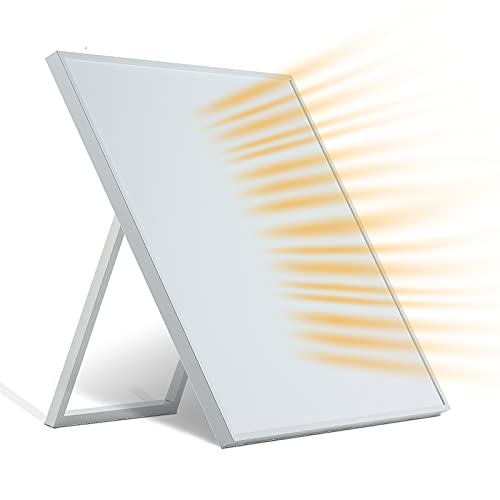
Pros
- 500W, 1706 BTU output for rooms up to 150 sq. ft.
- Fan-free convection heat for quiet, dust-free operation
- Automatic overheat protection included
- Waterproof and splash-proof for bathroom use
- 8.5 lb panel with portable aluminum alloy stand
Cons
- Best for spaces up to 150 sq. ft.
- No thermostat or timer listed
- 500W heat output may not suit larger rooms

Pros
- 250W, 853 BTU/hr output for small rooms
- Heats rooms up to 80 sq ft
- Slim 1 x 18 x 24 inch wall panel
- ETL certified and meets UL 2021 standards
- Runs silently with dust-free convection heat
Cons
- Covers only up to 80 sq ft
- 250W output is not for larger rooms
- Wall mounted design is less portable
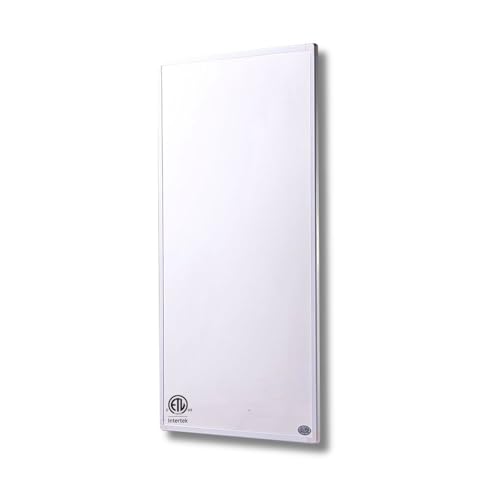
Pros
- 600W infrared panel heater
- On/off switch included
- Wall installation materials included
- IP54, ETL, TÜV and GS certified
- 5-year manufacturer's warranty
Cons
- Stand feet not included for floor standing use
- No thermostat or heat settings listed
- Heating area is not specified

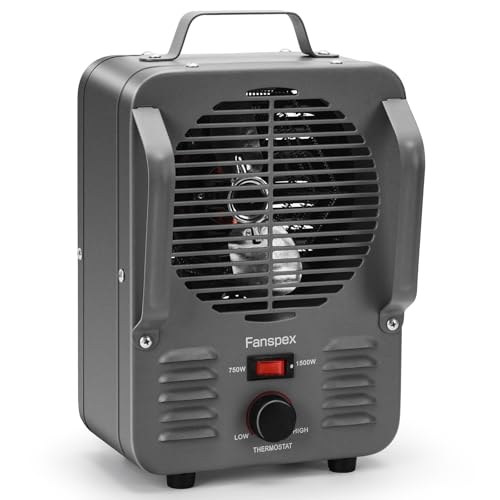
Pros
- 1500W mica panel heater for medium and large rooms
- 2 heat settings and adjustable thermostat
- Thermal shutoff and internal tip-over switch
- Freestanding or wall mount with included kit
- 10.1 lb design with carry handle
Cons
- No timer or remote listed
- 27 x 10 x 22 in. size needs floor or wall space
- Electric heat is for indoor room heating, not whole-home heat
What Matters in Panel Heaters for Bathroom Warmth
A bathroom heater has to work in a tighter, less forgiving room than a bedroom or office heater. Moisture, towels, outlet location and limited wall space all matter before raw heat output does.
- Bathroom-safe design: A wall-mounted heater helps keep the unit off the floor, which matters in a room where bath mats and towels can drift too close. The EconoHome Wall Heater is listed as IP44 splashproof, rated for up to 100 square feet, and UL certified. Its 250-watt output also fits the small-room use case better than a larger heater meant for a wide living area.
- Wattage for a small room: Among the main picks, output runs from 250 watts to 1,500 watts. For a small bathroom, lower wattage can make sense when the goal is steady supplemental heat rather than blasting a large room. The Amaze-Heater Wall Heater uses 250 watts and is rated for up to 80 square feet, which suits compact bathrooms where a high-output heater may be more than needed.
- Tip-over and overheat protection: Bathroom heaters should not depend on careful placement alone, especially if they are freestanding or movable. The De’Longhi HMP1500 lists 1,500 watts, tip-over protection and overheat protection, plus a 10.1-pound body. According to the U.S. Consumer Product Safety Commission, an automatic cut-off is required to shut off electric heaters if they tip over.
- Thermostat and timer control: A thermostat matters because a bathroom can move from chilly to steamy quickly. Among our main picks, thermostat ranges include 41 to 86°F on one model, while others list adjustable thermostat control without a stated temperature range. Timers are less common in this group, so buyers who want scheduled shutoff should check that feature before choosing.
- Size and outlet placement: Panel heaters are often bought because they save floor space, but their dimensions still affect where they can go. Our main wall panels range from about 18 by 24 inches to 27.95 by 24 inches. One pick is only 0.40 inch deep, while another is 2 inches thin, so outlet height and cord routing can matter as much as wall width.
We excluded central furnaces and whole-house systems because they require professional installation. We also left out water heaters and heated blankets because they do a different job, and we avoided unvented fuel heaters without an indoor rating because carbon monoxide risk is not a bathroom problem to gamble with.
Other Panel Heaters Worth Considering
These are other panel heaters we looked at but did not put on our main list.
If you want much more output than our top pick, pasapair Panel Heater offers 1,500 watts with a 600-watt low setting. It is rated for up to 250 square feet and includes an adjustable thermostat, plus tip-over and overheat protection. That extra power may be useful outside the bathroom, but it is a big jump from the 250 watts of our top pick.
For shoppers who want a built-in schedule, Dreo IP24 adds a 24-hour timer to a 1,500-watt panel heater. Its listed weight is 19.4 pounds, which makes placement and mounting feel more consequential than with lighter compact panels. Compared with our top pick, it brings far more wattage, but also more bulk for a small bathroom wall.
Heat Storm HS-1500 is aimed at larger spaces, with 1,500 watts and 5,200 BTU listed for up to 750 square feet. Those numbers make it a capable unit, but they are not as closely matched to a small, moisture-aware bathroom setup as the main list. For a half bath or narrow primary bathroom, that coverage target is far beyond what many buyers need.
And if a lightweight heater is the whole reason you are shopping, Olixis Wall Heater lists 4.5 pounds with a 1,500-watt high setting and a 750-watt low setting. It is rated for up to 215 square feet, and the listing notes 50 dB. The coverage and wattage are useful numbers, but the main picks stay more focused on compact wall placement, splash-aware use or bathroom-friendly low-watt heat.
FAQs
How much wattage makes sense for a bathroom panel heater?
For a small bathroom, our picks range from 250 watts to 1,500 watts. The lower end suits steady supplemental warmth in compact rooms, while the higher end is better suited to larger spaces or rooms that lose heat quickly.
Are wall-mounted panel heaters safer for bathrooms?
Wall mounting can help keep a heater away from bath mats, rugs and splashed floor areas. The U.S. Fire Administration says anything that can burn should stay at least 3 feet from space heaters, so towel racks, robes and shower curtains still need careful spacing.
What safety features should matter most near moisture?
Look for certification from a nationally recognized testing laboratory and automatic shutoff features where applicable. The CDC recommends electric space heaters with automatic shut-off switches and non-glowing elements, and it says space heaters should never be covered.
Do panel heaters dry out the air or blow dust around?
Fan-free panel heaters are designed to warm by convection or infrared heat rather than forcing air through a blower. In this group, several picks list quiet or dust-free operation, but the more important numbers are still wattage, room rating and safe clearance.
Sources
- CPSC Offers Tips to Prevent Home Fires From Space Heaters, U.S. Consumer Product Safety Commission. Fire-safety tips and required safety features for space heaters.
- Heating Fire Safety, U.S. Fire Administration. Home heating fire statistics and prevention messages.
- Safety Guidelines: During & After a Winter Storm, Centers for Disease Control and Prevention. Winter heating safety for space heaters, kerosene heaters and carbon monoxide.


Write Your Review
No reviews yet. Be the first to share your experience!