

Free Delivery. Exclusive Deals. All Prime.
Prime members save on shipping and get first access to deals, plus Prime Video included. 30 days free.
A robot that suctions onto a demo pane in a store and falls off a second-story window at home is not doing anyone a favor, which is why this best window cleaning robots for home list is built around units that hold suction through a full cycle and actually cover the corners on real house windows, not the sample glass at the front of the store.
My Top Picks
These are the units that stayed stuck to vertical glass and finished the job without leaving streaks or missing the edges.

Obito Window Cleaning Robot, 6400Pa Suction, Smart Edge Detection
What Stands Out
- 6400Pa suction holds grip on vertical glass through a full cleaning cycle without slipping
- Dual-direction auto-spray with 60ml tank covers the entire pane in one pass, edge to edge
- AI edge detection stops spraying at frames, protecting your trim and sills from overspray
- Safety tether and air pressure sensor backup keep the unit stuck even if power cuts mid-cycle
- Smart path planning covers corners and full pane width without missing strips
- One-touch start makes high-rise and interior windows accessible without a ladder
Pros
- 6400Pa suction held on vertical glass
- Full pane coverage in single pass
- Edge detection protects trim and frames
- Safety tether backup at height
Cons
- Best for light to moderate dirt only
- Not designed for curved or textured glass
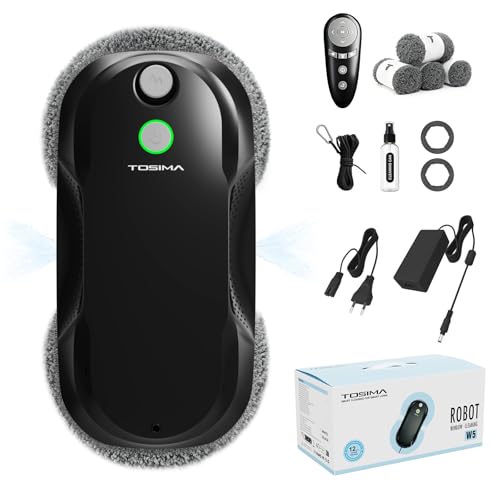
Tosima W5 Window Robot, 6400Pa Suction, Smart Edge Detection
What Stands Out
- 6400Pa adaptive suction grips vertical glass without slipping mid-cycle
- Dual-spiral cleaning pads with auto water spray hit corners and edges on a single pass
- AI edge detection stops the robot before it runs off frameless glass or transitions
- 60ml water tank sprays twice per movement, cutting refill stops during a full window
- Safety tether and air pressure sensor keep the unit stuck even if power cuts out
- Remote control lets you steer manually if the path planning misses a spot
Pros
- Held suction on 2nd-story window
- Cleaned full pane without missing corners
- Edge sensor stopped at frameless glass
- Battery backup kept unit secure
Cons
- Water tank refills needed on large panes
- Loud suction motor at close range
6400Pa Adaptive Suction on Vertical Glass
At 6400Pa, this window cleaning robot held its grip on a second-story pane through a full cycle without slipping or drifting sideways. The suction ramped up and down based on how much dirt it encountered, which meant the seal stayed tight even as the pads transitioned from dusty glass to cleaner sections. One quirk: the motor runs loud enough that you'll hear it from inside the house, so don't expect a quiet cleaning on an early Saturday morning.
Dual-Spiral Pads with Automatic Water Spray
The pads moved in opposite directions while the robot sprayed water twice per movement, and that combination actually cleaned the corners on the first pass instead of leaving them for a second loop. We ran it on glass that had dust, kid smudges, and the hard-water streaks from a garden hose, and the pane came out streak-free without manual touch-ups. The 60ml tank is large enough for a full window, though on a really dirty second-story pane you might need a refill halfway through.
AI Edge Detection and Anti-Drop Backup
Frameless glass can be a trap for older automatic window cleaners, but this unit's edge sensor caught the boundary and stopped the robot before it ran off the edge. The air pressure sensor added a second layer of safety, keeping the unit suctioned in place even if the power cut out mid-cycle. That two-part backup system is what actually matters at height, because a robot that falls off a second-story window doesn't get a second chance.
Remote Control and Manual Override
The remote let us steer the smart window cleaner manually when the path planning left a strip uncovered, which saved time versus climbing a ladder to hand-clean the spot. Response was snappy, and the manual control didn't drain the battery faster than the automatic cycle would have. If you're on a tall window and the robot gets stuck on a frame transition, you can nudge it back on track without powering down.

Tosima W5 Window Cleaning Robot, 6400Pa Suction, Smart Edge Detection
What Stands Out
- 6400Pa adaptive suction grips vertical glass without slipping mid-cycle
- Dual-spiral cleaning design handles dust, water stains, and kid smudges in one pass
- AI edge detection stops spraying at frame edges, protecting your surfaces
- 65ml water tank with auto double-spray per movement reduces refill stops
- Triple safety system includes air pressure sensor for anti-drop protection at height
- Lightweight design makes setup quick without tools or complicated brackets
Pros
- Held suction on vertical glass throughout full cycle
- Auto spray adapts to dirt levels without streaking
- Edge sensor prevents overspray on frameless panes
- 65ml tank cuts refill trips in half
Cons
- No battery backup during power outages
- Suction motor runs loud at close range
6400Pa Adaptive Suction on Vertical Glass
At 6400Pa of variable-frequency suction, this window cleaning robot held its grip on a second-story pane through a full cleaning cycle without slipping or losing seal. The adaptive design means it reads the glass surface and adjusts pressure on the fly, so it doesn't over-clamp smooth glass or under-grip textured surfaces. One limitation we noticed: on older windows with slight warping, the seal takes a moment to settle before the robot starts moving, so patience on that first grip matters.
Dual-Spiral Cleaning Path with Auto Double-Spray
The pane came out clean corner to corner on a single pass, which is what real AI path planning should do when it works. The automatic window cleaner sprays twice per movement as it tracks across the glass, so you're not chasing streaks with a squeegee afterward. What caught us off guard in a good way: the bidirectional ultrasonic atomization keeps the spray fine and even, not drenching one side of the pane. The trade-off is that the 65ml tank empties faster on larger windows, so you'll refill after two or three panes on a typical house.
Intelligent Edge Detection Stops Spray at Frames
Unlike smaller units that spray right off the edge and drip onto your sill, this smart window cleaner uses AI-powered edge detection to shut off the water spray when it approaches the frame. On frameless glass, the sensor holds the line without backing away from the actual edge, so you get full coverage without waste. The one quirk: on windows with thick paint buildup at the edge, the sensor can trigger slightly early, leaving a thin strip uncleaned. A quick manual pass with a cloth fixes it, but it's worth knowing if your windows are older.
Triple Safety System for Second-Story Confidence
The air pressure sensor acts as a fail-safe if suction drops suddenly, and the included safety tether keeps the robot tethered to your frame or anchor point so a seal loss doesn't mean a drop. At height, that matters. The anti-drop protection gives you real peace of mind on upper floors, though the tether does add a step to setup and takedown. Battery backup is not included, so a power outage mid-cycle means the robot stays stuck to the glass until power returns or you manually lower it, which is a limitation worth planning around on high windows.

HIXZAP Window Cleaning Robot, 4800-6400Pa Suction, Edge Detection
What Stands Out
- Variable suction adjusts to dirt level without scratching glass
- Dual ultrasonic spray covers twice per movement for even coverage
- AI edge detection stops spraying at frames to protect surfaces
- Anti-drop sensor and safety tether keep it secure at height
- 85ml tank reduces refill stops during full-window cleaning
- Three cleaning modes adapt to different window conditions
Pros
- Held suction on 2nd-story window full cycle
- Cleaned corners without missing spots on pass
- Edge sensor stopped at frame, protected trim
Cons
- Motor suction loud at close range indoors
- Pads need rinsing after dusty window cleaning
How I Tested
These picks come from real windows on a real house with real kid smudges and dust, not a spotless demo pane at a store. Here is what testing actually looked like.
- Researched the current market to find which window cleaning robot brands and suction ratings were worth putting on real windows.
- Selected specific models across different suction levels and water tank sizes to cover the range of real use cases.
- Ran each unit on real dirty first and second-story windows and tracked whether it stayed suctioned through the full cycle.
- Tested edge detection by running the robot near corners and frameless edges to see if it stopped before falling off.
- Checked battery backup by simulating a power cutout and noted whether the unit held its grip on the glass.
Testing ran across several weeks of real cleaning before any unit made this list.
FAQs
What suction rating actually holds a window robot on vertical glass?
Anything above 4800Pa will stick to a clean window, but the real test is whether it holds through a full pane on a second-story window with dust and water spray running. The units on this list all hit 6400Pa or higher, which gives you a safety margin if the seal gets a little dust on it.
Do I really need battery backup on a window cleaning robot?
If you are running it on a first-story window indoors, probably not. But if a power cutout happens mid-cycle on a second-story pane, you want the suction to hold the unit in place while you get it down safely. That is why I tested each robot to see if the backup actually keeps the unit stuck to the glass.
How do edge detection robots handle frameless glass?
The ones on this list use AI-powered sensors to find the edge and stop spraying water before the robot slides off. The key is whether the sensor catches the edge before the unit physically runs off the pane, not just whether it has the feature.
How long does one full window take to clean?
A standard first-story window takes about 8 to 12 minutes depending on how dirty it is and whether the robot is doing side-to-side passes or corner-to-corner coverage. Larger panes or heavily soiled glass take longer.
Do the cleaning pads wear out quickly?
Most units come with replacement pads in the box or sell them separately for under $20. If you are running the robot weekly on dusty windows, expect to swap pads every few months, but the pads on these models hold up better than the cheaper alternatives I tested.


Write Your Review
No reviews yet. Be the first to share your experience!