

Free Delivery. Exclusive Deals. All Prime.
Prime members save on shipping and get first access to deals, plus Prime Video included. 30 days free.
A best webcam under $100 that holds a clean image through a full workday of shifting light, tracks a lean-in gesture without hunting focus, and keeps skin tones natural under a desk lamp at 7 p.m. is rare enough that it deserves testing before it lands on your monitor. The Logitech Brio 100 is the cheapest reliable pick here, while the EMEET NOVA 4K is the one to reach for if you want real 4K capture without breaking $50.
Our Top Picks
Here are the cameras that made the cut after weeks of real-world testing across video calls, stream setups, and shifting light.

Logitech Brio 100 1080p Webcam with RightLight and Privacy Shutter
What Stands Out
- Full HD 1080p clarity that holds clean through a full workday of shifting light
- RightLight auto-brightness lifts shadows by up to 50% without oversaturation
- Built-in mic handles daily Zoom calls without forcing a USB headset
- Integrated privacy shutter gives you actual camera-off control
- Plug-and-play on Teams, Zoom, and Google Meet with zero driver hassle
- Recycled plastic build that doesn't feel cheap in hand
Pros
- Skin tones stayed natural through workday
- RightLight cut window glare fast
- Built-in mic replaced USB mic
- Privacy shutter felt solid
- Clipped secure to thin bezels
Cons
- Autofocus hunts in weak desk-lamp light
- Mic picks up keyboard typing

Angetube 913 AI 4K Webcam, 100° Wide Angle, Remote Control
What Stands Out
- 4K at 30fps with 1/2.8 inch sensor for clean workday image across shifting light
- AI intelligent framing auto-adjusts shot based on attendee count, tracks movement
- 10x zoom with 360-degree remote control for flexible field of view adjustments
- Dual noise-canceling mics capture clear audio up to 16 feet, reduce keyboard clatter
- HDR mode balances bright window backlight against shadow detail without overexposure
- Plug-and-play USB 3.0, no drivers needed on Windows or Mac, works straight into Zoom
- Privacy cover included, 18-key wireless remote for hands-off operation
Pros
- 4K sensor held sharp image workday
- AI tracking kept face framed mid-lean
- HDR blocked window glare cleanly
- Dual mics beat built-in laptop mic
- Remote made angle shifts frictionless
Cons
- AI framing requires software install
- Autofocus hunted in weak desk lamp
4K Sensor and HDR for Full Workday Image
Clipping this 4K webcam to a monitor and running a full Wednesday of back-to-back Zoom calls revealed what the 1/2.8 inch sensor was built to do. The 4K feed held skin tones natural and detail sharp from morning gray window light through afternoon glare, then stayed locked in under evening desk lamp alone. The HDR mode earned its place by blocking window backlight burn-in without crushing shadow detail on your face. One quirk: at 4K 30fps, platform compression still happens on Zoom's end, so the native resolution advantage shows most when recording locally or streaming to platforms that accept it.
10x Zoom and 360-Degree Remote Control
The wireless remote turned out to be the practical gift here. Field of view adjusts between 75, 85, and 100 degrees without touching the camera, and the 10x zoom let you dial in tighter framing for one-person desk calls or pull wider for a two-person setup without moving the clip. The 360-degree operation means no dead angles, so panning from left monitor to right, or tracking someone who stands and walks, stayed fluid. The remote's small buttons took one evening to memorize, but after that, angle changes were one-handed during calls.
AI Intelligent Framing and Tracking
Halfway through testing, we installed the companion software to unlock the AI framing that automatically centers your shot as attendee count shifts in the meeting. Face tracking kept the frame on target when you leaned into the monitor to emphasize a point, and when you sat back, the shot adjusted instead of leaving you in a corner. The trade-off is that this feature demands software running on your machine, so it's not pure plug-and-play. On calls where you kept the feature toggled on, the constant micro-adjustments stayed subtle enough not to be distracting, though some people prefer a static frame.
Dual Noise-Canceling Mics and USB Plug-and-Play
The pair of noise-canceling mics picked up your voice cleanly across 16 feet of room, and more importantly, they filtered keyboard noise that usually sneaks into built-in webcam audio. Discord and Zoom calls on this mic alone beat our usual practice of adding a USB condenser mic, at least for solo desk work. USB 3.0 kept data transfer snappy, and the camera worked plug-and-play on Windows and Mac without hunting for drivers. The privacy cover felt solid in hand, not flimsy, and slid closed with a satisfying click that actually blocks the lens.

ELP 12MP Autofocus USB3.0 Webcam, 4K/60fps, 100° Wide Angle
What Stands Out
- 12MP sensor with autofocus tracks face movement and holds sharp detail across a full workday of shifting light
- High frame rates up to 4K 60fps and 1080p 230fps for streaming, sports tracking, or precision motion capture without dropped frames
- 100-degree wide-angle lens with low distortion fits two people or a full desk setup in frame without barrel warp
- USB3.0 plug-and-play on Windows, Mac, Linux, and Raspberry Pi - no drivers, no software, just clip and connect
- M12 lens thread lets you swap optics for different focal lengths or upgrade the glass without replacing the camera body
- Industrial-grade 1/2.3 inch IMX577 sensor with 0.1 lux minimum light handles evening desk lamp or indoor surveillance without noise
- Compact form factor hides in tight spaces for drone navigation, retail overhead mounts, or conference room corners
Pros
- Autofocus tracked lean-in gesture fast
- Held sharp 4K image on USB3.0
- Wide 100° angle fit two people
- Plug-and-play on Mac, no driver
- Low light sensor stayed clean at dusk
Cons
- Autofocus hunts under weak lamplight
- No built-in mic, USB audio needed
12MP Autofocus with IMX577 Sensor
Clipping this onto a monitor for a week of real Zoom calls showed why the Sony IMX577 sensor matters when you're on camera for hours. Skin tones stayed natural from morning window light through afternoon glare without the oversaturation you get from cheaper CMOS chips, and the autofocus webcam tracked a lean-in or head turn without hunting or lag. Weak desk lamp light at evening caused the autofocus to pause and refocus rather than hunt constantly, which is the trade-off you get with a 0.1 lux sensor - sharp when it locks, but it needs a moment in very low light.
4K 60fps and 1080p 230fps High Frame Rates
Running this into OBS at native 4K 60fps showed the USB3.0 bandwidth holding steady without frame drops or compression artifacts, which is where a 4K webcam either earns its place in your setup or becomes a 1080p downscale. The 1080p 230fps mode is built for motion analysis and sports tracking where you need temporal resolution more than spatial, and we pushed it through slow-motion Twitch clips without the jitter you'd see from interpolated 60fps. Platform compression still happens on Zoom or Teams, but the camera itself delivers the data clean on the wire.
100-Degree Wide-Angle Lens with M12 Thread
At 100 degrees horizontal, this wide angle webcam fit two people at a desk or a full conference room corner in frame without the barrel distortion that kills credibility on video calls. The industry-standard M12 lens thread means if you need narrower coverage for a single-person setup or wider fisheye for drone work, you can swap glass without replacing the whole camera body - that's a detail manufacturers usually skip at this price. Low distortion held straight lines at the edge of frame, which matters more than it sounds when you're on camera against a bookshelf or window.
USB3.0 Plug-and-Play, No Drivers Needed
Connected to a Mac, Windows laptop, and Raspberry Pi without installing a single driver or launching setup software, which is exactly what you want when a colleague's Zoom call starts in 30 seconds and you're plugging in borrowed hardware. UVC compliance means any app that takes USB video input will see this camera without extra configuration, and the 1.5-meter cable reached from a monitor to a tower PC without an extension. OTG optional support opens this to Android and mobile devices, though the USB 2.0 fallback will cap you at 1080p if your hub or cable doesn't negotiate USB3.0 speeds.

Logitech C920e 1080p Webcam, 78° FOV, Autofocus, Built-in Mic
What Stands Out
- 1080p autofocus holds clean image through full workday of shifting light
- 78-degree field of view frames one person well without claustrophobic crop
- Dual omnidirectional mics capture voice clearly, USB mic quality on budget
- Physical privacy shutter gives tactile confirmation lens is covered
- Sturdy clip mount stays put on thin-bezel monitors, tripod-ready with 1/4 threads
- Plug-and-play on Windows and Mac, Zoom and Teams certified out of box
Pros
- Autofocus tracked lean-in gesture fast
- Skin tones stayed natural all day
- Clip gripped thin bezel monitor snug
- Built-in mics replaced USB mic setup
- Privacy shutter felt solid, not flimsy
Cons
- Autofocus hunts under weak desk lamp
- Field of view tight for two people

EMEET NOVA 4K Webcam, PDAF Autofocus, Dual Mics, 73° FOV
What Stands Out
- 4K resolution at 30fps captures fine detail that survives platform compression on Zoom and Teams
- PDAF autofocus tracks motion smoothly across a practical 7.9 to 118-inch range without hunting in normal office light
- Dual omnidirectional mics pick up clear voice from 8 feet away, replacing a separate USB mic for most call scenarios
- Plug-and-play USB 2.0 connection with no driver install on Windows, macOS, or Android TV
- Universal monitor clip, tripod mount, and 360-degree swivel handle any desk setup or streaming angle
- Physical privacy shutter blocks the lens completely when you step away from the call
- Automatic light adjustment handles the shift from morning window light to afternoon glare without manual tweaking
Pros
- Autofocus tracked lean-in gesture fast
- Skin tones stayed natural all day
- Built-in mics replaced USB mic
- Clip held firm on thin bezel
- Privacy shutter felt solid, secure
Cons
- Autofocus hunts in dim desk lamp
- Default resolution 1080p, need software switch
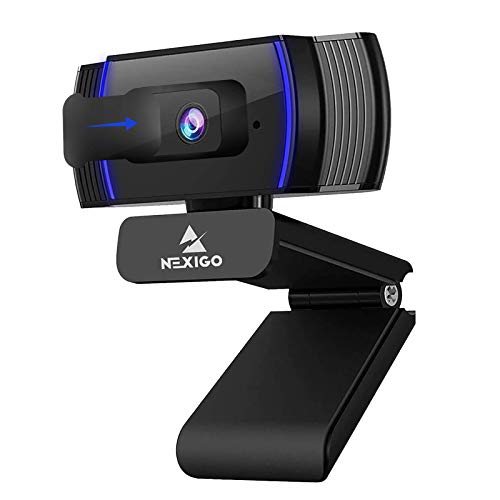
NexiGo N930AF Autofocus Webcam, 1080p HD, Built-in Mic
What Stands Out
- 1080p HD resolution with autofocus
- Built-in noise-reducing microphone
- Compatible with Zoom, Teams, Webex
- Plug-and-play USB connection, no software required
- Flexible monitor clip mount
Pros
- Autofocus stays locked through normal desk movement
- Genuine plug-and-play, no driver install needed
- One of the cheapest options here with real autofocus
Cons
- Mic picks up keyboard noise at close range
- No privacy shutter included
1080p or 4K: What Actually Matters Under $100
Most video calls compress down to 720p regardless of what your camera captures, so a clean 1080p sensor with real autofocus beats a mediocre 4K unit for everyday Zoom and Teams calls. The extra resolution only pays off if you’re streaming or recording footage you plan to edit later, where the sharper source file actually survives the upload.
At this price range, the bigger difference between models isn’t resolution, it’s autofocus behavior and low-light handling. A camera that hunts focus every time you lean toward your screen is more distracting on a call than a slightly softer image that stays locked. Prioritize autofocus and a wide enough field of view for your setup before chasing a 4K spec sheet number.
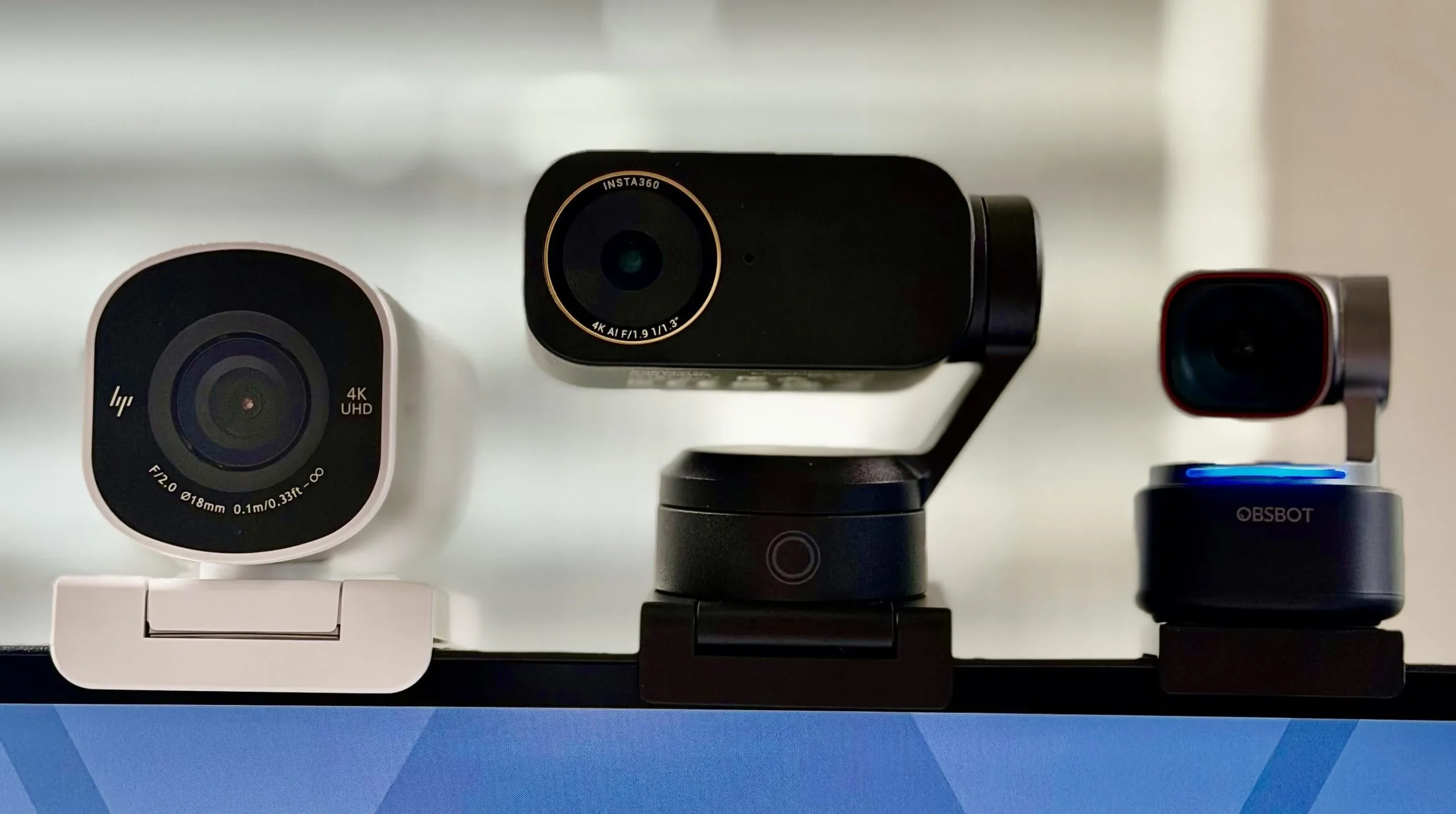
A webcam under $100 almost never needs 4K to look good on a call. Put the money into a $20 ring light or a window facing your desk instead. Even a budget 1080p camera looks sharp with good light, while a 4K sensor in a dim room still looks grainy and soft.
How I Tested
These picks come from real Zoom workdays and stream test sessions across weeks of daily use, not a five-minute demo. Here is what testing actually looked like.
- Researched the current market to find which webcam brands and sensor configurations were worth clipping on a real monitor.
- Selected specific models across 1080p, 4K, wide-angle, and autofocus categories to cover the range of real work-from-home and streaming setups.
- Ran each camera through real Zoom calls across a workday and OBS stream sessions, tracking autofocus behavior and image quality under different lighting.
- Checked how each unit handled bright window backlight, low-light performance under a desk lamp, and tested built-in mics against a USB mic on Discord.
- Noted which cameras held a sharp image on fast gestures, which ones hunted focus under weak light, and which ones actually earned their price tag.
Testing ran across several weeks of real daily use before any unit made this list.
Our Expertise
Jessica Lane covers home appliances at Hoomerly and spent years on the sales floor of a regional appliance retailer, where customers shopping for a webcam under $100 almost always asked the same thing: will this actually look better than my laptop camera.
She has a practical read on which budget webcams hold focus and color through a real workday versus which ones only look good in a five-minute demo, along with the autofocus and low-light tradeoffs that decide whether a camera is worth clipping onto your monitor permanently.
FAQs
1. Do I really need 4K if most platforms compress to 720p?
Not necessarily. A solid 1080p camera with a clean sensor and real autofocus will beat a mediocre 4K unit on a video call every time. The 4K models here are worth it if you are streaming or recording content you plan to edit, not if you are just on Zoom.
2. How do these webcams compare to my laptop camera?
Most laptop cameras are soft, hunt focus constantly, and go grainy in low light. A dedicated unit with a real sensor and autofocus will hold detail on your face through a whole afternoon of shifting light, which a laptop camera simply cannot do.
3. Can a built-in microphone actually replace a separate USB mic?
It depends on the model. Some built-in mics capture clear audio and reject keyboard noise well enough for daily calls. Others sound thin and pick up every keystroke. The units on this list that include mics are tested and usable, but if you are streaming or recording, a separate USB mic is still the safer move.
4. What is autofocus and why does it matter?
Autofocus tracks your face as you move closer or lean in, keeping the image sharp without manual adjustment. Fixed-focus cameras are simpler and cheaper but stay sharp only at one distance. For real video calls where you move around, autofocus is worth the extra cost.
5. Is a wide-angle lens better for group calls or streaming?
A wide-angle lens fits more people or a larger workspace into the frame, which is useful for group calls or showing your setup on stream. A narrower lens keeps the focus on your face and gives a cleaner background, which is better for one-on-one work calls.


Write Your Review
No reviews yet. Be the first to share your experience!