

Free Delivery. Exclusive Deals. All Prime.
Prime members save on shipping and get first access to deals, plus Prime Video included. 30 days free.
When leaves blow under the garage door like they paid rent, weather stripping for garage doors is the simple fix that closes the gap. A good strip blocks air, water, dust and debris before they move into the garage. After comparing 6 models, the Jin&Bao Weather Stripping stands out for its 20-foot length and self-adhesive installation. The Holikme Weather Stripping is the alternative pick if a 17-foot silicone seal is the better match for your door.

Pros
- 20 ft length can be cut to fit shorter garage openings
- Helps block water, snow, dust, dirt, and leaves
- Rated for temperature exposure from -40°F to 284°F
- Yellow safety strip improves visibility
- Anti-slip ridges help reduce slipping risk
Cons
- Only listed in yellow
- Cutting is needed for openings under 20 ft
- Made for garage door thresholds only

Pros
- 17 ft black EPDM rubber garage door bottom seal
- Blocks rain, cold drafts, leaves, dust, and debris
- Flexible from -40°F to 240°F
- U-shaped seal with O-ring dual-layer structure
- Includes rubber end plugs to help prevent shifting
Cons
- Metal tracks are not included
- May need soapy water or silicone spray to slide into rails
- Designed for 5/16 inch double T-end systems
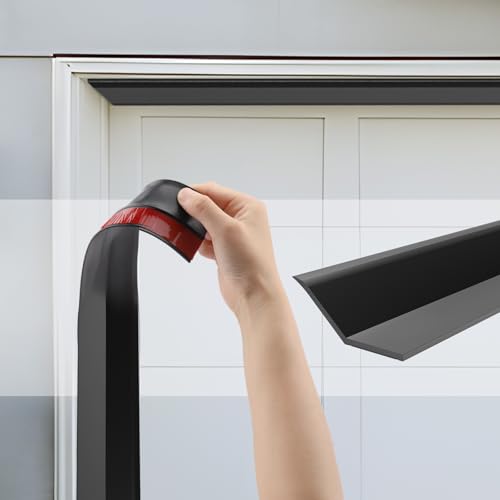
Pros
- 40 ft length for garage door top and side sealing
- Heavy duty weather resistant TPE material
- Helps block drafts, dust, debris, and water leaks
- Peel and stick adhesive with nails for reinforcement
Cons
- Only listed in black
- Made for garage door top and sides, not the bottom
- No warranty or certification details listed
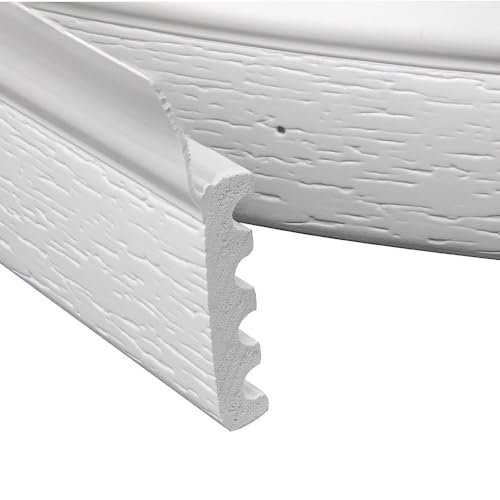
Pros
- 34 ft uncut roll can be cut to fit a double garage door
- Seals top and sides against drafts, rain, snow, dust, and pests
- Foamed PVC base with flexible PVC fin resists cracking and rotting
- Includes color matched finish nails for DIY installation
- Made in the USA and available in 6 colors
Cons
- Requires measuring and cutting with a utility knife or hack saw
- Designed for garage door jambs, not interior doors or windows
- White color may not match every garage door

Pros
- 16 ft length can be trimmed to fit
- 5/16 T-end design for garage door tracks
- Flexible waterproof rubber construction
- Rated for -40°F to 140°F
- Installs without screws or nails
Cons
- Only listed in black
- Requires a compatible T-channel garage door track
- No warranty details listed

Pros
- 40 ft length fits several listed garage door sizes
- Durable TPE stays elastic from -58 °F to 275 °F
- Helps block leaves, dust, cold air, rain and snow
- Self-adhesive backing plus 40 nails for reinforcement
- Can be cut to length with scissors
Cons
- Only listed in white
- Installation requires cutting and using nails
- Made for garage door tops and sides, not the bottom
What Matters in Weather Stripping Products for Drafty Garage Doors
Garage doors have long edges, uneven floors and moving parts, so a small mismatch can leave a real draft. According to the U.S. Department of Energy, air sealing is one of the most cost-effective ways to improve comfort and energy efficiency, and leaks around doors and windows are among the most obvious places to start.
- Fit for the door or window size and gap: Length is the first filter, because our picks run from 16 feet to 40 feet. The Jin&Bao Weather Stripping gives you 20 feet to work with, which suits many garage thresholds while still allowing cut-to-fit trimming. For side and top gaps, longer rolls matter more because they have to cover the vertical jambs plus the header.
- Material: Among our picks, the material mix includes rubber, EPDM rubber, TPE and PVC. The DuraSeal Weather Stripping uses a foamed PVC base with a flexible PVC fin, and it comes in a 34-foot roll for perimeter sealing. Rubber and EPDM are useful at the bottom edge because they stay flexible as the door compresses against the floor.
- Installation and removal: Some choices use adhesive, while others slide into a 5/16-inch T-end track or attach with nails. The alophoty Weather Stripping is a 40-foot self-adhesive option with nails for secondary reinforcement, which makes sense for top and side sealing where peeling at the ends can be a problem. Track-style bottom seals can be cleaner to remove, but they require an existing compatible channel.
- How well it blocks air and noise: Bottom seals with U-shaped and O-ring designs create 2 barriers, which helps reduce air and moisture paths at the floor. One of our 16-foot bottom-seal picks also claims a dual-rubber design that reduces noise by up to 5 times. For garages used as workshops, laundry areas or storage spaces, sealing both the bottom and the perimeter usually matters more than treating only one edge.
- Durability and reuse: Temperature ranges are a useful way to compare durability claims, and our picks span from minus 58 degrees to 284 degrees Fahrenheit. EPDM rubber in one 17-foot option is listed for minus 40 degrees to 240 degrees Fahrenheit, while a TPE perimeter seal is listed for minus 58 degrees to 275 degrees Fahrenheit. Those ranges matter if the garage faces direct sun, freezing weather or big seasonal swings.
- Looks: A threshold strip is visible every time the door opens, and one 20-foot option includes a yellow safety strip so the raised edge is easier to see. Perimeter kits tend to blend in better when the color matches the jamb, and one 34-foot kit is offered in 6 colors. If the garage faces the street, color and trim style can matter almost as much as the seal profile.
We excluded spray foam and caulk because they are for fixed gaps, not moving garage doors. Bidet seats and space heaters solve different household comfort problems, and they belong in separate guides. The products here focus on gaps where a door still needs to open and close.
Other Weather Stripping Products Worth Considering
These are other weather stripping products we looked at but did not put on our main list.
If you need more length for top and side coverage, Botyboty Weather Stripping offers 40 feet and a self-adhesive format. That is twice the length of our top pick, but the main list already includes multiple 40-foot perimeter-style options with more complete fit and material details.
For another long self-adhesive roll, Nayotaa Weather Stripping also gives you 40 feet. It is worth considering when a shorter threshold strip will not reach the jambs and header, though our top pick remains the cleaner choice for a 20-foot floor threshold job.
Foam can be the appeal with Kscjdg Weather Stripping, which comes in a 16-foot length. That is 4 feet shorter than our top pick, so it is better suited to smaller gaps or narrower projects rather than a full-width threshold on a wider garage opening.
Prefer a familiar building-supply option? M-D Building Products Weather Stripping is another 16-foot product, which again gives up 4 feet compared with our top pick. It may make sense for a compact repair, but it leaves less margin for trimming mistakes or uneven ends.
FAQs
How do I choose weather stripping for a garage door gap?
Start with the gap location, because bottom seals, threshold strips and perimeter seals do different jobs. Our picks range from 16 feet to 40 feet, so measure the door width or the full top-and-side run before choosing a length.
Is rubber or foam better for stopping winter drafts?
Rubber and EPDM rubber are common for garage door bottoms because they compress against the floor and move with the door. Foam or foamed PVC can work well around a jamb, where the seal is pressed by the door rather than dragged across concrete.
Can weather stripping help reduce garage noise?
Yes, closing air gaps can also reduce some noise paths. One 16-foot dual-rubber bottom seal in our group claims noise reduction by up to 5 times, but the biggest benefit still comes from sealing the largest visible gaps first.
Should I use heat tape instead of weather stripping for cold gaps?
No, heat tape is for pipes, not door gaps. The U.S. Consumer Product Safety Commission estimated about 1,500 fires, 10 deaths and 100 injuries a year from faulty electric heat tapes, so it should be used only as directed for pipe protection.
Sources
- Consumer Guide to Air Sealing the Home, U.S. Department of Energy. DOE guide to finding and sealing air leaks at home.
- CPSC Re-Issues Heat Tape Guidelines In Wake Of Zoo Fire, U.S. Consumer Product Safety Commission. CPSC safety guidelines for electric pipe heat tapes.




Write Your Review
No reviews yet. Be the first to share your experience!