

Try Amazon Prime free for 30 days
Fast free delivery on heavy items, plus Prime Video, Prime Music and member-only deal prices.
Most upright vacuums under $300 lose suction within a year because the filter clogs or the brush roll starts to bog down on carpet. What actually separates a decent upright from one that lives in the closet is the brush roll design, the seal quality around the motor, and whether the filter can handle pet hair without constant cleaning. The Bissell Cleanview Bagless Upright Vacuum gives you straightforward suction for carpet without the complexity, while the Hoover Linx Stick Vacuum works better if you need flexibility between carpet and hardwood without dragging a full-size upright around your home.
Compare the Top Picks
These picks cover different upright vacuum needs, from carpet-focused cleaning to lightweight options for mixed flooring. Check the table below to compare features, limitations, and current Amazon pricing.

Pros
- Detachable canister reaches stairs easily
- Tangle-free brush handles weekly pet hair
- Sealed HEPA keeps allergens contained
- XL tank cuts emptying frequency in half
Cons
- No brush roll shutoff for hardwood floors
- Lift-Off canister adds weight on stairs
Lift-Off Canister for Multi-Level Homes
The detachable pod is the real win here if you have stairs or furniture that needs attention. I can unhook it, grab the extension wand, and hit the second-floor hallway carpet without lugging the full unit up. The quick-release is smooth enough that it doesn't feel like a chore after a few uses, and the lightweight canister makes a genuine difference when you're moving between rooms. The trade-off is that the canister itself adds weight to what you're carrying, so it's not quite as effortless as a fully lightweight upright vacuum, but the flexibility makes up for it.
Tangle-Free Brush Roll for Pet Hair Season
After running a pet hair upright vacuum through shedding season, the brush roll is where you see if the engineering actually works. This one's tangle-free design genuinely reduces the hair wrap that usually clogs the beater bar every few passes. You still get some hair collecting around the edges, but you're not stopping every 10 minutes to pull out a matted clump. That said, the benefit drops if you have long-haired pets and don't vacuum more than once a week; the hair can still build up faster than the design accounts for.
HEPA Sealed Allergen System with Easy-Empty Tank
The sealed HEPA filtration keeps dust and dander locked inside the vacuum instead of leaking back into the air during emptying, which matters if anyone in the house has allergies or asthma. The 1L XL tank capacity means you're not stopping to empty it halfway through vacuuming the main floor, a real quality-of-life improvement over smaller bagless models. The one-touch release works as advertised, though emptying a full tank of pet hair into a trash bin still kicks up some dust unless you're careful and deliberate about it.
Scatter-Free Technology on Mixed Flooring
Transitioning from carpet to hardwood without sending dirt and debris flying across the floor is a specific problem that upright vacuums with weak scatter control make worse. This model's scatter-free suction keeps things contained, though the brush roll doesn't shut off on hard floors, so you'll still get some bristle action that can push lightweight debris. It's not a dealbreaker if you're used to sweeping small dust piles before vacuuming, but it's a limitation worth knowing if your home is mostly hardwood with area rugs.

Pros
- Lift-Away design cleans stairs without extra tools
- Sealed HEPA traps allergens reliably
- Brush shutoff prevents hardwood scratches
- Swivel steering cuts maneuvering time
Cons
- Bagless bin empties in visible dust cloud
- Filter needs rinsing every 1-2 weeks with pets
Lift-Away Pod for Stairs and Above-Floor Cleaning
Detaching the cleaning head from the main unit cuts the time spent hauling the full upright vacuum up and down stairs. The pod handles stairs, furniture crevices, and baseboards without needing a separate handheld or canister unit. After running this through a two-story home with a dog, the convenience is real, though the pod does feel lighter in hand than the full machine, so suction drops slightly on stubborn pet hair wrapped around stair edges.
Sealed HEPA Filter with Anti-Allergen Complete Seal
The sealed system actually contains dust and dander instead of venting it back into the room like older bagless models I've owned. For a home with pet allergies or asthma, this HEPA upright vacuum makes a measurable difference in air quality after vacuuming. The trade-off is that the filter fills faster than marketing suggests when you have shedding season or kids tracking in outdoor debris; plan on rinsing it every 1-2 weeks rather than monthly.
Brushroll Shutoff for Carpet and Hardwood Transitions
Flipping the brush off lets you move from carpet to hardwood without stopping mid-room to swap settings. On a floor plan with area rugs over hardwood, this feature saves the back-and-forth that wears on a vacuum's motor and your patience. The shutoff is responsive, though the brush takes a second or two to actually stop spinning after you toggle it, so rushing between surfaces risks leaving bristle marks on finished wood.
Swivel Steering for Tight Spaces
The front-end pivot handles corners and furniture legs with less elbow grease than fixed-wheel uprights, which matters on a third pass around the same room. Navigating a family room packed with toys and pet beds becomes less of a workout. The swivel can feel a touch loose on thick carpet, so steering requires slight adjustment on deep pile, but on medium carpet and hardwood the control is smooth.
Pros
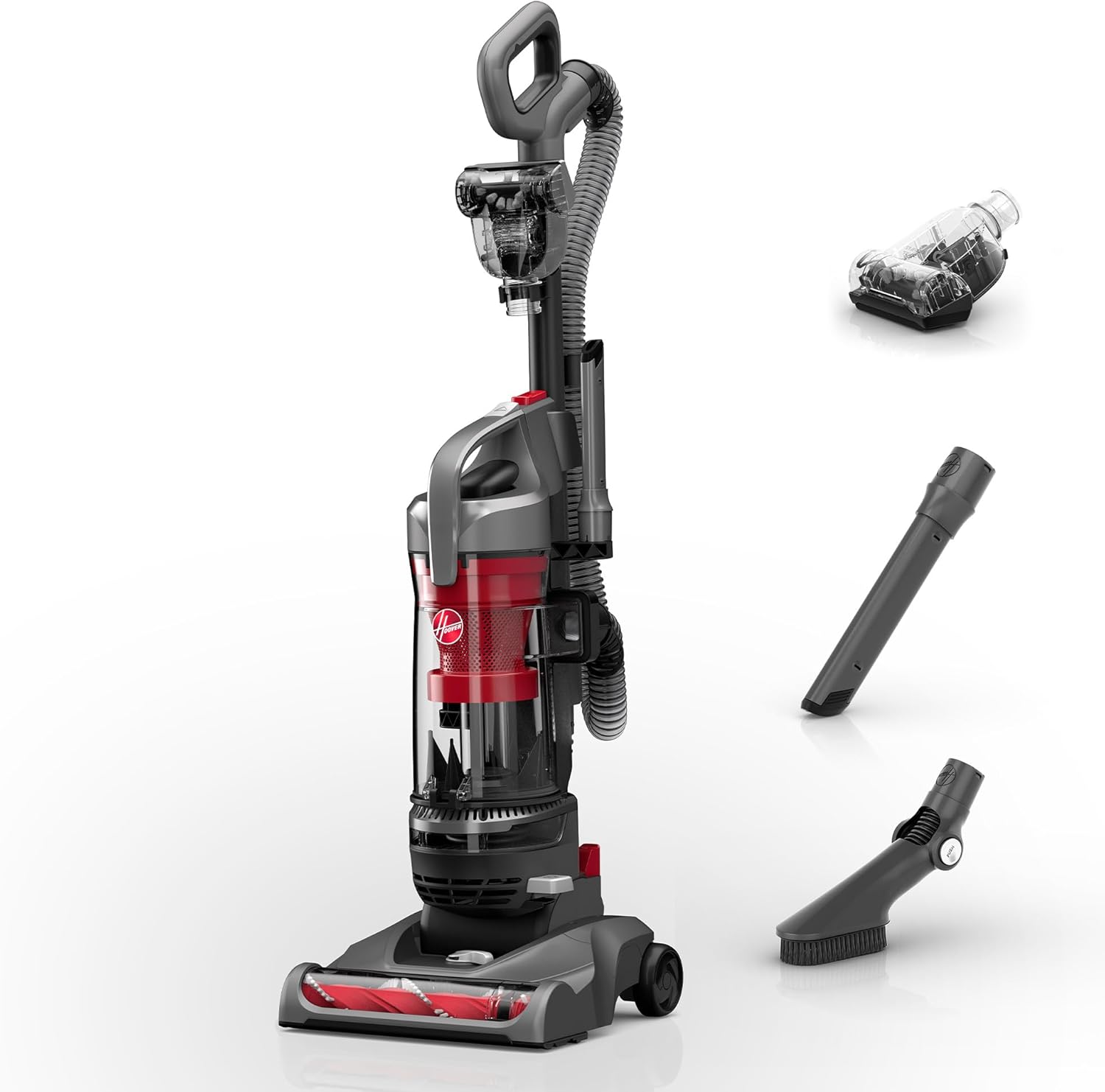
- Cord rewinds automatically, no tangled mess
- Turbo Tool grabs pet hair from furniture
- Large dirt cup empties less often
- Works on carpet and hard floors
Cons
- Bagless bin empties in a dust cloud
- Filter needs frequent cleaning with pets
Automatic Cord Rewind for Quick Storage
The 25-foot cord retracts at the push of a button, which sounds like a small thing until you realize you're not spending two minutes coiling it back into a tangled mess in your hallway closet. After years of watching customers return uprights because the cord was too short or too annoying to manage, I can tell you this feature actually sticks around in real homes. The button is easy to reach, and the cord snaps back without snagging.
One quirk: the cord rewind is fast enough that you need to keep your fingers clear when you hit the button, or it'll pinch you. Not a deal-breaker, just something to know.
Pet Hair Pickup with Included Turbo Tool
The Turbo Tool spins independently and pulls hair off upholstery, stairs, and pet beds without you needing to buy a separate attachment or hand-vacuum. On my couch after shedding season, it grabs what the main brush roll misses. For a pet-focused upright vacuum at this price, including a working pet tool is rare enough that it matters.
Reality check: the Turbo Tool works best on fabric, not leather. And if your pet sheds year-round, you'll be emptying the bin more often than the marketing suggests because pet hair takes up volume fast in a bagless unit.
Bagless Dirt Cup Saves on Replacement Costs
No proprietary bags to hunt down or budget for each year. The large removable cup shows you the fill line, so you know when to empty it instead of guessing. For families watching costs, this keeps the ongoing expense down compared to bagged models that need new bags every few months.
The trade-off is what I call the dust cloud moment: when you pop off the bin to empty it, a cloud of dust and debris can escape into the air, especially if you've been running it on carpet. Tapping the bin into the trash first helps, but it's not sealed like a bagged system.
Multi-Surface Cleaning with Extension Wand
The built-in extension wand detaches and reaches stairs, under furniture, and upholstery without switching to a separate handheld. For a bagless upright vacuum at under $150, having this built in saves you from buying an extra tool. The wand is sturdy enough to handle weekly stair cleaning in a two-story home.
One note: the main brush roll stays on during above-floor cleaning, so you're not getting the deep carpet suction you'd get if the brush could shut off for hard floors and stairs. It works fine, just not as specialized as premium models.

Pros
- Detects dirt on carpet, boosts power automatically
- Lift-Away canister makes stairs and furniture easy
- HEPA seal contains allergens, not just filters them
- Dual brushroll adapts to carpet and hardwood
Cons
- Bagless bin empties in a dust cloud
- Filter clogs faster with pet hair shedding
DuoClean Detect Dual-Brushroll System
The two-brushroll setup actually works the way Shark describes it. On my medium-pile family room carpet, the system ramps up suction and brushroll speed when it senses matted or embedded hair, which is exactly when you need the extra power. The real win is the automatic shutoff for hardwood and tile; I don't have to flip a switch or remember to disable the brush roll when moving from the hallway rug to the kitchen. That said, the brushes do need regular cleaning during shedding season, or they'll wrap with pet hair faster than the marketing suggests.
Five Adaptive Detection Sensors for Targeted Cleaning
Dirt Detect, Edge Detect, Direction Detect, and Floor Detect working together mean fewer passes over the same spot. The edge suction is genuinely noticeable along baseboards and in corners where my old uprights left a line of debris. Direction Detect does its job in both forward and reverse, so you're not fighting the vacuum on the pull stroke. The catch is that all this sensing adds complexity; if the sensors get dusty, the adaptive boost doesn't kick in as reliably, so the filter and sensors need more frequent checks than a basic upright.
Anti-Allergen Complete Seal with HEPA Filtration
Unlike a bagless upright that just has a HEPA filter, this model seals the entire system so dust and allergens stay trapped inside the vacuum, not recirculated into your air. For a home with pet dander or dust sensitivity, that's a real difference. The 99.99% allergen capture (particles 0.3 microns or larger) is backed by ASTM testing, so it's not just marketing talk. The filter does need cleaning or replacement more often than with a bagged upright vacuum, especially if you have pets, and replacement filters aren't cheap.
Lift-Away Canister for Stairs and Upholstery
Detaching the canister from the main unit makes stairs genuinely manageable; I can carry the lightweight canister up to the second floor instead of dragging the full upright vacuum up each step. The hose and crevice tool reach under beds and into closets. The tradeoff is that the connection point can loosen over time with repeated detaching, so you'll notice a slight loss of suction if you're not careful to snap it back firmly.
FAQ
What makes an upright vacuum have good suction for carpet?
Suction depends on the motor strength and the airflow path, but the brush roll design matters just as much. A direct-drive brush roll spins faster and digs into carpet fiber better than a belt-driven roll. The filter also plays a role: if it clogs quickly, suction drops fast. Check the current listing to see if the model has a washable pre-filter to extend the main filter’s life.
How often do I need to replace the filter on an upright vacuum?
Most upright vacuum filters need cleaning every 1 to 2 weeks if you have pets or carpet, and replacement every 6 to 12 months depending on use. Bagless models clog faster because all the dust goes through one filter. Bagged uprights let the bag do the heavy lifting, so the filter lasts longer. Factor in filter cost over two years when comparing upright vacuums.
Can an upright vacuum clean hardwood floors without scratching them?
Yes, if the brush roll has an off switch or a hard floor mode. A spinning brush roll on bare hardwood will scatter small debris and can scratch soft finishes. Look for a model with a brush shutoff button, or use the hose attachment instead of the main head on hardwood. Some uprights have dual-floor settings that automatically adjust.
Are bagged upright vacuums better than bagless for keeping dust contained?
Bagged uprights win for allergen containment because the dust stays sealed in the bag when you throw it out. Bagless models release a dust cloud every time you empty the bin, even with HEPA filters, because the motor and hose still leak air. For serious allergies or asthma, bagged is worth the recurring bag cost and the cleaner emptying process.



Write Your Review
No reviews yet. Be the first to share your experience!