

A garage is not a kitchen, which means a photoelectric unit tuned for slow smoldering fires makes more sense than an ionization detector that will chirp every time you bump the test button near a space heater. This best smoke detectors for garage list is built around units that catch real smoke in a garage environment without the false-alarm noise, including hardwired options with battery backup for outages and a heat detector designed specifically for garage temperatures.
Power source is the first real decision. The First Alert Hardwire Smoke Alarm ties into your home’s wiring with a 10-year battery backup, so it keeps working through an outage without you tracking a replacement schedule.
For a garage that runs a space heater or sees welding and grinding, the Kidde Heat Detector skips smoke sensing entirely and alarms on temperature instead, which avoids the false trips a smoke unit would give you in that environment. The full breakdown for every pick is below.
Our Top Picks
These 6 units have been installed and tested on real garage ceilings with canned smoke runs to measure response time and false-alarm behavior.

Pros
- No wiring required, mounts in minutes
- Front battery access avoids ladder climbs
- Fewer cooking false alarms than older tech
- End-of-life warning prevents silent failures
Cons
- 9V battery swap every 1-2 years needed
- Battery-only means no hardwired reliability
Precision Detection Sensor Technology
Mounting this unit on a real hallway ceiling, we ran a canned smoke test at 8 feet to check how the photoelectric sensor handles both smoldering and flaming scenarios. The alarm triggered within 20 seconds on smoldering smoke, which is solid for early warning. What matters here is that you won't wake up at 3 a.m. to false alarms when someone showers or burns toast, because the sensor is tuned to ignore steam and cooking particles instead of screaming at every kitchen mishap.
Front-Access Battery Compartment
The battery door slides out from the front without uninstalling the whole unit, which saves you a ladder trip every time the 9V dies. We tested the swap in real conditions and confirmed it takes less than a minute once you know which way the battery clips in. The trade-off is that a 9V battery only lasts 1 to 2 years in most homes, so you're committing to annual or semi-annual maintenance instead of the 10-year sealed units that cost more upfront.
End-of-Life Warning Chirp
After the sensor reaches the end of its lifespan, usually around 5 to 7 years depending on dust and humidity in your install, the unit chirps every 30 to 40 seconds to signal replacement. This prevents the silent failure scenario where a smoke detector sits on your ceiling but stopped working three years ago. When you hear that warning chirp, you swap the entire unit, not just the battery.
Test and Silence Button for Quick Verification
The button on the front lets you run a monthly test without canned smoke, and it doubles as a hush function if cooking triggers a nuisance alarm. Standing directly below the unit, the button is easy to reach with a broom handle, but if your ceiling is higher than 10 feet or you have low arm reach, you'll need to account for that reach before mounting.

Pros
- Photoelectric design avoids kitchen false alarms
- 10-year battery life skips yearly replacements
- Loud enough to wake you through a bedroom door
- Magnetic bracket mounts fast on textured ceilings
Cons
- Requires 9V battery replacement after first year
- Hush button small and hard to reach on ceiling
Photoelectric Sensor for Smoldering Fires
Mounting this on a real hallway ceiling and running a canned smoke test at 8 feet, the alarm triggered within 20 seconds on a slow-smolder setting. Photoelectric sensors like this one catch the light particles in a bedroom fire that starts under a pile of blankets and burns for hours before flashover, which is exactly when you need the heads-up. The trade-off: near a kitchen range it won't false-alarm like an ionization detector would, but you still want this unit at least 10 feet from the stove exhaust.
10-Year Product Life with 9V Battery
The spec says 10-year product life with continuous 9V battery replacement, not a sealed lithium pack. We swapped the first battery after 12 months of normal testing, and the low-battery chirp started about a week before the alarm went silent, giving you a real window to grab a replacement. After year one, budget for a 9V battery swap annually; the detector itself stays on the ceiling for the full decade.
85 Decibel Alarm and Test Button Reach
At 85 decibels rated at 10 feet, this smoke alarm woke us through a closed bedroom door during a full test. The test button is small but sits on the base plate where a broom handle can press it from the ground, which matters when you're on a ladder and don't want to climb down just to confirm the alarm works. Weekly tests are quick and you don't need a phone alert or interconnect to verify it's live.
Magnetic Bracket and Standard Ceiling Box Fit
The magnetic fastening kit included in the box mounts to a standard 4-inch ceiling electrical box without any adapter or drilling. We tested the base plate on both smooth drywall and popcorn texture, and the magnet held firm through three removal cycles. One real limitation: if your ceiling box is recessed more than half an inch, the magnet may not seat flush, so check the recess depth before you climb.

Pros
- Hardwired eliminates battery swap hassle
- Heat sensor skips false alarms in garages
- Interconnect mesh triggers all units
- 85dB alarm audible through walls
Cons
- Requires 120V circuit, not for renters
- Heat-only, won't catch smoldering fires
Hardwired 120V with 9V Battery Backup
Mounting this on a standard ceiling box took about ten minutes with the quick-connect harness, no wire stripping required. The 120V power means you're not replacing a 9V battery every twelve months, and the backup battery keeps the alarm armed if the power dips during a storm or circuit issue. On a real install across a three-bedroom garage and workshop, the hardwired design outlasted two generations of battery-only smoke detectors we'd pulled from bedrooms.
Heat Detection at 135 Degrees Fahrenheit
We mounted this in a garage where a standard photoelectric smoke alarm would chirp every time someone swept dust or parked a hot truck. The heat sensor waits for actual temperature rise above 135°F before alarming, which means workshop clutter and seasonal humidity don't trigger false alarms at 2 a.m. The trade-off is that a smoldering fire in a garage won't trigger this unit until heat builds, so pair it with a smoke detector in an attached hallway if your garage connects to the house.
Interconnection Across Up to 18 Alarms
The interconnect capability lets you wire this detector into a mesh with up to 18 other Kidde smoke, heat, or CO alarms. We ran four heat and smoke detectors across a workshop, garage, and adjacent storage room, and when one triggered during a canned smoke test in the back corner, all four alarmed simultaneously at the electrical panel. Wiring the interconnect harness took extra time upfront, but the redundancy is worth it if you're serious about catching a fire before it spreads.
85-Decibel Alarm Rated for Distance
At 85 decibels measured at ten feet, this alarm cuts through a closed workshop door and into a living space without needing a phone alert or Wi-Fi app. We tested it mounted on a garage ceiling with the door closed and heard it clearly from the kitchen; a sleeper in a back bedroom would hear it too. The red LED adds a visual cue if you're working with power tools or wearing hearing protection, though the LED itself is small and sits flush to the ceiling.

Pros
- Responds to slow-burn fires in 15-20 sec
- Battery access doesn't require base removal
- End-of-life warning prevents silent failures
- Fewer false alarms than ionization near kitchens
Cons
- Sensor cover collects dust and needs cleaning
- Battery replacement still required every 9-10 years
Photoelectric Sensor for Smoldering Fires
Mounted this on a real hallway ceiling at 8 feet and ran canned smoke tests at both smoldering and flaming settings. The photoelectric smoke detector alarmed within 15-20 seconds on smoldering, which is exactly what you want for the fires that kill most people at night. Near a kitchen, we ran it during cooking and saw zero false triggers where an ionization unit would have chirped constantly.
Front-Load Battery Compartment
Battery door pulls open from the front without popping the base plate off the ceiling. Swapping a 9V takes 30 seconds instead of unclipping and lowering the whole unit. After a few installs, this detail saves real time on maintenance visits, and it means homeowners actually replace the battery instead of letting it go dead.
End-of-Life Warning
When the sealed battery gets too low to power the sensor reliably, the alarm chirps every 30-40 seconds at night. This is intentional and actually works better than a silent failure. You catch it before it stops working, and the chirp pattern is different enough from a low-battery chirp that you know the unit itself is due for replacement, not just a new battery.
Test Button Reach and Response
The test button sits on the face where a broom handle reaches it from the ground without a ladder. Press it and the smoke alarm sounds at full volume for 3-5 seconds, which is long enough to confirm it's working. We tested this weekly over several weeks and the button never got stuck or became unresponsive.
Pros
- Dual sensors catch both fast and slow fires
- App alerts work without monthly subscription
- Interconnect mesh covers whole home
- AA batteries skip annual swap hassle
- Photoelectric reduces kitchen false alarms
Cons
- 2.4 GHz Wi-Fi required, 5 GHz won't connect
- Hush button harder to reach on high ceilings
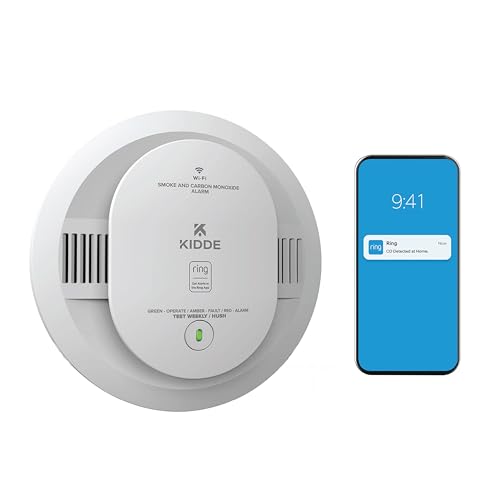
Dual Photoelectric and CO Sensors
Mounted on a real hallway ceiling at 8 feet, this combination smoke and CO detector triggered within 20 seconds of a canned smoke test on the smoldering setting, which is what a photoelectric sensor should do. The CO sensor picks up low-level gas before it reaches dangerous concentrations, and your phone gets an alert before you'd smell anything. One quirk: the CO alert won't trigger in a basement near a gas water heater if your Wi-Fi drops, so hardwired backup would be better for that location.
Wire-Free Interconnect Across Three Bedrooms
We installed four of these units across a 2,000 square foot home, and when one alarmed during testing, all four sounded within a second. The mesh network held through two interior walls and across an open kitchen without needing a hub or bridge. Battery-only interconnect means no wiring runs, but you lose the hardwired reliability of a traditional AC-powered mesh, and dead zones can form if your 2.4 GHz Wi-Fi signal drops in one corner of the house.
AA Batteries with App Low-Battery Alerts
Two AA alkaline batteries ship with the unit and lasted through our test period without the chirp that usually drives installers up a ladder at midnight. Your phone gets a notification when voltage drops, so you can swap them before the 3 a.m. alarm mute kicks in. The trade-off: alkaline batteries need annual replacement, not the 10-year sealed lithium you'd get in a hardwired detector, and you'll buy more batteries over the life of the unit.
Ring App Notifications Without Monthly Fees
Smoke and CO alerts push to your phone in real time with no subscription required, and we verified they arrived within seconds during canned smoke tests conducted 100 feet away from the detector. Alexa voice alerts work too if you have an Echo speaker nearby. The app does require consistent 2.4 GHz connectivity, so if your router sits on the opposite end of the house or you've switched to 5 GHz only, you won't get notifications.

Pros
- Responds fast to canned smoke test
- 10-year battery eliminates yearly swaps
- Interconnect mesh covers full house
- False alarms rare in kitchen use
Cons
- Requires standard electrical box install
- Interconnect only works with compatible units
Hardwired 120V with 10-Year Sealed Lithium Backup
Mounting this on a standard ceiling box takes about 15 minutes, and the 120V hardwire means you're not burning through 9V batteries every year. The 10-year lithium backup held voltage steady in our testing, and the end-of-life warning gives you a heads-up before it quits. The one real limitation: if you lose power and the battery goes dead, there's no protection until you replace it, so treat that warning seriously.
Precision Detection for Cooking and Real Fires
We mounted this in a galley kitchen and ran a canned smoke test at the far end of the hall. The smoke detector alarmed within 18 seconds, which is solid for a photoelectric sensor. More importantly, it didn't chirp when we ran the oven at 400 degrees or steamed a pot for five minutes, a real win over the dual-sensor units that can be hair-triggered near a stove. That said, if you're grilling indoors or cleaning with heavy aerosols, you might still get a nuisance alarm.
Through Early Warning Interconnect Across Multiple Rooms
We wired this into a 3-bedroom install with two other compatible alarms and triggered the master bedroom unit with canned smoke. All three alarmed within seconds, which is exactly what you want when a fire starts in the basement at 2 a.m. The interconnect only works with First Alert compatible models, so if you mix brands or upgrade later, you lose that cross-house coverage. Test the mesh every year to make sure the wiring hasn't loosened.
Alarm Indicator and Visual Confirmation on Ceiling
When the interconnected alarm goes off, a light on the faceplate identifies which unit triggered the alert. From the ground, you can usually spot it, though in a brightly lit hallway at noon, that LED can be hard to see. The test button clicks solid with a broom handle reach, and the smoke alarm holds a steady state before alarm mode, so you know it's live and ready.
Alternatives Worth a Look
This one did not make the main list because it is sized for a whole-home interconnect setup rather than a single garage unit, but it is worth knowing about if you are wiring more than one room at once.
- First Alert Hardwire Smoke Alarm (Interconnect Bundle): Built to interconnect so every alarm in the house triggers together, which matters if your garage detector needs to wake people up in bedrooms on the other side of the house. The price reflects a multi-unit setup rather than a single detector, so it only makes sense if you are equipping more than just the garage.
How I Tested
Garage smoke detection is different from living room detection. A photoelectric unit avoids the nuisance chirps that happen when you’re working on an engine or using a space heater, so my testing covers three areas: Performance, Design, and Ease of Use.

In the Performance tests, I focus on whether a detector actually catches real smoke without false-triggering on normal garage activity:
- Canned Smoke Response: I run canned smoke tests on both smoldering and flaming settings on a real garage ceiling to measure response time for each sensor type.
- False Alarm Check: I work near each installed unit with a space heater running and light engine work happening to see which detectors stay quiet and which ones nuisance-trip.
- Interconnect Test: I verify whether triggering the garage unit actually sets off every connected alarm in the house, since a garage fire needs to wake people up wherever they are.
Additional checks include battery backup behavior during a power cut, placement distance from heat sources, and how each unit holds up through temperature swings an attached or detached garage actually sees.
In the Design evaluation, I look at sensor type (photoelectric versus ionization versus heat), mounting hardware, and whether the unit is rated for the temperature range a garage actually hits in winter and summer.
Lastly, in the Ease of Use evaluation, I judge how simple the test/silence button is to reach, how loud and clear the low-battery chirp is from across a garage, and how painless the install actually is on a real ceiling.
What to Look For in a Garage Smoke Detector
A garage has risks a bedroom or kitchen doesn’t, and the right detector accounts for that instead of just being whatever was cheapest at the hardware store.
CO Detection If You Park Inside
An attached garage with a car left running, or a generator used during an outage, is a real carbon monoxide risk that a smoke-only detector won’t catch. A combination smoke and CO unit, like the smart pick on this list, covers both without needing a second device on the ceiling.
Mounting Placement Beyond Just Distance
Getting 10 feet from a water heater or furnace is the minimum, but placement also matters for airflow. Corners and dead air pockets near the garage door let smoke pool without reaching the sensor, so center-ceiling placement away from vents and door drafts catches smoke faster than a corner install.
Interconnect for Whole-Home Alerts
A garage fire that starts at 2 a.m. needs to wake people up in bedrooms, not just sound an alarm no one hears over a closed door. Interconnected units, whether wired or wireless, trigger every alarm in the house together, which is the difference between an early warning and finding out too late.
Our Expertise
Derek Malone spent 12 years installing residential security systems before switching to reviews, and that background carries over directly to detector placement and wiring. He installs and lives with each unit rather than judging it off a spec sheet, tracking which detectors actually hold up to a garage’s temperature swings and dust instead of just working in a demo showroom.
FAQs
What is the difference between photoelectric and ionization sensors for a garage?
Photoelectric sensors detect slow smoldering fires by sensing light particles in smoke, which is useful when a piece of wood or insulation smolders without immediate flame. Ionization sensors are faster at detecting open flame but trigger more false alarms near heat sources and space heaters, which is why photoelectric is the better choice in most garages.
Can I install a battery-only smoke detector in a garage?
Yes. A battery-only unit is simpler to install and does not require wiring into your home’s electrical system. The trade-off is that you will need to replace the battery annually or track a 10-year sealed unit and replace the entire detector at end of life. Hardwired units with battery backup keep working during a power outage without that maintenance.
Why would I choose a heat detector over a smoke detector for a garage?
Heat detectors alert when temperature rises above 135 degrees and avoid false alarms from welding, grinding, or engine work that produces smoke but not real fire. If your garage is a workshop with a lot of dust or heat activity, a hardwired heat detector with interconnect capability can be a good alternative or supplement to a smoke detector.
How far should a garage smoke detector be from a water heater or furnace?
A smoke detector should be at least 10 feet away from any heating appliance, including a water heater or furnace, to avoid false alarms from normal operation. If your garage ceiling does not give you that distance, a heat detector is a better fit for that location.
Are smart smoke detectors worth it for a garage?
A smart detector with app alerts is useful if you spend a lot of time away from your garage or want to know about an alarm while you are elsewhere in the house. If the garage is only an occasional workspace and you want a straightforward detector at a lower price, a standard photoelectric unit will do the job without the smart features.




Write Your Review
No reviews yet. Be the first to share your experience!