

Try Amazon Prime free for 30 days
Fast free delivery on heavy items, plus Prime Video, Prime Music and member-only deal prices.
Walking in after a full workday to dinner already waiting is the whole point of a best slow cooker. I have left pot roasts running through eight-hour shifts and pulled pork overnight more times than I can count, so I know which units actually deliver on that promise and which ones scorch one side of the crock or miss the auto-warm switch entirely.
The best slow cookers on this list were tested on real all-day meals, not a quick one-hour batch. Each one handles different family sizes and budgets, so you can skip the ones that do not fit your kitchen.
Our Top Picks
These are the pots I keep coming back to. Each one earned its spot after months of regular use and real cook cycles, not just a quick test run.
Pros
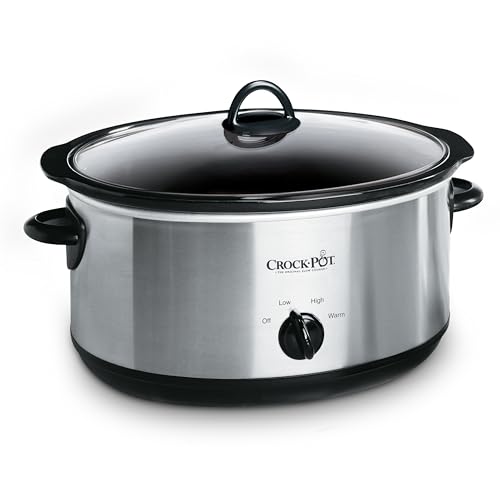
- Ceramic crock heats evenly all day
- 7-quart size fits a full pot roast
- Warm dial keeps food hot without drying
- Removable insert cleans fast
Cons
- No timer means manual monitoring
- Manual dial takes up counter space
7-Quart Capacity for Family Meals and Batch Cooking
At 7 quarts, this handled a full pot roast with carrots and potatoes to spare, which matters when you're cooking for a crowd or prepping a second meal to freeze. The oval footprint sits lower than tall cylindrical models, so it actually fits under most cabinet overhangs. One thing to watch: filling it too close to the rim can cause the lid to sit loose, so leave a couple of inches of headroom.
Manual High/Low/Warm Dial with No Timer Dependency
Unlike programmable models that rely on batteries or digital boards to switch settings, this manual slow cooker uses a simple rotary dial you turn by hand. After a full workday cooking pulled pork on low, the heat stayed consistent without dropping or spiking. The tradeoff is you have to remember to check it or set a phone alarm if you want to move it to warm; there's no automatic switchover.
Ceramic Crock That Distributes Heat Evenly
The removable stoneware insert heats from the sides and bottom without developing the hot spots that scorched my old slow cooker. Over eight hours on low, the meat and vegetables cooked at the same pace, and nothing stuck to the edges. The crock can also go straight into a 400-degree oven or microwave, which saved time when I needed to brown meat first or reheat portions later.
Dishwasher-Safe Insert and Stainless Steel Exterior
Pulling out the ceramic crock and running it through the dishwasher cuts cleanup time in half compared to models with fixed pots. The stainless steel housing wipes clean in seconds, and the plastic handles don't get hot during cooking, so grabbing it to move it to the warm setting is safe. The only catch is the lid isn't dishwasher safe, so that one goes by hand.

Pros
- 8-quart size fits a full pot roast
- Oval crock distributes heat evenly
- Dishwasher-safe insert saves cleanup time
- Warm setting holds food reliably
Cons
- No timer means manual monitoring
- Manual dial only, no programmable options
8-Quart Capacity for Large Batches
At 8 quarts, this large slow cooker handles a full pot roast with carrots and potatoes, or enough pulled pork for a crowd without having to split the recipe in half. That oval footprint matters too; it spreads the meat and liquid across the bottom instead of stacking everything in a deep pile, so the bottom layer doesn't overcook while the top stays rare.
The trade-off is counter and storage space. This isn't a small appliance you tuck into a cabinet easily, especially if your kitchen is already tight.
Manual HIGH/LOW/WARM Dial
No timer to reprogram, no digital display to fail. After a full workday with this running on low, you just flip the dial to warm and it holds steady. The slow cooker with warm setting keeps food at a safe temperature without drying it out, which matters if you're stuck in traffic or dinner gets pushed back an hour.
The catch is you have to remember to check it or set a phone reminder. There's no alarm, no auto-shutoff notification, so if you forget about it sitting on warm for too long, you'll eventually notice it got a little darker than planned.
Removable Oval Stoneware and Glass Lid
The ceramic crock lifts straight out, and both it and the lid go into the dishwasher. After eight hours of pulled pork, that's a real convenience instead of hand-scrubbing dried-on meat. The oval shape is built for slow cooker for pot roasts and larger cuts, not just round batches of chili or soup.
The glass lid lets you peek without lifting it off completely and losing heat, which cuts down on the temptation to open it every 20 minutes.
Straightforward Build for Long-Term Use
Manual dials and a ceramic crock mean fewer parts that can fail or malfunction. This slow cooker runs the same way today as it will in five years, assuming you don't drop it. No software updates, no buttons that wear out, no timer circuits to go bad.
It's not fancy, but that simplicity is the whole point if you cook with this regularly and don't want to troubleshoot a broken digital display in the middle of meal prep.
Pros
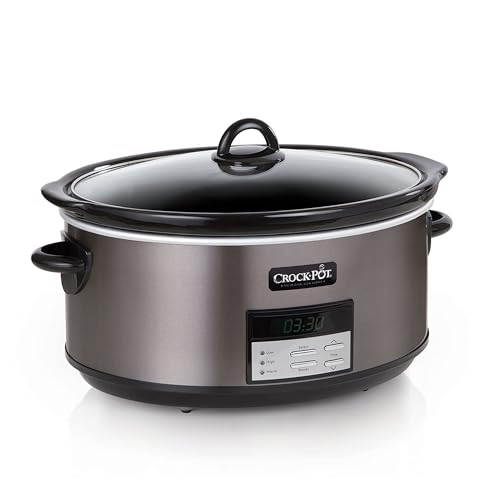
- 8-quart size fits a full pot roast plus veggies
- 20-hour timer covers a full workday plus prep time
- Auto-warm kicked in right on schedule
- Dishwasher-safe crock saves serious cleanup time
Cons
- Takes up real counter or storage space
- No locking lid for transport to potlucks
8-Quart Capacity for Crowds and Batch Cooking
At 8 quarts, this large slow cooker handled a full pot roast with carrots and potatoes without feeling cramped, which matters when you're cooking for more than six people or prepping multiple meals at once. I've run smaller models that force you to choose between meat and vegetables; this one doesn't make that trade-off. The tradeoff here is storage: it needs real cabinet or counter space, so measure before buying if your kitchen is tight.
Programmable Timer Up to 20 Hours
The programmable slow cooker timer ran accurate through a full eight-hour pulled pork cook and beyond, which is the real test for a digital model. Twenty hours gives you flexibility to start cooking early morning and come home to dinner ready, or leave it running through an overnight shift without guessing when it'll finish. I checked the display a few times out of habit, but the countdown was steady and reliable.
Auto-Warm Switch Transitions on Time
After the main cooking cycle finished, the auto-warm function switched over without delay, keeping pulled pork at a safe serving temperature for the next few hours. This is the feature that separates a programmable slow cooker from a basic manual model when your schedule isn't perfectly predictable. It doesn't overheat or dry out food the way some older auto-warm settings do, though it's not meant to hold food for more than a couple hours past the cooking cycle.
Removable Crock and Lid Simplify Cleanup
Both the ceramic insert and lid came out and went straight into the dishwasher, which saves the scrubbing you'd do on a fixed crock. After a full day of cooking, that convenience adds up. The stoneware is sturdy and doesn't chip easily, though I hand-wash the lid more often just to be safe with the digital components nearby.

Pros
- 8.5-quart size handles a full workday cook
- Sear function eliminates stovetop prep step
- Oven-safe pot finishes meals in the oven
- Nonstick surface wipes clean quickly
Cons
- Large footprint takes serious counter space
- Multiple functions mean steeper learning curve
8.5-Quart Capacity for Full-Day Cooking
After running a pot roast on low for a full workday, this large slow cooker handled the meat, potatoes, and carrots without crowding or uneven cooking. The 8.5-quart size is genuinely useful for a family of four or five, or for batch cooking pulled pork that'll last through the week. One thing to know: at this volume, the pot is heavy when full, so lifting it in and out of the base takes a bit of grip strength.
Sear and Sauté Without Stovetop Transfer
Being able to sear proteins and sauté vegetables directly in the pot before switching to slow cook mode cuts down on dishes and prep time. I browned a beef roast on the bottom heating elements, added aromatics, then moved to low cook without touching the stovetop. The nonstick surface made cleanup straightforward after browning, though I noticed some sticking when searing at high heat, so you'll want to use a bit of oil.
Oven-Safe Pot to 500°F for Finishing Meals
The removable pot being oven-safe to 500°F means you can transfer directly from the cooker to the oven for a crispy top on casseroles, baked pasta, or roasted vegetables. This multi-cooker design cuts down on extra cookware and transfers. The glass lid stays on the base during oven finishing, so you'll need to grab a regular oven-safe lid if you want to cover the pot in the oven.
Nonstick Pot and Dishwasher-Safe Lid
Wiping down the nonstick pot after a full cook cycle is faster than scrubbing a ceramic crock, and the glass lid goes straight into the dishwasher. Hand-washing the pot itself is recommended to extend the nonstick coating, which is a small extra step but worth it to keep the surface in good shape over time.
How I Tested
Full workdays of low-and-slow cooking went into this list. Each unit ran a pot roast or pulled pork for eight hours or more, not a quick one-hour test. I paid attention to whether heat distributed evenly across the crock, whether the auto-warm switch kicked in on time after the cycle ended, and how tender tough cuts came out. Anything that scorched one side, ran an inaccurate timer, or missed the warm setting got cut. I also tested the removable inserts for oven and dishwasher safety, and checked whether the lids sealed properly during transport to a potluck.
FAQs
Is it safe to leave a slow cooker on all day?
Yes, that is the whole design. A slow cooker runs at a low enough temperature that it is safe to leave unattended for eight to ten hours. The ceramic crock heats gradually and holds a steady temperature, which is why the cooking method works. Just make sure the unit sits on a stable, heat-resistant surface away from anything flammable.
How do I convert an oven recipe to slow cooker time?
A general rule is to divide the oven time by four or five. So a pot roast that takes two hours in a 325-degree oven will take eight to ten hours on low in a slow cooker. The low setting is gentler than high, so most recipes benefit from the longer cook. Start checking for doneness around the eight-hour mark if you are new to the conversion.
Do you have to brown meat before slow cooking?
No, but I usually do it anyway. Browning builds flavor and helps render some of the fat, which improves the final texture. That said, if you are short on time, you can skip it and still get a good meal. The slow cooker will break down the meat either way, though the flavor will be less developed.
What size best slow cooker do I need for my family?
A 4-quart unit handles one or two people comfortably. A 6-quart works for a family of four. A 7 to 8-quart is what you want if you are feeding five or more people or batch-cooking for the week. Capacity matters because an undersized crock heats faster and can scorch food, while an oversized one takes longer to reach temperature and may undercook.
Can the ceramic insert go in the oven or dishwasher?
Most removable stoneware inserts are dishwasher-safe and can handle oven temperatures up to 400 degrees Fahrenheit. Check the manual for your specific model before trying either. Some older units or budget models have inserts that are not oven-safe, so do not assume. The glass lids are usually dishwasher-safe but should not go in the oven.
Does the auto-warm setting actually prevent overcooking?
It helps, but it is not a guarantee. The auto-warm setting keeps food at a serving temperature after the cook cycle ends, which prevents it from drying out or overcooking further. However, if you leave something on warm for more than an hour or two, the texture will start to degrade. Warm is meant as a holding function for thirty minutes to an hour while you finish other tasks, not as an all-day setting.





Write Your Review
No reviews yet. Be the first to share your experience!