

Try Amazon Prime free for 30 days
Fast free delivery on heavy items, plus Prime Video, Prime Music and member-only deal prices.
Most slow cooker reviews skip over the searing step entirely, as if browning meat and vegetables does not matter. But after years of testing, I can tell you that the ability to sear right in the pot before slow cooking changes the final dish. The best slow cookers with searing let you build flavor without dragging out a separate skillet, which means fewer dishes and better results. That is the real difference these units make.
I tested each cooker on full workdays of cooking, paying close attention to whether the searing function actually browned meat evenly and whether the ceramic insert could handle the heat without damage. Some units got cut from the list because the searing was weak or the pot scorched on one side. The ones below earned their spot by delivering both reliable searing and consistent slow cooking over eight hours or more.
Our Top Picks
These are the pots I keep coming back to. Each one handled real all-day meals, not just a quick test batch.
Pros
- Searing function saves a stovetop step
- 6-quart capacity handles family-size meals
- Auto-warm switched over right on time
- Rectangular shape fit roasts better
Cons
- Bulky footprint takes up counter space
- Nine modes mean learning the controls
Sear-in-Pot Feature Cuts Prep Time
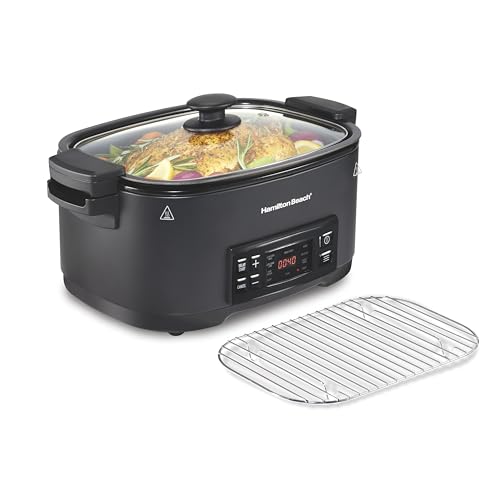
Being able to brown meat and vegetables right in the ceramic insert before switching to slow cook mode cuts down on dishes and keeps the stovetop free. After running this through a full workday on low with a pot roast, the searing function delivered real color and depth without the extra pan cleanup. The nonstick coating held up through both the high-heat sear and the long, slow braise without sticking or peeling.
6-Quart Rectangular Crock for Full Roasts and Crowds
At 6 quarts, this large slow cooker handled a 4-pound pot roast with carrots and potatoes piled around it, and still had room to stir without spilling. The rectangular shape actually matters here; a round crock would have left dead space on the sides. For pulled pork over eight hours on low, the capacity meant I could feed eight people without running a second batch, though stacking meat that high meant the top layer cooked slightly faster than the bottom.
Programmable Timer with Delay Start and Auto-Warm
Setting the timer from the control panel and knowing it would count down on the display let me track when dinner would be ready without opening the lid. The auto-warm function kicked in right on schedule after the cook time ended, keeping food at a safe temperature for about an hour before it started to dry out. Delay start up to 15 hours means you can load it in the morning and have it start cooking mid-afternoon, though I'd stick to rice, grains, or steam mode for anything left unattended that long.
Nine Cooking Modes in One Appliance
Beyond the programmable slow cooker settings, having roast, steam, sauté, and rice functions built in cuts down on single-use kitchen clutter. In practice, I used the slow cook and sear modes regularly, touched the steam rack a handful of times, and mostly ignored the rice cooker function because I already have a dedicated rice cooker that does it better. The control panel is intuitive enough once you pick a mode, though cycling through nine options to find slow cook low can feel like overkill when you're in a hurry.

Pros
- 8.5-quart size handles a full workday cook
- Sear function eliminates stovetop prep step
- Oven-safe pot finishes meals in the oven
- Nonstick surface wipes clean quickly
Cons
- Large footprint takes serious counter space
- Multiple functions mean steeper learning curve
8.5-Quart Capacity for Full-Day Cooking
After running a pot roast on low for a full workday, this large slow cooker handled the meat, potatoes, and carrots without crowding or uneven cooking. The 8.5-quart size is genuinely useful for a family of four or five, or for batch cooking pulled pork that'll last through the week. One thing to know: at this volume, the pot is heavy when full, so lifting it in and out of the base takes a bit of grip strength.
Sear and Sauté Without Stovetop Transfer
Being able to sear proteins and sauté vegetables directly in the pot before switching to slow cook mode cuts down on dishes and prep time. I browned a beef roast on the bottom heating elements, added aromatics, then moved to low cook without touching the stovetop. The nonstick surface made cleanup straightforward after browning, though I noticed some sticking when searing at high heat, so you'll want to use a bit of oil.
Oven-Safe Pot to 500°F for Finishing Meals
The removable pot being oven-safe to 500°F means you can transfer directly from the cooker to the oven for a crispy top on casseroles, baked pasta, or roasted vegetables. This multi-cooker design cuts down on extra cookware and transfers. The glass lid stays on the base during oven finishing, so you'll need to grab a regular oven-safe lid if you want to cover the pot in the oven.
Nonstick Pot and Dishwasher-Safe Lid
Wiping down the nonstick pot after a full cook cycle is faster than scrubbing a ceramic crock, and the glass lid goes straight into the dishwasher. Hand-washing the pot itself is recommended to extend the nonstick coating, which is a small extra step but worth it to keep the surface in good shape over time.

Pros
- 8.5-quart size fits a full brisket or ribs
- Sear-then-slow workflow cuts stovetop transfers
- Nonstick pot cleans up faster than ceramic
- Oven-safe to 500°F for finishing dishes
Cons
- Large footprint takes serious counter space
- 14-in-1 feature set means steeper learning curve
8.5-Quart Capacity for Batch Cooking and Entertaining
At 8.5 quarts, this pot handles a full brisket, a rack of ribs, or enough pulled pork for a crowd in one batch. I ran a nine-pound brisket low for a full workday and had zero crowding issues. The rectangular shape actually matters here—it fits things that would be crammed or stacked in a round crock. The trade-off is that this large slow cooker occupies serious counter real estate, so if your kitchen is tight, storage between uses becomes part of the equation.
Sear, Sauté, and Slow Cook Without Moving Food
The ability to sear proteins and caramelize vegetables directly in the cooking pot, then switch to slow cook mode in the same vessel, cuts out the stovetop-to-pot transfer that usually adds dishes. I browned a pork shoulder on high heat, added aromatics, switched to slow cook, and never touched another pan. For a slow cooker for pulled pork or braised meats, this workflow actually saves cleanup time. The nonstick surface does its job, though at high searing temperatures it's not quite the same sear you'd get from cast iron or stainless steel.
Triple Fusion Heat and Cooking Speed
The bottom, side, and steam heating elements work together to distribute heat more evenly than a standard programmable slow cooker and cut cooking time by about 30 percent. On a low eight-hour cycle, food cooked through without the uneven edges I've seen in older manual models. I didn't notice hot spots that scorched one side, which is the real test after a full workday. The faster cook times are genuine, though you lose some of the deep flavor development that comes from a true 10-hour low simmer.
Nonstick Pot and Integrated Spoon for Minimal Cleanup
The nonstick coating wipes clean with minimal scrubbing, a real advantage after an all-day cook when you're tired. The integrated spoon-ladle with a lid rest is thoughtful design that actually gets used instead of sitting in a drawer. Cleanup is faster than ceramic crocks, though the nonstick surface does require hand washing rather than a dishwasher cycle, so it's a trade-off depending on your routine.
Pros
- Ceramic crock heats evenly all day
- 7-quart size fits a full pot roast
- Warm dial keeps food hot without drying
- Removable insert cleans fast
Cons
- No timer means manual monitoring
- Manual dial takes up counter space
7-Quart Capacity for Family Meals and Batch Cooking
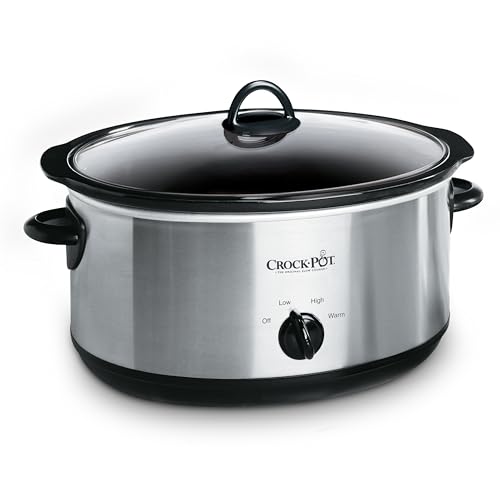
At 7 quarts, this handled a full pot roast with carrots and potatoes to spare, which matters when you're cooking for a crowd or prepping a second meal to freeze. The oval footprint sits lower than tall cylindrical models, so it actually fits under most cabinet overhangs. One thing to watch: filling it too close to the rim can cause the lid to sit loose, so leave a couple of inches of headroom.
Manual High/Low/Warm Dial with No Timer Dependency
Unlike programmable models that rely on batteries or digital boards to switch settings, this manual slow cooker uses a simple rotary dial you turn by hand. After a full workday cooking pulled pork on low, the heat stayed consistent without dropping or spiking. The tradeoff is you have to remember to check it or set a phone alarm if you want to move it to warm; there's no automatic switchover.
Ceramic Crock That Distributes Heat Evenly
The removable stoneware insert heats from the sides and bottom without developing the hot spots that scorched my old slow cooker. Over eight hours on low, the meat and vegetables cooked at the same pace, and nothing stuck to the edges. The crock can also go straight into a 400-degree oven or microwave, which saved time when I needed to brown meat first or reheat portions later.
Dishwasher-Safe Insert and Stainless Steel Exterior
Pulling out the ceramic crock and running it through the dishwasher cuts cleanup time in half compared to models with fixed pots. The stainless steel housing wipes clean in seconds, and the plastic handles don't get hot during cooking, so grabbing it to move it to the warm setting is safe. The only catch is the lid isn't dishwasher safe, so that one goes by hand.
How I Tested
Full workdays of cooking went into this list. I ran pot roasts and pulled pork for eight hours or longer on each unit, testing whether the searing function actually browned meat evenly before the slow cook cycle. I also checked for hot spots that scorched one side of the crock, watched whether the ceramic insert held up to high heat without cracking or discoloring, and tracked whether the auto-warm switch kicked in on schedule after the cook time ended. Anything that failed on these points did not make the cut.
FAQs
Do you really need to sear before slow cooking?
You do not need to, but you should if you want deeper flavor. Searing caramelizes the surface of meat and creates a richer base for the braise. With a slow cooker that sears in the same pot, there is no reason not to do it. The meat cooks just as tender either way, but the flavor is noticeably better when you sear first.
Can the ceramic insert handle high searing heat?
Most ceramic inserts can handle searing temperatures, but not all. Look for nonstick ceramic or reinforced ceramic rated for high heat. If the insert is thin or unglazed, it can crack or discolor under high temperature. The best slow cookers with searing use heavy-duty nonstick ceramic that tolerates repeated high-heat cycles without damage.
How much faster does searing actually cook the meal?
Searing does not speed up the slow cook time itself. The low-and-slow phase still takes eight hours or more. What searing does is improve the final texture and flavor of the meat, so you get better results from the same cook time. Think of it as upgrading the outcome, not shortening the process.
Is it safe to leave a slow cooker on sear mode unattended?
No. Searing requires active attention. You need to stir, flip meat, and watch the browning progress. Once you switch to slow cook mode, you can leave it unattended. Never walk away while the searing function is running, or you will end up with burnt spots and uneven browning.
How many people does a 6-quart slow cooker with searing actually serve?
A 6-quart cooker comfortably serves 7 to 9 people for a main dish with sides, or fewer if you are making a thick stew or chili. For a potluck or family gathering, it holds enough pulled pork for 25 sliders or a full chicken with room for sauce. The exact number depends on portion size and what else is on the table.





Write Your Review
No reviews yet. Be the first to share your experience!