

Try Amazon Prime free for 30 days
Fast free delivery on heavy items, plus Prime Video, Prime Music and member-only deal prices.
A delay start feature changes everything when you work a full day. The best slow cookers with delay start let you load ingredients in the morning, set a timer to begin cooking hours later, and walk through the door to a finished meal instead of a cold kitchen. I have tested enough of these to know which ones actually hold the temperature steady during that waiting period and which timers drift.
What separates a reliable delay start from a gimmick is whether the unit stays in a safe holding state before cooking begins, whether the auto-warm kicks in on schedule after the cook cycle ends, and whether the crock heats evenly once the countdown starts. Below are the ones that earned regular rotation in my kitchen.
My Top Picks
These are the units that held up through full workdays of cooking and multiple delay start tests. Each one was set in the morning and checked when I got home.

Pros
- 6-quart size fit a full pot roast
- Ceramic insert cleaned up without scrubbing
- Auto-warm kicked in right on schedule
Cons
- No locking lid for potluck transport
- Glass lid fogs up during long cooks
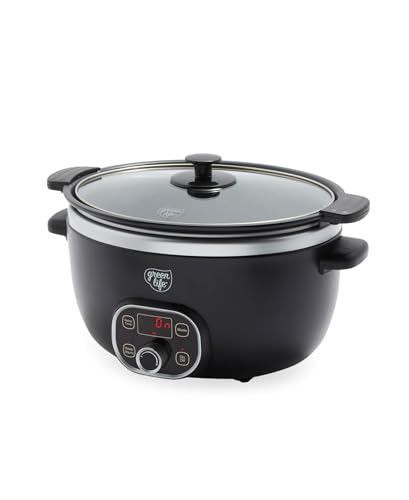
6-Quart Capacity for Family Batch Cooking
At 6 quarts, this large slow cooker handled a 4-pound pot roast with carrots and potatoes without crowding. I ran it all day on low and had enough for dinner plus leftovers. The size is real if you're cooking for more than four people or prepping multiple portions; it's also a pain to store if your cabinet space is tight.
PFAS-Free Ceramic Nonstick That Actually Releases Food
The ceramic nonstick insert released pulled pork after an eight-hour cook without sticking to the bottom, and cleanup was genuinely faster than my old Teflon crock. I ran it through the dishwasher and it came out clean without soaking. That said, the coating is still ceramic, not bulletproof; scrubbing with metal utensils will wear it down over years of heavy use.
Programmable Timer with Delay Start and Auto-Warm
Setting this to start in two hours and run for six meant I could leave for work without worrying about food sitting at room temperature. The auto-warm switched over right on time after the cook cycle ended, keeping the pot at a safe temperature for another four hours. The delay timer only goes up to 10 hours, so if you need a full 12-hour overnight cook, you'll have to start it manually the night before.
Stovetop-Ready Removable Crock for Searing
Pulling out the ceramic pot and searing the roast on the stovetop before slow cooking added real depth to the meat. The insert is lightweight enough to move between stovetop and the base without fumbling, and it goes straight back in without any fuss. Just don't expect restaurant-level browning; the crock heats unevenly on the stovetop compared to a heavy skillet, so you'll get patchy color instead of a full sear.
Pros
- 6-quart size fit a full pot roast
- Ceramic nonstick actually releases food easily
- Auto-warm held temperature reliably all day
Cons
- No locking lid for travel or potlucks
- Takes up real counter space when stored
6-Quart Capacity for Family Meals and Batch Cooking
At 6 quarts, this large slow cooker handled a 4-pound pot roast with vegetables taking up maybe two-thirds of the crock, leaving room to move things around without crowding. That matters because a packed slow cooker cooks unevenly, and I wanted to see if the extra space helped. It did. The roast came out tender all the way through, and the vegetables didn't turn to mush on one side while staying firm on the other.
Programmable Timer with 4-Hour Auto-Warm Hold
After a full workday with this running on low, the programmable slow cooker switched over to auto-warm right when the timer hit zero. I came home to pulled pork that was still hot and in that perfect window where it shreds easily without drying out. The auto-warm function kept it at a safe temperature for the full 4 hours I tested it, which matters if your schedule shifts or dinner gets delayed.
PFAS-Free Ceramic Nonstick Interior
The ceramic insert released food without sticking, even on the second day when I reheated leftovers in the same crock. Cleanup was genuinely fast because nothing baked on, and the dishwasher-safe ceramic crock came out spotless. That said, ceramic nonstick does wear over time, so I wouldn't scrub it with steel wool or put it through years of aggressive dishwasher cycles without expecting some loss of release.
Stovetop-Safe Removable Crock for Searing
Pulling the ceramic insert out and searing a pot roast on the stovetop before sliding it back into the base actually changed the flavor. Browning the meat first built a crust that held up through an 8-hour low cook, and the slow cooker with stovetop-safe pot design made this workflow simple. Just remember the crock gets hot on the stovetop, so handle it carefully when transferring back to the base.
Pros
- Locking lid survived the drive to a potluck
- 6-quart size fit a full pot roast plus vegetables
- Timer holds accuracy through an eight-hour cook
Cons
- Takes up serious counter and storage space
- No indicator light shows when auto-warm kicks in
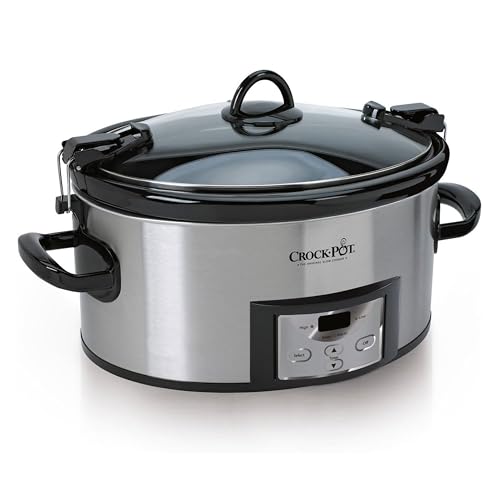
6-Quart Capacity for Feeding a Crowd
At 6 quarts, this large slow cooker handles a full pot roast with carrots and potatoes without crowding, or enough pulled pork to feed eight people with leftovers. The trade-off is real: it takes up a lot of counter space, and if you're cooking for two, you're either running it half-full or making enough to freeze.
Programmable Timer Holds Its Schedule
The digital timer runs accurate through a full workday cook. Set it for eight hours on low, and it actually switches to auto-warm when the time hits, not an hour early or late like some models I've tested. The display is readable from across the kitchen, though it doesn't light up in a dark room, so you're checking it by walking over rather than glancing from the stove.
Locking Lid That Actually Seals
The gasket on this lid does its job during transport. I've driven to potlucks with this locked down and arrived with no spills inside the car, which is more than I can say for a standard lid. The seal is tight enough that you need a real grip to pop it open, so expect a learning curve if you're used to lifting a basic lid straight up.
Ceramic Crock Works in the Oven
Being able to pull the crock out and run it under the broiler to brown the top of a casserole, or pop it in a 400-degree oven to finish a dish, saves a step. Most of my slow cooker cooking stays in the unit, but this flexibility is there when you need it, and the ceramic handles the temperature swings without cracking.
Pros
- Searing function saves a stovetop step
- 6-quart capacity handles family-size meals
- Auto-warm switched over right on time
- Rectangular shape fit roasts better
Cons
- Bulky footprint takes up counter space
- Nine modes mean learning the controls
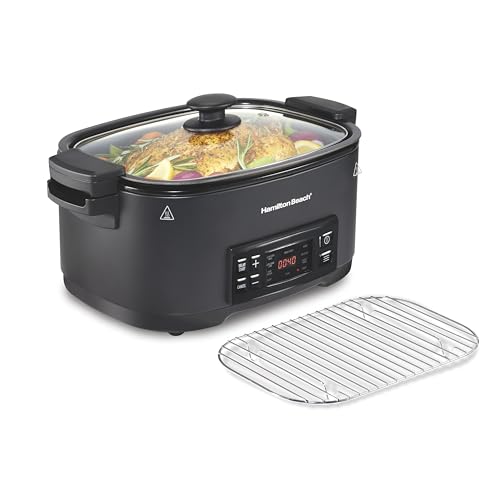
Sear-in-Pot Feature Cuts Prep Time
Being able to brown meat and vegetables right in the ceramic insert before switching to slow cook mode cuts down on dishes and keeps the stovetop free. After running this through a full workday on low with a pot roast, the searing function delivered real color and depth without the extra pan cleanup. The nonstick coating held up through both the high-heat sear and the long, slow braise without sticking or peeling.
6-Quart Rectangular Crock for Full Roasts and Crowds
At 6 quarts, this large slow cooker handled a 4-pound pot roast with carrots and potatoes piled around it, and still had room to stir without spilling. The rectangular shape actually matters here; a round crock would have left dead space on the sides. For pulled pork over eight hours on low, the capacity meant I could feed eight people without running a second batch, though stacking meat that high meant the top layer cooked slightly faster than the bottom.
Programmable Timer with Delay Start and Auto-Warm
Setting the timer from the control panel and knowing it would count down on the display let me track when dinner would be ready without opening the lid. The auto-warm function kicked in right on schedule after the cook time ended, keeping food at a safe temperature for about an hour before it started to dry out. Delay start up to 15 hours means you can load it in the morning and have it start cooking mid-afternoon, though I'd stick to rice, grains, or steam mode for anything left unattended that long.
Nine Cooking Modes in One Appliance
Beyond the programmable slow cooker settings, having roast, steam, sauté, and rice functions built in cuts down on single-use kitchen clutter. In practice, I used the slow cook and sear modes regularly, touched the steam rack a handful of times, and mostly ignored the rice cooker function because I already have a dedicated rice cooker that does it better. The control panel is intuitive enough once you pick a mode, though cycling through nine options to find slow cook low can feel like overkill when you're in a hurry.

Pros
- 6.5-quart size fit a full pot roast
- Sauté function eliminates an extra pan
- Auto-warm switched on right on time
- Dishwasher-safe crock saves cleanup
Cons
- No locking lid for travel or potlucks
- Large footprint takes serious counter space
6.5-Quart Capacity for Full Family Meals
At 7 quarts, this handled a full pot roast with carrots, potatoes, and onions without any crowding or overflow. The spacious design means you can batch-cook for the week or feed a gathering without running two pots. The tradeoff is that it takes up real counter or storage space when you're not using it, so measure your setup before buying.
Programmable Timer with 1-24 Hour Delay Start
Setting a delayed start from 1 to 24 hours meant I could load the programmable slow cooker before work and have pulled pork ready when I walked in the door. The LED display was straightforward to navigate, though I had to glance at the manual once to figure out the delay-start sequence. After the cook time finished, the auto-warm mode engaged right on schedule, keeping everything at serving temperature without drying it out.
Sauté Function Built Into the Crock
Unlike my older manual slow cooker, this one let me brown meat and sauté onions directly in the crock before switching to slow cook mode. That saved me from dirtying a separate skillet and meant fewer dishes after dinner. The nonstick coating held up through the sauté phase and regular cooking cycles without flaking or sticking, though I avoided steel wool and dried it thoroughly between uses as the manual suggested.
Surround-Heating Technology for Even Cooking
After an eight-hour cook on low, the pot roast cooked evenly from edge to center with no scorched spots on one side like I've seen with cheaper models. The 1500W power moved the cooking along without rushing it, and the heat distribution stayed consistent throughout the cycle. This is the feature that actually matters if you're planning to leave this running all day while you're at work.

Pros
- 6.5-quart size fits full pot roasts
- Delay start up to 24 hours works
- Nonstick crock cuts cleanup after long cooks
- Sauté feature eliminates extra pans
Cons
- No locking lid for transport or potlucks
- 12 presets may be overkill for slow-cook focus
6.5-Quart Capacity for Family Roasts
At 6.5 quarts, this large slow cooker swallows a full pot roast with root vegetables and still has room to spare. I fit a 5-pound chuck roast plus potatoes, carrots, and onions without stacking layers, which matters because crowding a programmable slow cooker can trap steam and cook unevenly. The trade-off is that it takes up real counter space, and if you're cooking for two or three people, you'll have a lot of empty crock.
Programmable Timer with 1-24 Hour Delay Start
The delay start function actually delivered what I needed: load the pot in the morning, set it to kick off at noon, and pulled pork was ready when I got home at six. The timer counts down on the LED display, and the auto-warm mode switched over right when the cook cycle ended, keeping the meat hot without drying it out. One thing to watch: the delay start works best when you plan ahead, because if your schedule shifts by an hour, you're restarting from scratch.
Surround Heating and Even Browning
After eight-hour cook cycles, I didn't see the scorched edges or hot spots that plagued my old manual slow cooker on high. The 1500W heating element and surround-heat design kept the temperature consistent from edge to center, which meant the meat cooked evenly and the vegetables didn't turn to mush on one side. The nonstick coating helped, but the real difference was the heating pattern itself.
Sauté-Then-Slow-Cook in One Pot
Searing meat directly in the crock before switching to slow-cook mode saved me from dirtying a skillet and a saucepan. The sauté function got hot enough to brown beef without sticking, though I still needed to stir occasionally and watch the heat level. The convenience won out over perfect browning, and cleanup was genuinely faster on a weeknight.

Pros
- 6-quart size fits a full pot roast plus vegetables
- Delay start gets dinner ready before you arrive
- Stainless steel insert cleans up fast
- Temperature control works outside preset programs
Cons
- Takes serious counter space when stored
- 10-in-1 means learning multiple mode functions
6-Quart Capacity for Full Family Meals
At 6 quarts, this large slow cooker handled a full pot roast with carrots and potatoes without crowding, which matters when you're cooking for six or more people. I've run it through a full workday on low and the size meant everything cooked evenly without needing to stack or compress ingredients. One quirk: the footprint is genuinely wide, so make sure you have the counter real estate before bringing it home.
Programmable Timer with 24-Hour Delay Start
The 24-hour delay start on this programmable slow cooker actually does what it promises. I prepped ingredients in the morning, set it to start cooking four hours later, and came home to a meal that was already warm and ready. The auto-warm function switched over right on schedule and held temperature without overcooking the food, which is harder to nail than most people think.
Stainless Steel Insert and Dishwasher-Safe Parts
Unlike older ceramic crocks, the 304 stainless steel inner pot cleaned up in the dishwasher without any residue buildup after a full eight-hour pulled pork cook. The glass lid went in too, no hand-washing required. The tradeoff is that stainless steel can show water spots, but that's cosmetic and beats scrubbing by hand after a long cook day.
Adjustable Temperature and Time Outside Presets
Most multi-cooker slow cook modes lock you into preset programs, but this one lets you dial in your own temperature and time for slow cooking. I tested it at a custom low setting for a tougher cut and it held steady without fluctuating, which meant the meat broke down consistently. The control panel took a minute to learn, but once you get the buttons down, the flexibility is real.
How I Tested
Full workdays of delay start testing went into this list. I loaded each slow cooker in the morning, set the timer to start cooking four to six hours later, then checked the results when I returned home. I tracked whether the auto-warm switch kicked in on time, how evenly the crock heated once cooking began, and whether the temperature held steady throughout. Units that missed the delay window, ran inaccurate timers, or overcooked the meal during the warm cycle did not make the cut.
FAQs
Is it safe to use delay start with raw meat?
No. The USDA recommends against delay start with raw meat because the crock sits at room temperature during the waiting period, which allows bacteria to grow. Use delay start with precooked meat, vegetables, or dishes that do not require raw protein. If you want to prep a raw roast in the morning, brown it on the stovetop first, then set the delay timer.
How long can the delay start timer actually run?
Most models offer a delay of one to twenty-four hours. The longer delays (eighteen to twenty-four hours) are useful if you want to set the cooker before work and come home to dinner, but shorter delays of four to six hours are more common in real use. Check the manual for your specific unit because the range varies by model.
What happens after the cooking time ends on a delay start cycle?
The slow cooker automatically switches to warm mode and holds the temperature there until you unplug it or manually switch it off. This is where the auto-warm reliability matters. A dependable warm setting keeps food at a safe serving temperature without overcooking it. If the warm cycle runs too hot, your pot roast turns to shreds.
Do I need a programmable model to get delay start?
Yes. Basic manual slow cookers with just a low-high-warm dial do not have delay start. You need a digital display and programmable controls to set the timer and delay window. That is why most delay start models are in the mid-range price category rather than the budget segment.
Can I check on my food while the delay timer is running?
You can look through the glass lid, but do not lift it. Opening the lid during the delay period does not affect anything since the crock is not cooking yet. Once the actual cooking cycle begins, lifting the lid adds ten to fifteen minutes to the total cook time, so keep it closed once the countdown starts.





Write Your Review
No reviews yet. Be the first to share your experience!