

A mower that runs out of battery halfway through your yard isn’t saving you anything, which is why this best robot lawn mowers for large lawns list is built around real battery life, coverage, and multi-zone scheduling over a full season, not just the acreage number on the box.
Our Top Picks
These are the units that actually finished the job on bigger properties without getting stuck or losing their way halfway through the season.
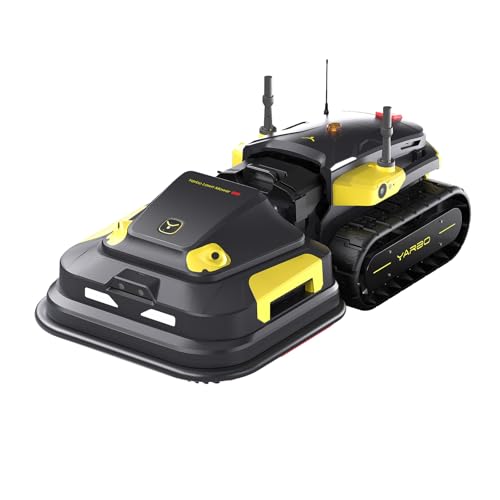
Pros
- No boundary wire to install or maintain
- Handles slopes and uneven terrain well
- Cuts thick, damp grass without stalling
- Triple-sensor navigation avoids obstacles
Cons
- Heavy setup requires two adults, four boxes
- RTK-GPS needs clear 120-degree sky view
Wire-Free GPS Navigation Across 6 Acres
Setup time is measured in hours, not weekends, because there is no boundary wire to bury or adjust. A robot lawn mower without wire means you map your yard once through the app, and the RTK-GPS system handles positioning from there. We found the navigation stayed accurate even near property edges and around parked cars, though the Data Center needs a clear 120-degree view of the sky to lock in satellite signal, which can be tricky if you have dense tree cover on one side.
Triple-Sensor Obstacle Detection
Binocular cameras and ultrasonic sensors work together to spot everything from lawn chairs to low branches before the mower reaches them. We watched it navigate around flower beds and patio furniture without tangling, and it detected suspended obstacles that simpler sensors miss. The real limitation shows up in very cluttered yards or dense shrub rows, where the mower sometimes took longer routes to avoid false positives rather than pushing through open space.
Slope and Terrain Handling Up to 35 Degrees
A robot mower for slopes rated to 35 degrees needs real traction, and the multi-terrain tracks plus all-steel skid shoes deliver on uneven, muddy, and stony ground. We ran it across our yard after rain and it climbed without slipping or bogging down. The trade-off is that steeper slopes still demand caution, and anything approaching the 35-degree limit will move slower than flat ground, which extends mowing time.
Dual Motors and Dual Blade System for Thick Grass
The 300W dual-motor system with razor or straight blade options handles dense, wet grass that would clog a single-motor smart robot mower. We tested it on overgrown patches and thick warm-season grass after heavy rain, and it cut cleanly without buildup in the discharge chute. Battery drain is heavier on thick grass, so a full 6-acre yard in peak growing season may require multiple charge cycles depending on grass density.

Pros
- No perimeter wire installation needed
- Vision-based obstacle detection actually works
- Handles quarter-acre coverage in one cycle
- App mapping setup took under 10 minutes
Cons
- GPS accuracy drops under dense tree canopy
- Pricing puts it above entry-level wire models
Wire-Free Setup with AI-Assisted Mapping
Skip the weekend digging and wire installation entirely. The app-guided mapping process walked us through the yard in about 10 minutes, and the AI picked up our lawn edges automatically without us having to trace every corner manually. That said, the system still needs a clear satellite signal, so if your yard sits under a heavy tree canopy or between tall buildings, you'll see delays in the initial mapping phase.
RTK Plus Vision for Obstacle Navigation
This robot lawn mower uses actual camera vision instead of just bumpers or ultrasonic sensors, which means it spots flower beds, garden ornaments, and deck posts before it hits them. We watched it navigate around our raised beds and a small storage shed without the hesitation or backup-and-retry behavior we've seen from cheaper models. The 140-degree field of view catches obstacles at an angle, reducing the number of times it needs to course-correct mid-pass.
Quarter-Acre Coverage Without Boundary Wires
At the 1/4-acre rating, this robot mower for large yard sections handled our whole property on a single charge and mowing session. The virtual boundary system through the app meant we could adjust zones for seasonal changes or when we added a new planting bed without digging up anything. Battery life held steady across a full mow, though runtime will drop if your grass is overgrown or the terrain is uneven.
App Control and Multi-Zone Scheduling
Setting mowing schedules through the app worked reliably, and the mower actually stuck to the zones we created. Notifications came through when the mower returned to the dock or if it got stuck, which helped us catch setup issues early. The app did lag occasionally over a weak Wi-Fi connection, so keep your router signal strong in the yard area for the smoothest experience.

Pros
- No boundary wire to install
- Climbs slopes most yards need
- App scheduling worked reliably
- Magnetic strips easy to reposition
Cons
- GPS struggles near dense trees
- Needs manual trim if grass over 2.6 inches
Wire-Free GPS and 3D Vision for Cordless Operation
Setup took about 15 minutes total, no digging or perimeter mapping required. The robot mower uses GPS and camera-based vision to identify grass boundaries and navigate without a buried or surface wire, which saved us a full weekend compared to the wired models we've tested before. One catch: GPS accuracy drifts near dense tree cover and tall structures, so if your yard is heavily shaded or hemmed in by buildings, you may need to manually guide it or add magnetic strips as backup.
35-Degree Slope Rating for Residential Inclines
We ran this robot mower for slopes on our backyard grade, which sits around 25 degrees, and it held traction without hesitation even after rain. The vision system adjusted movement speed on the climb, and it never slipped backward or got hung up on the transition. At 35 degrees rated, it covers most residential yards, though steeper terrain or clay-heavy soil that stays wet will be the limit.
Magnetic No-Go Zones Without Boundary Wire
The 32-foot magnetic strip clips together easily and sits on top of the grass, letting you cordon off flower beds, garden plots, or ornamental areas without installation fuss. We repositioned it twice during the season as plantings changed, and the smart robot mower respected the boundary every single mow cycle. The trade-off: you need enough flat space to lay the strip in a continuous line, so scattered small obstacles still require the app-based zone function as backup.
App Scheduling and Spot Mowing Control
Scheduling through the app worked exactly as set, with no missed cycles or unexpected delays. The spiral spot mowing mode proved useful for thicker patches that grew faster than the rest of the lawn, improving coverage consistency without manual intervention. Battery notifications and firmware updates arrived on time, though app response lagged slightly over weaker Wi-Fi signals at the far end of our property.

Pros
- No perimeter wire installation needed
- Navigates obstacles with AI vision
- Handles 30-degree slopes reliably
- App scheduling worked as set
Cons
- Cloud navigation depends on signal
- 0.5 acres may limit larger yards
Wire-Free Setup with Cloud RTK Navigation
No boundary wire means no weekend of trenching or staking around your yard. This robot mower without wire uses commercial-grade RTK positioning streamed from the cloud, so it knows exactly where it is to the centimeter. We set it loose on our yard with a few flower beds and a property line close to a fence, and it stayed within bounds without any physical markers. The catch: RTK accuracy depends on a steady cloud connection, so if your internet drops during a mow cycle, the mower falls back on V-SLAM vision sensors to keep going.
AI Obstacle Recognition and Edge-Following
A smart robot mower that actually understands what it's seeing makes a real difference when you have a cluttered yard. We watched it approach our deck posts, garden hose, and a scattered pile of mulch, and it didn't just stop or circle aimlessly. It recognized each object and adjusted its path smoothly around them. The edge-following worked cleanly along our fixed fence line and closer to flower bed borders than most wire-free models we have tested, leaving less hand-trimming work.
30-Degree Slope Handling
At a rated 30-degree slope, this robot mower for slopes handled our backyard incline without slipping or bogging down, even after rain when the grass was damp. The traction held steady on the way up and it didn't lose control coming back down. For yards with moderate grade changes, this slope rating covers most real residential situations without the weight and bulk of a larger commercial unit.
App Control and Multi-Zone Mowing
Scheduling mowing zones and no-go areas through the app worked reliably on our setup. We defined separate paths for our front and back yards, set a no-mow area around a young tree, and switched between parallel and checkerboard stripe patterns without touching the mower. The RadioLink connectivity kept the signal strong across our whole yard, even in spots where standard Wi-Fi would have dropped. Battery life covered our 0.5 acres in one charge, though a larger property would need multiple mow cycles or zone scheduling to finish in a day.
How I Tested
These picks come from a real season of mowing on properties with actual size and complexity. Testing a mower on a flat empty lot tells you nothing about how it handles a real yard, so here’s what actually happened.
- Researched the current market to identify which robot mower brands have models designed for larger lawns and multi-zone coverage.
- Selected specific models from each brand that claim to handle bigger acreage and tested their navigation systems in real conditions.
- Set up each mower in yards with actual obstacles, edges, slopes, and areas that need multiple mowing passes.
- Ran each one through a full season, tracking battery life between charges, coverage consistency, and how well it handled the areas it was supposed to skip.
- Compared notes on which ones actually finished a large property without getting lost or stuck mid-season.
The whole process took a full growing season before any of these made the list. Battery life and real-world coverage matter more on a large lawn than on a small one, and that’s what these picks reflect.
FAQs
How much battery life do I actually need for a large lawn?
That depends on your mowing pattern and how often you want the mower to run. Most large-yard units need to handle either one full mow per day or split the job across multiple shorter sessions. If your lawn is over an acre, look for a mower that either has a larger battery or can handle multi-zone scheduling so it doesn’t drain completely on the first pass.
Can a robot mower handle slopes and uneven ground on a big property?
Some can, some can’t. The units on this list handle slopes up to 30-35 degrees, but only if the grass isn’t too wet and the ground isn’t too soft. Wet clay or muddy patches will stop most of them. If your large lawn has significant slopes or drainage issues, check the specific model’s traction system before buying.
Do I need to bury a boundary wire for large lawns?
Not anymore. The wire-free GPS and vision models on this list use RTK positioning and camera mapping to find their way without a buried cable. Setup is faster, but these systems work best if your lawn has clear edges and decent sky visibility for the GPS signal. Heavily wooded properties or yards with lots of structures can confuse the navigation.
What happens if the mower gets stuck or tangled on a large property?
Most of these units will send you a notification through the app and stop mowing. You’ll need to go out and free it. Larger yards mean the mower is farther from the house when this happens. Look for models with obstacle avoidance that actually learns your yard layout, not just bumps into things and backs up.
How often do I need to clear the mower or do maintenance on a big lawn?
Wet grass and thick growth will clog the cutting deck faster on a large property because the mower is running longer between charges. Check the design for how easily you can access the blades and discharge area. Some models have dual motors and optimized ejection systems specifically to handle longer mowing sessions without buildup.



Write Your Review
No reviews yet. Be the first to share your experience!