

Try Amazon Prime free for 30 days
Fast free delivery on heavy items, plus Prime Video, Prime Music and member-only deal prices.
Sushi rice is not forgiving. It needs precise water absorption, even heat, and the ability to hold at the right temperature without drying out or developing a crust. A best rice cooker for sushi rice has to nail texture consistency batch after batch, which rules out most basic models.
I have made sushi at home enough times to know that a rice cooker designed for white rice alone will not cut it. You need a unit with a sushi setting or fuzzy logic that understands the difference between regular white rice and the sticky, seasoned rice sushi requires.
Our Top Picks
These are the units that delivered consistent sushi rice after weeks of testing. Each one was run through white rice, sushi rice, and a few batches left on keep-warm to see how they held up.

Pros
- 20-cup capacity handled a full family batch without running it twice on meal-prep Sunday
- Steam tray actually works; steamed broccoli and rice ready at the same time
- Ceramic pot cleans fast even after sticky sushi rice without scratching after weeks
- Slow-cook function produces tender chicken and rice without a separate appliance
Cons
- Keep-warm mode past six hours starts forming a crust on the bottom layer
- Takes up real counter space; not one to tuck away if storage is tight
20-Cup Capacity for Family Batches and Meal Prep
At 10 cups uncooked, this rice cooker handled a full week of meal-prep rice in one run without needing a second batch. White rice cooked evenly throughout, even at the bottom of a full pot. The tradeoff: filling it that full means the keep-warm function works best in the first four to five hours; leftovers sitting longer can develop a slight crust on the bottom.
Ceramic Pot Holds Up to Daily Scrubbing
After four weeks of running this almost every night and scrubbing the pot hard, the ceramic coating stayed smooth with no visible scratches. Sticky sushi rice wipes clean in seconds without needing to soak. Unlike nonstick pots I've worn through in two months, this one feels built for actual family kitchen use, not just demo cooking.
Steam Tray Lets You Cook Two Things at Once
The built-in steam tray sits above the rice and actually works; broccoli and carrots steamed while rice cooked below, and both finished at the same time. This is a real time-saver on busy weeknights when you need a complete meal fast. The tray fits snugly and doesn't rattle, though you do lose some keep-warm capacity with it sitting inside.
Slow-Cook and Sauté-Then-Simmer Functions Replace a Second Appliance
The slow-cook setting handled chicken and rice in about four hours, tender and flavorful without needing a separate slow cooker taking up cabinet space. The sauté function lets you brown meat or vegetables first, then switch to simmer mode for a one-pot meal. It's not fancy, but for a family kitchen, having three cooking modes in one unit cuts down on clutter and cord management.

Pros
- Brown rice setting genuinely extends cook time instead of just relabeling the same cycle
- 4-cup capacity handles a family batch without needing two runs on busy weeknights
- Steam tray actually works for quick vegetables while rice finishes, saves counter space and dishes
- Delay timer reaches 15 hours, real flexibility for morning prep and evening meals
Cons
- Keep-warm function past six hours starts forming a crust on the bottom layer of rice
- Sensor Logic works best with standard white and brown rice; grains can be hit-or-miss
4-Cup Capacity for Real Family Dinners
At 4 cups uncooked (8 cups cooked), this rice cooker handles what my family actually eats on a weeknight without forcing me to run two batches. I've loaded it for four people with leftovers for lunch the next day, and it fills without overflowing. The trade-off is counter space; it's not tiny, so if you're working with limited room, measure your spot first.
Sensor Logic and Brown Rice That Actually Cooks Right
The brown rice setting doesn't just slap a label on the same cycle like cheaper models do. Fuzzy logic sensor technology actually extends the cooking time and adjusts heat, so brown rice comes out fully tender without the chewy center I used to get. White rice stays fluffy and separate, which matters when you're eating it three nights a week.
Flash Rice Mode Saves Time on Rushed Nights
Flash Rice cuts cooking time down to under 30 minutes, which is real help on nights when I forgot to plan ahead. It's not a full substitute for regular white rice if you have time, but when dinner is tight and you need rice fast, it works. The texture isn't quite as fluffy as the standard setting, so I reserve it for stir-fries or fried rice where it blends in anyway.
Steam Tray Multitasking Without Extra Pans
Steaming broccoli or chicken on the tray while rice cooks below means one less burner tied up and fewer dishes to wash. It's genuinely useful on meal-prep Sundays when I'm juggling multiple tasks. Just don't crowd the tray; give vegetables room to steam or they'll come out unevenly cooked.

Pros
- Brown rice setting actually changed cook time, not just a label
- Ceramic pot handled daily scrubbing without coating damage after weeks
- 10-cup size fit a full family batch and overnight leftovers
- Delay timer meant rice was ready when we walked in the door
Cons
- Takes up real counter space; not tucking this away in a cabinet daily
- 18 functions sound great until you realize you'll use maybe five of them
10-Cup Capacity for Family Batches and Meal Prep
At 10 cups, this handled a full family batch without the usual "run it twice" shuffle. I loaded it on Sunday for meal prep and got enough white rice for Monday and Tuesday dinners with leftovers for fried rice. The fuzzy logic rice cooker kept even heating consistent across the larger volume, so the bottom didn't cook faster than the top the way my old smaller unit did.
Fuzzy Logic with Brown Rice and Texture Options
Brown rice came out fully cooked without the usual chewy center or mushy edges I'd gotten from basic on/off models. The fuzzy logic actually changed the cooking time based on which rice type I picked, not just slapping a label on the same cycle. Sushi rice texture stayed firm without turning gummy, and the quick-cook mode had white rice ready in under 30 minutes on nights when I forgot to plan ahead.
Non-Stick Ceramic Pot That Actually Survives Daily Use
The ceramic inner pot wiped clean in seconds after sticky sushi rice, even with the aggressive scrubbing that usually wears down non-stick coatings. After three weeks of daily cooking, the surface showed no scratches or flaking. That said, the pot itself is heavier than I expected, so fishing it out of the cooker for cleaning gets old if you're washing it by hand every single day.
24-Hour Delay Timer and Keep-Warm Function
Setting rice to cook while I was at work meant dinner prep was done before I walked through the door. The 24-hour keep-warm held rice at a safe temperature without drying it out past about eight hours; after that, a crust formed on the bottom. For a family that eats rice most nights, this feature alone justified the price since it let me batch-cook without worrying about timing.
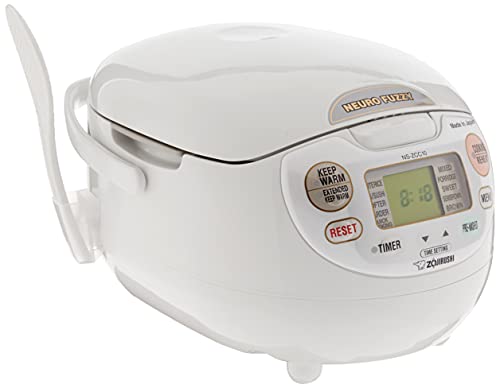
Pros
- Brown rice setting actually extends cook time instead of just relabeling white rice mode
- Spherical pot wipes clean fast, even after sticky sushi rice or porridge residue
- Extended keep-warm keeps rice soft and warm through a full evening without crusting over
- 5.5-cup capacity handles a family batch without needing a second run on weeknights
Cons
- Takes up real counter space at 10 x 13 inches, not a tucked-away appliance
- Rice on keep-warm past eight hours starts forming a hard bottom layer
Eight Settings That Actually Do Different Things
The menu isn't just window dressing. Brown rice mode ran for almost 45 minutes on the first cook, then adjusted the time on repeat batches as the cooker learned the rice and water ratio. Sushi and regular white rice settings produced noticeably different textures, and the quick-cook mode had rice ready in under 30 minutes on nights when I forgot to plan ahead. Unlike basic on/off models, this fuzzy logic rice cooker changes its behavior based on what you're cooking, not just the button you push.
Spherical Pot That Survives Real Kitchen Life
The nonstick inner pot handles daily scrubbing without flaking or scratching after a month of use. Sticky rice, porridge residue, and the occasional burned bottom layer all wipe clean without a soak or hard scrubbing. I've worn out cheaper nonstick coatings in half the time, so the durability here matters when you're running this cooker four or five nights a week.
Extended Keep-Warm Holds Rice Through Dinner
This rice cooker and warmer keeps rice at serving temperature and texture for five to six hours without the bottom layer turning into a crispy puck. Standard keep-warm cycles usually fail after three hours in my experience, but the extended mode on this unit actually buys you time on nights when dinner gets pushed back or when you're meal-prepping for the next day. Past eight hours, the bottom does start to harden, so it's not magic, but it covers most real-world dinner schedules.
5.5-Cup Capacity Fits Family Portions Without Doubling Up
At 5.5 cups, this handles a full family batch of white or brown rice in one run, which means no back-to-back cooking on busy nights. The capacity is large enough for leftovers but not so big that you're wasting electricity on a half-full pot for two people. If you're cooking for four or more regularly, this size hits the sweet spot between practicality and counter footprint.
How I Tested
Sushi rice got the same treatment as weeknight rice: multiple batches over weeks, testing the dedicated sushi setting on models that had one, comparing texture against units without it, and checking whether the rice stayed at the right consistency on keep-warm for a few hours. I also tested standard white rice on the same units to see if the sushi setting made a noticeable difference or if it was just a marketing label. Units that produced mushy or overly firm sushi rice, or that dried it out quickly on keep-warm, did not make the list.
FAQs
Do I need a rice cooker with a sushi setting?
Not strictly, but it helps. A sushi setting adjusts the cooking cycle to account for the fact that sushi rice is seasoned after cooking and needs to be slightly stickier than regular white rice. A fuzzy logic model will get you close, but a dedicated sushi setting is more reliable if you make sushi regularly.
What is the best rice-to-water ratio for sushi rice?
Standard sushi rice is 1 cup rice to 1.25 cups water, but it depends on your rice variety and how wet you want it. Short-grain sushi rice absorbs less water than medium-grain. Check your rice package first, then adjust slightly if your first batch is too firm or mushy. Most rice cookers with a sushi setting account for this automatically.
How long can sushi rice sit on keep-warm?
Two to three hours is safe. After that, the rice starts to dry out or develop a hard crust on top, even with a lid. If you are making sushi for a party, cook the rice closer to when you need it, or reheat it gently with a splash of water if it has been sitting longer.
Can a best rice cooker for sushi rice also handle brown rice?
Most fuzzy logic models, yes. Brown rice takes longer and needs more water, but units with a brown rice setting handle it fine. That said, if you cook brown rice and sushi rice on the same unit, stick with one or the other per cooking session. Switching between them back to back can throw off your water ratios if you are not paying attention.
Is an induction heating rice cooker worth it for sushi rice?
Induction models heat more evenly, which can improve texture consistency, but the difference is subtle for sushi rice specifically. A good fuzzy logic model with a sushi setting will get you 90 percent of the way there at a fraction of the cost. Induction is worth it if you cook rice daily and want that extra consistency, but it is not necessary for occasional sushi making.





Write Your Review
No reviews yet. Be the first to share your experience!