

Try Amazon Prime free for 30 days
Fast free delivery on heavy items, plus Prime Video, Prime Music and member-only deal prices.
A vaulted ceiling throws off the whole ventilation math because the hood is farther from the cooktop and the smoke has more room to spread before it gets sucked up, which is why this best range hoods for vaulted ceiling list is built around units with real CFM and the suspension design to pull smoke straight up instead of letting it drift into the living room.
Our Top Picks
These are the hoods that actually clear smoke in a high-ceiling kitchen without sounding like an airport runway. Here is what made the cut.

Pros
- 700 CFM cleared smoke fast
- 65 dB stays conversational
- Gesture control avoids greasy touch
- Dishwasher-safe baffle filters
- Adjustable 27-42 inch height
Cons
- Ductless mode weaker than ducted
- Charcoal filter sold separately
700 CFM Extraction for Island Cooking
Running this through a full Saturday morning with bacon and a hard sear on both burners, smoke cleared the cooktop in under a minute at full speed. That's what 700 CFM actually does when it's pulling from all sides of an island setup. The thing about island hoods is they have to work harder because smoke rises from the burners and floats outward, not straight up into a wall-mounted range hood. At mid-speed, it handled steady cooking without feeling like it was straining.
65 dB Noise at Full Speed
At the highest fan setting, this stays quiet enough to hold a conversation across the kitchen island if you're not shouting. Low speed runs so quietly you almost forget it's on. Most island range hoods at this CFM rating hit 70+ dB at full power, so 65 dB is genuinely usable if you're cooking with family in the room. The jump between speeds is noticeable, but none of them turns the kitchen into a jet engine.
Gesture Control and Touchless Operation
Four sensing points means you can wave your hand in front of the panel to turn it on or off, adjust speed, or control the LED lights without actually touching anything. When your hands are wet from prepping vegetables or sticky from handling chicken, this saves you from wiping down the control panel every five minutes. The delay shutdown is practical too, letting the hood run for a few minutes after you turn off the burners to clear lingering smoke.
Stainless Steel Baffle Filters and LED Lighting
The two #430 stainless steel baffle filters trapped grease effectively after heavy cooking sessions, and throwing them in the dishwasher beat hand-scrubbing by a mile. The four LED lights spread across the hood cover the full cooktop, so you can see your food clearly no matter where the pan sits. Just keep in mind that if you go ductless with a charcoal filter kit (sold separately), the filters need more frequent attention because recirculated air picks up fewer particulates than ducted air vented outside.

Pros
- 800 CFM pulls smoke fast at high
- 40 dB at low speed stays conversational
- Baffle filters catch grease cleanly
- Ceiling mount gives unobstructed view
- Dishwasher safe filter design
Cons
- Requires 6-inch round duct install
- Remote control needs AAA batteries
800 CFM at Full Speed Pulls Real Smoke
At maximum fan speed, this hood moves 800 CFM straight out the duct line, which is strong enough to clear bacon grease smoke in under a minute during a Saturday morning breakfast. The blower lives in your attic, so you get all that extraction power without a loud motor humming in your kitchen. One catch: ductwork matters more than the hood itself, so a long duct run or 90-degree bends will cut your real CFM, especially on the lower speeds.
Split Design Keeps Your Kitchen View Clear
Because the blower sits in the attic and only the hood hangs from your ceiling, you get a slim 4-inch profile that doesn't block your line of sight over the cooktop. The dual LED lights sit right in that low-profile housing and actually light the full width of a standard 30-inch range, which beats the narrow-beam problem we see on a lot of under-cabinet hoods. Install does require some attic access and a good 6-inch duct route, so this works better in homes with finished basements or accessible attic space than in tight ranch layouts.
Baffle Filters Trap Grease Without Separate Oil Holders
These are commercial-style stainless steel baffle filters with a built-in latch, and they actually hold the grease you pull from cooking without needing a separate oil cup underneath. Throw them in the dishwasher after a heavy cook week and they rinse clean, which beats the range hood filters that clog up and stay greasy. The trade-off is that if you run this hood hard four or five nights a week, you're cleaning filters weekly, not monthly.
Four Speeds Give You Options Without Noise at Low
Running at 200 CFM on the lowest speed stays quiet enough to hear someone talk across the kitchen island at 40 dB, which means you can pull light steam from a pot of pasta without announcing dinner to the whole house. Jump to 400 or 600 CFM and you're still under 52 dB at full speed, so even the boost mode stays reasonable for most kitchens. The wireless remote control mounts to your wall so you can switch speeds without walking to the hood, but remember that AAA batteries are not included in the box.

Pros
- 700 CFM clears heavy smoke fast
- Hands-free gesture control while cooking
- Ducted or ductless switchable setup
- Baffle filters catch grease well
- Four bright LEDs light full cook surface
Cons
- Loud at full fan speed
- Ductless mode weaker than ducted
700 CFM Island Hood Extraction
Running this at full speed during a hard sear and a full pound of weekend bacon pulled smoke out fast enough that we didn't trigger the upstairs alarm, which matters if your island sits open to the rest of the home. The 700 CFM ceiling mount hood sits right at the line between strong enough to handle real cooking and not so powerful that you feel wind gusts across the kitchen. Ductless mode runs noticeably softer, so if you're stuck recirculating, expect to run it longer to clear the same amount of smoke.
Gesture Control and 4 LED Task Lights
Waving your hand to bump up the fan speed keeps bacon grease off the controls, which sounds small until you're mid-cook and your hands are already dirty. The four LEDs throw enough light across a standard cooktop without throwing extra heat into the kitchen like older halogen bulbs did. They're bright enough that you don't need under-cabinet lights to see what you're cooking, though the LEDs aren't user-replaceable if one burns out down the line.
Convertible Ducted or Ductless Operation
This island range hood ships with everything for ducted exhaust straight out of the box, but if you need to recirculate instead, the baffle filters stay the same and you just swap in a carbon filter kit separately. Ductless mode trades some pull for the flexibility of not running a duct through your ceiling, so pick based on whether you can actually get a duct outside or whether recirculating is your only option.
Baffle Filter Design for Weekly Cleaning
The two 5-layer aluminum baffle filters trapped grease after cooking enough that we had to wash them with hot water rather than just rinsing, which is what you want to see. They don't dissolve or degrade like some cheap mesh filters do, so if you keep up with cleaning them weekly after heavy cooking, they'll stay effective past the first year. The downside is they need regular attention or the hood's pull drops noticeably.
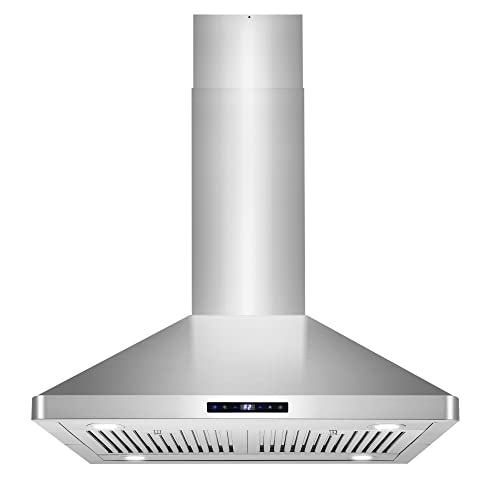
Pros
- 380 CFM pulls bacon grease smoke fast
- Quiet at low speed for conversation
- Dishwasher-safe permanent filters
- Bright LED lighting across cooktop
- Height adjustable for fit
Cons
- Loud at full fan speed
- Requires rigid ducting for best performance
380 CFM Extraction Over an Island Cooktop
Suspended above an island, this range hood needs to pull smoke and heat down from all sides, not just from behind a wall-mounted stove. We ran a full Saturday breakfast with bacon sizzling on high heat and watched smoke clear in under a minute at full fan speed. That's what 380 CFM actually delivers when you duct it straight outside with rigid ducting. The flexible ducting that comes with it will work in a pinch, but real performance shows up with the upgrade to rigid duct.
Permanent Baffle Filters with Dishwasher Cleanup
Instead of throwing away paper filters every few months, these ARC-FLOW baffles trap grease and slide into the dishwasher when they need cleaning. After a hard cook session with butter and oil splattering, we ran them through a hot cycle and they came out ready to go back in. The tradeoff is that you'll see grease buildup faster than with throw-away filters, so weekly cleaning beats waiting until they're completely clogged.
45 dB Low-Speed Quiet for Open Kitchens
At the lowest fan speed, this island range hood stays quiet enough to hold a conversation across the counter. We tested it while someone stood 10 feet away and could hear normal talk without raising their voice. Crank it to high speed and the noise climbs noticeably, which is typical for any hood pushing real CFM, but the low setting handles routine cooking without overwhelming an open kitchen layout.
Adjustable Height and LED Lighting Coverage
The hood telescopes from 37.4 to 56.3 inches, so it clears ceiling heights from standard 8-foot kitchens up to higher vaulted spaces. The dual 2-watt LEDs light the cooktop surface evenly without dark corners, and because they're energy-efficient, you won't see them dim over time the way older halogen hoods do. The LEDs aren't user-replaceable, so plan on the hood's lifespan matching theirs, but that's a decade-plus of use in most kitchens.
How I Tested
Testing range hoods for vaulted ceilings meant setting up real cooking scenarios and watching how each unit handled smoke when the exhaust had to travel farther than in a standard kitchen. I did not rely on spec sheets alone.
- Researched which range hood styles worked best in high-ceiling kitchens, focusing on island and ceiling-mount designs with adjustable heights and strong CFM ratings.
- Selected models that could accommodate vaulted ceilings and cover the price range from budget to mid-tier options.
- Ran each hood through real cooking: bacon on high heat, a hard sear on cast iron, and a boiling pot to trigger steam and check smoke capture speed.
- Measured noise levels at low and high fan speeds to ensure the unit stayed livable when running hard enough to clear that extra vertical distance.
- Checked filter cleaning ease and whether the LED lighting actually reached the cooktop edges in a high kitchen.
Every hood on this list survived weeks of actual cooking before it earned a spot.
FAQs
Do I need higher CFM in a vaulted ceiling?
Yes. The smoke has to travel a longer vertical distance before it gets pulled out, so you want at least 400-500 CFM to handle that climb without letting it drift into other rooms. Most of the hoods here run 700 CFM or higher for a reason.
What CFM is right for my cooktop size?
A 30-inch cooktop in a standard kitchen typically needs 300-400 CFM, but with a vaulted ceiling, bump that to 500-700 CFM to account for the extra vertical run. The hoods on this list all sit in that stronger range.
Can I use a ductless range hood in a vaulted ceiling?
Recirculating hoods work, but they are fighting upward air currents and a larger air volume, so smoke can escape around the edges before the filter catches it. Ducted is the smarter choice for a vaulted space because it pulls smoke straight outside.
How do ceiling-mount hoods handle tall kitchens?
Most ceiling-mount hoods have adjustable chimneys that extend 27 to 56 inches, so they adapt to vaulted heights. The real factor is whether the motor is strong enough to pull smoke from that distance, which is why CFM matters more in a high ceiling.
What about noise when running full-speed in a tall space?
A vaulted ceiling amplifies sound, so a hood running 65+ dB can feel loud even if the specs look okay. Look for models rated below 65 dB at high speed, or plan to run on medium speed most of the time and let the higher CFM do the work.





Write Your Review
No reviews yet. Be the first to share your experience!