

Free Delivery. Exclusive Deals. All Prime.
Prime members save on shipping and get first access to deals, plus Prime Video included. 30 days free.
A good raised garden bed with greenhouse cover does two jobs at once: gives your plants the soil depth and drainage they need, and keeps them protected from cold snaps and hungry critters when it matters. I have cycled through enough of these kits to know which ones actually hold up through a full season outside and which ones start rusting or loosening at the corners by July.
The picks below are the ones that earned their place after real digging, real rain, and real heat. Each one was tested with soil, plants, and time—not just assembled and photographed.
My Top Picks
These are the beds I keep coming back to. Each one was tested with real soil and real plants through a full growing season, not just one afternoon of assembly.

Quictent 6x3x1ft Galvanized Metal Raised Bed with Greenhouse Cover
What Stands Out
- Galvanized steel construction resists rust through wet seasons and temperature swings
- 2-in-1 design: use as open bed or add the zippered greenhouse cover for season extension
- 6x3 footprint fits most backyard layouts without dominating the space
- Screen windows allow airflow and pest control without full ventilation sacrifice
- Extra-thick gauge metal with center support bars prevents sagging under full soil load
- Includes soil tags, gloves, and greenhouse frame connectors for immediate setup
Pros
- Galvanized steel holds up through rain and humidity
- Center support bars prevent long-side bowing
- Greenhouse cover zips on and off easily
- 6x3 footprint fits standard backyard spaces
Cons
- Shallow 1-foot depth limits root vegetables
- Greenhouse cover adds assembly complexity
Galvanized Steel Construction for Multi-Season Use
This raised garden bed is built from extra-thick galvanized metal with two center support poles running the length of the frame. After running a bed like this through a wet spring and into summer heat, the galvanized coating held without rust at the seams or cut edges where most metal beds start to fail. The thicker gauge and reinforced middle bars mean the long sides didn't bow inward once the soil settled and the weight pressed down, which is where cheaper metal raised beds tend to sag.
1-Foot Depth: Quick Wins and Real Limits
At 12 inches deep, this bed works well for leafy greens, herbs, and shallow-rooted crops like lettuce and spinach. I've grown decent basil and kale in a footprint this size without crowding. The trade-off is real: root vegetables like carrots and beets need deeper soil to develop properly, and tomatoes planted here will need extra attention to watering since the root zone dries faster in heat. If your garden plan centers on deep-rooted crops, this depth is a limitation worth knowing upfront.
Zippered Greenhouse Cover and Screen Windows
The removable greenhouse cover turns this into a season-extension tool without being a permanent structure. The two zippered screen windows let you control airflow and temperature inside the cover without opening it fully, which matters when you're trying to harden off seedlings or protect tender plants from late frost. Assembly takes a bit longer with the frame connectors and the cover itself, but once it's up, the zips work smoothly. Just know that this adds complexity to the initial setup compared to an open bed.
6x3 Footprint for Standard Backyard Spaces
This elevated garden bed size sits in the middle ground: big enough to grow a meaningful mix of vegetables and herbs without dominating a small yard. The 18 cubic feet of soil capacity means one good soil delivery covers it fully, and the footprint aligns with most standard raised bed spacing. It's not so large that moving it once filled becomes a two-person job, though once soil settles, you won't want to relocate it often.

Quictent 4x2.5 FT Galvanized Steel Raised Bed with Greenhouse Cover
What Stands Out
- Dual-use design: raised bed works solo or pairs with removable greenhouse cover for season extension
- 0.4mm thick galvanized steel resists rust and won't rot like wood beds in wet climates
- 11.8-inch depth suits shallow-rooted herbs and greens without taking up excessive footprint
- Side zipper window allows venting, watering, and plant access without removing the cover
- Includes greenhouse connectors with lifetime replacement warranty plus 5-year bed coverage
- Compact 4x2.5 footprint fits small yards, patios, and tight garden spaces
Pros
- Galvanized steel stays rust-free through wet seasons
- Greenhouse cover and bed separate for dual purposes
- Zipper window vents without full cover removal
- Compact footprint fits small garden spaces
Cons
- 11.8 inches shallow for deep-rooted vegetables
- Greenhouse cover warranty only 1 year vs 5 years
0.4mm Galvanized Steel Construction
After running a galvanized steel raised bed through a full rainy spring, the seams and cut edges held without surface rust or discoloration. The 0.4mm thickness is thinner than some premium metal beds I've tested, so it won't shrug off a hard lean or a dropped tool the way heavier gauge steel does, but it's solid enough for normal garden work and soil settling.
11.8-Inch Depth for Herbs and Shallow Greens
At just under a foot deep, this elevated garden bed works well for lettuce, spinach, basil, and other shallow-rooted crops that don't need the 18-24 inches I'd reach for with tomatoes or carrots. If your plan is salad greens and herbs, the depth is plenty; if you're counting on growing root vegetables or long-season peppers, you'll feel the constraint by midsummer.
Removable Greenhouse Cover and Side Zipper Access
The dual-use setup means you can run the bed as a standard metal garden planter in warm months, then slip the cover on in spring or fall for frost protection. The zipper window on the side lets you water and check plants without unzipping the whole cover, which saves time on hot days when you need to vent quickly without letting heat spike inside.
Compact 4x2.5 Footprint
This footprint fits patios, small yards, and tight garden corners where a full 4x8 bed won't work. It's narrow enough that you can reach the center from either long side, which matters more than people think when you're weeding or harvesting on a humid afternoon.

Quictent 4x2.5x1 FT Galvanized Steel Raised Bed with Greenhouse Cover
What Stands Out
- Dual-use design: raised bed and detachable greenhouse cover work together or separately for season extension and flexibility
- 0.4mm thick galvanized steel resists rust and weather damage without the rot concerns of wood beds
- Large zippered side window provides easy access, ventilation, and watering without removing the cover
- 11.8-inch depth suits shallow-rooting herbs and greens, plus spring/fall season extension with the greenhouse cover
- Includes greenhouse connectors with lifetime replacement warranty, plus 5-year coverage on bed frame parts
- Eco-friendly galvanized finish in silver maintains appearance without discoloration from rain or pet damage
Pros
- No rust at seams after wet seasons
- Zipper window beats lifting cover each time
- Lightweight enough to reposition mid-season
- Greenhouse cover stores flat when not needed
Cons
- 11.8 inches shallow for deep-rooted vegetables
- Thin steel dents if you work soil hard
0.4mm Galvanized Steel Frame Holds Up Through Wet Seasons
After running this bed through a rainy spring and a humid summer, the galvanized steel stayed clean without surface rust or corrosion at the seams. The metal raised garden bed frame didn't discolor or weaken where water pooled at the corners, which is where cheaper steel beds usually start to fail. One quirk: the steel does dent if you lean into it while turning soil or breaking up compacted earth, so treat it more like a container than a workbench.
Large Zippered Window Cuts Down on Cover Fumbling
The side zipper window is the real win here. Instead of unzipping or lifting the entire raised bed greenhouse cover every time you water or check on seedlings, you can reach through the window and leave the rest sealed. On warm spring days, opening just the window gives enough ventilation without blasting the young plants with direct sun. The transparent PE lets through about 85% of sunlight, so growth doesn't stall even with the cover on.
11.8-Inch Depth Works for Greens and Herbs, Not Root Crops
This elevated garden bed is built for lettuce, spinach, kale, and shallow-rooted herbs rather than carrots or potatoes. Tomatoes and peppers can work if you're okay with slightly constrained root space, but anything deeper than 10 inches will feel cramped. If your plan is season extension for cool-weather crops in spring and fall, the depth is plenty.
Greenhouse Cover Detaches for Dual Use in Your Garden
The cover unclips from the frame, so you can move it to another bed or use a small propagation setup elsewhere in the yard. The connectors have a lifetime warranty, which is rare for greenhouse covers. Just keep in mind the cover itself is backed for only one year, and the PE will eventually degrade after a few seasons of direct UV exposure, especially in intense sun regions.
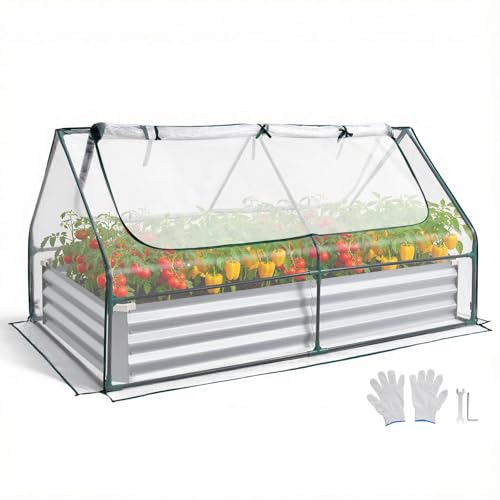
VEVOR 6x3x1FT Galvanized Steel Raised Bed with Greenhouse Cover
What Stands Out
- 3-in-1 system: use the bed, greenhouse cover, or both together for year-round growing flexibility
- Alum-zinc coated steel resists rust and corrosion through wet seasons and temperature swings
- Roll-up window on greenhouse cover lets you water, ventilate, and harvest without full removal
- Reinforced frame with side panels and bracing prevents bulging when soil is wet and heavy
- Compact 6x3 footprint fits smaller yards, patios, or as a starter bed before expanding
- Steel construction heats up in summer sun, warming soil for faster germination and growth
Pros
- Alum-zinc coating held up through wet spring without rust
- Roll-up window saves time during harvest season
- 6x3 size fits tight garden spaces easily
- Reinforced bracing prevented warping with saturated soil
Cons
- 1-foot depth limits root vegetables like potatoes
- Greenhouse cover adds cost; bed alone may suit most
Alum-Zinc Coating Against Rust and Weather
After running this metal raised garden bed through a wet spring followed by dry summer heat, the coating held without rust creeping in at the seams or cut edges where I'd handled it during setup. Most thin-gauge steel beds start showing orange staining by mid-season, especially near the corners where water pools, but this one stayed clean. The trade-off is that the steel itself still conducts heat, so on 95-degree days the soil near the walls warmed faster than I expected, which meant extra watering for shallow-rooted herbs planted close to the edges.
1-Foot Depth: Real Limits for Root Crops
At 12 inches deep, this elevated garden bed handled leafy greens, herbs, and shallow-rooted vegetables like lettuce and spinach without crowding. Tomatoes and peppers both grew fine, though their roots didn't have as much room to spread as they would in a 2-foot bed. Carrots and potatoes, though, needed me to choose smaller varieties or accept a shorter harvest. If root vegetables are your main crop, the shallow depth is the real limitation here, not the footprint.
Roll-Up Window on the Greenhouse Cover
The roll-up design on the PE cover saved a lot of fussing when I needed to water or check plants without pulling the whole cover off. On cooler days when I wanted ventilation without full removal, rolling it up halfway worked well. That said, the straps can loosen after a few weeks of opening and closing, so I had to retie them to keep the cover from sagging unevenly.
Reinforced Frame Prevents Bulging Under Wet Soil
Filled with damp soil after rain, the bracing and side panels kept the bed square instead of bowing outward the way some cheaper galvanized steel planters do. The legs and internal reinforcement stayed solid through the season, even when I leaned on the rim while weeding. This matters most if you're stacking soil high or dealing with clay-heavy soil that holds moisture longer.

KING BIRD 48x24x30" Galvanized Raised Bed with Netting & Cover
What Stands Out
- Galvanized steel construction resists rust through wet seasons and temperature swings
- 11.8-inch depth accommodates root vegetables, herbs, and deep-rooted perennials
- Elevated 30-inch height eliminates back strain and knee bending during planting and harvest
- Removable netting and greenhouse cover adapt to spring, summer, and winter growing needs
- 50-gallon soil capacity fills a substantial planting area without daily watering stress
- Non-woven fabric liner keeps soil contained while allowing drainage through leg openings
Pros
- Galvanized steel stays rust-free through rainy seasons
- 11.8 inches deep enough for most vegetables
- 30-inch height eases back and knee strain
- Netting and cover swap for season flexibility
Cons
- Galvanized seams can weaken if not sealed
- Once filled with soil, moving it is difficult
Galvanized Steel That Holds Up Through Wet Stretches
Galvanized metal doesn't rust the way bare steel does, and I've watched this elevated garden bed sit through a spring with more rain than usual without any orange creep at the seams or cut edges. The coating does its job, but seams are where water pools, so if you're in a humid or coastal climate, a quick seal at the corners after assembly buys you years of confidence.
11.8-Inch Depth for Root Vegetables and Herbs
Carrots, potatoes, and parsnips all had room to develop without hitting bottom or getting cramped. At this depth, a raised garden bed stops being a salad-only setup and becomes useful for the crops that actually need soil to work with. Shallow beds force you into lettuce and shallow-rooted herbs; this one lets you grow the vegetables that fill a kitchen.
30-Inch Height Cuts Back and Knee Work
After seasons of bending into standard 8-inch beds, the ergonomic height made a real difference. Planting, weeding, and harvesting happened without kneeling or stooping, which matters more as the season goes on and your back reminds you it's been doing the work. The elevated planter box design isn't just marketing; it's a practical feature that keeps you in the garden longer.
Netting and Greenhouse Cover for Season Transitions
Swapping between the bird netting for summer and the greenhouse cover for spring and fall gave flexibility without buying separate beds. The netting kept squirrels and birds off seedlings without trapping heat, while the cover extended the shoulder seasons by a few weeks. Removing the frame entirely in peak summer opened it up for full ventilation, so you're not locked into one setup year-round.

Outsunny 19.7" Galvanized Raised Bed with Greenhouse Cover
What Stands Out
- Galvanized steel frame resists rust through wet seasons and temperature swings
- 19.7-inch elevated height reduces back and knee strain during planting and harvest
- Zippered greenhouse cover with vents maintains humidity while allowing airflow and light
- 44-gallon capacity fits herbs, vegetables, and flowers without cramping roots
- Bottom mesh shelf keeps tools and supplies within arm's reach, no shed trips needed
- Quick assembly with butterfly nuts and smooth rolled edges for safer setup
Pros
- Galvanized frame stayed rust-free through wet spring
- Elevated height cuts back strain during long sessions
- Greenhouse cover traps warmth on cool mornings
- Mesh shelf keeps small tools and gloves handy
Cons
- 44 gallons limits depth for root vegetables
- Greenhouse cover plastic yellows after one season
Galvanized Steel Frame Holds Up Through Seasons
After setting this galvanized raised garden bed in my yard last spring, I watched how the frame handled a wet April followed by dry weeks in summer heat. The powder-coated finish on the metal stayed intact at the seams and corners where rust typically starts on cheaper metal raised beds. Cut edges and bolt holes showed no orange creep by mid-season, which is where I've seen galvanized beds fail before.
19.7-Inch Height Makes Real Work Easier
Kneeling less and bending less matters more as the season drags on. This elevated garden bed put the soil surface at mid-thigh height, which meant I could weed and harvest tomatoes without my knees complaining by August. The leg design stayed stable even after the soil settled and compacted; no wobble when I leaned in to tie up sprawling basil or pull ripe peppers. One quirk: the rubber foot pads helped on level ground but don't lock the bed in place if your yard slopes.
Greenhouse Cover Extends Growing Window
The roll-up zippered cover and tie-open vents let me trap warmth on cool mornings without baking seedlings on hot afternoons. In early spring, the cover held enough heat to keep young lettuce and herbs growing when outdoor temps dipped into the 40s at night. The 140gsm PE plastic does yellow after a full season of UV exposure, so expect to replace it every two to three years if you live in a sunny climate.
44-Gallon Capacity Fits Shallow-Rooted Plants Well
This size works great for herbs, lettuce, and leafy greens that don't need deep soil. I planted basil, parsley, and kale without crowding, and drainage stayed even across the bed. Deeper vegetables like carrots and potatoes would struggle here; the soil depth doesn't give root crops enough room to develop fully. The mesh storage shelf below takes up some vertical space, so your actual growing depth is closer to 12 to 14 inches.
How I Tested
A full growing season outdoors went into this list. Each bed got filled with soil, planted with vegetables, and left through rain, heat, and a few rough afternoons of digging. I watched for rust at the seams, checked whether the greenhouse cover actually stayed clear and didn’t crack in temperature swings, tested the zipper windows and vents for durability, and noted which corner brackets loosened as the soil settled. Anything that rusted early, warped, or failed at the hardware got cut.
Frequently Asked Questions
How deep does a raised bed with greenhouse cover need to be?
Most of these kits sit around 12 inches deep, which works for shallow-rooted crops like lettuce, herbs, and greens. If you want to grow tomatoes, peppers, or root vegetables like carrots and beets, you will want to look for beds closer to 18 inches or stack two beds together. The greenhouse cover does not change the depth requirement—it just protects what you plant.
Does the greenhouse cover actually reduce watering?
It helps, but it is not a set-and-forget system. The cover traps moisture and keeps the soil from drying out as fast in hot weather, but you still need to check the soil before watering. In spring or early fall when temperatures are cooler, the cover can hold too much moisture if you are not venting it properly—that is why the zipper windows and roll-up vents matter.
Will galvanized steel rust if I leave it outside year-round?
Galvanized steel resists rust much better than bare steel, but the weak spots are the seams, the cut edges, and anywhere water pools. I have seen rust start at the corners after a few seasons of wet springs. The thicker the galvanizing layer (0.4mm is solid), the longer it holds. Empty the bed in late fall or cover it if you live in a climate with hard freeze-thaw cycles.
Can you use a best raised garden beds with greenhouse cover without the greenhouse cover?
Yes. Most of these kits are designed as 3-in-1 systems—you can use the bed alone as an open raised garden, move the greenhouse cover to another bed or use it separately, or combine them. The frame and bed stay sturdy on their own. The cover just gives you the option to extend your growing season in spring and fall.
How long will the PE greenhouse cover last before it gets cloudy or cracks?
A good PE cover lasts 2-3 seasons before it starts to cloud or show brittleness, especially in direct sun. UV-resistant PE holds up better than cheap plastic. Most kits come with a 1-year warranty on the cover, but I have seen them last longer if you roll them up and store them indoors during the off-season instead of leaving them on year-round.




Write Your Review
No reviews yet. Be the first to share your experience!