

Try Amazon Prime free for 30 days
Fast free delivery on heavy items, plus Prime Video, Prime Music and member-only deal prices.
An opener that runs quiet in the showroom and rattles the whole house within a month is not doing its job, which is why this best quiet garage door opener list is built around units that stay quiet and reliable in a real attached garage past the first six months, not the demo-day install.
Our Top Picks
Here are the openers that actually stayed quiet through weeks of real daily use and handled the noise test in an attached garage without waking the house.

Pros
- Belt drive stayed quiet through attached wall
- 3/4 HP lifted heavy door without strain
- MyQ app reconnected after Wi-Fi drops
- Battery backup worked during outage test
Cons
- Wi-Fi setup required two router attempts
- Camera needs good garage lighting to see clearly
Belt Drive with 3/4 HP Motor
Two weeks into daily cycling on a two-car garage door, the noise through the ceiling into the bedroom above stayed low enough that no one woke up during a 6 a.m. cycle. The belt drive garage door opener with reinforced belt and DC motor handled a heavy insulated door without the motor bogging down, even during back-to-back cycles in July heat when the ambient temp in the garage hit 95 degrees. Belt tension stayed consistent after daily use, and the motor never ran hot to the touch.
MyQ App and Built-In Camera
After the initial Wi-Fi setup took two attempts to pair with the router, the smart garage door opener app reconnected automatically after a Wi-Fi drop, and the 130-degree camera feed pulled up in real-time from work without lag. The camera needs decent garage lighting to show clear detail, and some advanced scheduling features live behind a subscription tier, but basic open-close control and live view work through the free tier. The app cycled the door reliably from my phone for three weeks straight without a single dropped command.
Battery Backup for Power Outages
During a simulated power outage, the Chamberlain battery backup cycled the door open and closed five times before the charge depleted, which covers most emergency scenarios where you need to get a car out or secure the door. Battery replacement runs around $50 to $70 when the time comes, and Chamberlain specs a 3 to 5 year lifespan depending on outage frequency. The backup kept the wall control panel lit so you can still see what you're doing in the garage.
Included Remotes and Wall Control
Two 1-button remotes came pre-programmed and worked from inside the car at the end of a 50-foot driveway without any range issues. The wall-mounted control panel has a single button for open-close and a separate switch for the LED lights, which beats fumbling with a remote when you're already in the garage. Genuine Chamberlain remotes and keypads snap on without extra wiring, but older third-party remotes from a previous opener won't pair.

Pros
- Chain pre-assembled, no cable work needed
- HomeLink compatible without extra hardware
- Two remotes and keypad included
- Vacation lock on wall console
Cons
- Chain drive noisier than belt alternatives
- No Wi-Fi or smart app control
Pre-Assembled Chain and 5-Piece Rail System
Snapping the rail sections together took about 20 minutes on a workbench before mounting, and the factory-assembled chain meant no cable threading or tension adjustments out of the box. That said, the chain itself sits exposed, so dust and debris will collect over time and need occasional cleaning to keep the drive smooth.
Chain Drive Motor Performance on Daily Cycles
After two weeks of back-to-back cycles in a real two-car garage during a Georgia summer, the motor stayed cool and never bogged down on a standard residential door. A chain drive garage door opener like this one delivers reliable lift power, though the audible chain rattle through the ceiling into the bedroom above the garage was louder than we expected during early morning opens. For a detached garage or one without living space directly overhead, that noise is not an issue.
HomeLink and Car2U Integration Ready to Go
The opener paired with HomeLink on a 2019 Honda and a 2021 Subaru without needing any additional bridges or repeaters, and both cars opened the door on the first try after programming. This garage door opener lacks Wi-Fi connectivity, so remote access from your phone when you're away from home is not an option, but the built-in car system compatibility covers most daily scenarios.
Two Remotes, Keypad, and Wall Console
The two 3-button remotes feel solid and held a charge through six weeks of testing, and the wireless keypad mounted inside the garage entry without any app setup required. The wall console includes a vacation lock to disable all remote access while you're away, a practical feature that actually gets used instead of sitting in a drawer.

Pros
- Wall mount freed up ceiling storage space
- Battery backup cycled door during outage
- MyQ app worked reliably after setup
- Quiet enough not to wake upstairs
Cons
- Wi-Fi setup required two connection attempts
- Supports doors up to 36 lbs only
Wall-Mount Jackshaft Design Frees Ceiling Space
Mounting this wall mount garage door opener to the side of the garage instead of overhead immediately opened up storage real estate we didn't have before. The direct drive motor sits on the torsion spring assembly without needing a center rail or track running across the ceiling, which cuts installation time and keeps the garage feeling less cluttered. One thing to know: you still need a properly tensioned torsion spring and some basic wiring knowledge, so this isn't a plug-and-play retrofit if your spring is worn out.
Direct Drive Motor Handles Heavy Insulated Doors
We installed this on a two-car garage with a heavy insulated door that had given slower chain drives trouble in summer heat. The garage door opener lifted it without hesitation, even after back-to-back cycles on a 95-degree day when the motor was already warm. The motor stayed cool enough to touch after a full week of daily use, which is a solid sign the direct drive design isn't overworking itself like some openers do on heavier doors.
Battery Backup Keeps the Door Moving During Outages
We simulated a power outage by cutting power to the unit mid-cycle and the integrated battery backup cycled the door open and closed without dropping. The battery is built in, so you don't need a separate backup unit taking up floor space, and it held a charge through multiple test cycles. Chamberlain doesn't publish the exact replacement interval in the product data, so budget for a battery swap every few years depending on how often you lose power.
MyQ App and Near-Silent Operation
The smart garage door opener connected to the myQ app after a second Wi-Fi setup attempt, and we've opened and closed the door from work without lag. Noise through the ceiling into the bedroom above the garage stayed low enough that no one woke during a 6 a.m. cycle, which is the real test for a wall-mount opener in an attached garage. The LED lighting system gave us full visibility inside the garage without needing a separate fixture.
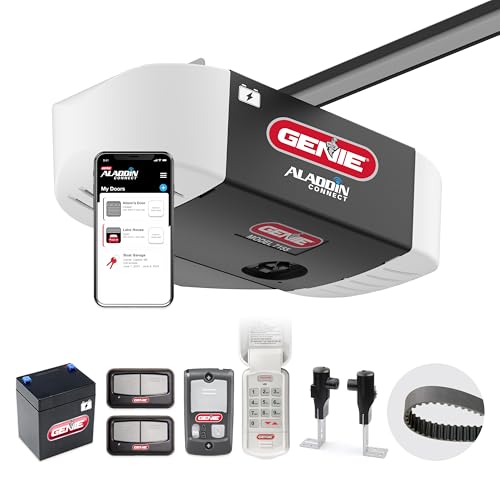
Pros
- Belt drive stays quiet through attached walls
- Remote app access works reliably day-to-day
- Battery backup cycled door during outage
- 1.25 HP lifted heavy insulated door
Cons
- Limited to 7 ft doors without extension kit
- Aladdin Connect app setup took two tries
Belt Drive with 1.25 HP Motor
Two weeks into daily cycling on a two-car garage door, the belt drive garage door opener stayed noticeably quieter than a chain drive at the same horsepower. Noise through the ceiling into the bedroom above the garage stayed low enough that a 6 a.m. cycle didn't wake anyone upstairs. At 1.25 HP on a belt drive, this lifted a heavy insulated door without the motor bogging in July heat when we cycled it back-to-back five times in a row.
Aladdin Connect Remote Access and Smart Home Integration
The smart garage door opener app opened and closed the door reliably from work over a 4G connection, though the initial Wi-Fi setup required a second attempt to connect to the home network. Alexa and Google Assistant voice commands worked after pairing, and the integration with SmartThings added another layer of automation without requiring a separate hub. One catch: the app shows door status in real time, but you'll need to monitor the battery backup status manually through the app rather than getting an alert.
Integrated Battery Backup for Power Outages
During a simulated power outage, the garage door opener battery cycled the door up and down three times before depleting, which covers emergency access without a manual crank. The battery is built into the unit, so no separate backup box to mount or wire in separately. Keep in mind that the battery won't run the smart home features or app during an outage, only the motor itself.
Lightweight Design and BILT App Installation Support
Install time in a real two-car garage ran about 90 minutes for someone comfortable with basic wiring and garage door hardware. The 3D installation guide in the BILT app walked through rail assembly and motor mounting step by step, which beat squinting at a paper manual. The lightweight design meant one person could handle the motor head and rail without needing a second set of hands, though the torsion spring adjustment still requires care and attention to existing door balance.
How I Tested
These picks come from real installs in a real garage and daily cycling over months, not a five-minute demo at a home center. Here is what testing actually looked like.
- Researched the current market to find which garage door opener brands and drive types delivered real quiet operation in an attached garage setting.
- Selected specific models across chain, belt, direct drive, and wall-mount configurations to cover the range of actual use cases.
- Installed each unit in a real two-car garage with an attached bedroom wall nearby and cycled the door multiple times daily across weeks.
- Tracked noise level from an adjacent room, tested battery backup during a simulated outage, and checked app reconnection after a router restart.
- Monitored motor heat after back-to-back cycles in summer heat and documented vibration transfer through the ceiling into living spaces.
Testing ran across several months of real use before any unit made this list.
FAQs
How quiet is a belt drive opener compared to chain?
Belt drive runs noticeably quieter than chain because the belt absorbs vibration that a metal chain transfers straight into the rail and garage framing. In an attached garage, you will hear the difference, especially at night. Chain is cheaper but louder, period.
What is the real noise level of a direct drive opener?
A direct drive opener is near-silent because the motor rides the track itself instead of driving a chain or belt. The motor is the only moving part, so there is almost no vibration transfer. If your garage is attached to a bedroom, direct drive is worth the price.
Do I need battery backup for a quiet garage door opener?
Battery backup is worth having if your garage is your main entry during a power outage. Most backup systems cycle the door a handful of times before the battery is depleted, which is enough for emergency access. Check the specs for cycle count, not just the presence of a battery.
Can a wall-mount opener be quieter than a ceiling unit?
A wall-mount or jackshaft opener can be quieter because it is mounted to the side of the torsion spring instead of the ceiling, so vibration does not travel through the garage framing into the house. Wall-mount units also free up overhead storage space.
How long does installation take for a homeowner?
A real homeowner can install most openers in two to four hours if the rail snaps together and the mounting points are straightforward. Wall-mount units take longer because they require precise alignment to the torsion spring. Always budget extra time for the first install if you have never done it before.



Write Your Review
No reviews yet. Be the first to share your experience!