

A sweeper that leaves a stripe of leaves down the middle of every pass is not really saving anyone time, which is why this Best Push Lawn Sweepers list is built around units with real brush-to-wheel torque that actually pick up on the first pass, not the ones that jam the hopper on wet grass or fall apart hitching to a mower.
Our Top Picks
These are the units I’d roll out on a Saturday morning without hesitation. Each one handles pine needles, oak leaves, acorns, and grass clippings the way they should.
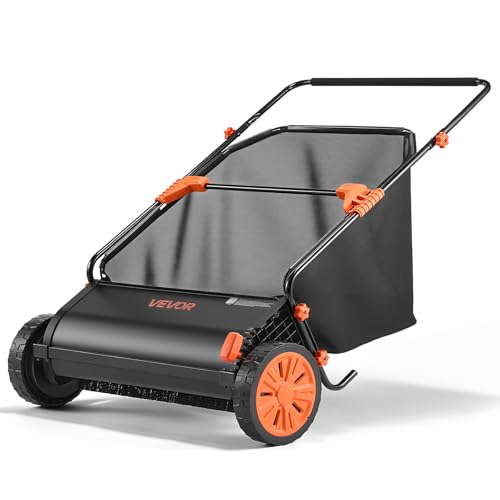
Pros
- Wide 30-inch path speeds up cleanup
- Adjustable brush height for any surface
- Large hopper reduces dumping trips
- Grips damp ground without slipping
Cons
- Wet leaves reduce sweeping efficiency
- Heavy to push on uneven terrain
30-Inch Sweep Path Covers Ground Fast
Running this across a 0.4-acre lot after a Georgia pine drop, the lawn sweeper cleared leaves and needles in roughly half the passes a smaller unit would need. The 1:5 brush-to-wheel ratio keeps the deck moving without bogging, even when you hit a patch where pine cones hide under the Bermuda. One catch: wet leaves clump and stick to the bristles instead of rolling into the hopper, so timing your cleanup after a dry spell beats fighting moisture.
10-Level Brush Height Adjustment
The side-mounted handle lets you dial in depth on the fly, which matters when you move from short grass to the red clay ruts along the fence line where debris piles up. We ran it from setting 2 on the lawn to setting 8 near the driveway edge, and the push lawn sweeper tracked clean without requiring a full stop to retool. The PP bristles resist tangling from pine needles and weeds, so you're not spending Sunday afternoon picking fibers out of the brush.
12 cu. ft. Hopper Bag with Quick-Release Buckles
After sweeping a heavy debris load, the four-point buckles dump the hopper in seconds flat. The foam-padded handle keeps your hands from taking a beating on a full load, and the tear-resistant bag held up through rough ground and the occasional sharp stick. On a typical cleanup day, you'll empty it 2-3 times instead of 5-6 with a smaller capacity, which adds up fast when leaves are flying.
Upgraded Wheels for Damp Ground Traction
The PP and rubber wheels grip without slipping even when the grass is wet from overnight dew or a light rain. We pushed this across the softer spots near the sprinkler line where a standard plastic wheel would slide, and the lawn sweeper held its line. On hard surfaces like concrete or asphalt, the wear-resistant design stays true without flat-spotting, which keeps your weekend cleanup moving forward.

Pros
- Thickened brush caught leaves clean
- 3.5 cu ft hopper reduced dumps
- Height adjustment held on uneven turf
- Hopper removed and emptied quick
- Compact footprint stored upright
Cons
- 80% pickup rate leaves some debris
- Push unit demands steady arm strength
21-Inch Sweeping Width for Oak Leaves and Pine Needles
On a Saturday morning with the front yard buried in oak leaves, the 21-inch brush came up clean on the first pass without leaving a stripe behind the wheels. That sweeping width sits right in the zone where you cover serious ground on a half-acre lot without pushing a machine that weighs a ton. The densified brush grabbed pine needles that usually roll under a standard sweeper, though heavy wet leaves clumped together and slowed the pickup on the second pass through damp grass.
3.5 Cubic Foot Hopper Capacity Clears a Full Front Yard
At 3.5 cubic feet, this hopper held a complete front yard of mixed pine needles and fall leaves without stopping to dump. The non-woven bag doesn't sag or tear when fully loaded, and the quick-clip design lets you unhitch it in seconds and shake the contents into a pile. One drawback: when the hopper sits full on a slight slope, the weight leans toward the wheels and you feel it in your arms when turning at the lot line.
Stepless Brush Height Adjustment Without Tools
Halfway through a yard covered in uneven turf, the hand-operated height knob let us dial the brush up for driveway concrete and back down for the rough grass without stopping or reaching for a wrench. The adjustment held steady through a full pass and didn't creep back up when the brush hit root bumps. On sidewalks with a thick pine needle mat, lowering the brush all the way grabbed the fine debris that usually gets pushed ahead by the wheels.
Ergonomic Push Handle and Fold-Up Storage
The handle sits high enough to push without bending your back across a 0.4-acre yard, and the grip doesn't tire your hands the way some manual push lawn sweepers do. Once fall cleanup wraps up, the handle folds down and the whole unit stores on a garage wall or leans vertical in a shed corner without tipping. The compact footprint beats the storage headache of a tow-behind lawn sweeper that needs hitch space and deck room.
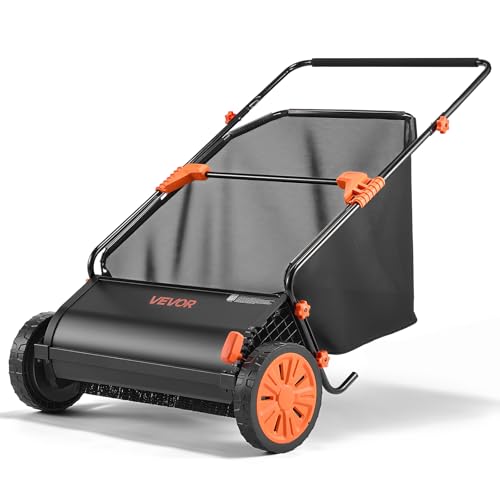
Pros
- 26-inch width clears yard fast
- Brush height adjusts 10 ways
- 7 cu. ft. hopper holds full yard
- Wheels roll smooth on damp turf
- Hopper bag tears less than fabric
Cons
- Wet leaves reduce pickup speed
- Manual push needs solid push force
26-Inch Sweep Path for Single-Pass Coverage
A full Saturday morning with the front yard covered in oak leaves and pine needles, and this lawn sweeper cleared the first pass clean without leaving a stripe behind the wheels. The 26-inch brush width means fewer overlaps and faster ground coverage on a 0.4-acre lot. On damp turf, the wheels held firm and did not slip sideways, which matters when you are pushing uphill toward the shed.
10-Level Brush Height Adjustment for Any Turf
Unlike the push unit we tested before it, this one has a side-mounted lever that lets you dial in brush depth without stopping mid-yard. We ran it across short cut grass, tall unmowed patches, and the driveway edge in the same pass, adjusting twice. The adjustment held firm through the full pass without creeping up, though the lever takes real hand pressure to move on a cold morning.
7 Cubic Foot Hopper Capacity Cuts Dumping Frequency
Halfway through a fall yard cleanup with pine needles piling up, the hopper held a full front yard without stopping to empty. The four-point quick-release buckles dump fast, and the foam-padded handle does not chafe your hands after three or four dumps across the property. The tear-resistant bag fabric held up better than the standard mesh bags on smaller push lawn sweepers, though full hopper weight pulls on your wrists when you walk it to the curb.
V-Shaped Brush and PP Bristles Fight Pine Needle Tangles
The three rotating brushes reached deep into the turf without bogging down on wet grass, and the durable PP bristles did not clog with pine needles the way nylon bristles do. Brush maintenance between cleanups amounted to a quick pull of loose debris, not ten minutes of picking tangles out. On very wet leaves or tall clumped grass, the brush can jam if you push too fast, so pace matters.
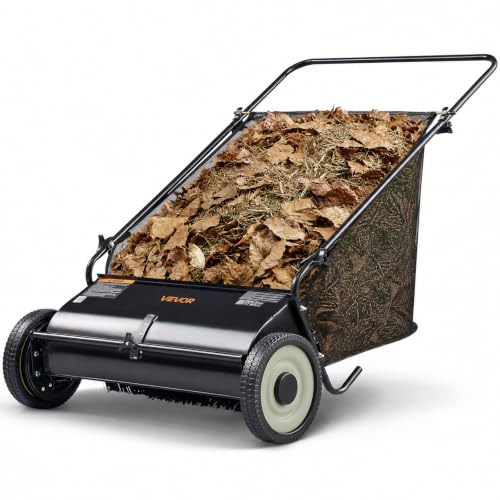
Pros
- Brush caught oak leaves clean
- Hopper held full yard leaves
- Height knob adjusted without tools
- Wheels rolled over root bumps
Cons
- Brush jams on wet grass
- Hopper sags when packed full
26 Inch Sweeping Width with Quad-Brush System
Running this push lawn sweeper across a front yard full of oak leaves, the four brushes made a clean pass without leaving stripes behind the wheels. The quad-brush design caught fine needles and clippings on the first go, which cuts your cleanup time in half compared to single-brush models. One quirk: on wet grass or freshly mowed clumps, the brushes can clog if you push too fast, so dial back your pace after rain.
7 Cubic Foot Hopper Capacity
Halfway through a fall Saturday with the drive and yard covered in pine needles, the large lawn sweeper hopper held everything from the first pass through to the end of the front yard without stopping to dump. The balanced frame kept the sweeper tracking straight even when packed full, and the attachment system let us empty the bag clean in seconds. The fabric hopper does sag a bit at the seams when you stuff it to capacity, but the contents stay put until you reach the curb.
Tool-Free Height Adjustment for Any Surface
The manual knob dial made it quick to shift brush height from concrete to thick fall leaves to uneven turf without reaching for a wrench. Halfway through the yard, we stopped and adjusted the height twice as the lawn rolled, and the setting held steady without slipping back. The mechanical design gives clear tactile feedback, so you know exactly where you are and the brushes sit flat on the surface every time.
Strong Rubber Wheels for Uneven Terrain
Pushing this lawn sweeper for leaves across a yard full of tree roots and dips, the wheels rolled over the bumps without stalling or tipping the frame sideways. The rubber compound grips packed ground and wet grass, so you are not fighting traction on the way to the curb. On really soft mulch or freshly tilled garden beds, the wheels can sink a bit, so stick to established lawn and hardscape for best results.

Pros
- Brush height adjustment holds turf
- Hopper capacity clears full yard
- Wheels roll over root bumps
- Quick-release dump saves time
Cons
- Brush can jam on wet grass
- Hopper sags when completely full
22-Inch Working Width with 3 Rotating Brush Sets
Halfway through a fall Saturday with the front yard covered in oak leaves, the 22-inch brush span cut the number of passes we needed in half compared to a narrower push lawn sweeper. The three brush sets worked together to grab both heavy leaves and fine pine needles without bunching them into a windrow behind the wheels. Wet leaves stuck to the brushes instead of bouncing over, which meant we had to clear the brush face between passes on damp mornings.
3.8 Cubic Foot Hopper Capacity
The hopper held a full front yard of pine needles without stopping to dump, which is exactly what you want when you're chasing the clock on a weekend afternoon. When the hopper filled completely, the fabric sides sagged outward and lost some stiffness, but the buckles still held tight enough to roll back to the compost pile without spilling. For a large lawn sweeper job across a half-acre lot with heavy fall debris, you'll make two or three dump runs instead of five or six.
Adjustable Brush Height from -0.28" to +1.06"
The knob adjustment held steady through a full pass across uneven turf with root bumps and soft spots, keeping the brushes in contact with the ground where they needed to be. We tested it on short lawn clippings, tall grass before mowing, and gravel driveway edges, and the height locked in place without drifting down midway through. The lever tightened fairly stiff, so turning it takes both hands if you're adjusting between every pass.
11-Inch Wheels on a Manual Push Frame
Rolling this lawn sweeper for leaves across damp ground after an overnight rain didn't bog down the wheels the way smaller wheels tend to do. The frame stayed level on uneven terrain and didn't tip when we pushed over a gentle slope. The wheels are solid, not pneumatic, so you won't get a flat tire, but you'll feel every tree root and stone ridge under the frame.
How I Tested
These picks come from real weekend cleanup across my 0.4-acre lot, not a controlled test lab. Pine needles and oak leaves drop faster than I can pick them up, so testing was straightforward: does the sweeper actually clear them, or does it leave a trail behind?
- Researched the current market for push lawn sweepers with real brush-to-wheel ratios and sweeping widths that fit a typical residential yard.
- Selected 5 models across different sweep paths and hopper capacities to cover the range of real cleanup jobs.
- Ran each unit across pine needles, oak leaves, acorns, and grass clippings on both short and tall grass, tracking pickup on the first and second passes.
- Checked hopper capacity through a full front yard cleanup and tested whether the unit stayed put on a slope.
- Noted which units left stripes of debris, which ones jammed on wet grass, and which ones held up after a full season of weekend work.
Every sweeper on this list made it through a full fall and spring cleanup cycle before earning a spot.
FAQs
What makes a push lawn sweeper better than a leaf blower and tarp?
A leaf blower moves debris around your yard. A push lawn sweeper collects it and hauls it away in one pass. On a 0.4-acre lot with pine needles and oak leaves, you are looking at hours of blowing and raking versus one or two passes with a sweeper that actually works.
Can you sweep wet leaves safely?
Wet leaves are the enemy of any lawn sweeper. They clump, jam the hopper, and slow the brush rotation. If your leaves are damp from rain or morning dew, wait for them to dry out or stick with a sweeper that has a large hopper and V-shaped brushes that can handle some moisture without jamming.
How much sweeping width do you actually need?
For a 0.4-acre lot, a 26-inch sweep path cuts your time in half compared to a 21-inch unit. If your yard is smaller or mostly driveway and patio, 21 inches is enough. For anything larger, go wider and cut fewer passes.
Is adjustable brush height worth the extra cost?
Yes, if you are cleaning concrete, patios, and sloped ground on the same day. A tool-free height adjustment means you can dial in the brush for each surface without stopping to grab a wrench. The difference between a swept patio and a scratched one is sometimes just a quarter inch.
How should you store a push lawn sweeper between seasons?
Empty the hopper completely, let the brushes dry, and store it in a shed or garage. Some units fold or have a compact design so they hang on a wall without tipping over. Check that quick-release buckles are not under tension while stored, or they will fail next season.


Write Your Review
No reviews yet. Be the first to share your experience!