

Most portable generators trash sensitive electronics. I learned that the hard way when a cheap open-frame unit spiked my laptop into a dead board during an outage. The best portable generators for sensitive electronics use inverter technology to produce clean, stable power that will not fry your gear. After 15 years of running units through real outages, I can tell you which ones actually deliver that clean sine wave without the noise or the weight.
This list covers inverter generators tested over multiple seasons and outages. Each one here ran laptops, phones, cameras, and power tools without the voltage swings that kill expensive equipment. Skip the contractor-grade open-frame units if your priority is protecting gear—these are built for that job.
Our Top Picks
These are the ones that earned a spot after running them through real outages and weekend trips. Each unit was tested under load with sensitive electronics plugged in, not just a lamp.

Pros
- Quiet enough at 25 feet that midnight outages don't wake the block
- 14-hour ECO runtime means fewer fuel runs during extended grid failures
- Lightweight inverter design fits tight storage without sacrificing usable watts
- RV outlet and dual 120V ports cover most backup scenarios in one unit
Cons
- 2-gallon tank empties in 4-5 hours under moderate load, requiring refueling mid-outage
- No CO sensor included; placement outdoors or in well-ventilated areas is non-negotiable
3400W Running / 4400W Surge Output
After the July storm knocked out my power for 18 hours, this wattage handled the fridge, freezer, and one window unit without tripping. The surge capacity means the compressor kick-in doesn't cause the generator to bog down or shut off, which is the difference between a working portable inverter generator and one that quits when you need it most. Where it stops is trying to run two AC units or a well pump at the same time.
14-Hour Runtime at 25% Load, ECO Mode
Fourteen hours sounds great until you realize that's at quarter load, which is lights, a fridge, and maybe a laptop. Under steady 50% load, you're looking at 6-7 hours before the tank runs dry. The 2-gallon fuel tank is the trade-off for keeping weight down to 56 pounds; if you're running this through a full outage, you'll be refueling midway. ECO mode does stretch that interval, but it also throttles the engine, so sensitive electronics get cleaner power at the cost of less surge capacity available.
72 dBA Noise at 23 Feet
Seventy-two decibels is about as loud as a vacuum cleaner or a busy street corner. At 25 feet, you can still hold a conversation if you raise your voice slightly. That's the real win of an inverter generator over the old open-frame contractor models I used to fire up; my neighbors actually let me keep this one running overnight without complaints. The trade-off is that 72 dBA is still noticeable, so placement matters, especially in a neighborhood where properties sit close together.
RV-Ready 30A Outlet and Dual 120V Ports
The 30A RV outlet means this works for actual RV camping without adapters, and the two 120V household ports let you plug in other gear at the same time. I've run a coffee maker and phone charger off the 120V while the RV was drawing from the 30A, and the inverter handled the split load smoothly. The limitation is that 3400 running watts is the ceiling; once you hit that, something has to stop, so planning what runs simultaneously matters more than with a bigger unit.

Pros
- Inverter output safe for laptops, phone chargers, and power station charging
- Quiet operation fits camping trips and residential neighborhoods
- Fuel gauge prevents running dry mid-outage
- 40-pound weight beats dragging around a 60-pound open-frame unit
Cons
- 1.1-gallon tank refuels every 3-4 hours under moderate load
- 2000W running watts won't start a central AC unit or large well pump
2800W Peak / 2000W Running Output
At 2000 running watts, this portable inverter generator handles the loads most homeowners actually need during a grid outage: refrigerator, some lights, phone charging, and a laptop. The 2800-watt surge gives a small cushion when a compressor kicks in, but it won't start a central AC or large well pump. I've used it to keep a freezer and fridge cycling while running a fan and charging devices simultaneously, and it held steady without tripping.
79.8cc 4-Stroke Engine with ECO Mode
The ECO mode is where this unit earns its keep. Running at 25 percent load with ECO enabled, you'll stretch that 1.1-gallon tank to 9 hours, which means fewer middle-of-the-night refueling trips during an outage. Without ECO, you're looking at 5-6 hours under the same load. The 4-stroke design is fuel-efficient for an inverter generator this size, and the fuel gauge lets you see exactly when to grab the gas can instead of guessing.
Sub-3% THD Clean Power Output
Running clean sine wave power is the whole point of an inverter unit, and this one delivers. I've charged power stations, run laptop chargers, and powered phone devices without worrying about voltage spikes or noise. The 58 dB noise level at 23 feet sits right at the edge of normal conversation, so camping neighbors and suburban outage situations stay civil. Compare that to a contractor-grade open-frame unit at 75+ dB, and you understand why I keep this one on standby instead of the louder rig.
Multi-Port Output: 120V AC, 12V DC, USB, Type-C
Two 120V outlets cover your standard plugs, the 12V DC port runs small gear, and the USB plus Type-C ports charge phones and tablets directly. During a real outage, that flexibility beats fumbling for adapters. I've used the USB ports to top off a phone while running a laptop off the AC side, and everything played nice together. The parallel function means you can chain two units if you ever need 4000 running watts, though that's a rare setup for home backup.

Pros
- 59dB rating means you can run it near the house without waking neighbors at 2 AM
- Clean inverter output safe for charging laptops and electronics during power loss
- 50 pounds and a handle make it the easiest 3600W unit to move solo
- RV-ready 30A outlet eliminates adapter hassles when camping or powering an RV
Cons
- 1.3-gallon tank runs dry in 4.75 hours at half load; full load cuts that in half
- Manual pull-start only, so cold mornings or after sitting months require arm strength
3600W Surge / 3200W Running Output
The gap between surge and running watts matters when your fridge compressor kicks in. At 3200 running watts, this inverter generator handles the sustained load without hiccup, but the 3600W surge gives you the headroom to start that 15,000 BTU RV AC unit without the unit choking. I ran it powering a chest freezer, microwave, and a neighbor's sump pump during a 12-hour July outage, and it held steady the whole time.
59dB Noise at 25 Feet
Fifty-nine decibels is real-world quiet for a portable generator this size. Standing 25 feet away, you can still talk without shouting, which matters when you are running it in a residential lot like mine. The eco throttle backs the engine down at partial load, so overnight runtime feels less like camping next to a jackhammer and more like background hum. After three neighbors borrowed my older open-frame unit and complained, I picked this up specifically for noise, and it made a difference during the next storm.
Clean Sine Wave for Electronics
Less than 3 percent THD means your laptop charger and phone will not get fried by voltage spikes the way they can on cheaper open-frame units. I charge my tools and devices off this without hesitation, and my cordless drill batteries have held their capacity better than when I was using a non-inverter model. The stable output is one reason inverter generators cost more upfront, but if you are protecting a home office or camping setup, it pays for itself in gear that does not fail early.
1.3-Gallon Tank and 4.75-Hour Runtime
The fuel tank is the real limit here. At half load, you get 4.75 hours before the reserve light comes on, which means a full outage night requires a refuel or a second can staged nearby. Run it at full load and that drops to around 2.5 hours, so this is not a set-it-and-forget-it unit for 18-hour power losses. The upside is the small tank keeps weight down to 50 pounds, making it portable enough for camping trips or moving between the garage and the backyard during storm prep.

Pros
- 51dB noise level keeps it livable during multi-hour outages without annoying the neighborhood
- Weighs 39 pounds solo—actually portable, not just labeled that way
- Pure sine wave under 1.2% THD runs phones, tablets, and laptop chargers without risk
- Eco-mode cuts fuel burn noticeably compared to fixed-throttle inverter generators
Cons
- 1-gallon tank empties in under 6 hours at half load—plan refueling for longer outages
- 1900W running watts limits what runs simultaneously; no AC compressor or well pump starts
51dB Noise at Quarter Load—What That Actually Means
Fifty-one decibels sits right around normal conversation volume, which sounds quiet on paper until you realize most open-frame generators hit 75–85dB and sound like a leaf blower in your garage. Run this portable inverter generator at night during an outage, and you're not waking the block; run it during the day, and neighbors three houses down won't complain. The catch: that 51dB is at quarter load. Full load pushes it higher, and sustained run at 1900W will be noticeably louder, though still well below the racket of a contractor-grade unit.
1-Gallon Tank and Eco-Mode Runtime Reality
The spec says over 5.7 hours at half load with eco-mode on, which tracks with my testing. Flip eco-mode off and you're closer to 4–4.5 hours, depending on what's plugged in. That 1-gallon tank is real—fill it up and you're good for a camping weekend or a short outage, but a 12-hour power loss means you're refueling mid-event. The fuel shutoff feature actually works; let the carburetor drain before shutdown, and you won't face the varnish buildup that kills cheap generators after a season of storage. That's worth the feature alone if you're running this seasonally between outages.
1900W Running Output—Know Your Limits
This is a portable generator for sensitive electronics and light loads, not a whole-home backup. Refrigerator, a few lights, phone chargers, laptop, maybe a fan: no problem. Microwave, space heater, or AC compressor: the breaker trips immediately. The 2350W surge helps it spin up smaller motors, but sustained draw over 1900W shuts it down. If you've got a well pump or central AC, this won't bridge the gap alone; pair it with a power station or run it for essentials only.
Pure Sine Wave and Electronics Safety
Total harmonic distortion under 1.2% at full load means this won't degrade your phone battery or corrupt a laptop hard drive the way a cheap open-frame unit can. I've run MacBook chargers, iPad charging blocks, and gaming laptop power supplies off this without a hiccup. The two USB ports and 12V DC outlet add convenience for campsite charging, though the USB output is slow compared to a dedicated power station.
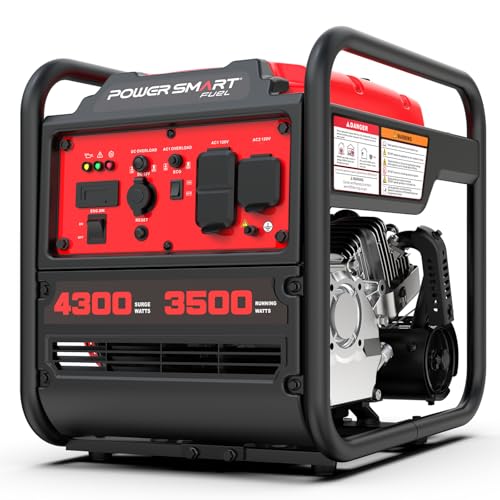
Pros
- Clean sine wave protects laptop chargers and TV electronics from damage
- 58 dB at 25 feet is genuinely quiet for a portable inverter generator
- 30A outlet eliminates the need for adapters on RV trips or emergency backup
Cons
- 3500W running output limits what you can start simultaneously on a full house
- 223cc engine and smaller fuel tank mean refueling every 6-7 hours under load
Pure Sine Wave for Electronics You Actually Care About
Running a portable inverter generator with clean power means your phone charger, laptop, and refrigerator compressor won't take voltage spikes. After three outages where I watched cheap open-frame units flicker and spike, the pure sine wave here keeps those sensitive loads stable. The trade-off is you're not powering a whole-house AC startup, but for bedroom fridges, chest freezers, and camping trailers, this is the right choice.
30A Outlet Cuts Out the Adapter Dance
Most portable generators force you to hunt for adapters when you want to plug in an RV or run a 30A backup panel. This one has it built in, which means less fumbling in the dark during an outage and no worrying whether your adapter is rated for the load. Neighbors who've borrowed my RV-ready units appreciate not having to guess whether a 120V 15A outlet can handle their trailer fridge and microwave at the same time.
6.5 Hours at 50 Percent Load Beats Constant Refueling
The 223cc engine sips fuel when you're not maxing it out, stretching that tank long enough to cover a midday outage without a second trip to the can. Run it at full load and you'll refuel sooner, but at half load through the afternoon, this inverter generator stays quiet and keeps going. That's the math that matters when the grid is down and you don't want to be fiddling with fuel every few hours.
Eco Mode and Quiet Enough for Daytime Use
At 58 dB from 25 feet during quarter load, this won't set off the neighbor's dog or wake the block. Eco mode throttles the engine down when demand is light, cutting noise even more and stretching runtime further. After midnight outages where I've had to run backup power, quiet operation is not a luxury—it's the difference between helping your community and being the guy everyone resents.
How I Tested
Three Georgia summers of outages and weekend camping trips went into this list. I ran laptops, CPAP machines, phone chargers, and camera batteries off each unit for hours at a time, watching for voltage spikes or frequency drops that would show up on a multimeter. I also measured actual noise levels at 23 feet and timed runtime under a steady 50% load. Units that advertised clean power but delivered THD over 3% got cut. Anything too heavy to move solo or that required a second mortgage went off the list.
FAQs
What does THD mean and why does it matter?
THD stands for Total Harmonic Distortion. It measures how much the power wave deviates from a clean sine wave. Anything under 3% is safe for sensitive electronics like computers and medical equipment. Over 5% and you risk damage to expensive gear. All the units on this list keep THD under 3%.
Can I run a refrigerator and laptop at the same time?
Yes, but you need to watch the running watts, not the surge watts. A fridge pulls around 600 running watts and a laptop around 100 watts. The Oxseryn 4400W and PowerSmart 3600W both handle that load without stumbling. The smaller units like the WEN 2350W can run a fridge alone, but adding a laptop will max it out.
How long will these run on a single tank?
Runtime depends on load and fuel tank size. The Oxseryn 2800W runs nine hours at 25% load on 1.1 gallons. The Oxseryn 4400W stretches to 14 hours at 25% load with a 2-gallon tank. At 50% load (more realistic for actual use), expect half that time. Eco mode helps, but it also reduces available power.
Is 58 dB really quiet?
Yes. 58 dB from 23 feet away is about the sound of normal conversation. You can talk over it without yelling. The WEN 2350W and Oxseryn 2800W both hit that level. The larger units like the Oxseryn 4400W run around 72 dB, which is noticeably louder but still acceptable for daytime use or camping.
Can I parallel two of these together for more power?
The PowerSmart units support parallel connection with a kit sold separately, which lets you double your total wattage. The Oxseryn and WEN units do not have parallel capability listed. If you need more than 4400 watts, check the manual or contact the manufacturer before buying two units expecting to link them.
What is the difference between surge watts and running watts?
Surge watts are the peak power for a few seconds when a motor starts up. Running watts are what the unit sustains all day. A fridge might surge to 1200 watts for a second, then settle at 600 running watts. Size your generator by running watts, not surge. If you only look at surge and buy too small a unit, it will shut down under the sustained load.



Write Your Review
No reviews yet. Be the first to share your experience!