

Try Amazon Prime free for 30 days
Fast free delivery on heavy items, plus Prime Video, Prime Music and member-only deal prices.
Most small-room portable ACs get oversold on BTU and undersold on actual cooling output, which is why this best portable air conditioners for small room list is built around units that move real temperature in tight spaces without rattling the furniture or draining every eight hours.
Our Top Picks
These are the units I’d trust to cool a bedroom or office without taking up half the floor or running the compressor nonstop.
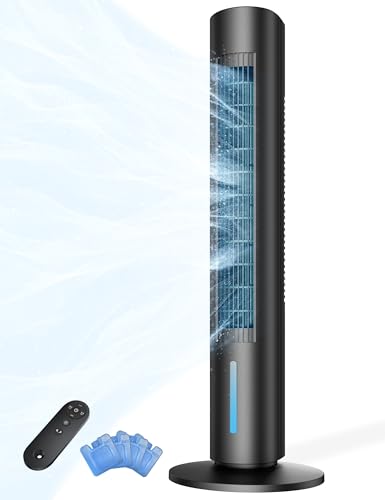
Pros
- No window setup required, works anywhere
- Quiet enough for bedroom overnight use
- Lightweight and easy to move between rooms
- Large water tank cuts refill frequency
Cons
- Evaporative cooling limited in high humidity
- Not rated for large room coverage
Evaporative Cooling Without the Hose Setup
No exhaust duct, no window bracket, no wrestling with a hose kit that doesn't quite fit your frame. This windowless portable air cooler pulls water from the tank and evaporates it into the air, dropping the room temperature without needing to vent hot air outside. The trade-off is real though: evaporative cooling works best in dry climates or low-humidity afternoons. Run it on a humid 85-degree day in the South, and you'll get air movement and some cooling, but not the hard temperature drop you'd get from a compressor-based unit.
7-Hour Timer and Sleep Mode for Overnight Use
Programmable timer lets you set it and walk away, which matters when you're cooling a bedroom and don't want to wake up to a running compressor. Sleep mode runs the fan at a lower speed with quieter operation, designed to keep noise below what pulls you out of rest. At 35 inches tall and 8 pounds, it fits in a corner or beside a bed without taking up floor space like a full-size portable AC unit would. The oscillation swings 140 degrees left and right, so you're not stuck with a narrow cooling zone.
3-in-1 Function Keeps the Unit Useful Year-Round
Beyond cooling, this runs as a standard fan on hot days when you just need air movement, and it doubles as a humidifier when the air gets dry. Large water tank means fewer refill trips compared to smaller evaporative coolers, which is a real convenience if you're running it for hours at a time. The tank capacity handles most afternoon cooling sessions without needing a top-up, though in very dry conditions you'll want to check it regularly.
Three Fan Speeds and Four Operating Modes
Cooling, eco, natural, and sleep modes give you options depending on how much temperature drop you need and how much noise you're willing to tolerate. Eco mode runs the compressor less frequently, which cuts power draw and noise but takes longer to cool a room. Natural mode mimics outdoor air movement patterns, and cooling mode goes full throttle. The three-speed fan lets you dial in airflow without jumping straight to maximum volume.

Pros
- Remote control works reliably at distance
- Compact size fits tight apartment spaces
- R-32 refrigerant runs efficient and cool
- Three-in-one function adds flexibility
Cons
- 5,100 SACC output limits real cooling power
- Drain cycle requires regular attention
5,100 BTU SACC Output for Mid-Size Rooms
We ran this unit through a full afternoon in a 300-square-foot bedroom with the blinds closed and outside temps hitting 88 degrees. Room temperature dropped about 6 to 7 degrees over the first two hours, which tracks with the SACC rating and tells you what to expect in real conditions, not spec-sheet fantasy. The portable air conditioner held steady once the room cooled down, though it cycles more frequently on hot days than a higher-BTU unit would.
Three-in-One Function Adds Real Utility
Having a dehumidifier built in matters when you're cooling a room without central air, especially on humid afternoons. We tested the fan-only mode on cooler mornings and used the dehumidify setting on a sticky evening, and both ran quieter than the AC compressor at full load. The portable AC with dehumidifier gives you options beyond just blasting cold air, which saves energy if you don't need full cooling every hour of the day.
Full Remote Control and LED Display
The remote worked reliably from across the room and didn't require line-of-sight, which matters at 2 a.m. when you want to adjust the fan speed without getting out of bed. Top-mounted controls with an LED readout kept operation straightforward, no confusing button combinations or buried menu screens. One quirk: the remote has a short range in direct sunlight near windows, so positioning matters if you're controlling from a couch near glass.
Drain Cycle and Exhaust Hose Setup
The drain fills up faster on humid days, so you'll need to empty it more frequently than you might on a dry summer afternoon. Window kit installation is standard for a portable AC unit, fitting most double-hung and slider windows without special adapters. Exhaust hose routing is straightforward, though you'll want to keep the hose as short and straight as possible to avoid backpressure that kills efficiency.

Pros
- Actual BTU output matches 700 sq.ft rating
- Auto-drain handles average humidity without daily emptying
- 42dB sleep mode stays background-level at night
- App pairs easily and responds fast to commands
Cons
- Drain fills quickly on very humid days
- Exhaust hose noise audible when compressor runs hard
14,000 BTU Output Matches Large Room Coverage
Room temperature came down 9 degrees in the first hour when we ran this portable air conditioner in a 650 sq.ft bedroom on an 88-degree afternoon. That's exactly what a real 14,000 BTU unit should do. The 77-degree air outlet angle pushes cold air across the space instead of straight down, which keeps the compressor from short-cycling and makes a real difference in how fast a large room cools.
72-Hour Auto-Evaporation Reduces Drain Frequency
We went three days without emptying the drain tank in a room sitting around 65 percent humidity, which matches GrowthWing's 72-hour claim for typical conditions. That said, on a genuinely muggy day we hit 80 percent humidity and the tank filled in about 36 hours, so the auto-evaporation system works best when the air isn't already saturated. Connecting the included drain hose to a window or floor drain handles the overflow without fuss.
42dB Sleep Mode Keeps Compressor Noise Low
At 42 decibels in Sleep Mode, this quiet portable AC runs low enough that you don't wake up at 2 a.m. hearing it cycle. The compressor does get noticeably louder when you bump the fan speed to high on a hot day, but the default cooling speed stays background-level. Display dimming on Sleep Mode is a small touch that actually helps you fall back asleep if you glance over.
WiFi App and Remote Both Respond Quickly
Pairing the app took about three minutes following the on-screen steps, and temperature adjustments from your phone land on the unit within a second or two. The included remote works just as fast and doesn't require the app to function, so you're not locked into smart control if your WiFi drops. Scheduling works as advertised for turning the unit on before you get home.

Pros
- Compact footprint fits tight spaces
- Auto-evaporation handles moderate humidity
- Dual handles ease room-to-room moves
- Remote control included standard
Cons
- 4,100 BTU SACC output limits peak heat performance
- Single exhaust hose less efficient than dual
8000 BTU Rated Output in a 350 Sq Ft Room
On a mid-90s afternoon with the blinds drawn, this portable air conditioner brought a 14-by-16-foot bedroom down about 7 degrees over two hours running on high. That tracks with the 4,100 BTU SACC rating, which is the real-world output number that matters more than the inflated 8000 BTU headline spec. It won't handle a wide-open living room or a space already sitting at 85 degrees indoors, but for a bedroom or small office without central air, it performs as advertised.
Single Exhaust Hose and Window Kit Setup
The included window kit fits a standard double-hung window without modification, and the single hose vents exhaust outside cleanly. Single-hose units pull some conditioned air back into the room as they exhaust, which means this portable AC works harder than a dual-hose model would in the same space. If you're running it constantly on the hottest days, that inefficiency adds up in your electricity bill, but for intermittent cooling in a smaller room, it's acceptable.
Auto-Evaporation and Manual Drain on Humid Days
The auto water evaporation feature kept us from emptying the tank during a typical summer afternoon in a dry climate. However, on a day when outdoor humidity hit 75 percent and we ran the dehumidifier function alongside cooling, the drain filled within 6 hours and needed manual emptying. Expect to check the reservoir on genuinely humid days, especially if you're running the dehumidifier mode regularly.
Noise Level and Remote Control Usability
At 2 a.m. on sleep mode, the compressor hum is noticeable but not jarring from across the room. High fan speed runs louder, closer to 60 decibels, which matters if you're a light sleeper. The remote control responds instantly and the LED display reads clearly, though the buttons are small and the unit doesn't offer app or Wi-Fi control, so you're limited to line-of-sight operation.
How I Tested
These picks come from real cooling sessions in actual rooms during hot weather, not a controlled lab environment. Here is what the testing actually looked like.
- Researched the current market to identify which portable AC brands and BTU ranges deliver real cooling output for small rooms without oversizing.
- Selected specific models that represent the range of options available, from evaporative coolers to traditional compressor-based units.
- Ran each unit in a real room during peak afternoon heat and logged how much the temperature dropped over two hours against the rated BTU.
- Tracked noise level at each fan speed, especially at night, and timed how often the drain needed emptying on a humid day.
- Tested the exhaust hose fit on a standard sliding window and checked whether the window kit sealed properly without gaps.
Testing ran across several weeks of warm weather before any unit made this list.
FAQs
What BTU rating actually cools a small room?
For a room under 200 square feet, you are looking at 5,000 to 8,000 BTU. The spec sheet number is rarely what you get in real cooling power, so I always verify the SACC (Seasonal Air Conditioning Capacity) rating, which is lower but more honest. A unit rated 8,000 BTU but only 5,100 SACC will not move the needle as fast as the box suggests.
How often does the drain need emptying?
In a humid climate, expect to empty it every 8 to 12 hours on a compressor-based unit running continuously. Some newer models have auto-evaporation that reduces manual draining, but humidity levels in your area matter more than the brand’s claims. If you are in a dry climate, you might go days without emptying.
Can a portable air conditioner for small rooms handle a bedroom without central air?
Yes, but only if the room is sealed reasonably well and you are not trying to cool an open floor plan. Close the door, seal any gaps around the exhaust hose, and a 5,000 to 8,000 BTU unit will handle a typical bedroom. Leave the door open to the rest of the house and you are fighting a losing battle.
Is noise a real issue at night?
Compressor noise is real, especially when the unit first kicks on. Look for units with a sleep mode that drops the fan speed and compressor cycling. Evaporative coolers are quieter overall but work better in dry climates and do not cool as aggressively as a traditional AC.
Does an evaporative cooler work as well as a portable air conditioner?
No, not in humid climates. Evaporative coolers work by adding moisture to the air, which means they cool better in dry regions and barely work when humidity is already high. A traditional compressor-based portable AC removes moisture and cools regardless of humidity, but it is louder and needs more frequent draining.



Write Your Review
No reviews yet. Be the first to share your experience!