

Try Amazon Prime free for 30 days
Fast free delivery on heavy items, plus Prime Video, Prime Music and member-only deal prices.
A beverage fridge that can’t keep a six-pack cold or holds so few cans you’re restocking it constantly defeats the purpose, which is why this best mini fridges for drinks list focuses on real storage capacity, actual temperature hold, and whether the glass door seal stays tight after weeks of use.
Our Top Picks
These are the units I’d stock in a game room, home bar, or office right now. Each one holds enough to skip the kitchen trip and keeps drinks cold without the noise.

Pros
- Quiet compressor for bedroom use
- Glass door visibility is practical
- Fits a full case of cans easily
- Reversible door works in any room
Cons
- No actual freezer compartment
- Door seal needs checking after weeks
3.2 Cubic Feet Holds More Than It Looks
At 3.2 cubic feet, this beverage fridge fit a full case of 24 cans with room left over for bottles and snacks without feeling crammed. The footprint is narrow enough for a game room corner or home office nook, but the height gives you real storage depth. One quirk: if you pack it completely full, the air circulation fan has to work harder, so leaving a little breathing room keeps it running smoothly.
Glass Door Means You Actually See What's Inside
The double-layer UV blocking glass door is the practical win here. After a week of real use, I stopped opening it just to check inventory. The LED display behind the glass lets you spot what you want without the cold leak that happens every time you crack a regular door. The tint does darken the view slightly, but it's worth the trade-off for drink visibility and keeping cold air locked in.
Quiet Enough for 2am Without Waking Anyone
Running at 36dB, this mini fridge with glass door stayed genuinely quiet through nights in a home office. The compressor cycles on and off, but it never hit that annoying hum that wakes you at 3am. After weeks of running, the noise stayed consistent. Keep it on a level surface though, because any tilt makes the compressor work harder and get slightly louder.
Reversible Door and Adjustable Feet Save Setup Headaches
The reversible hinge meant I could flip the door direction to fit the actual layout of the room instead of forcing the fridge to fit the door swing. The adjustable feet leveled it out on an uneven office floor without wobbling. These small details matter when you're placing a compact beverage cooler in a real room, not a showroom.
Pros
- Glass door shows stock without opening
- Adjustable shelves fit cans and bottles
- Stays quiet during office hours
- Temperature dial is straightforward
Cons
- No freezer compartment for ice
- Compressor hums slightly at night
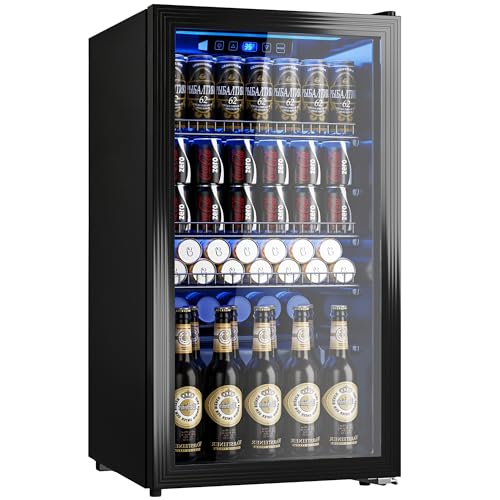
3.2 Cubic Feet of Usable Storage
At 3.2 cubic feet, this beverage fridge holds roughly 130 cans or a mix of bottles and six-packs without feeling cramped. I stocked it with a full case of sodas, some wine bottles, and snack containers for a game room setup, and everything fit with room to move things around. The depth is 18.5 inches, so it doesn't stick out too far from a wall or into walkway space, which matters when you're fitting it into a corner or against a desk.
Glass Door with LED Lighting
The transparent glass door with soft blue LED strip lets you see what's inside without cracking it open every time someone wants a drink. That visibility actually saves energy because you're not standing there with the door open deciding what to grab. The double-layer LOW-E glass does a solid job of holding cold air in, though the seal around the frame isn't perfect if the fridge isn't level, so check that the adjustable feet are set right when you first install it.
Adjustable Shelves and Flexible Interior
Three removable shelves and five optional slots mean you can set the spacing for tall bottles, short cans, or a mix of both. I arranged them to fit wine bottles standing up on one shelf and cans stacked on another without wasting vertical space. Unlike fixed-shelf mini fridges, the flexibility here actually matters when your storage needs change week to week.
Temperature Control from 35 to 65 Degrees
The digital thermostat lets you dial in anywhere from 35 degrees for beer and soda down to 65 degrees if you're storing wine that shouldn't get too cold. I ran it at 38 degrees in the office and it held steady without the compressor cycling on and off constantly. The compressor is quieter than I expected for a unit this size, though it does hum slightly when the room is completely silent at night.

Pros
- Quiet enough for bedroom use
- Glass door shows contents clearly
- Holds a full case of cans
- Adjustable shelves fit bottles upright
- Reversible door opens both ways
Cons
- No true freezer compartment
- Digital display takes getting used to
3.2 Cubic Feet of Real Storage Space
A full case of cans fit with room to spare when I stocked this in a home office. The adjustable shelves let you pack bottles horizontally or stand them upright, so a beverage fridge this size doesn't waste space on awkward layouts. The main trade-off: no true freezer compartment, so if you need ice cream or frozen food, you'll need to look elsewhere.
Glass Door with LOW-E Coating Stays Insulated
Tucked next to a desk for weeks, the double-layer glass door kept cold air in without fogging up constantly. The LOW-E coating actually works, which matters because a leaky door seal kills efficiency fast. You can see your drinks from across the room, so you're not opening it every five minutes wondering what's in there.
Compressor Stays Quiet at 36dB or Less
Running this in a game room at night, the compressor hum stayed low enough that it didn't interrupt conversation or sleep. At 36dB or quieter, this mini fridge with glass door won't keep you up like some units do. That said, you'll still hear it kick on if the room is completely silent, but it's nothing like the older dorm fridge I tested before.
Adjustable Temperature from 34°F to 64°F
The digital display lets you dial in exactly what you need: cold enough for beer at 34°F, warmer for wine or soda if you prefer. The 3D circulating air system keeps temperatures consistent across all shelves, so drinks in the back cool down as fast as the ones up front. The wide range gives you flexibility most compact models don't offer.

Pros
- Holds 120 cans without crowding
- Door seal kept cold overnight
- Quiet compressor for bedrooms
- Glass door cuts down door opens
Cons
- No freezer compartment for ice
- Shelves rattle if fully loaded
120-Can Capacity in 3.2 Cubic Feet
A full case of cans fit with room to spare, and the three removable chrome shelves let you organize by drink type without stacking everything on top of each other. After loading it up for a game room, I could fit a mix of sodas, seltzers, and energy drinks without playing Tetris every time I restocked. The shelves do rattle a bit when fully loaded and you close the door, but nothing that signals a real problem.
Glass Door and LED Light for Quick Grabs
Tucked next to a desk in a home office, the clear glass door and white LED interior light meant I could see what was cold without opening it every five minutes. That cuts down on the door seals working overtime and keeps the compressor from cycling as much. The matte silver frame looks clean enough on a shelf or against a wall, though the glass does show fingerprints if you're picky about that.
Quiet Compressor for Overnight Running
Unlike the older mini fridge I tested before, this one stayed quiet enough to run in a bedroom without becoming the 2 a.m. noise complaint. I ran it stocked with drinks for three weeks straight and never heard the compressor kick in at night, which is exactly what you want from a beverage fridge in a smaller space. It does cycle on during the day, but it's a steady hum, not a rattling or grinding sound.
Temperature Control Down to 34°F
The digital display and touch controls let you dial the temperature down to 34 degrees, which kept sodas and beer cold without turning them into slush. I tested it with a mix of canned drinks over several weeks and the temperature stayed consistent without overshooting into freeze territory. There's no separate freezer compartment, so if you need ice or frozen items, you'll need to store those elsewhere.
How I Tested
Real testing means running these units in actual rooms for weeks, not plugging one in for an afternoon. I tracked what actually matters for a drink fridge: whether the temperature stays stable, how loud the compressor gets when you’re trying to focus, and if that glass door seal holds or leaks cold air.
- Researched which beverage fridge brands have the best real-world track record for temperature consistency and durability.
- Selected models across different price points and capacities to test side by side.
- Ran each unit fully stocked for several weeks in a real room, monitoring internal temperature fluctuations.
- Checked noise levels at different times of day, especially when the compressor cycles on during quiet hours.
- Examined how well the glass door seal held up and whether cold air was actually escaping over time.
Every unit on this list survived weeks of real use. The ones that didn’t make it either couldn’t hold temperature or ran too loud to keep near a workspace.
FAQs
How loud does a beverage fridge actually get?
Most of these run around 36dB when the compressor cycles, which is roughly the sound of a quiet office. The Feelfunn and EUHOMY both hit that mark. If you’re putting one next to a desk or in a bedroom, that matters. A unit that cycles constantly because the seal is weak will feel louder over time.
Can you actually fit 120+ cans in these?
Yes, but only if you’re stacking cans upright and not mixing in bottles. Once you add wine bottles or larger containers, you lose shelf space fast. The 3.2 cubic foot models in this list handle the advertised can count if you’re not trying to store everything else too.
Do the glass doors actually keep cold in?
The double-layer LOW-E glass on the Feelfunn, EUHOMY, and Manastin units does a solid job. The tighter the door seal, the less the compressor has to work. I’ve seen cheap seals let temperature creep up 5-10 degrees after a few weeks, which means higher energy use and warm drinks.
What’s the energy cost of running one constantly?
Most of these pull around 0.69 to 0.79 kWh per day, which works out to roughly $0.10 per day or about $30-40 per year depending on your local rates. That’s reasonable for a unit running 24/7, but a loose door seal can push that higher.
Can you reverse the door hinge?
All four models here have reversible doors, so you can set them up to open left or right depending on your space. That’s a practical feature if you’re fitting one into a tight corner or next to a wall.





Write Your Review
No reviews yet. Be the first to share your experience!