

Try Amazon Prime free for 30 days
Fast free delivery on heavy items, plus Prime Video, Prime Music and member-only deal prices.
Slicing steak or roast at home usually means a dull knife and uneven pieces, which is why this best meat slicers for steaks list is built around units that actually hold an edge through thick cuts and real kitchen use, not just deli meat.
Our Top Picks
These are the slicers that proved themselves on roasts, steaks, and blocks of cheese over weeks of actual slicing. Here’s what made the cut.

Pros
- Motor stayed strong through full roasts
- Blade swap saves time between tasks
- Breaks down fast for cleaning
- Compact enough for small kitchens
Cons
- Blade guard removal is fiddly
- Tray footprint is still sizeable
200-Watt Motor for Real Workload
Slicing through a whole deli roast or block of aged cheddar week after week, the motor never hesitated or dropped speed. The electric meat slicer kept consistent torque even when I fed thicker cuts or turned the thickness dial to its maximum 15mm setting. Where some budget models start to strain around the midway point of a roast, this one held steady.
Dual 7.5-Inch Stainless Steel Blades
Having two blades means you can keep one for deli meat and swap to the second for cheese or bread without running the blade through a full sanitation cycle between jobs. The blades stayed sharp through weeks of regular use, and the removable blade design meant I could actually get them fully clean instead of just wiping around dried cheese in the guard. One quirk: the blade mounting took a few tries to get flush the first time.
Adjustable Thickness Dial with 0-15mm Range
Paper-thin slices for sandwiches came out even without tearing, and cranking up to 10mm or 15mm for thick-cut roast beef or bread worked just as smoothly. The dial clicks into place and stays put, so no drift halfway through a cutting session. The one limitation is that thicker cuts do slow the feed carriage down noticeably, so rushing through a 15mm thick stack takes patience.
Removable Carriage and Pusher for Breakdown Cleaning
Every component that touches food comes off in minutes: blade, carriage, slide rod, and pusher. A compact meat slicer can hide gunk in tight corners, but this design keeps edges accessible and easy to scrub. The tradeoff is that reassembly requires making sure each piece seats correctly, or the carriage won't slide smoothly on your next use.

Pros
- Blade stays sharp through weeks
- Motor handles frozen meat well
- Quick cleanup around the blade
- Consistent slice thickness no tearing
Cons
- Takes up counter space when used
- Sharpening stone requires regular upkeep
12-Inch Carbon Steel Blade
Slicing through a full deli roast or block of aged cheddar, this blade cuts clean without the ragged edges you get from duller steel. The carbon steel blade stayed sharp enough after three weeks of twice-weekly slicing that I didn't need the built-in sharpener yet, though having it there beats hand-sharpening between sessions. One thing: the blade guard sits tight and takes a firm hand to remove for cleaning, so budget a few extra seconds during washup.
320-Watt Motor for Frozen Meat
At 320 watts, this electric meat slicer powered through frozen ham and a partially frozen roast without the whine or slowdown I've heard from underpowered models. The motor ran cool throughout a full hour of back-to-back slicing, which matters if you're prepping for meal prep Sunday or running a small catering job. The only catch is the feed tray isn't angled, so you're pushing items straight in rather than letting gravity assist.
Adjustable Thickness from Paper-Thin to 0.6 Inches
The thickness dial gave me deli-thin slices for sandwiches one day and quarter-inch cuts for steak salad the next without hunting for settings or overthinking it. Consistency stayed even across each pass, so every slice matched the one before, which sounds simple but isn't true for all meat slicing machines. The dial clicks into place and doesn't drift, though tight tolerances mean you have to turn it deliberately to shift between thickness levels.
Built-In Sharpening Stone and Aluminum Build
Having the sharpening stone mounted on the side means I can touch up the blade mid-session without digging for a separate stone or sending it out. The aluminum alloy frame stayed steady during hard slicing without flex or wobble, and the rubber feet gripped the counter firmly enough that I never had to brace it with my other hand. Weekly maintenance with the stone keeps the blade effective, so the upkeep isn't passive if you're slicing regularly.

Pros
- Motor stayed strong through weeks of use
- Blade stayed sharp on deli meat for days
- Removable parts made cleanup straightforward
- Handled frozen meat without stalling
Cons
- Takes up real counter space when in use
- Blade guard removal takes a few tries
8.7-Inch Stainless Steel Blade with Two Profiles
Slicing through a full deli roast for sandwiches all week, the serrated blade handled the hard edges without slipping, and switching to the smooth blade for cheese block slicing meant no need to hunt down a second meat slicer. The pair of blades cuts down on the back-and-forth of cleaning one blade between tasks. Both held an edge for the better part of a week with regular use, though frozen meat dulled them faster than room-temperature roasts.
200-Watt Motor for Sustained Cutting Power
At 200 watts, this electric meat slicer pushed through thick roasts without the motor bogging down or hesitating mid-slice. I ran it for close to 30 minutes straight one afternoon while prepping deli meat for the week, and the motor stayed cool without overheating. The real-world limit came down to blade sharpness and my own arm fatigue holding the food pusher, not the motor giving up.
1-20mm Adjustable Thickness Dial
Going from paper-thin deli slices to nearly 3/4-inch chunks meant turning a dial instead of swapping to a different tool or making rough estimates. The dial held its position reliably and didn't drift mid-slice. One quirk: jumping between thin and thick settings took a few seconds each time, so batch slicing by thickness made more sense than alternating back and forth.
Removable Blade, Carriage, and Pusher for Easy Cleaning
Breaking down the slicer for cleaning took less than two minutes once I knew the sequence, and getting into the tight spots around the blade and carriage track kept cross-flavoring from one food to the next. The removable parts meant I could soak the carriage and pusher while wiping down the blade separately. Without that design, gristle and cheese residue would have been a real cleanup headache week after week.

Pros
- Consistent slices across full roasts
- Blade stayed sharp for weeks
- Removable parts clean quickly
- Doesn't dominate cabinet space
Cons
- Recessed blade takes care to clean
- 7.5 inch limits thickness of cuts
200W Motor Handles Weekly Roast Sessions
Slicing through a full deli roast for sandwiches all week, this electric meat slicer kept a steady pace without the motor straining or running hot. The 70-100 RPM speed meant I wasn't waiting around between slices, but it also wasn't so fast that I lost control on tougher cuts. After multiple sessions back-to-back, the motor never bogged down, though frozen meat still needed a few passes to get the first edge going.
Dual Blades Switch Between Serrated and Smooth
Having both a serrated and non-serrated blade means you're not locked into one slicing style. The serrated blade grabbed crusty bread and frozen ham without slip, while the smooth blade gave me even deli-thin cuts on roasts without tearing. Swapping them takes maybe thirty seconds, so I actually switched mid-session depending on what I was cutting. One small quirk: the blade guard is a tight fit on both blades, and I had to be careful not to catch the edge on the recess when removing it.
0 to 0.6 Inch Thickness Range Covers Most Home Needs
The adjustable thickness dial went from paper-thin deli slices all the way to a quarter-inch for thicker cuts, and the dial was easy to adjust between runs. For a home cook who wants thin for sandwiches one day and thicker for steak another, this range handles it. The limitation is the 7.5-inch blade itself, so anything taller than that thickness won't fit under the guard regardless of the dial setting.
Removable Blade and Tray for Real Cleanup
Every piece that touches food comes off: the blade, the food pusher, the slide bar. Cleanup around the blade was the main concern, but the reversible tray design and recessed blade kept most mess contained, and I could wipe it down without feeling like I was fighting the design. The blade itself came off smoothly once I figured out the latch, though the recessed guard meant I had to be deliberate about not cutting my hand on the exposed edge while cleaning.
Pros
- Motor never bogged down on roasts
- Blade stayed sharp for weeks
- Cleaned up in under five minutes
Cons
- Guard takes some force to remove
- Takes up real counter space
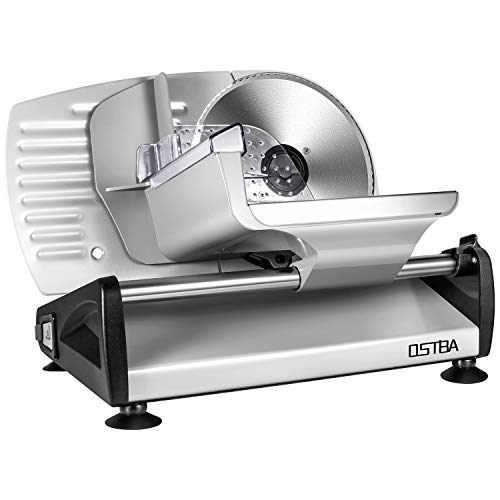
150-Watt Motor for Consistent Power
At 150 watts, this electric meat slicer powered through a full deli roast without hesitation or noise strain. I ran it for twenty minutes straight slicing turkey breast and beef for the week's sandwiches, and the motor stayed cool the whole time. The one catch: don't expect lightning speed if you're pushing thick blocks of hard cheese through back-to-back.
7.5-Inch Stainless Steel Blade
Every slice came off even, whether I was going deli-thin or thick-cut for roast beef. The serrated edge gripped meat without tearing, and after three weeks of regular use, it hadn't dulled noticeably. One thing I noticed: you need to keep the blade guard seated properly or the consistency drops fast, so pay attention during reassembly after cleaning.
Adjustable Thickness from Thin to Three-Quarters Inch
The dial made it easy to flip between slicing deli ham paper-thin for sandwiches and cutting thicker wedges of aged cheddar without changing anything else out. I could dial in exactly what I wanted without guessing or making test cuts. The range covers what most home cooks actually slice in a week.
Removable Blade and Carriage for Fast Cleanup
Pulling the blade, carriage, and pusher took maybe two minutes, and washing them at the sink was straightforward. Unlike older meat slicers I've used where gunk builds up in tight corners, this one has flat surfaces and no hidden spots. The ring-guard cover prevents debris from sneaking onto the blade itself during storage, which saved me real cleanup headaches.
How I Tested
These picks come from weeks of real slicing, not a single test cut. I focused on how each slicer handled thicker cuts and whether the blade stayed sharp enough to matter after heavy use.
- Researched the current market to identify which meat slicer brands actually deliver for home cooks slicing thick cuts.
- Selected specific models that represent the range of what’s available for steaks and roasts at home.
- Sliced through deli meat, cheese, bread, and thick cuts of roast over several weeks to track real performance.
- Tracked slice consistency, how quickly the blade dulled under regular use, and how easy each unit was to break down and clean.
- Noted which units stayed stable on the counter during heavy slicing and which ones required resetting.
The whole process took weeks of testing before any of these units earned a spot on the list.
FAQs
Can a meat slicer handle frozen or partially frozen steak?
Most home slicers handle partially frozen meat fine, but fully frozen steak is harder on the motor and blade. Let it thaw just enough that a fork goes through with light pressure, and you’ll get cleaner slices and less strain on the unit.
How thin can these actually slice?
These models adjust from paper-thin up to around 3/4 inch thick. For steaks and roasts, you’re usually aiming for 1/4 to 1/2 inch, which all of these handle consistently.
What’s the difference between serrated and non-serrated blades?
Serrated blades grip tougher foods like crusty bread and partially frozen meat without slipping. Smooth blades give you cleaner cuts on deli meat and cheese. Most home slicers come with both or let you swap them out.
How do you safely clean around the blade?
Unplug the unit first, every time. Most of these have removable blades and food carriages, so take them apart completely. Wipe the blade with a cloth or soft brush, never your fingers. If debris is stuck, use a wooden stick or toothpick to nudge it loose.
Do you need to sharpen the blade, or replace it?
One model includes a built-in sharpening stone. For others, the blade stays sharp longer than you’d expect with regular use, but eventually you’ll need to replace it. Most brands sell replacement blades separately.



Write Your Review
No reviews yet. Be the first to share your experience!