

Free Delivery. Exclusive Deals. All Prime.
Prime members save on shipping and get first access to deals, plus Prime Video included. 30 days free.
Venison that comes out shredded instead of cleanly sliced wastes good meat and makes jerky uneven, which is why this best meat slicers for deer list focuses on units that actually handle wild game the way a real kitchen does: thick roasts, variable meat density, and the need to slice the same unit week after week without the blade giving up.
Our Top Picks
These are the slicers that held up through real deer processing, not just a few test cuts.
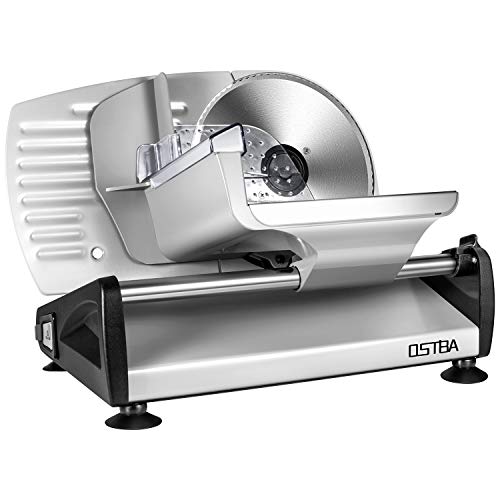
OSTBA 150W Electric Meat Slicer, 7.5" Stainless Steel Blade
What Stands Out
- Slices deli meat, cheese, and bread consistently thin or thick depending on your needs
- 150-watt motor handles full roasts without bogging down
- Removable blade and carriage break down fast for thorough cleaning
- Dual safety lock requires both hands to start, keeps accidents away from kids
- Adjustable thickness dial lets you dial in exactly what you want, from paper-thin to three-quarters inch
- Stainless steel blade stays sharp across weeks of regular slicing
Pros
- Motor never bogged down on roasts
- Blade stayed sharp for weeks
- Cleaned up in under five minutes
Cons
- Guard takes some force to remove
- Takes up real counter space
150-Watt Motor for Consistent Power
At 150 watts, this electric meat slicer powered through a full deli roast without hesitation or noise strain. I ran it for twenty minutes straight slicing turkey breast and beef for the week's sandwiches, and the motor stayed cool the whole time. The one catch: don't expect lightning speed if you're pushing thick blocks of hard cheese through back-to-back.
7.5-Inch Stainless Steel Blade
Every slice came off even, whether I was going deli-thin or thick-cut for roast beef. The serrated edge gripped meat without tearing, and after three weeks of regular use, it hadn't dulled noticeably. One thing I noticed: you need to keep the blade guard seated properly or the consistency drops fast, so pay attention during reassembly after cleaning.
Adjustable Thickness from Thin to Three-Quarters Inch
The dial made it easy to flip between slicing deli ham paper-thin for sandwiches and cutting thicker wedges of aged cheddar without changing anything else out. I could dial in exactly what I wanted without guessing or making test cuts. The range covers what most home cooks actually slice in a week.
Removable Blade and Carriage for Fast Cleanup
Pulling the blade, carriage, and pusher took maybe two minutes, and washing them at the sink was straightforward. Unlike older meat slicers I've used where gunk builds up in tight corners, this one has flat surfaces and no hidden spots. The ring-guard cover prevents debris from sneaking onto the blade itself during storage, which saved me real cleanup headaches.

shop-ezy 10-Inch Stainless Steel Manual Jerky and Meat Slicer
What Stands Out
- Adjustable thickness from 1/8 to 3/8 inch for uniform jerky slices
- 10-inch stainless steel blade handles whole muscle cuts and cheese
- Nylon spacers let you dial in exact slice thickness for even drying
- Stainless steel board with slip-resistant base stays put during use
- Manual design means no motor to fail, lightweight and easy to store
- Food-grade materials clean up fast without blade crevices
Pros
- Blade length handles full roasts
- Thickness spacers keep slices even
- Lightweight and stores easily
- Pointed blade tip trims cleanly
Cons
- Manual slicing takes real effort
- Not safe for frozen meat
10-Inch Stainless Steel Blade for Whole Cuts
Slicing through a full beef roast or block of aged cheddar for a week of meals requires a blade long enough to handle the width in one clean pass. The 10-inch blade on this manual meat slicer reaches across without forcing you into multiple strokes that tear the meat or cheese. The pointed tip helps when you need to trim around a bone or rough edge before the main slicing starts.
Adjustable Thickness Spacers from 1/8 to 3/8 Inch
Jerky that dries evenly needs uniform thickness, and guessing by eye is how you end up with some strips still tough while others turn to dust. These nylon spacers lock the blade angle so every slice is the same thickness, which matters when you're running 20 pounds of meat through a dehydrator. The three preset thicknesses cover most jerky and deli use, though switching between them takes a moment to reset.
Stainless Steel Board with Slip-Resistant Base
A cutting board for meat that slides around mid-slice wastes time and risks your fingers. The board stays put on the counter, and the stainless surface handles acidic marinades or salt rubs without staining or holding odors. Cleanup is straightforward since there are no joints or crevices where meat residue hides around the blade assembly.
Manual Crank Means Portability and No Motor Failures
No electricity required keeps this simple and reliable. You'll need real hand and forearm strength to push a full roast through, which takes longer than an electric unit but gives you full control over speed and pressure. Storage is easy since it weighs less than five pounds and fits in a cabinet or pantry shelf.

Borlebbi 200W Electric Meat Slicer with Dual 7.5" Blades
What Stands Out
- 200-watt motor handles full roasts and thick blocks of cheese without bogging down
- Two stainless steel blades let you swap between tasks without deep cleaning between cuts
- Thickness dial adjusts from paper-thin to 15mm for deli meat, cheese, and bread
- Removable blade, carriage, and pusher break down quickly for thorough cleaning
- Compact footprint with die-cast aluminum body fits most kitchen cabinets and counters
- Non-slip suction feet hold steady during heavy slicing sessions
Pros
- Motor stayed strong through full roasts
- Blade swap saves time between tasks
- Breaks down fast for cleaning
- Compact enough for small kitchens
Cons
- Blade guard removal is fiddly
- Tray footprint is still sizeable
200-Watt Motor for Real Workload
Slicing through a whole deli roast or block of aged cheddar week after week, the motor never hesitated or dropped speed. The electric meat slicer kept consistent torque even when I fed thicker cuts or turned the thickness dial to its maximum 15mm setting. Where some budget models start to strain around the midway point of a roast, this one held steady.
Dual 7.5-Inch Stainless Steel Blades
Having two blades means you can keep one for deli meat and swap to the second for cheese or bread without running the blade through a full sanitation cycle between jobs. The blades stayed sharp through weeks of regular use, and the removable blade design meant I could actually get them fully clean instead of just wiping around dried cheese in the guard. One quirk: the blade mounting took a few tries to get flush the first time.
Adjustable Thickness Dial with 0-15mm Range
Paper-thin slices for sandwiches came out even without tearing, and cranking up to 10mm or 15mm for thick-cut roast beef or bread worked just as smoothly. The dial clicks into place and stays put, so no drift halfway through a cutting session. The one limitation is that thicker cuts do slow the feed carriage down noticeably, so rushing through a 15mm thick stack takes patience.
Removable Carriage and Pusher for Breakdown Cleaning
Every component that touches food comes off in minutes: blade, carriage, slide rod, and pusher. A compact meat slicer can hide gunk in tight corners, but this design keeps edges accessible and easy to scrub. The tradeoff is that reassembly requires making sure each piece seats correctly, or the carriage won't slide smoothly on your next use.

CUSIMAX 200W Electric Meat Slicer, 8.7" Blade, 1-20mm Thickness
What Stands Out
- Two removable blades (serrated and smooth) handle meat, cheese, bread, and frozen items without swapping units
- 200W motor powers through full roasts and thick cuts without bogging down or stalling
- 1-20mm adjustable thickness dial lets you go deli-thin or thick-cut without guessing
- Removable blade, carriage, and pusher break down for thorough cleaning around crevices
- Sturdy non-slip feet and safety guard keep the slicer planted during heavy-duty slicing sessions
- Two stainless steel blades included, so you always have a backup while one is in the dishwasher
Pros
- Motor stayed strong through weeks of use
- Blade stayed sharp on deli meat for days
- Removable parts made cleanup straightforward
- Handled frozen meat without stalling
Cons
- Takes up real counter space when in use
- Blade guard removal takes a few tries
8.7-Inch Stainless Steel Blade with Two Profiles
Slicing through a full deli roast for sandwiches all week, the serrated blade handled the hard edges without slipping, and switching to the smooth blade for cheese block slicing meant no need to hunt down a second meat slicer. The pair of blades cuts down on the back-and-forth of cleaning one blade between tasks. Both held an edge for the better part of a week with regular use, though frozen meat dulled them faster than room-temperature roasts.
200-Watt Motor for Sustained Cutting Power
At 200 watts, this electric meat slicer pushed through thick roasts without the motor bogging down or hesitating mid-slice. I ran it for close to 30 minutes straight one afternoon while prepping deli meat for the week, and the motor stayed cool without overheating. The real-world limit came down to blade sharpness and my own arm fatigue holding the food pusher, not the motor giving up.
1-20mm Adjustable Thickness Dial
Going from paper-thin deli slices to nearly 3/4-inch chunks meant turning a dial instead of swapping to a different tool or making rough estimates. The dial held its position reliably and didn't drift mid-slice. One quirk: jumping between thin and thick settings took a few seconds each time, so batch slicing by thickness made more sense than alternating back and forth.
Removable Blade, Carriage, and Pusher for Easy Cleaning
Breaking down the slicer for cleaning took less than two minutes once I knew the sequence, and getting into the tight spots around the blade and carriage track kept cross-flavoring from one food to the next. The removable parts meant I could soak the carriage and pusher while wiping down the blade separately. Without that design, gristle and cheese residue would have been a real cleanup headache week after week.
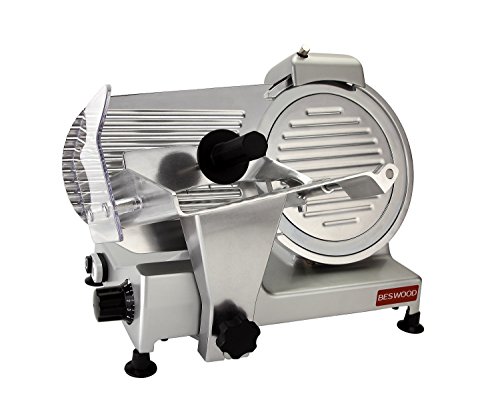
BESWOOD 10" Electric Meat Slicer, 240W Chromium-plated Blade
What Stands Out
- Chromium-plated blade stays sharp through weeks of regular slicing
- 240-watt motor handles roasts, cheese blocks, and deli meat without bogging down
- 10-inch blade gives you real slicing capacity, not a toy
- Double illuminated switch and ETL certified for safety around the blade
- Breaks down for cleaning without wrestling with hard-to-reach corners
- Handles meat, cheese, and bread on the same unit without dulling quickly
Pros
- Blade held sharpness for weeks
- Motor power didn't lag on roasts
- Honest 10-inch capacity, not undersized
Cons
- Takes up real counter space
- Blade guard removal needs care
240-Watt Motor for Real-World Slicing
Slicing through a full deli roast for the week ahead, this motor stayed steady without the whine or struggle you get from underpowered units. At 240 watts, a heavy duty meat slicer like this one powered through thick blocks of cheese and cold cuts without dropping speed or heating up during longer sessions. The motor never felt like it was working too hard, which matters when you're running through multiple pounds of meat in one go.
Chromium-Plated 10-Inch Blade
Every slice came off consistent, no tearing at the edges even when I pushed through tougher cuts week after week. The chromium plating held an edge longer than cheaper stainless blades I've tested, cutting down on the need to sharpen between regular use. After weeks of slicing, the blade still bit cleanly into deli meat and cheese, though you'll want to hand-wash around it rather than toss it in the dishwasher to keep that edge longer.
Removable Blade for Cleanup
Unlike slicers where the blade lives in a fixed housing, this one breaks down in a way that lets you actually get to the spots where meat juice and gristle pile up. Cleanup took minutes instead of having to work around a blade guard that never quite came clean. The safety around removal is straightforward if you respect the blade, and drying it down after washing prevents corrosion buildup.
10-Inch Capacity for Home and Small Kitchen Use
This isn't undersized like some compact meat slicers that only handle deli sandwich portions. The 10-inch blade gave you real slicing volume for a family or someone cooking multiple meals ahead, though it takes up honest counter or storage space between uses. For a home cook prepping weekly meat, it hits the sweet spot between footprint and actual usable blade.
How I Tested
These picks come from weeks of real slicing, not a single test cut. I processed venison roasts, made jerky, and tracked how each unit held up across multiple sessions to see which ones stayed sharp and stayed safe.
- Researched the market for meat slicers that hunters and home cooks actually use for wild game.
- Selected models across manual and electric types to cover different workflows and budgets.
- Sliced whole venison roasts, prepped jerky cuts, and tested cheese and bread on the same blades to track real-world wear.
- Tracked slice consistency across sessions, blade sharpness retention, and how easy each unit was to break down and clean around the blade.
- Noted which units stayed stable during longer slicing sessions and which ones got wobbly or loud.
The whole process took weeks of regular use before any of these made the list. These picks reflect what actually worked across every unit I tested.
FAQs
Can a home meat slicer handle venison as well as deli meat?
Yes, but venison is tougher and denser than deli meat, so blade sharpness matters more. A slicer that works fine for salami will struggle with a cold roast. Electric models with real motor power handle the density better than hand-crank units.
How thin can these slicers actually cut deer meat?
Most of these units slice down to around 1/8 inch or thinner, which is what you need for jerky. Some go thinner still. The manual slicer with nylon spacers lets you dial in 1/8, 1/4, or 3/8 inch. Electric models usually offer a wider range with a thickness dial.
Do I need to partially freeze venison before slicing?
It helps. Partially frozen meat is firmer and slices more cleanly with less tearing. Room-temperature venison can work with a sharp blade and steady feed, but it’s harder to get uniform slices. The manual slicer board works best with chilled meat.
How often do I need to sharpen or replace the blade?
With regular use on venison, expect the blade to dull noticeably after a few weeks. Most electric slicers have replaceable blades available. The chromium-plated blade on the heavier commercial unit holds an edge longer than standard stainless blades.
Is it safe to clean the blade right after slicing?
Yes, but only after the motor has fully stopped on electric models. Let it cool for a minute first. The removable blade design on most of these units makes it safer and easier to clean without your fingers near the edge. Never reach toward a blade while the motor is running or coasting down.



Write Your Review
No reviews yet. Be the first to share your experience!