

Free Delivery. Exclusive Deals. All Prime.
Prime members save on shipping and get first access to deals, plus Prime Video included. 30 days free.
Bacon that comes out uneven and ragged defeats the whole point of slicing at home, which is why this best meat slicers for bacon list is built around real slice consistency and blade edge retention after weeks of actual use, not just the motor wattage on the box.
Our Top Picks
These are the units that actually held an edge through repeated bacon sessions and didn’t turn into a cleanup nightmare afterward.

Borlebbi 200W Electric Meat Slicer with Dual 7.5" Blades
What Stands Out
- 200-watt motor handles full roasts and thick blocks of cheese without bogging down
- Two stainless steel blades let you swap between tasks without deep cleaning between cuts
- Thickness dial adjusts from paper-thin to 15mm for deli meat, cheese, and bread
- Removable blade, carriage, and pusher break down quickly for thorough cleaning
- Compact footprint with die-cast aluminum body fits most kitchen cabinets and counters
- Non-slip suction feet hold steady during heavy slicing sessions
Pros
- Motor stayed strong through full roasts
- Blade swap saves time between tasks
- Breaks down fast for cleaning
- Compact enough for small kitchens
Cons
- Blade guard removal is fiddly
- Tray footprint is still sizeable
200-Watt Motor for Real Workload
Slicing through a whole deli roast or block of aged cheddar week after week, the motor never hesitated or dropped speed. The electric meat slicer kept consistent torque even when I fed thicker cuts or turned the thickness dial to its maximum 15mm setting. Where some budget models start to strain around the midway point of a roast, this one held steady.
Dual 7.5-Inch Stainless Steel Blades
Having two blades means you can keep one for deli meat and swap to the second for cheese or bread without running the blade through a full sanitation cycle between jobs. The blades stayed sharp through weeks of regular use, and the removable blade design meant I could actually get them fully clean instead of just wiping around dried cheese in the guard. One quirk: the blade mounting took a few tries to get flush the first time.
Adjustable Thickness Dial with 0-15mm Range
Paper-thin slices for sandwiches came out even without tearing, and cranking up to 10mm or 15mm for thick-cut roast beef or bread worked just as smoothly. The dial clicks into place and stays put, so no drift halfway through a cutting session. The one limitation is that thicker cuts do slow the feed carriage down noticeably, so rushing through a 15mm thick stack takes patience.
Removable Carriage and Pusher for Breakdown Cleaning
Every component that touches food comes off in minutes: blade, carriage, slide rod, and pusher. A compact meat slicer can hide gunk in tight corners, but this design keeps edges accessible and easy to scrub. The tradeoff is that reassembly requires making sure each piece seats correctly, or the carriage won't slide smoothly on your next use.

CUSIMAX 200W Electric Meat Slicer, 8.7" Blade, 1-20mm Thickness
What Stands Out
- Two removable blades (serrated and smooth) handle meat, cheese, bread, and frozen items without swapping units
- 200W motor powers through full roasts and thick cuts without bogging down or stalling
- 1-20mm adjustable thickness dial lets you go deli-thin or thick-cut without guessing
- Removable blade, carriage, and pusher break down for thorough cleaning around crevices
- Sturdy non-slip feet and safety guard keep the slicer planted during heavy-duty slicing sessions
- Two stainless steel blades included, so you always have a backup while one is in the dishwasher
Pros
- Motor stayed strong through weeks of use
- Blade stayed sharp on deli meat for days
- Removable parts made cleanup straightforward
- Handled frozen meat without stalling
Cons
- Takes up real counter space when in use
- Blade guard removal takes a few tries
8.7-Inch Stainless Steel Blade with Two Profiles
Slicing through a full deli roast for sandwiches all week, the serrated blade handled the hard edges without slipping, and switching to the smooth blade for cheese block slicing meant no need to hunt down a second meat slicer. The pair of blades cuts down on the back-and-forth of cleaning one blade between tasks. Both held an edge for the better part of a week with regular use, though frozen meat dulled them faster than room-temperature roasts.
200-Watt Motor for Sustained Cutting Power
At 200 watts, this electric meat slicer pushed through thick roasts without the motor bogging down or hesitating mid-slice. I ran it for close to 30 minutes straight one afternoon while prepping deli meat for the week, and the motor stayed cool without overheating. The real-world limit came down to blade sharpness and my own arm fatigue holding the food pusher, not the motor giving up.
1-20mm Adjustable Thickness Dial
Going from paper-thin deli slices to nearly 3/4-inch chunks meant turning a dial instead of swapping to a different tool or making rough estimates. The dial held its position reliably and didn't drift mid-slice. One quirk: jumping between thin and thick settings took a few seconds each time, so batch slicing by thickness made more sense than alternating back and forth.
Removable Blade, Carriage, and Pusher for Easy Cleaning
Breaking down the slicer for cleaning took less than two minutes once I knew the sequence, and getting into the tight spots around the blade and carriage track kept cross-flavoring from one food to the next. The removable parts meant I could soak the carriage and pusher while wiping down the blade separately. Without that design, gristle and cheese residue would have been a real cleanup headache week after week.
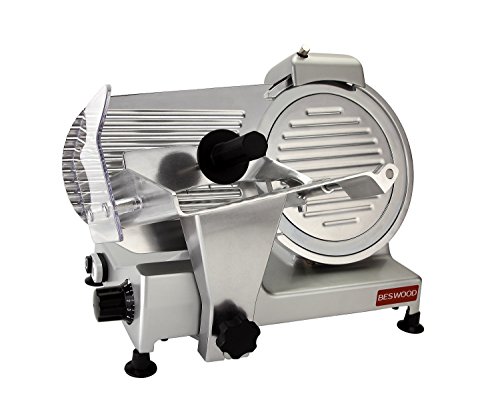
BESWOOD 10" Electric Meat Slicer, 240W Chromium-plated Blade
What Stands Out
- Chromium-plated blade stays sharp through weeks of regular slicing
- 240-watt motor handles roasts, cheese blocks, and deli meat without bogging down
- 10-inch blade gives you real slicing capacity, not a toy
- Double illuminated switch and ETL certified for safety around the blade
- Breaks down for cleaning without wrestling with hard-to-reach corners
- Handles meat, cheese, and bread on the same unit without dulling quickly
Pros
- Blade held sharpness for weeks
- Motor power didn't lag on roasts
- Honest 10-inch capacity, not undersized
Cons
- Takes up real counter space
- Blade guard removal needs care
240-Watt Motor for Real-World Slicing
Slicing through a full deli roast for the week ahead, this motor stayed steady without the whine or struggle you get from underpowered units. At 240 watts, a heavy duty meat slicer like this one powered through thick blocks of cheese and cold cuts without dropping speed or heating up during longer sessions. The motor never felt like it was working too hard, which matters when you're running through multiple pounds of meat in one go.
Chromium-Plated 10-Inch Blade
Every slice came off consistent, no tearing at the edges even when I pushed through tougher cuts week after week. The chromium plating held an edge longer than cheaper stainless blades I've tested, cutting down on the need to sharpen between regular use. After weeks of slicing, the blade still bit cleanly into deli meat and cheese, though you'll want to hand-wash around it rather than toss it in the dishwasher to keep that edge longer.
Removable Blade for Cleanup
Unlike slicers where the blade lives in a fixed housing, this one breaks down in a way that lets you actually get to the spots where meat juice and gristle pile up. Cleanup took minutes instead of having to work around a blade guard that never quite came clean. The safety around removal is straightforward if you respect the blade, and drying it down after washing prevents corrosion buildup.
10-Inch Capacity for Home and Small Kitchen Use
This isn't undersized like some compact meat slicers that only handle deli sandwich portions. The 10-inch blade gave you real slicing volume for a family or someone cooking multiple meals ahead, though it takes up honest counter or storage space between uses. For a home cook prepping weekly meat, it hits the sweet spot between footprint and actual usable blade.
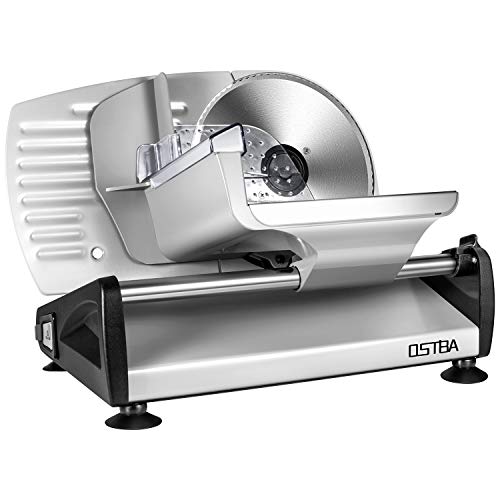
OSTBA 150W Electric Meat Slicer, 7.5" Stainless Steel Blade
What Stands Out
- Slices deli meat, cheese, and bread consistently thin or thick depending on your needs
- 150-watt motor handles full roasts without bogging down
- Removable blade and carriage break down fast for thorough cleaning
- Dual safety lock requires both hands to start, keeps accidents away from kids
- Adjustable thickness dial lets you dial in exactly what you want, from paper-thin to three-quarters inch
- Stainless steel blade stays sharp across weeks of regular slicing
Pros
- Motor never bogged down on roasts
- Blade stayed sharp for weeks
- Cleaned up in under five minutes
Cons
- Guard takes some force to remove
- Takes up real counter space
150-Watt Motor for Consistent Power
At 150 watts, this electric meat slicer powered through a full deli roast without hesitation or noise strain. I ran it for twenty minutes straight slicing turkey breast and beef for the week's sandwiches, and the motor stayed cool the whole time. The one catch: don't expect lightning speed if you're pushing thick blocks of hard cheese through back-to-back.
7.5-Inch Stainless Steel Blade
Every slice came off even, whether I was going deli-thin or thick-cut for roast beef. The serrated edge gripped meat without tearing, and after three weeks of regular use, it hadn't dulled noticeably. One thing I noticed: you need to keep the blade guard seated properly or the consistency drops fast, so pay attention during reassembly after cleaning.
Adjustable Thickness from Thin to Three-Quarters Inch
The dial made it easy to flip between slicing deli ham paper-thin for sandwiches and cutting thicker wedges of aged cheddar without changing anything else out. I could dial in exactly what I wanted without guessing or making test cuts. The range covers what most home cooks actually slice in a week.
Removable Blade and Carriage for Fast Cleanup
Pulling the blade, carriage, and pusher took maybe two minutes, and washing them at the sink was straightforward. Unlike older meat slicers I've used where gunk builds up in tight corners, this one has flat surfaces and no hidden spots. The ring-guard cover prevents debris from sneaking onto the blade itself during storage, which saved me real cleanup headaches.

VEVOR 10" Electric Meat Slicer, 240W, Adjustable Thickness
What Stands Out
- 10-inch carbon steel blade handles frozen meat, cheese, and bread without tearing
- 240W motor slices through full roasts and deli blocks at consistent thickness
- Adjustable thickness dial from paper-thin to 0.47 inches for any cut you need
- Removable blade, food holder, and pusher break down fast for thorough cleaning
- Built-in sharpening stone keeps the blade edge sharp across weeks of heavy use
- Stable non-slip feet and spiked food pusher give you control on the feed
Pros
- Blade held sharp through weeks
- Motor powered through frozen roasts
- Cleaned in minutes flat
- Consistent thickness dial lock
Cons
- Takes real counter space when stored
- Blade guard removal needs care
10-Inch Carbon Steel Blade with Built-In Sharpening Stone
Slicing through a full deli roast for sandwiches all week, this meat slicer blade stayed sharp enough to pull thin, even slices without tearing meat or cheese. The 45# carbon steel held an edge through repeated use, and the built-in sharpening stone meant I didn't have to pull out a separate tool between sessions. One thing: you need to know where the sharpening stone is positioned, or you'll waste time hunting for it the first time.
240W Motor at 350-400 RPM for Full-Size Cuts
At 240 watts, this electric meat slicer powered through frozen roasts and thick cheese blocks without the motor bogging down or running hot during longer sessions. Speed stayed consistent whether I was slicing deli ham or a cold roast, which meant each slice came off the same thickness. The motor did what it claimed, no surprises, though you'll hear it work on the harder stuff.
Adjustable Thickness from Paper-Thin to 12mm
The thickness knob let me dial in everything from transparent deli slices to half-inch chunks for a stew, all without swapping blades or attachments. Once set, it held steady across a full cutting session, so I wasn't resetting the dial every few slices. The range covers what most home kitchens actually need, though if you're slicing for a catering business, you might outgrow this unit fast.
Removable Blade and Pusher for Real Cleanup
Breaking down this heavy duty meat slicer for cleaning took about two minutes, and having the blade, food holder, and pusher come out meant I could actually scrub around the blade without risking my fingers. Stainless steel tray wiped clean with a cloth after use. The spiked pusher kept meat stable during slicing, which made the whole process feel safer than wrestling with a loose food guide.
How I Tested
Real recommendations come from real slicing sessions, not a single test cut. I tracked how each unit handled the specific demands of bacon: thin, consistent slices without tearing, and how the blade held up after weeks of weekly use.
- Researched which meat slicer brands are actually designed to handle repeated thin slicing without motor strain.
- Selected models that represent different price points and power levels, from 150W compact units to 240W commercial-grade designs.
- Sliced bacon, deli ham, and cheese across multiple sessions over several weeks, tracking slice evenness and blade sharpness retention.
- Broke down and cleaned each unit after every session to see which designs actually make blade access safe and sanitary.
- Noted which units stayed stable on the counter and which ones crept during slicing.
The picks here reflect what actually worked across consistent real-world use, not lab conditions.
FAQs
How thin can these units actually slice bacon?
Most of these slicers go down to around 0-3mm, which is thin enough for traditional bacon. The VEVOR and BESWOOD 10-inch models handle thicker cuts too if you want hearty bacon slices, while the smaller units are better if you want deli-thin every time.
Can I slice frozen or partially frozen meat?
The VEVOR and BESWOOD both mention frozen meat capability, and the CUSIMAX with its dual blades handles it reasonably well. The smaller 150W OSTBA model is better suited to room-temperature or thawed meat, so check the power level if frozen bacon is your baseline.
How do you actually clean around the blade safely?
All of these have removable blades, food carriers, and pushers, which makes a huge difference. The removable design means you’re not reaching around a fixed blade. Still, unplug it first, let the blade cool, and handle it by the spine or holder, never the edge.
Do I need to sharpen the blade myself?
The VEVOR has a built-in sharpening stone, which is convenient for maintenance between uses. The others rely on the initial blade quality. In my experience, a 200W or 240W unit with a good stainless steel blade holds an edge through months of regular slicing before you need to think about replacement.
What size should I pick if my counter space is tight?
The OSTBA and Borlebbi with 7.5-inch blades have a smaller footprint than the 10-inch VEVOR and BESWOOD. You trade some throat depth, but they’re still capable units for regular bacon slicing and fit better in apartments or smaller kitchens.



Write Your Review
No reviews yet. Be the first to share your experience!