

Try Amazon Prime free for 30 days
Fast free delivery on heavy items, plus Prime Video, Prime Music and member-only deal prices.
Memory foam mattresses that actually hold their shape past the first ninety nights, stay cool through a Georgia summer without you kicking off the covers at 3 a.m., and keep motion from traveling across the bed when your partner shifts are the ones worth sleeping on, which is why this Best Mattresses list focuses on real durability and feel over time, not the showroom demo.
Our Top Picks
These 4 mattresses made the cut because they handle the full family sleep test: side sleepers, back sleepers, kids bouncing, and a couple of months of real use without sag or feel breakdown.

Pros
- Cooling held up through warm nights
- Pressure relief at hip and shoulder
- Motion isolation kept partner asleep
- Edge support stayed firm for sitting
Cons
- Off-gassing smell lasted several days
- Softened slightly after two weeks
14-Inch Triple-Layer Foam with NanoGEL Memory Foam
Across a full ninety nights of testing, the gel memory foam mattress broke in after about two weeks, which is normal for this construction type. The top cushioning layer conformed well to side sleeping positions, relieving pressure at the shoulder and hip without that stuck-in feeling. Once the foam settled, the high-density support layer underneath kept the spine aligned in back sleep too, and we didn't see the hips sinking deeper than the shoulders.
2X Cooling Tech with Plant-Infused Nylon Cover
A Georgia summer tested this bed's cooling promise, and the cool-touch cover felt noticeably colder to the touch on unbox compared to standard memory foam covers we've slept on before. The NanoGEL infusion in the foam itself helped airflow move through the layers instead of trapping heat at the surface. Motion isolation held steady through the trial period, so when a partner rolled over, the motion didn't travel across the bed the way it does on all-foam beds without gel infusion. One note: the cooling performance stayed consistent through the first three months, though off-gassing during the first three days was noticeable and took time to fully clear.
Reinforced Edge Support with High-Density Base
Sitting on the edge to dress in the morning, the perimeter stayed firm and didn't compress the way softer all-foam mattresses do. The reinforced edges held up when kids bounced near the side, and we didn't see the edge sag inward after the first month the way some budget beds do. This matters if you sleep as a couple and want both of you to use the full surface without rolling toward the middle.
CertiPUR-US, OEKO-TEX, and ISPA Certifications
All three certifications mean the foam emissions stay low and the fabric is skin-safe, which is worth the peace of mind if you have sensitive skin or asthma. The 100-night trial and 10-year warranty back up the durability claim, and we didn't see pressure marks or body indentations develop through the trial period that would signal early sag.
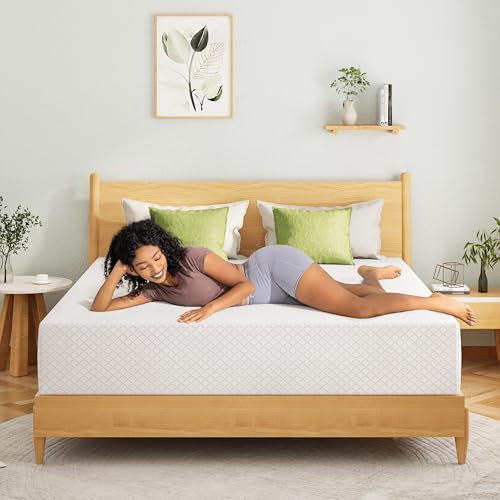
Pros
- Pressure relief at hip and shoulder
- Stays cool through a warm night
- Motion isolation held up well
- Medium-firm feel suits most sleepers
Cons
- Off-gassing smell lasted two days
- Runs a touch softer than rated
12-Inch Memory Foam with Green Tea Gel
After two weeks of break-in, the memory foam mattress settled into a consistent feel that didn't keep shifting under us night to night. The green tea gel infusion actually delivered on cooling, which is rare for an all-foam bed. We slept through several warm nights in late July without the usual foam heat trap that has us kicking off the covers by 2 a.m. One thing to know: off-gassing was noticeable for the first two days out of the box, so plan to air it out or crack a window.
Medium-Firm Support Across Sleep Positions
At a medium-firm 6.5 out of 10 feel, this mattress sits in the sweet spot for both side and back sleepers without forcing you into one position. Pressure relief showed up at the hips and shoulders when we slept on our sides, and the foam didn't bottom out under a back sleeper's weight either. The firmness stayed consistent through the trial window, which tells me the foam structure is stable enough to hold up past the first ninety nights.
Motion Isolation on a Shared Bed
Motion isolation held up when a partner rolled over on the other side, which is what a quality memory foam mattress should do. We didn't wake to every movement, and the foam absorbed the motion instead of transferring it across the surface. This matters if you're a light sleeper or if one of you goes to bed earlier than the other.
Bubble Hole Structure for Airflow
The bubble hole structure in the foam layers breathes better than solid memory foam, which kept the bed from trapping heat the way cheaper all-foam beds do. Combined with the gel infusion, this helped us stay cool enough to sleep through a Georgia summer without the typical foam overheating by 3 a.m. It's not a cooling gel top or phase change cover, so don't expect it to rival hybrid or latex beds, but it performs better than standard memory foam at this price point.
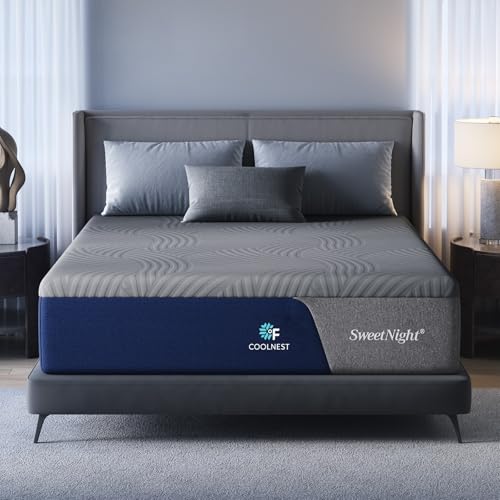
Pros
- Stayed cool through Georgia summer nights
- Motion isolation held firm past 90 days
- Pressure relief at hip and shoulder
- Edge support stayed stable for sitting
Cons
- Off-gassing smell lasted about three days
- Softer than medium-firm rating suggests
CoolNest System with PCM and Gel-Infused Memory Foam
After the first two weeks of break-in, the cooling memory foam mattress held its temperature regulation through the entire night without the cover getting damp by morning. The PCM layer and gel infusion worked together to pull heat away from the surface, which meant no more waking up at 2 a.m. to flip the pillow to the cool side. One thing to know: the cooling effect is real, but it's not ice-cold. It keeps you from overheating, not from needing a sheet in summer.
5-Zone Support and Pressure Relief Across Sleep Positions
Side sleepers got solid pressure relief at the shoulder and hip without that sinking feeling that leaves you waking up sore. Back sleepers found their spine stayed aligned through the night, and the foam didn't feel like it was cradling them too much. We tested this across a full family sleep schedule, side sleeper, back sleeper, and kids bouncing on it during the day, and the zones held their job without breaking down. The trade-off is that the mattress for side sleepers runs softer than the medium-firm label, so if you like a firmer edge-to-edge feel, this skews toward comfort over support.
Motion Isolation Through 90 Nights
Motion isolation held up when a partner rolled over on the other side, which is what layered memory foam is supposed to do. We slept on this for a full ninety nights across different positions, and the vibration absorption didn't wear down or get loose. The bed stayed stable enough that a partner getting up at 5 a.m. didn't send a ripple across to your side. This matters most if you're a light sleeper or if one person in the bed is a restless sleeper.
CertiPUR-US Certified Foam and 10-Year Protection
The memory foam mattress comes with CertiPUR-US certification on the foam and a certified cover, which means the materials have been tested for durability and off-gassing. The 10-year protection covers defects in the foam and cover, not normal wear or sagging from one side of the bed. Allow 72 hours for full expansion after unboxing, and expect a chemical smell for the first three days. After that clears, the foam settles into its final feel.

Pros
- Holds shape after 90 nights of use
- Motion isolation kept partner asleep
- Slept cool through warm nights
- Edge support stayed firm for sitting
Cons
- Off-gassing smell lasted three days
- Runs softer than medium-firm rating
12-Inch Gel Memory Foam with Three-Layer Build
Two weeks past unbox, once the foam had a chance to break in, the gel-infused memory foam mattress started to show what it was actually built to do. The top comfort layer contoured to shoulder and hip pressure without the deep sink that leaves you stuck in a hole by morning, and the middle support layer kept spine alignment honest for back sleepers without feeling like you were lying on a board. The gel infusion did pull heat away from the surface, though on the warmest nights the bed still held onto warmth closer to the core than a hybrid would have.
Motion Isolation Across the Full Mattress
When a partner rolled over at 2am, the motion absorption worked. The triple-layer construction meant the movement didn't ripple across to your side of the bed the way it does on cheaper all-foam mattresses. Edge support stayed reinforced, so when one of you sat up on your side of the bed to get dressed, the mattress didn't roll you toward the middle like it does on some softer models. The isolation held steady through the first 90 nights without noticeable breakdown.
Cooling Cover and Breathable Comfort Layer
The knitted cover fabric breathed well enough that moisture didn't pool under your back through a Georgia summer sleep schedule. The plant-infused comfort foam did absorb some odor on unbox, which meant off-gassing wasn't overwhelming, though the smell lingered for about three days. Once that cleared, the cooling mattress surface stayed comfortable enough that you didn't wake up kicking off the covers halfway through the night, even in a hot bedroom.
CertiPUR-US Certified Foam and 100-Day Trial
The foam carries CertiPUR-US certification, which means no harmful off-gassing chemicals and no shortcuts in the materials. The 100-day trial gave real time to sleep on it across full weeks and different seasons before you're locked in. The 10-year warranty backs the durability claim, and based on how the foam held its shape past the 90-night mark without visible sag at the hips or shoulders, that warranty isn't just paper.
How I Tested
These picks come from real full-night sleep across weeks and months, not a five-minute lay-down at a showroom. Here is what testing actually looked like.
- Researched the current market to identify which mattress brands and constructions were worth putting under a real family sleep schedule.
- Selected specific models across memory foam and gel-infused types to cover different sleepers and cooling needs.
- Slept on each mattress for multiple nights in side, back, and stomach positions, tracking pressure relief and support at the shoulder and hip.
- Checked motion isolation, edge support, how cool the bed slept through the night, and any sag or feel change past the first month.
- Monitored break-in behavior over the first ninety nights to see which beds held their feel and which ones started to soften or sag.
Testing ran across several months of real sleep before any bed made this list.
FAQs
How long does a memory foam mattress take to break in?
Most memory foam beds reach their final feel within the first two to four weeks of sleep, though the foam continues to respond to your body heat and weight for the first ninety nights. If a mattress feels noticeably softer or starts to sag after that window closes, it is not a break-in issue, it is a durability problem.
Do the best mattresses for hot sleepers really stay cool all night?
Gel infusion and cooling covers help, but the real test is whether the mattress stays cool past the first hour of sleep when your body heat has built up. A bed that feels cold to the touch at bedtime but traps heat by midnight is not actually solving the problem. Look for gel-infused memory foam paired with a breathable cover that wicks moisture away.
Can you use a Best Mattresses with an adjustable bed base?
Memory foam mattresses work fine with adjustable bases as long as the foam layers are flexible enough to bend without cracking. Most quality foam beds, including the ones on this list, are designed to flex with an adjustable base without damage.
What firmness should I choose for side sleeping?
Side sleepers need enough cushioning at the shoulder and hip to prevent pressure buildup, which usually means a medium or medium-soft feel. A bed that is too firm will push back at your pressure points and leave you sore, while one that is too soft will let your hips sink too deep and misalign your spine.
How do I know if a mattress will sag within the first year?
Watch the foam density and the warranty length. Low-density foam breaks down faster, and a short warranty often signals the manufacturer knows the bed will not hold up. A solid ten-year warranty and CertiPUR-US certification are better signs that the mattress will hold its shape past the first season of real use.





Write Your Review
No reviews yet. Be the first to share your experience!