

Prime Big Deal Days: October 6 - 7, 2026
Members only: two days of exclusive deals across Amazon. A 30-day free trial unlocks the same prices and fast free delivery.
When the couch is cozy but your toes feel like they are storing leftovers, infrared room heaters can add direct, room-by-room warmth without raising the whole-house thermostat. After comparing 6 models, the Wewarm 5,200 BTU Infrared Heater stands out for its 1,500 watts, 5,200 BTU output and rating for up to 350 square feet. The Dr. Infrared Heater DR-998 is the alternative pick because it pairs 1,500 watts with an adjustable thermostat.

Pros
- 1500W infrared heat with 5200 BTU output
- Heats up to 350 sq ft
- Four infrared quartz elements heat up in 3 seconds
- 9-hour programmable timer and thermostat
- TUV certified with overheat auto shut-off
Cons
- Coverage is limited to rooms up to 350 sq ft
- Remote needs 2 AAA batteries, not included
- 18.8 lb weight may be less easy to move

Pros
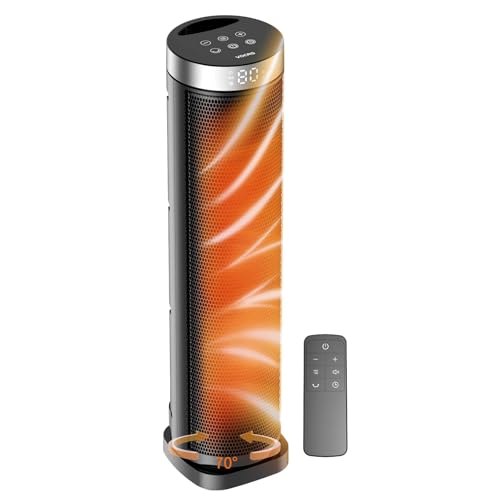
- 1500W dual infrared quartz tube and PTC heating
- Cool mist ultrasonic humidifier built in
- Oscillation helps distribute heat through the room
- Digital thermostat adjusts from 50°F to 85°F
- Tip over and overheat protection included
Cons
- 26 lb weight may be bulky despite wheels
- Zone heating design is not for heating the whole house
- Thermostat range tops out at 85°F
Pros
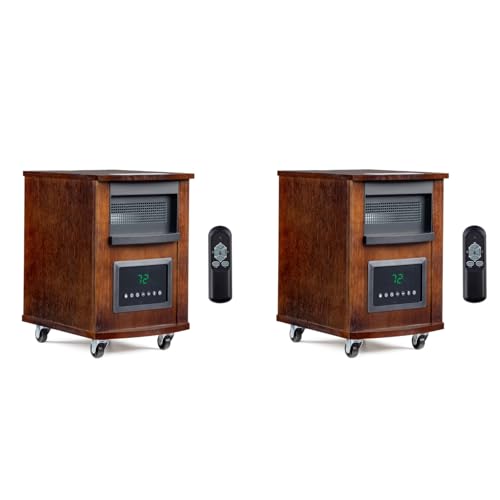
- 1500W quartz infrared heating
- 50°F to 90°F temperature range
- 3 heat settings plus ECO mode
- Remote control and 12-hour timer
- Tip-over shut-off and overheat protection
Cons
- No square footage coverage listed
- Indoor use only
- Requires floor space at 13.11 x 10.6 x 16.14 inches
Pros
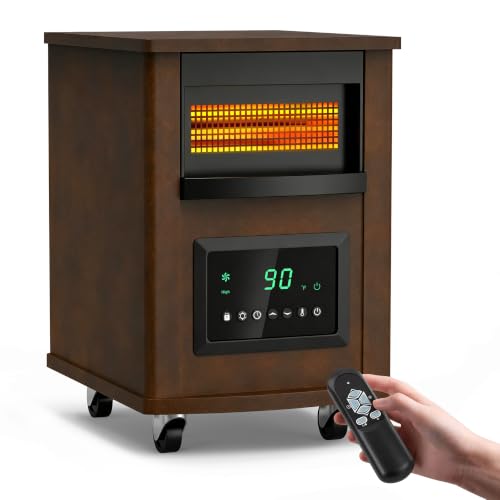
- 1500W infrared heat for spaces up to 350 sq. ft.
- 3 modes, 750W, 1500W and ECO
- Thermostat adjusts from 50 to 90°F
- Tip-over and overheat protection
- Caster wheels and 16 lb cabinet for moving room to room
Cons
- 350 sq. ft. coverage may not suit larger open areas
- 16 lb weight is less compact than small ceramic heaters
- 2 AAA batteries are not included

Pros
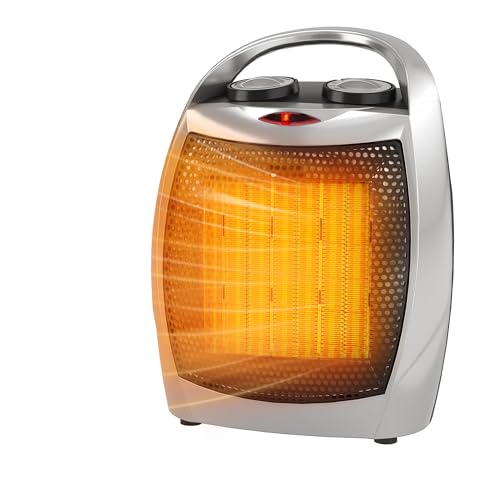
- 2 heat settings, 750W low and 1500W high
- Adjustable thermostat with manual controls
- Tip-over auto shutoff and overheat shutoff
- Portable 5 lb design for room-to-room use
Cons
- Heating area coverage is not specified
- Uses a fan, but noise level is not specified
- Manual controls only, no listed remote or timer

Pros
- 1500W, 5000 BTU output for spaces up to 1000 sq ft
- 24 heat settings from 40°F to 90°F
- Tip-over shut-off, dual overheat sensors, cETL approved
- Washable lifetime dust and hair filter
- Wireless remote and rolling casters included
Cons
- 24 lbs may be heavy to lift between rooms
- 6 ft power cord may limit placement near outlets
- Cabinet size needs floor space in smaller rooms
What Matters Most in Infrared Heaters for Room-by-Room Warmth
An infrared heater is not just a small furnace on wheels. The right one should match the room, shut itself down when something goes wrong and offer controls that do not require constant babysitting.
- Heat output and room size: Most of our picks use 1,500 watts on high, which is the key number to compare before looking at cabinets or remotes. The Wewarm 5,200 BTU Infrared Heater is rated at 5,200 BTU and up to 350 square feet, so it makes the most sense for a typical bedroom, office or den rather than an open-plan main floor. If you need gentler heat, some picks include lower modes such as 750 watts or 1,000 watts.
- Safety protection and certification: Tip-over and overheat protection mattered because portable heaters are often used near beds, desks and sofas. According to the U.S. Consumer Product Safety Commission, space heaters should be certified by a nationally recognized testing laboratory and kept at least 3 feet from bedding, drapes, furniture or anything else that can burn. The RealSmart Infrared Heater lists tip-over and overheat protection, plus 1,500 watts with a 750-watt low setting, which gives it a safer, more flexible profile for everyday use.
- Thermostat range and controls: A useful thermostat lets the heater cycle instead of blasting at full power until the room feels stuffy. Among our picks, thermostat ranges run from 50 to 85 degrees or 50 to 90 degrees, depending on the model. Several also include timers, with limits such as 9 hours, 12 hours or 1 to 12 hours, which is helpful if you want heat while working but not after you leave the room.
- Noise level: Infrared heaters often use fans to move warmed air, so noise still matters even when the heat source is radiant. One pick lists operation under 45 dB, and another outside the main list also lists 45 dB. For bedrooms and offices, that number is more useful than a vague promise of quiet operation, especially if the heater will sit within a few feet of a bed or desk.
- Oscillation and heat spread: Heat spread can matter as much as raw wattage if two people are sitting in different parts of the same room. One of our picks includes oscillation, while others rely on quartz elements and fan-assisted airflow. In practical terms, a 1,500-watt heater with oscillation may feel more even in a seating area than a fixed unit aimed at only one chair.
- Size, weight and portability: Portability is not only about weight, because wheels can matter more once a heater has a cabinet body. The EdenPURE 5,000 BTU Infrared Heater weighs 24 pounds, uses rolling casters and is rated at 5,000 BTU for up to 1000 square feet. Other picks are lighter, including one at 5 pounds, but the larger cabinet style can be easier to roll than to carry.
We excluded central furnaces and whole-house systems because they require professional installation. We also left out water heaters and heated blankets because they solve different problems, and we avoided unvented fuel heaters without an indoor rating because carbon monoxide is a serious indoor risk.
Other Infrared Heaters Worth Considering
These are other infrared heaters we looked at but did not put on our main list.
If carrying a heater matters more than cabinet-style controls, Wewarm Infrared Heater is worth a look. It uses 1,500 watts with a 1000-watt low setting and is rated for up to 300 square feet, but its 6.4-pound weight is far below the 18.8 pounds listed for our top pick. That lighter body is easier to move by hand, though the main list has stronger matches for room coverage and feature balance.
For shoppers who want a different design at the same general output, Dr. Infrared Heater DR-123 keeps the familiar 1,500-watt ceiling. It lists an adjustable thermostat, tip-over protection and overheat protection, and the listing gives a 45 dB noise figure. Compared with our alternative pick, it is more about a different control and housing mix than a step up in output.
Prefer a heater with a longer timer window? Akires Infrared Heater offers 1,500 watts, a 750-watt low setting and a 12-hour timer. It also lists an adjustable thermostat plus tip-over and overheat protection, so the main reason to consider it is the control layout rather than a higher power rating than the main picks.
And if BTU output is the number you are comparing first, Comfort Glow QEH1408 comes close to our top pick. It is rated at 5,120 BTU and up to 800 square feet, with 1,500 watts on high and a 750-watt low setting. Our top pick still has a slightly higher 5,200 BTU figure, but this one is notable if you want a listed coverage number above 350 square feet.
FAQs
How much power should an infrared heater have for a room?
Most of our picks top out at 1,500 watts, which is the common high setting for plug-in room heaters. For smaller spaces or milder days, low settings such as 750 watts or 1,000 watts can reduce heat output without shutting the unit off completely.
What safety features matter most for infrared room use?
Look for tip-over shutoff and overheat protection, and choose a unit certified by a nationally recognized testing laboratory. The U.S. Consumer Product Safety Commission also says heaters should stay at least 3 feet from bedding, drapes, furniture and other flammable materials.
Can an infrared heater be used while sleeping?
The U.S. Fire Administration advises turning space heaters off when leaving the room or going to bed. If you use one in the evening, a timer such as 9 hours or 12 hours can help limit how long it runs, but it does not replace safe placement and supervision.
Do infrared heaters dry the air?
Infrared heaters warm people and objects, and several room models add a fan to help spread heat. One of our picks includes a cool-mist humidifier, but most do not add moisture, so room comfort still depends on your indoor humidity level.
Sources
- CPSC Offers Tips to Prevent Home Fires From Space Heaters, U.S. Consumer Product Safety Commission. Fire-safety tips and required safety features for space heaters.
- Heating Fire Safety, U.S. Fire Administration. Home heating fire statistics and prevention messages.
- Safety Guidelines: During & After a Winter Storm, Centers for Disease Control and Prevention. Winter heating safety for space heaters, kerosene heaters and carbon monoxide.


Write Your Review
No reviews yet. Be the first to share your experience!