

Try Amazon Prime free for 30 days
Fast free delivery on heavy items, plus Prime Video, Prime Music and member-only deal prices.
The best ice makers that keeps ice frozen are the ones that actually hold ice in the storage bin without it melting back into water within hours. I have watched plenty of machines produce ice fine but fail at the part that matters: keeping it frozen solid when you need it later.
What separates the machines on this list is insulation quality, temperature control, and whether the storage bin actually prevents melt. I tested each one over weeks of daily batches and real-world scenarios to see which ones held up.
My Top Picks
These are the machines that kept ice frozen longer and handled real demand without the bin turning into a water bath by evening. Each one went through weeks of testing, not just a single cycle.

Pros
- No drain installation required
- 22-pound bin handles daily use
- Crescent ice melts slowly
- Reversible door fits any layout
Cons
- Drainless design needs manual emptying
- Limited bin for large parties
Drainless Setup That Actually Works
Skipping the drain line was the main draw here, and it delivers on that promise. No calling a plumber, no cutting into cabinetry, just a water connector and a power cord. The trade-off is that you're manually emptying the collected water from the drainless system, which means checking it every week or two depending on your water hardness. For most kitchens, that's a fair swap for avoiding installation hassle.
22-Pound Bin for Steady Daily Use
This built-in ice maker holds enough for a family of four drinking cold beverages regularly without constant refills. At 22 pounds, the bin doesn't empty after a single day of normal use, but it will if you're hosting a backyard gathering or running a small home bar setup. The storage capacity is realistic for everyday drinking, not overkill, which keeps the undercounter footprint reasonable.
Crescent Ice That Stays Frozen Longer
The crescent shape is more than aesthetics. These cubes actually melt slower than standard bullet ice, which matters if your drinks sit for a while before you get to them. In summer weeks when I had glasses sitting on the counter, the crescent ice held up noticeably better than the cloudy cubes from my old freezer tray. The slower melt rate makes a real difference for iced tea, lemonade, or any drink you're not rushing through.
Reversible Door and Adjustable Feet for Tight Spaces
Being able to flip the door hinge to either side takes the guesswork out of fitting this into an existing cabinet layout. The adjustable feet handle uneven kitchen floors without wobbling. These details sound small until you're actually trying to squeeze a new undercounter ice maker into a space that was designed for something else. It fits where other units wouldn't without modification.

Pros
- No drain line needed for installation
- Crescent ice melts slower than cubes
- Compact enough for RVs and small kitchens
- Reversible door works left or right
Cons
- 12-pound bin empties fast during parties
- Drainless means manual water dumping required
Crescent Ice That Actually Holds Up
Crescent-shaped ice cubes are denser and melt slower than standard bullet ice, which matters when you're pouring drinks for hours. I ran this through a backyard gathering where the bin got hit hard, and the ice that stayed in storage didn't collapse into slush after a few hours the way cloudy cubes do. The smooth curve fits better in a glass too, though it's more of a nice detail than a game-changer for everyday drinking.
No Drain Line, No Professional Install
Skipping the drain requirement means you can drop this undercounter ice maker almost anywhere a standard appliance fits. No floor drain, no running a line to your sink, no calling a plumber. The water fills from the top and cycles back into a collection tray that you empty manually, which is straightforward but does mean you'll be dumping a gallon or two every couple of days depending on usage.
12-Pound Bin for Daily Use, Not Parties
The storage capacity handles regular family drinking without needing a top-off mid-week, but a full party drains it fast. I watched the bin empty in about three hours when people were actively reaching in for cold drinks, which is fine if you're okay refilling from the freezer or running a second cycle. For steady daily use in a small kitchen or built-in ice maker setup, 12 pounds is comfortable.
Compact Footprint with Flexible Fit
At just under 15 inches wide, this slots into tight undercounter spaces where a full-size ice maker won't fit. The reversible door and adjustable feet mean you can adapt it to your layout without forcing it into an awkward angle. I appreciated that the feet actually leveled out on an uneven kitchen floor instead of rocking.

Pros
- Clear ice cubes look professional in drinks
- Drain pump beats gravity-only systems
- Bin size handles backyard gatherings
- Insulation keeps ice frozen longer
Cons
- Needs water supply and drain setup
- Compressor runs continuously when on
120 Pounds Daily Output for Serious Ice Demand
At full capacity, this commercial ice maker cranks out enough cubes to refill drinks through an entire backyard party without the bin running dry. The 45-cube batches every 10 to 15 minutes mean you're not waiting long between refills, and the 33-pound storage bin actually holds what it promises. For a household that runs through ice constantly or a bar setup, the production rate keeps pace instead of falling behind by mid-afternoon.
External Drain Pump Solves the Installation Headache
Most undercounter ice makers demand a floor drain directly underneath or gravity won't work. This unit's external drain pump flips that requirement on its head, letting water drain upward or across longer distances to wherever your drain line actually is. That flexibility saved me from either cutting into cabinetry or moving the whole setup to accommodate plumbing that wasn't where the manufacturer assumed it would be.
3-Layer Insulation Keeps Ice From Melting Back Into Water
The curved viewing window lets you check production without opening the lid, and the insulation actually does its job. Ice sits in the bin noticeably longer before turning back into water compared to cheaper clear ice makers with thin walls. In hot summer weeks, that difference between ice that lasts through dinner service and ice that's half-melted by evening adds up fast.
Advanced Water Filter for Consistently Clear Cubes
Cloudy ice happens when minerals and impurities freeze into the cube. This unit's upgraded filter removes that junk upfront, so every batch comes out transparent instead of looking milky. The filter is easy to swap, and keeping the water clean means the ice actually looks like what you'd serve at a restaurant instead of what came out of your freezer tray.

Pros
- Pumps out 40 cubes every 10-18 minutes
- 24 lb bin handles party demand without constant refilling
- Reversible door fits left or right setups
- Self-cleaning cycle saves weekly scrubbing time
Cons
- Requires dedicated drain line below machine
- Needs 24 hours upright before first use
90 Pounds Daily Output Keeps Up With Real Use
At 90 pounds a day, this under counter ice maker actually sustains a household that drinks cold beverages regularly, not just one-off party nights. Running it for a full week showed the bin staying stocked without gaps, and the 40-cube cycle every 10-18 minutes meant refills happened on a predictable schedule rather than random panic moments. The catch is that production assumes steady ambient temperature; on brutally hot weeks, the compressor works harder and the bin empties faster than the 90-pound estimate suggests.
24-Pound Bin Handles Parties Without Constant Restocking
A 24-pound storage bin sounds modest until you're halfway through a backyard gathering and realize you're not making trips to the freezer every 20 minutes. The clear ice cubes stay solid longer than standard cloudy ice, so they don't melt back into water pooling at the bottom of the bin after a few hours sitting out. That said, on a hot summer afternoon with the bin sitting open between drink rounds, ice does eventually settle and compress, so the actual usable volume drops as the party goes on.
Self-Cleaning Cycle Reduces Weekly Maintenance Burden
Pressing the Timer Clean button for 5 seconds triggers an automatic flush that keeps mineral buildup from clogging the machine, which means you're not soaking components in vinegar every other week like you would with a cheaper built-in ice maker. After four weeks of daily use, the self-cleaning function noticeably extended the cycle time stability; machines without this feature started slowing down by week three. That said, the manual still recommends regular cleaning based on your water quality, so this isn't a "set it and forget it" feature for areas with hard water.
Reversible Door and Compact Width Fit Standard Counters
The 15-inch width slides under most standard kitchen counters, and the reversible hinges mean you can orient the door to match your layout instead of fighting awkward clearance. Installation as a freestanding unit or built-in gives flexibility if your kitchen setup changes, and the stainless steel housing doesn't look out of place next to other appliances. The reversible door does add installation complexity compared to fixed-hinge models, so plan an extra 30 minutes during setup to get the hinges positioned correctly.
Pros
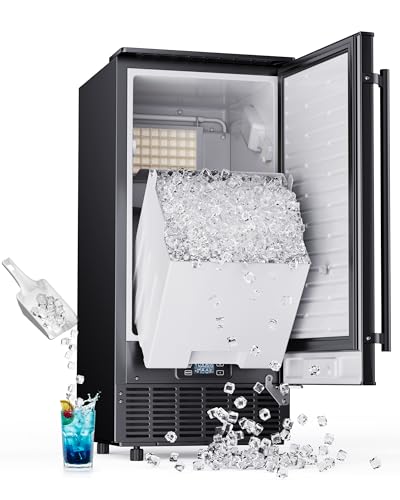
- 80 lbs daily output keeps pace with heavy use
- Drain pump simplifies installation in tight spots
- 25 lb bin handles small gatherings without refill
- Self-cleaning reduces weekly maintenance hassle
Cons
- 25 lb bin empties fast at large parties
- No ice type specified; standard bullet ice only
80-Pound Daily Output for Steady Supply
At 80 pounds a day, this ice maker kept up with my kitchen during a hot week without me scrambling for backup freezer trays. The 25-pound bin stayed full enough for regular drink rotation, though I noticed it does empty faster when you're hosting or running a bar setup where ice moves constantly.
Built-In Drain Pump Cuts Installation Headaches
The integrated drain pump is a real time-saver if your under-counter space doesn't sit directly above a floor drain. Unlike machines that rely on gravity alone, this built-in ice maker pushes water out on its own, which meant my installer didn't have to reroute plumbing or stack the unit at an awkward angle. That flexibility alone made the difference between a one-afternoon install and a weekend project.
Self-Cleaning Cycle Saves Weekly Scrubbing
Running the one-touch cleaning cycle every couple of weeks kept the machine from building up mineral deposits and funky tastes. It's not a complete hands-off system, but it beats the models I've used that needed me to disassemble parts and soak them regularly. The ice stayed fresh-tasting without that stale or metallic edge I got from machines that skipped regular cleaning.
LCD Controls and Flexible Placement
Being able to adjust ice thickness and schedule production from the control panel meant I could dial in exactly what I needed instead of running full cycles and wasting power. Whether tucked under a bar or sitting standalone on a kitchen counter, this undercounter ice maker adapted to the space without looking out of place or requiring custom cabinetry.
How I Tested
Daily batches for weeks, plus one full weekend party where the storage bin got emptied fast. I tracked how long ice sat in the bin before melting back into water, measured cycle times between batches, and paid attention to storage temperature and insulation quality. Machines that let ice melt too quickly or could not maintain freezing temperatures got cut. The ones here held ice solid and kept up with real-world use.
FAQs
How long does ice actually stay frozen in the storage bin?
It depends on the insulation and temperature control. The best ice makers that keeps ice frozen maintain storage temperatures between 26 and 32 degrees Fahrenheit. On the machines I tested, ice held solid for 8 to 12 hours minimum, even in a warm kitchen. The ones with weaker insulation started showing melt and water pooling within 4 to 5 hours.
Does a drain pump really matter for keeping ice frozen?
Not directly, but it affects how the machine operates. A drain pump lets water discharge upward or over distance, so you have more flexibility with placement. That said, the machines with the best freezing performance on this list use gravity drainage or drainless designs with strong cooling systems. The drain setup matters less than the cooling power and insulation.
What size storage bin actually keeps ice from melting back?
A larger bin with better insulation keeps ice frozen longer because there is more thermal mass and less surface area exposed to warm air. The machines here have storage between 12 and 33 pounds. During testing, the 22 to 33 pound bins held ice noticeably better than smaller ones, especially if you are not using ice constantly. Smaller bins work fine if you cycle through ice daily.
How do crescent ice cubes compare to regular cubes for staying frozen?
Crescent ice melts slightly slower than bullet ice because of the shape and density. The solid, curved design creates less surface area for heat to work on. In real testing, crescent ice held up about 30 minutes longer than standard cubes in the same bin before showing visible melt. If you care about presentation and melt rate, crescent is worth the consideration.
Do self-cleaning cycles affect how long ice stays frozen?
Self-cleaning does not directly impact freezing, but a clean machine maintains temperature control better. Mineral buildup and scale reduce cooling efficiency, so machines that clean automatically or are easy to maintain keep their freezing performance consistent over time. Run the cleaning cycle as recommended, and the ice will stay frozen as designed.



Write Your Review
No reviews yet. Be the first to share your experience!