

Try Amazon Prime free for 30 days
Fast free delivery on heavy items, plus Prime Video, Prime Music and member-only deal prices.
A real espresso shot at home for under $400 comes down to whether the machine holds pressure and temperature on a rushed Tuesday, not the bar number printed on the box, so this best espresso machines under $400 list sticks to semi-automatics that pull steady crema and steam milk without a fight. The KitchenAid KES6403 is the closest thing to a prosumer machine at this price, with dual temperature sensors that hold steady shot after shot, while the Breville Bambino heats up in seconds and is the one to grab when the value question matters most.
Our Top Picks
These machines pulled real shots daily and frothed milk for lattes without constant fiddling. Genuinely good espresso in this range mostly sits between $180 and $350; anything nicer has crept past $400 and sits in the Nearest Competitors section below.

Pros
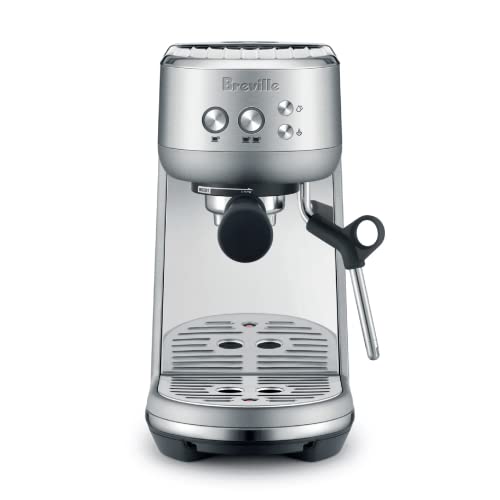
- 3-second warm-up beats waiting
- Steam wand froths real microfoam
- 54mm portafilter pulls proper shots
- Holds temperature shot to shot
Cons
- Manual tamping takes practice to dial
- Small reservoir refills every few days
3-Second ThermoJet Heat-Up
On a weekday morning with five minutes before heading out, this machine goes from cold to pulling a shot faster than most semi-automatic machines heat a single group head. The thermojet system gets water to extraction temperature in 3 seconds, which means no more standing around waiting for the boiler light to stop blinking. That said, the first shot after a long break still benefits from a short flush to stabilize temperature, so don't expect perfection if you're pulling shots back-to-back after hours of sitting.
54mm Portafilter with 19-Gram Basket
A proper semi-automatic espresso machine needs a full-size basket, and Breville didn't cheap out here. The 54mm portafilter and 19-gram capacity pull shots with real body and complexity that you don't get from smaller baskets. The trade-off is that tamping consistency matters more than it does with super-automatic machines, so if you're coming from pod-based brewing, expect a learning curve of a few weeks to dial in your grind and pressure.
Automatic Milk Texturing Steam Wand
The automatic steam wand adjusts milk temperature and texture without you standing there manually rolling the pitcher. On a morning when you're making lattes for two people, this hands-free approach saves real time and pulls microfoam that holds together for latte art. The catch is that you still need to position the pitcher correctly and watch for overflow, so it's not truly set-and-forget like a super-automatic machine with a built-in milk system.
PID Temperature Control for Shot Consistency
Digital temperature control keeps water at the exact temperature for every shot, which means your second espresso tastes the same as your first without adjusting anything. This is the feature that separates a semi-automatic espresso machine from cheaper lever machines where temperature drifts between shots. Low-pressure pre-infusion gradually builds pressure at the start of extraction, so flavors come through balanced instead of bitter or sour from uneven saturation.


Pros
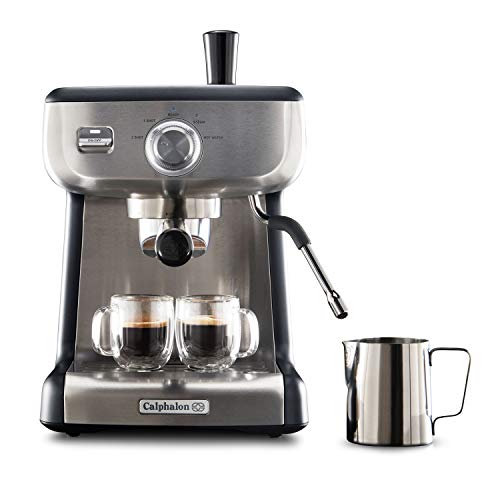
- 15-bar pump builds authentic crema
- Compact design saves counter space
- Included tamper calibrated for consistency
- Steam wand froths milk reliably
Cons
- Manual tamping takes practice to dial in
- Small water reservoir needs frequent refills
15-Bar Pump Pressure for Real Crema
At 15 bars, this semi-automatic espresso machine pulls shots with body and crema that actually stick around past the first sip. The pressure is consistent enough that once you dial in your grind and tamp, you're not chasing wildly different results from one morning to the next. That said, the pump pressure alone doesn't make the shot; uneven tamping or a too-coarse grind will still give you thin, sour pulls.
Calibrated Tamper for Dial-In Help
The included tamper is designed to apply even pressure without guessing, which cuts down the learning curve on this manual espresso machine. I appreciated not having to hunt for a separate tamper that actually fit the portafilter basket properly. The stainless steel base and wood handle feel solid enough to last through months of daily mornings, though you'll still need to develop a feel for when the tamp is level and firm enough.
Manual Steam Wand Froths Milk Consistently
The steam wand produces real microfoam when you angle the pitcher right and keep the tip just below the surface. It's not one-button automatic, but after a few lattes you figure out the motion and get repeatable results. The wand does require hands-on attention and regular cleaning to avoid milk buildup, so it's not a set-it-and-forget-it feature.
Compact Design Without Cheap Build
This espresso machine doesn't hog counter space, but the stainless steel exterior and portafilter feel sturdy enough for daily use. The footprint works for small kitchens or tight corners without feeling cramped to operate. Water reservoir is small, though, so on a busy morning with multiple shots or lattes, you'll refill it more than once.

Pros
- 20-bar pump builds real crema
- Steam wand froths actual microfoam
- Compact design fits small kitchens
- Pressure gauge shows extraction clarity
Cons
- Small tank needs daily refilling
- Cools down between milk and shots
20-Bar Italian Pump for Real Crema
At 20 bars of pressure, this semi-automatic espresso machine pulls shots with actual body and a crema layer that sticks around past the first sip. I ran this through weekday mornings for months, and the extraction stayed consistent once I dialed in my grind and tamp. The pressure gauge on the side is honest feedback, not just decoration, so you can see when you're under or over-extracting instead of guessing.
Steam Wand for Real Microfoam
The steam wand on this espresso machine with milk frothing actually produces textured microfoam, not just scalded milk with bubbles on top. I made lattes on repeat and got smooth, pourable foam that looked more like what a café pulls. One quirk: you need to let the machine cool between pulling a shot and steaming milk, or the pressure spikes and the safety kicks in, which adds a few minutes to your routine on busy mornings.
Compact Footprint Without Sacrificing Shot Quality
This compact espresso machine takes up roughly the space of a toaster, which matters if your counter is already packed. Despite the small frame, the boiler and pump don't feel undersized, and shots pull with the same pressure and crema as machines twice the size. The 34-ounce water tank is the real trade-off here, so refilling becomes part of your morning ritual if you're pulling multiple shots or steaming milk back-to-back.
Pressure Gauge for Shot Dialing
Most budget espresso machines leave you blind, but this one has a built-in gauge so you can watch the pressure climb and know when you're in the sweet spot. I used it to dial in my tamp and grind without wasting shots, and it cut my learning curve noticeably. Once you're dialed in, the gauge becomes background noise, but it's genuinely useful during those first weeks of figuring out what works for your beans and your taste.
Nearest Competitors
Three machines worth knowing about if the budget can stretch past $400.
- Anyone who wants milk texturing handled automatically should look at the Breville Bambino Plus, which keeps the fast heat-up of the standard Bambino but adds an automatic steam wand with three foam settings. It runs around $500, so it is a real step up in spend for the milk feature.
- The Gaggia Classic Pro is the entry point into prosumer territory, with a commercial 58mm portafilter and a metal build that takes aftermarket upgrades for years. At roughly $550 it costs more and asks you to dial in grind and tamp yourself, but it rewards the effort.
- For a machine with the grinder built in, the De’Longhi La Specialista pairs a conical burr grinder with a dosing system that cuts out a separate grinder purchase. It is close to $700, which only makes sense if you would otherwise buy a grinder anyway.
How We Test Espresso Machines
Our espresso machine evaluations focus on the things that make the biggest difference once you start using a machine every day: espresso quality, temperature consistency, milk steaming, and usability. We pull repeated shots and make milk drinks rather than judging a machine by its advertised pump pressure or a single good espresso.
1. Espresso Quality and Consistency
We pull multiple single and double shots using the same coffee and preparation as consistently as possible. This helps us see whether a machine can repeat a good result rather than producing one strong shot followed by an inconsistent one.
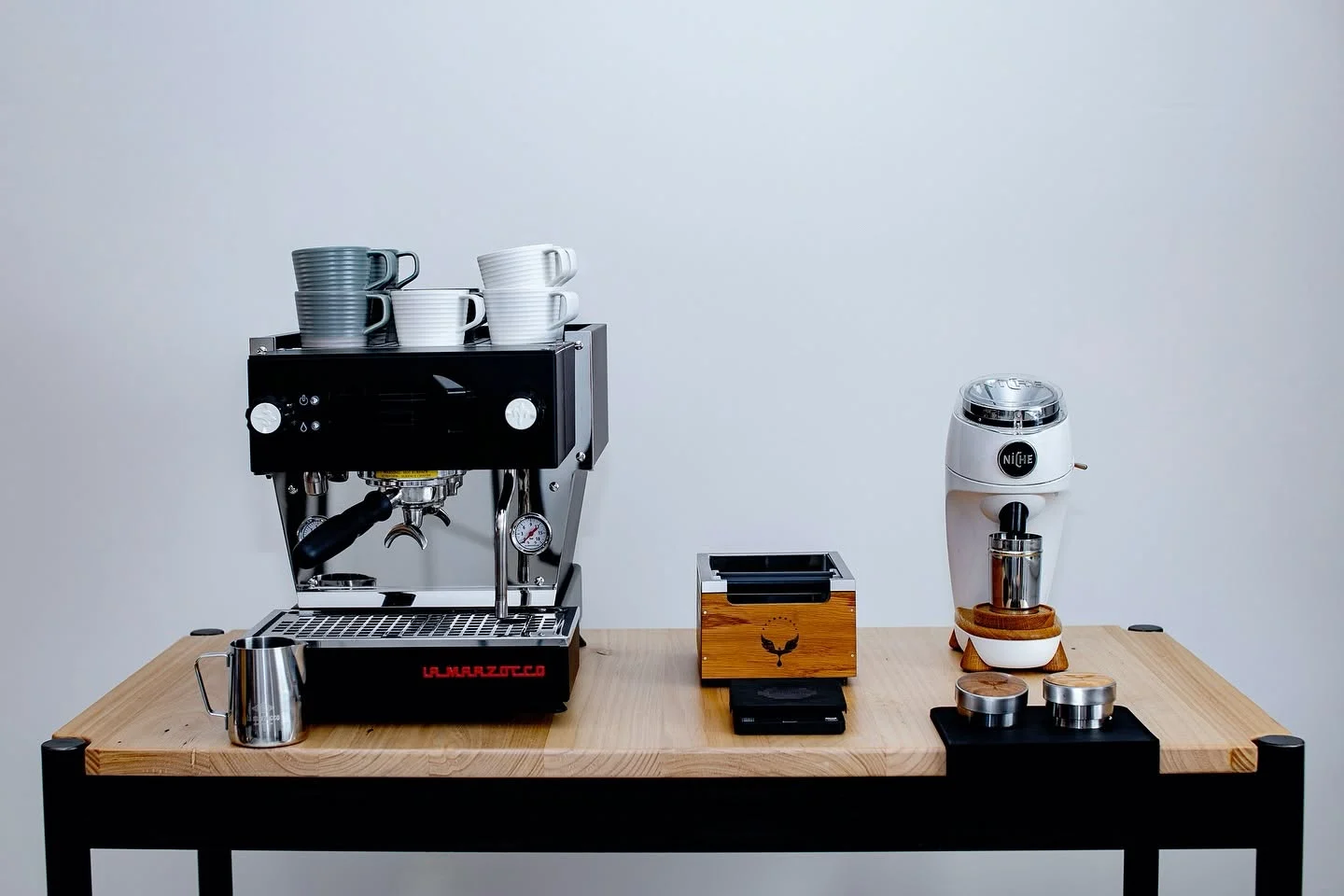
We pay particular attention to:
- Shot consistency: How similar the results are from one extraction to the next.
- Temperature stability: Whether brewing performance changes during consecutive shots.
- Extraction: Whether the machine produces balanced espresso without obvious weak or harsh flavors.
- Recovery time: How quickly it’s ready to pull another shot.
2. Milk Steaming Performance
For machines with a steam wand, we test more than how quickly it heats milk. We look at steam power, control, and milk texture, including whether the wand can create the fine, even foam needed for lattes and cappuccinos.
We also note how quickly each machine transitions between brewing and steaming. That becomes particularly important when making several milk drinks back to back.
3. Controls and Everyday Use
We run each machine through the complete routine you’d go through at home: filling the reservoir, preparing the portafilter, pulling shots, steaming milk, emptying the drip tray, and cleaning afterward. Pairing any of these with a decent grinder matters as much as the machine, so our guides to grinders for the Gaggia Classic Pro and single dose grinders are worth a read alongside this one.
Small design choices matter here. We pay attention to warm-up time, reservoir access, portafilter design, control layout, drip-tray capacity, and cleaning requirements, especially anything that becomes frustrating with repeated use.
4. Value Under $400
Machines in this price range often advertise long feature lists, high pump-pressure ratings, and multiple presets. We don’t give those features much weight unless they noticeably improve the espresso or make the machine easier to use.
Under $400, we’d rather have consistent extraction, stable brewing temperature, and a capable steam wand than pay extra for touchscreens, unnecessary presets, or impressive-looking 15- and 20-bar pressure claims.
That balance between coffee quality, daily usability, and price carries the most weight when deciding which machines deserve a place in this guide.
Choosing a Good Espresso Machine Under $400
Under $400, the biggest differences between espresso machines are usually temperature control, heating speed, steam power, and how much work they expect from you. A thermoblock machine makes sense if you want faster warm-up and a simpler morning routine, while a more traditional semi-automatic machine gives you greater control over grind, dose, and extraction.
Don’t choose by pump pressure alone. A 15- or 20-bar rating tells you little about the espresso in the cup. Consistent temperature, good pressure management, and a capable steam wand matter more, especially if you regularly make lattes or cappuccinos.
What 15-Bar and 20-Bar Pressure Really Means
Pump pressure is one of the most heavily advertised espresso machine specs, with 15-bar and 20-bar pumps appearing on everything from beginner machines to more feature-packed models. But the larger number doesn’t tell you how much pressure is actually reaching the coffee during extraction. It describes the maximum pressure the pump is capable of producing.
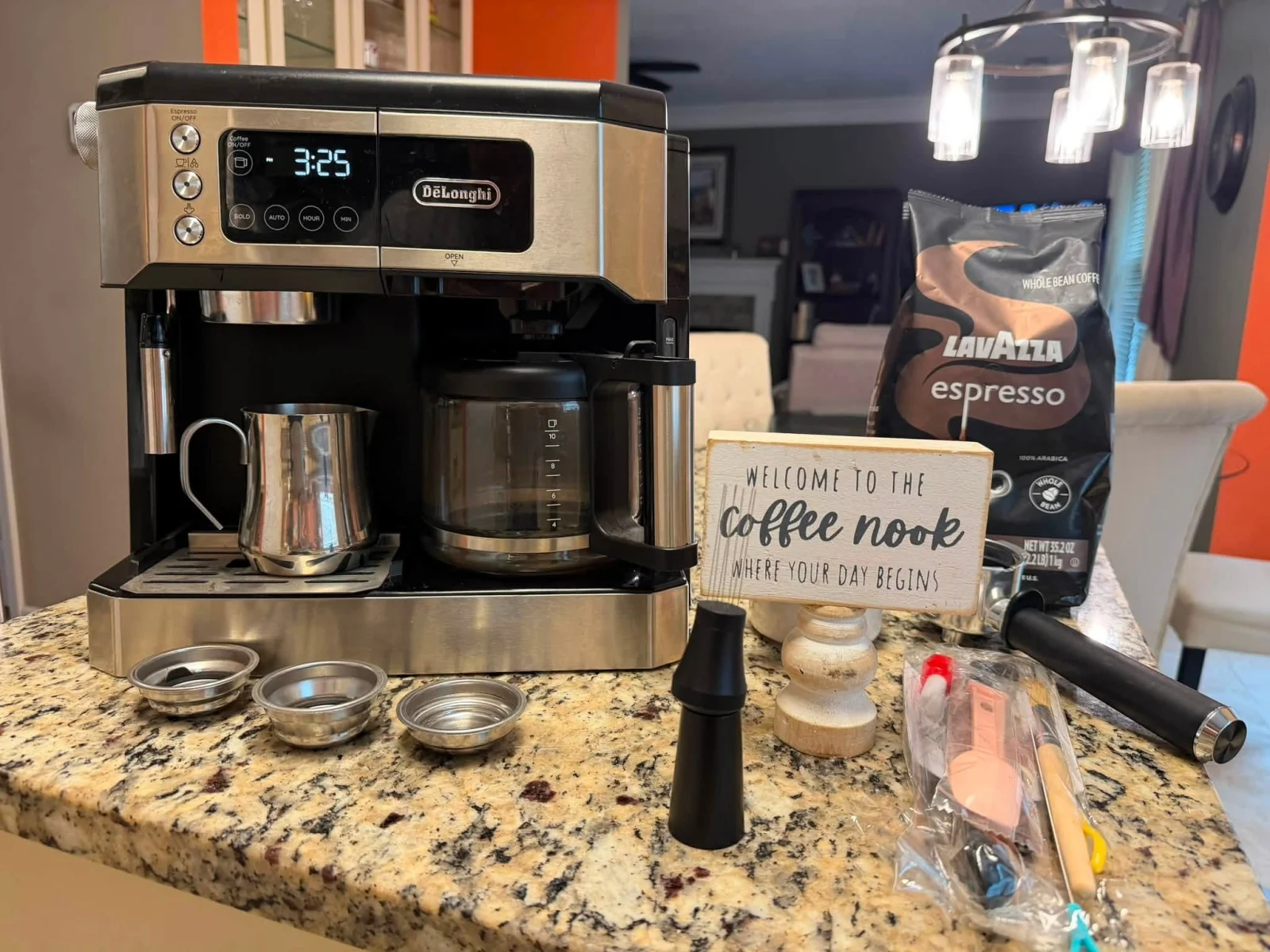
For espresso, what matters more is how the machine controls pressure while water passes through the coffee puck. Grind size, dose, tamping, water temperature, and resistance from the coffee all affect how a shot extracts. That’s why comparing two machines based only on 15 bar versus 20 bar can be misleading.
| Pump Rating | What It Means | What to Know |
|---|---|---|
| 9 bar | Common reference point for espresso extraction | Often associated with traditional espresso brewing |
| 15 bar | Pump can generate up to 15 bars | More than enough capacity for a home espresso machine |
| 20 bar | Pump can generate up to 20 bars | Higher maximum rating doesn’t automatically improve extraction |
| What matters more | Pressure during the actual shot | Temperature, grind, dose, and consistency have a larger influence on results |
A machine also needs to repeat that performance. If temperature changes noticeably between shots or pressure isn’t managed consistently, a powerful pump won’t fix the underlying problem. This is why we pay more attention to shot consistency, temperature stability, and extraction behavior when comparing machines.
Don’t assume 20 bar is better than 15 bar. The pump rating tells you what the pump can produce at its maximum, not how good the espresso will taste. A well-controlled 15-bar machine can produce a more consistent shot than a 20-bar model with weaker temperature or pressure management.
For most home users, pump pressure should therefore be treated as one specification rather than the deciding specification. Once a machine has sufficient pressure capability, the quality of the heating system, portafilter setup, grinder, and your ability to dial in the coffee become much more important.
Our Expertise
Jessica Lane covers home appliances at Hoomerly and spent years on the sales floor of a regional appliance retailer, where shoppers regularly traded a machine back because it pulled weak, watery shots or the steam wand could not keep up with their morning latte.
She has a practical read on which sub-$400 machines hold temperature through a real morning rush versus which ones look the part in the store but sputter once you use them daily, along with the grinder-pairing and maintenance details that decide whether a machine stays in the rotation or ends up in a cabinet.
FAQs
How many bars of pressure do you actually need?
Nine to ten bars is the sweet spot for espresso extraction. Most machines in this price range claim 15 or 20 bars, but that number is the pump maximum, not what hits the coffee puck. What matters is whether the machine holds steady pressure throughout the shot. A 20-bar pump that drops to 6 bars mid-pull gives you weak, watery coffee, while a machine that maintains 9 to 10 bars consistently pulls better shots than one that spikes and crashes.
Can you actually froth milk without a separate steam wand?
Yes, but only if the steam wand has enough power and the right nozzle design. A weak steam wand just heats milk and creates big bubbles instead of dense microfoam. The best ones in this price range deliver focused, dry steam that lets you tilt the pitcher and build texture. If the wand sputters or leaves mostly foam on top with hot milk underneath, skip it.
How long should you wait before pulling your first shot?
Machines that preheat in under 30 seconds are worth it for a rushed morning. Some take 60 to 90 seconds, which means standing there while your coffee gets cold. Check the actual preheating time in user reviews, not the marketing claim. Temperature stability matters more than raw speed, though, since a machine that takes 45 seconds but holds temperature pulls better shots than one that heats fast and fluctuates.
Do you need to descale an espresso machine often?
Yes. With tap water, descale every one to two months; with filtered water, every two to three months. Mineral buildup clogs the group head and steam wand, and your shots get weak while the milk stops frothing. Most machines come with a descaling solution and the cycle takes about 20 minutes. Units with a removable or backflush-friendly group head are easier to keep clean between shots.
Is a semi-automatic machine worth the learning curve?
If you want to pull a real shot and understand what you are doing, yes. You control the tamp, the extraction time, and the dose, which means you can dial in the grind and adjust for different beans. If you would rather push a button and walk away, a super-automatic is easier. But semi-automatics in this price range pull noticeably better shots once you get past the first week of trial and error.





Write Your Review
No reviews yet. Be the first to share your experience!