

Free Delivery. Exclusive Deals. All Prime.
Prime members save on shipping and get first access to deals, plus Prime Video included. 30 days free.
The campfire is out, your socks are damp, and the dog has claimed the only dry corner of the tent. The best emergency blankets help slow heat loss and block wind or moisture when cold weather turns inconvenient fast. After comparing 6 models, the Mart Cobra Emergency Blanket stands out with a 4-pack, 90% body-heat retention and an 82 by 52-inch size. The Anloke Emergency Blanket is the alternative pick, with 10 blankets and an 84 by 64-inch size.

Pros
- Retains up to 90% of body heat with aluminized Mylar material
- Large 82" x 52" unfolded size suitable for multiple uses
- Compact fold size fits easily into backpacks and emergency kits
- Tear-resistant Mylar is reusable across multiple emergency situations
- Four-pack provides multiple blankets for different scenarios
Cons
- Mylar material may tear if not handled carefully despite tear-resistant claim
- Single-layer design offers limited insulation compared to multi-layer options
- No information provided on durability after multiple uses or storage

Pros
- 10 individually wrapped blankets for storage and retrieval
- Large 84 x 64 inch size covers the body better
- Waterproof and windproof mylar construction
- Each pack is about 6 x 4 inches and 2 oz
- Reusable design for multiple emergency uses
Cons
- Emergency blanket, not a standard winter comforter
- Mylar is not a soft fabric bedding layer
- Thin 15 micrometer material
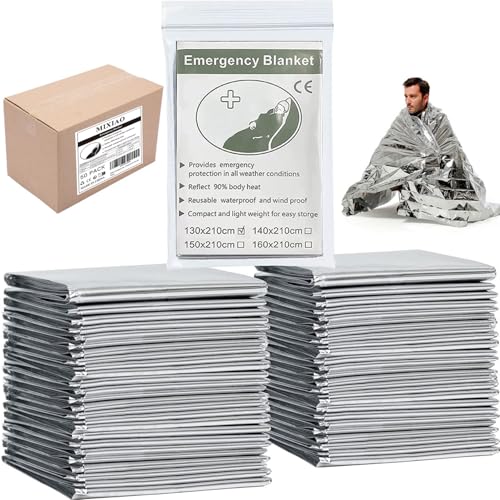
Pros
- 50 individually packaged blankets per order
- Each blanket opens to 51 x 83 inches
- Reflects and retains up to 90% of body heat
- Compact 2 oz design fits in emergency kits
- Waterproof, windproof and moisture-proof mylar
Cons
- 12-micron material is very thin
- Made for emergency use, not regular winter bedding
- Only listed in silver

Pros
- Retains 90% of body heat with dual-sided aluminized Mylar technology
- Ultra-compact and lightweight at 0.125 pounds for easy transport
- 10-pack includes bonus space blanket for multiple emergency uses
- Waterproof and durable construction withstands harsh weather conditions
- Versatile as ground cover, shelter, or gear protection
Cons
- Single-use design means blankets cannot be reused after deployment
- Mylar material can crinkle loudly during movement or adjustments
- Requires proper deployment technique for effective heat retention
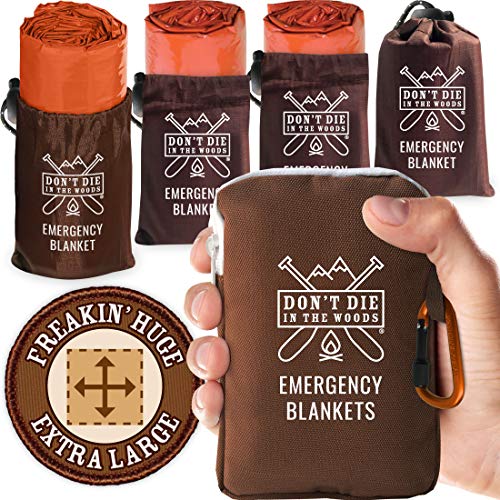
Pros
- 23% larger than standard foil blankets at 7x5 feet for full body coverage
- Reflects up to 90% of body heat, waterproof NASA-designed mylar material
- Ultralight and compact at only 2 oz per blanket with included zipper pack
- Pack of 4 blankets allows for group use or multiple emergency kits
- Durable construction designed for repeated use, not single-use only
Cons
- Requires tape or paracord to convert into shelter or sleeping bag configurations
- Single blanket dimensions may be limiting for tall individuals or extended use
- Mylar material can tear if not handled carefully despite durability claims

Pros
- 12-pack quantity provides multiple blankets for different situations
- Reflects up to 90% of body heat to help prevent hypothermia
- Military-grade 12-micron mylar is waterproof, windproof, and reusable
- Lightweight and compact for bug-out bags and emergency kits
- Versatile uses beyond emergencies including ground tarps and pet crate liners
Cons
- Thin material may tear or puncture with rough handling during use
- Limited to emergency situations; does not provide same warmth as sleeping bags
- Reflective coating can be damaged if washed or cleaned improperly
What We Looked For in Emergency Blankets for Cold Camps
Cold-weather camping puts pressure on small gear. An emergency blanket has to trap heat, shed moisture and pack small enough that it actually makes it into a backpack, glove box or first-aid pouch.
- Insulating value or capacity: The clearest baseline was heat reflection, because the National Park Service notes that hypothermia happens when the body loses heat faster than it can produce it. Among our picks, every main option claims up to 90% body-heat retention, which gives a consistent comparison point. The Mart Cobra Emergency Blanket also comes as a 4-pack, enough to split between a tent kit, car kit and daypack without relying on one shared blanket.
- Material and durability: We favored aluminized Mylar or polyethylene builds because they pair heat reflection with weather protection. The Mixiao Emergency Blanket uses 12-micron aluminized polyethylene mylar and is described as waterproof, windproof and moisture-proof. That matters in camp because the National Park Service says wet conditions from rain, sweat or submersion can contribute to hypothermia even above freezing.
- Size and weight: Coverage matters when a blanket is used around shoulders, under a sleeping pad or as a quick shelter panel. Among our picks, opened sizes range from 51 by 83 inches to 84 by 64 inches, while several individual blankets weigh about 2 ounces. Larger sheets give more wraparound coverage, but the 2-ounce class is easier to scatter across go-bags, first-aid kits and vehicle compartments.
- Ease of cleaning or packing: Reusable, waterproof blankets are easier to wipe dry before repacking than fabric layers that hold moisture. The Swiss Safe Emergency Blanket uses 12-micron aluminized polyethylene mylar and includes a bonus space blanket, giving you one smaller backup for a glove compartment or hiking pack. Compact storage also matters because a blanket that fits in a small kit is more likely to be carried on short hikes.
- Lid or closure design: Emergency blankets do not have lids, so packaging and closure style stood in for this criterion. Among our picks, pack counts range from 4 to 50, and several are individually wrapped for cleaner storage and faster handout. One pick includes a zipper pack with a carabiner, which is useful if you want group blankets kept together rather than loose in a bin.
We excluded summer or three-season-only gear that is not rated for freezing temperatures, because this list is for cold-weather backup insulation. We also excluded home space heaters used inside a tent without ventilation, since the U.S. Consumer Product Safety Commission warns that carbon monoxide is colorless and odorless, and we left out children’s toy tents and sleeping bags because they are not emergency warmth gear.
Other Emergency Blankets Worth Considering
These are other emergency blankets we looked at but did not put on our main list.
If you want a water-resistant alternative with a different size and feature mix, Don’T Die Emergency Blanket is worth a look. The tradeoff is that our main list already spans 4 to 50 blankets per pack, which makes it easier to choose between a small personal kit and group distribution.
For shoppers comparing another water-resistant option, Rasupro Emergency Blanket sits in the same broad category as the main picks. The reason it stayed outside the list is simple: our selected group gives published opened sizes from 51 by 83 inches to 84 by 64 inches, so coverage is easier to compare before packing for a cold trip.
SecuCaptain Emergency Blanket may appeal if you are building a secondary kit for a car or garage shelf. It did not displace the main picks because several selected blankets weigh about 2 ounces each, a useful benchmark when every item in a hiking pack has to justify its space.
And if plastic construction is part of the appeal, Altland Emergency Blanket offers a water-resistant plastic build. We kept it off the main list because the selected options include 12-micron and 15-micrometer material callouts, which make durability comparisons clearer than a broad material description alone.
FAQs
How do emergency blankets help campers stay warm in cold weather?
Emergency blankets reflect body heat back toward the user, and our picks claim up to 90% heat retention. They are most useful as part of a broader system that also keeps you dry, blocks wind and insulates you from the cold ground.
Can an emergency blanket prevent hypothermia by itself?
No single thin blanket should be treated as a complete hypothermia plan. According to the National Park Service, staying dry, layering clothing and insulating from the ground are key ways to reduce heat loss while camping.
What size emergency blanket should I pack for camping?
Our picks range from 51 by 83 inches to 84 by 64 inches when opened. A larger sheet is easier to wrap around a person or rig as a wind block, while a smaller packed size is easier to carry every time.
Are fuel-burning heaters a safe substitute inside a tent?
Be careful with any fuel-burning device in an enclosed shelter. The U.S. Consumer Product Safety Commission says carbon monoxide can come from stoves, lanterns, charcoal, wood and small engines, and it should not build up inside a tent or camper without proper ventilation.
Sources
- Hypothermia, National Park Service. NPS guidance on preventing hypothermia outdoors.
- Carbon Monoxide Questions and Answers, U.S. Consumer Product Safety Commission. CPSC guidance on carbon monoxide hazards from fuel-burning devices.



Write Your Review
No reviews yet. Be the first to share your experience!