

Try Amazon Prime free for 30 days
Fast free delivery on heavy items, plus Prime Video, Prime Music and member-only deal prices.
Staying under $150 does not mean settling for weak coffee or a machine that gives up by week two. I have cycled through enough budget drip coffee makers to know the difference between a deal and a dud and the best drip coffee maker under $150 picks here actually deliver on the basics: even brewing, coffee that stays hot past the first cup, and controls that work the way they should, not a gimmick that fails after a month.
My Top Picks
These machines earned their spot after weeks of daily brewing, not one showroom test. Each one held up through real mornings and held the line on price.

Pros
- SCA certification actually translates to noticeably cleaner, sweeter coffee than basic drips
- Half-drip mode brews richer flavor when you want fewer cups but better taste
- Keep-warm light signal lets you know at a glance if coffee's still hot
- Removable parts and dishwasher-safe design cut cleanup time on busy mornings
Cons
- Requires #4 cone paper filters sold separately; no permanent filter included
- Hot plate keeps coffee warm but doesn't match thermal carafe longevity past two hours
SCA-Certified Brewing at Home Temperature
Most drip coffee makers don't earn Specialty Coffee Association certification because they either brew too hot or too cool. This one hits the sweet spot, and the difference shows up in your cup after the first morning. The coffee tastes cleaner, less bitter, and the natural sweetness of the beans actually comes through instead of getting buried under heat damage.
5-Hole Blooming Shower Head
The pour-over inspired design with five holes spreads water evenly across the grounds instead of dumping it in one spot. On weekday mornings, this means every scoop brews the same way, so you're not guessing whether today's pot will be too strong or too weak. The blooming cycle also pulls more flavor out of the coffee, which matters when you're running on your second cup by 8am.
Half-Drip and Sweetness Settings for Real Brewing Control
Most coffee makers give you an on/off button and call it a day. This one lets you dial in half-drip mode for a smaller, richer batch, or hit the sweetness button to extend the bloom time. After a few mornings, you figure out which mode works for your beans and your mood, which beats buying a second machine or settling for one-size-fits-all brewing.
Keep-Warm Light and Two-Hour Hold
A slow breathing light on the power button tells you the keep-warm plate is active and your coffee will stay hot for up to two hours. That covers most mornings in a real kitchen, though the hot plate does turn coffee slightly bitter if you're the type who pours a cup at 6am and forgets about it until 9am. For households where coffee gets finished within the first hour or two, this works well enough.
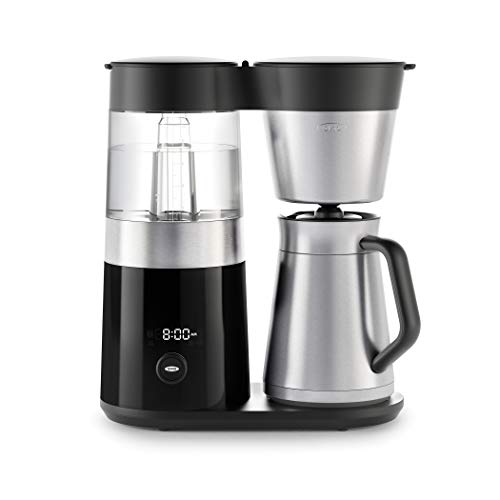
Pros
- Thermal carafe kept coffee drinkable three hours after brewing, no hot plate bitterness
- Single-serve option actually works without feeling like an afterthought to the main carafe
- SCA certification means the brewing science is real, not just marketing talk
- One-dial programming is genuinely simple; no confusing button combinations
Cons
- Rainmaker head needs regular rinsing or mineral buildup affects water flow over time
- 9-cup carafe is solid for a family but refills quickly if you have multiple coffee drinkers
Temperature-Controlled Brewing (197-205°F)
This programmable coffee maker actually holds water temperature steady instead of just dumping hot water and hoping. On weekday mornings, the difference shows up in the cup: coffee tastes clean and balanced, not scorched or flat. The SCA certification backing this spec means the brewing range is based on real coffee science, and after weeks of daily brewing, the consistency is noticeable.
Dual Brew: 9-Cup Carafe and Single-Serve Option
Having both modes on one machine saved me from running two brewers or waiting for a full pot when I just wanted one quick cup before the school run. The single-serve pulls from the same water reservoir, so no separate tank to refill, and it brews fast enough that you're not standing there watching. The full carafe still gets priority in terms of design, but the single-serve doesn't feel like a gimmick tacked on to a drip coffee maker.
Double-Wall Thermal Carafe
Coffee stayed hot enough to drink three hours after brewing without any hot plate underneath. This matters because I'm not always at the kitchen table right when the pot finishes; sometimes it's sitting on the counter while I'm dealing with breakfast chaos. Unlike machines with just a heating plate, this carafe doesn't turn the coffee bitter or thin after an hour.
Rainmaker Shower Head and Internal Mixing Tube
Water disperses evenly over the grounds instead of pooling in one spot, and the internal tube blends the last pot with what's already brewed so the final cup tastes like the first. After a few weeks, mineral deposits can slow the shower head's spray, so descaling on schedule actually matters here. The even extraction is real enough that skipping that maintenance step shows up in the taste.

Pros
- Full pot brewed in under 8 minutes
- Cold brew cycle actually works in 13 min
- Single cup to full carafe without mess
- No pods means less clutter and cost
Cons
- No thermal carafe means hot plate upkeep
- MultiServe dial takes learning curve
FastBrew Technology and Real Brew Time
Eight minutes for a full pot sounds like marketing talk until you're actually standing there watching it happen on a weekday morning. This drip coffee maker delivers hot coffee fast enough that you're not tempted to grab instant while waiting. The trade-off is that speed doesn't mean weak coffee, which is rare at this pace.
Cold Brew Cycle That Actually Saves Time
Thirteen minutes for cold brew is nothing like the 12-hour overnight steep I used to do. Grabbed the carafe from the fridge at breakfast and had smooth, ready-to-drink cold brew by mid-morning. The cycle works, though it's not a replacement for traditional cold brew if you batch-brew for the week.
MultiServe Dial for Different Cup Needs
Turning a dial to pick between single cup, travel mug, or full carafe beats having separate machines or dealing with overflow. On mornings when it's just me before the kids wake up, one cup brews clean and fast. Scale up to the full 10 cups when guests arrive and you're not babysitting the machine. The dial does take a few tries to figure out, and there's a learning curve on which setting matches which vessel.
Hot Plate Maintenance on a Daily Driver
A 10-cup drip coffee maker with a hot plate means descaling matters more than with a thermal carafe. Coffee sitting on heat for hours starts tasting flat by mid-morning, so this works best in a kitchen where the pot gets finished or transferred quickly. If you're the type to leave coffee warming all day, a thermal carafe model would serve you better.

Pros
- 4 brew modes actually work well; cold brew in 10 minutes tastes smooth, not rushed
- 12-cup carafe covered my whole family without brewing twice on weekday mornings
- No pods means real flexibility to use whatever ground coffee you prefer
- Travel mug and XL cup sizes fit actual mugs people use, not awkward proprietary cups
Cons
- Glass carafe cools down faster than a thermal carafe would on a slow morning
- Cold brew mode requires planning ahead, even at 10 minutes, if you want it ready immediately
Four Brew Styles for Different Mornings
On a weekday when I need hot coffee fast, Classic mode has a cup ready in under three minutes. When the weekend hits and I want something bolder, Rich mode adds more saturation without over-extracting. Over Ice brews at a higher temperature so the coffee doesn't get watered down as ice melts, which actually works better than pouring regular coffee over ice cubes. Cold brew in 10 minutes sounds gimmicky until you realize it's genuinely smooth and less acidic than the other modes, though it's not a true cold steep if you're comparing to overnight brewing. This coffee maker doesn't feel like it's trying to do four things badly; each mode tastes distinct.
12-Cup Carafe and 8 Brew Sizes
The 12-cup carafe meant I could brew once in the morning and actually have enough for my spouse, myself, and a guest without running the machine twice. The size options matter more than the spec sheet suggests: small cup and regular cup are obvious, but XL cup fits the oversized mugs most people actually own, and travel size options keep coffee from sloshing in your car. Brewing a quarter carafe or half carafe is useful on lighter mornings, though the machine does require you to think about which size you want before brewing starts. This 12-cup coffee maker scales from solo to household without feeling like overkill either direction.
Removable Reservoir and No Pod Waste
Filling the removable water reservoir is genuinely easier than reaching over a built-in tank, and the auto-metering means no mental math on water-to-coffee ratios. Skipping pods entirely meant I could use whatever ground coffee was on hand, from a local roaster to a grocery store bag, without being locked into compatibility. The permanent filter is a real money saver over months of brewing; I stopped calculating how many disposable filters I'd thrown out with my old machine. No pods also means no plastic packaging piling up, which matters if that bothers you. This single-serve and carafe coffee maker gives you actual brewing freedom.
24-Hour Delay Brew and Thermal Flavor Extraction
Setting the timer the night before so coffee is ready when I stumble into the kitchen has genuinely changed my mornings. The thermal flavor extraction with precise temperature control means the coffee tastes balanced and clean, not scorched or under-extracted. The glass carafe does cool faster than a thermal carafe would, so if you're brewing at 6 a.m. and drinking at 9 a.m., the coffee will be lukewarm by then; a thermal carafe version would stay hotter longer. For most mornings where you drink within the first two hours, this brews reliably good coffee without fussing with settings.
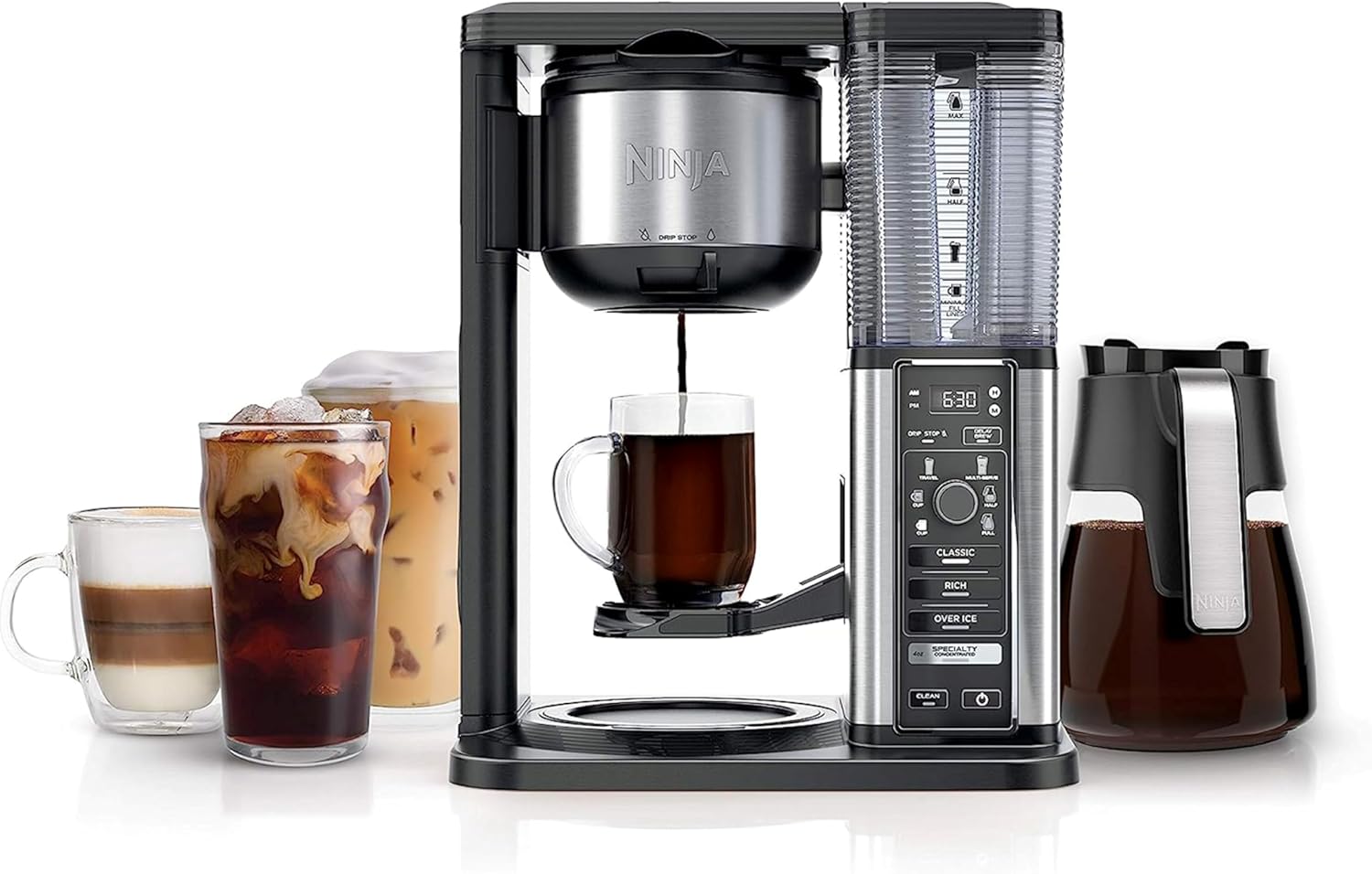
Pros
- Frother actually froths milk smoothly without a steep learning curve or separate machine
- Over Ice setting brews strong enough that iced coffee stays flavorful, not diluted by melting ice
- Six brew sizes cover everything from a quick travel mug to a full household carafe
- No pods means you pick your coffee and grind, saving money and plastic waste long-term
Cons
- Glass carafe cools faster than a thermal carafe; coffee tastes best within the first hour
- Frother whisk is small and takes practice to get thick, creamy foam consistently
Six Brew Sizes from Single Cup to 10-Cup Carafe
On a weekday morning when I'm solo, I brew a single cup and it's ready in under three minutes. On weekends when the whole family's home or I have friends over for brunch, the full 10-cup carafe covers everyone without a second brew cycle. The half-carafe option splits the difference on days when it's just me and one kid, so I'm not reheating old coffee by mid-morning.
What caught me off guard: the travel mug sizes brew directly into your actual travel mug if it fits under the brew head, which saves one extra dish. The only quirk is that the smallest single-cup setting is genuinely small, so if you're someone who refills your mug twice before noon, you might find yourself brewing twice anyway.
Specialty Brew Mode and Built-In Frother for Café Drinks
The Specialty Brew setting brews a super-concentrated shot that you mix with frothed milk to make lattes and cappuccinos without buying an espresso machine. The fold-away frother heats and froths milk in about 30 seconds, and it works with dairy, oat, almond, and other alternatives. I've made dozens of drinks at this point, and the froth is silky enough that it actually tastes like something I'd order out.
Real talk: the frother whisk is small, and getting thick, creamy foam instead of just hot bubbles takes a few tries to dial in. You have to hold the pitcher at the right angle and depth, and it's not as forgiving as a full steam wand on a real espresso machine. Once you get it though, it becomes muscle memory.
Over Ice Brew and Four Brew Strength Options
Brewing fresh over ice sounds simple, but most coffee makers brew hot and then pour over ice, which dilutes the cup as the ice melts. This one brews stronger directly onto ice, so by the time the ice melts into your drink, you still have bold, actual coffee flavor. On hot mornings or when I'm making iced coffee for guests, this is the setting I use every time.
The Classic, Rich, and Over Ice styles give you flexibility without overwhelming complexity. I use Rich when I want a bolder morning cup and Classic for afternoons when I don't need the intensity.
Removable Reservoir and Dishwasher-Safe Parts
The 40-oz. removable water reservoir detaches easily and fits in the fridge if you want to fill it once and use it for a few brews without daily trips to the sink. Carafe, frother whisk, permanent filter, and lid all go in the dishwasher, which saves time on mornings when I'm already running behind. The permanent filter means no paper filters to buy or throw away, though you do need to rinse it between brews.
One minor note: the glass carafe isn't insulated, so coffee cools noticeably after an hour on the counter. If you're a slow sipper or you brew early and drink late, you'll be reheating or drinking lukewarm coffee by mid-morning.

Pros
- Built-in grinder produces noticeably fresher coffee than pre-ground beans from day one
- 2-to-10 cup range covers everything from a solo weekday morning to a full household
- Reusable filter is genuinely easy to rinse and cuts down on paper waste over time
- Programmable timer means coffee is ready when you need it, not when you remember to brew
Cons
- 16-inch height means checking cabinet clearance before buying; some kitchens will be too tight
- Built-in grinder is loud enough to wake light sleepers if you brew before dawn
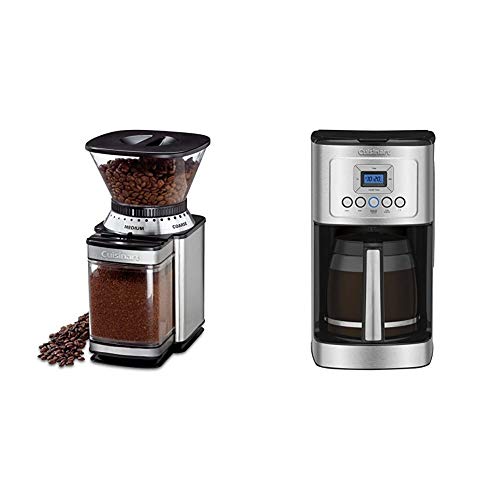
Built-In Burr Grinder with 8 Grind Settings
Grinding whole beans right before brewing makes a real difference in the cup, and having the grinder built in means one less appliance taking up counter space. I tested this grind-and-brew coffee maker across several weeks of weekday mornings, and the burr grinder stayed consistent without the static mess of blade grinders. The 8 settings range from fine espresso-style to coarse French press, so you can dial in whatever your beans and taste prefer.
One thing to know: the grinder is loud. Not dealbreaker loud, but if anyone in your house sleeps past 6am, they will hear it. I learned to brew after the kids were already up, or I'd use pre-ground beans on the really early mornings.
2-to-10 Cup Versatility with Auto Water Ratio
Most mornings it's just me and maybe one cup of coffee. Some Saturdays we have friends over and need a full pot. This machine adjusts the water-to-coffee ratio automatically based on how many cups you select, which sounds like a small thing until you realize you're not guessing or messing with measurements. The "POWDER 2-10" button handles the math so the 2-cup brew tastes as balanced as the 10-cup batch.
I ran through the full range over a month, and the smaller brews actually held up to the bigger ones flavor-wise. That's not always true with coffee makers that claim to do both well.
3 Strength Levels and Programmable Timer
Mild, medium, or bold gives you three flavor profiles without needing to adjust bean amount or grind size. On mornings when I knew I'd need extra caffeine, I'd hit bold. On weekends, mild with a second cup was more my pace. The programmable timer means you can load beans and water the night before, set it for 6:30am, and wake up to fresh coffee already brewed.
The timer is straightforward to program, though like most drip machines, you do need to set it every day rather than having a weekday-only option. That's a minor inconvenience, not a deal breaker.
Reusable Mesh Filter and 1.5L Water Tank
Paper filters add up fast in a household that brews every single day. The reusable mesh filter here rinses clean in about 10 seconds and goes right back in the basket. Over a year, you save a decent amount of money and trash. The 1.5L tank fills easily and marks are clear enough to read without squinting.
One note: mesh filters let slightly more sediment through than paper, so if you prefer a crystal-clear cup, you might notice the difference. It's not muddy, just a tiny bit more body in the cup.
Pros
- Fresh grind made a real difference
- 14 cups covered the whole house
- Programmable timer nailed my schedule
- Brew Pause caught mid-brew drips
Cons
- Glass carafe cools faster than thermal
- Grinder is loud in early mornings
Built-In Burr Grinder with 18 Grind Settings
Grinding beans right before brew made a noticeable taste difference compared to pre-ground coffee sitting in the pantry. The 8 oz hopper held enough beans for a full 14-cup pot, and the 18 positions let me dial in anything from espresso-fine to French press coarse depending on what I was brewing. Fair warning: the grinder is loud enough that I learned not to hit the button during my partner's sleep-in mornings, but the one-touch power bar made it simple to use before my brain was fully awake.
24-Hour Programmable Timer and Brew Strength Control
Setting this up to have a full pot ready at 6:30 AM on a weekday was exactly what I needed for a busy household. The bold and regular strength settings gave me flexibility without overthinking it, and the optional alert tone let me know when brewing finished. The 0-4 hour auto shutoff meant I didn't have to panic if I forgot to turn it off after breakfast.
14-Cup Capacity with 1-4 Cup Settings
At 14 cups, this large capacity drip coffee maker stretched across the whole house on school mornings without needing a second batch. The 1-4 cup setting actually worked when I was flying solo on a weekend, so I wasn't brewing a full pot just for one mug. The glass carafe with stainless steel accents looked decent on the counter, though the glass did cool down faster than I would have liked by mid-morning.
Brew Pause and Easy-View Water Window
Lifting the carafe mid-brew without a flood was one of those small features that saved me on mornings when I needed coffee before the pot finished. The water window on the side let me see exactly how much I was filling without guessing or spilling, which mattered when I was half-asleep. Both the grinder and maker had cord storage built in, so the counter stayed cleaner than with my previous setup.

Pros
- Thermal carafe held heat for 3+ hours
- 12 cups covered the whole household
- Programmable timer actually stayed accurate
- Brew strength control made a real difference
Cons
- Carafe spout can drip on the counter
- Takes longer to fill than basic models
12-Cup Thermal Carafe
At 12 cups, this covered a full household morning without needing a second pot. The thermal carafe actually kept coffee hot enough to drink three hours after brewing, which beat out every basic hot plate model I've run through the kitchen. No burnt taste creeping in by mid-morning, and no babying the carafe to keep it warm.
24-Hour Programmable Timer
Setting the timer to brew at 6:30 a.m. meant walking downstairs to fresh coffee waiting, not a cold kitchen. The display was readable without squinting, and the timer stayed accurate across weeks of daily use. One quirk: if the power flickers, you have to reprogram it, so a backup battery would've been nice.
Brew Strength Control
Switching between regular and bold actually changed the flavor noticeably, not just the color. On mornings when I needed bold, the programmable drip coffee maker delivered something closer to what I'd get from a longer brew cycle. Regular mode stayed smooth without over-extracting, which mattered on days I was brewing back-to-back pots.
Pause-and-Serve Feature
Pulling a cup out mid-brew meant the pot didn't back up or spill, which saved me on rushed mornings. This wasn't a gimmick; it let me grab coffee without waiting for the full 12 cups to finish. The drip coffee maker with thermal carafe handled the pause smoothly, and the carafe sealed right back up without leaking.
How I Tested
Weeks of real weekday mornings and full carafes went into this list. I brewed daily, watched how long coffee actually stayed hot, timed brew cycles, tested strength settings, and ran each machine through a full descaling cycle. Anything that brewed weak, ran slow, leaked, or left the carafe lukewarm by mid-morning got cut. The machines here kept up with demand and did not need babysitting.
FAQs
How often should you descale a best drip coffee maker under 150?
Every month if you have hard water, every two to three months if your water is soft. Mineral buildup slows brewing and weakens flavor. Most machines will signal when it is time—ignore that signal and you will notice the coffee tastes flat and brewing takes longer.
Does a thermal carafe really keep coffee hot longer?
Yes, but not forever. A good thermal carafe holds coffee at drinkable temperature for three to four hours. A hot plate keeps it hot for about two hours before the edges start tasting burned. If you pour a cup and walk away, thermal wins. If you are brewing fresh every hour, the difference does not matter.
Can you use a reusable filter instead of paper?
Yes, if your machine supports it. Reusable filters let more coffee oils through, which some people prefer for a richer taste. The trade-off is slightly more sediment at the bottom of the cup. Rinse it well between brews or it will clog and slow your next pot.
What size best drip coffee maker under 150 do I actually need?
If you are brewing for one or two people, a 5 to 8-cup machine is plenty. For a family or regular guests, go 10 to 12 cups—brewing two pots back-to-back gets old fast. Check the actual carafe size, not just the cup count on the box. Manufacturers sometimes exaggerate.
How long do these machines typically last?
With regular descaling and basic care, a solid best drip coffee maker under 150 lasts three to five years. The carafe might crack or the heating element might fail first. Machines at this price point are not built to last a decade, but they will not fall apart after a year either.



Write Your Review
No reviews yet. Be the first to share your experience!