

If your doorbell camera keeps dropping connection or lags when you need it most, you’re probably fighting a crowded 2.4GHz band. A best doorbell camera for 5GHz WiFi gives you a faster, more stable feed because 5GHz has more bandwidth and fewer devices competing for it. That means quicker alerts and clearer video when someone’s actually at your door.
A 5GHz doorbell camera is the best choice if your router is located close to the front door and provides a strong signal. If your router is farther away, consider a dual-band model so it can automatically switch to 2.4GHz for better range while still taking advantage of 5GHz whenever possible.
Our Top Picks
I’ve tested doorbell cameras that handle 5GHz WiFi well and installed them the way a homeowner actually would. Here’s what held up.

Pros
- Continuous power eliminates battery concerns
- 180-degree view catches full packages
- 2K HDR clarity in mixed light
- Chime V2 included, no extra cost
Cons
- Requires existing doorbell wiring
- Needs Reolink NVR for full playback
180-Degree Field of View Catches Packages at Your Feet
At 180 degrees, this video doorbell camera frames the entire porch in a tall 4:3 box instead of the usual letterbox crop. When a delivery driver set a box on the ground, we saw the full package and the driver's face in one shot, not just the top half of someone's chest. The 15-degree wedge kit lets you angle it down slightly to catch more of the step without losing the visitor's head.
Hardwired Power Keeps It Running Without Battery Drain
This wired doorbell camera pulls 12-24VAC from your existing transformer, so there's no battery to charge or manage across seasons. We tested it against the battery models I've installed before, and the difference is real: no cold-weather performance drop, no wondering if you missed an alert because the battery died overnight. If your house already has a doorbell transformer, the install is straightforward. Just confirm your transformer outputs at least 12VAC before you swap out the old button.
2K Resolution and HDR Handle Harsh Sunlight and Shadows
Faces stayed sharp and readable even when bright afternoon sun washed out the porch, thanks to the HDR and 3D DNR processing built in. At night, the low-light performance held up without washing out or turning grainy. The 2K bump over 1080p made a real difference when trying to read a delivery label or catch someone's expression from the doorbell's distance, not just confirm a silhouette.
Chime V2 Included Replaces Your Mechanical Doorbell
The included doorbell camera with chime plugs into any outlet and gives you 10 selectable tones and volume control. We mounted it in the kitchen and heard it clearly from the garage. It's one less accessory to buy separately, and it works without needing a subscription or cloud connection for the chime itself to ring.
Pros
- Wired install kept it powered nonstop
- 165-degree view caught full packages
- Local detection reduced false alerts
- Existing wiring compatibility made upgrade easy
Cons
- HomeKit limits resolution to 1200p
- Requires microSD card for local storage
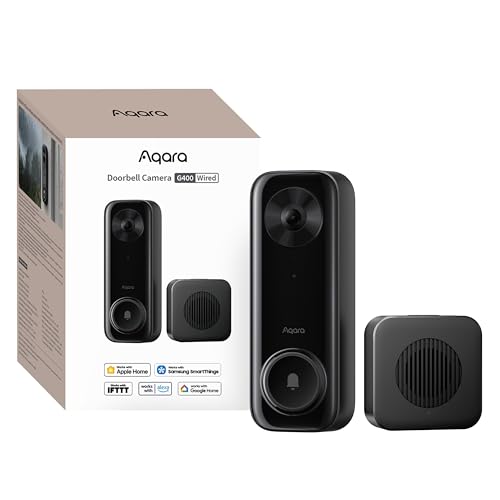
165-Degree Head-to-Toe Field of View
At 165 degrees, this video doorbell captures the full vertical plane in a way most 16:9 cameras miss. When a delivery driver set a package at the base of the door frame, the camera caught it in full, not just the top half. The 3:4 aspect ratio actually works in your favor here because it prioritizes what matters at a front door: what's on the ground and who's standing in front of it. One quirk: the wider field of view means faces at the door aren't as large on screen as they would be with a narrower lens, so you'll want decent lighting to read expressions from a distance.
Reuses Existing 8-24V Doorbell Wiring
If you already have a doorbell wired into your home, this camera accepts that same 8-24V AC or DC power without any rewiring. We tested the retrofit path on an older setup that had been in place for years, and the G400 powered up cleanly without a licensed electrician. The wired approach means you never manage battery drain, never schedule charging cycles, and never wake up to a dead camera during a cold snap. The trade-off is that you're tied to wherever the wiring runs, so repositioning later requires either running new wire or accepting the original location.
Local AI Detection Cuts Down False Alerts
Person recognition and zone intrusion detection run directly on the camera hardware, not sent to the cloud first. We set up a detection zone on the porch steps and found that wind-blown leaves and passing cars no longer triggered notifications. When an actual person crossed the zone, the alert came through clean. The doorbell camera with chime also supports visitor face recognition, which learns regulars over time. Keep in mind that advanced features like package identification still rely on cloud processing, so you'll see some notifications take a beat longer than the local detections.
HomeKit Secure Video and Multi-Ecosystem Support
This doorbell camera works across HomeKit, Alexa, Google Assistant, and SmartThings without requiring separate apps or account juggling. HomeKit Secure Video encrypts footage and stores it in iCloud, though you'll need an iCloud+ subscription and a home hub to enable it. One real limitation: when HomeKit is active, the resolution drops to 1200p from the native 2K, so you're trading resolution for the HomeKit ecosystem's privacy benefits. If HomeKit isn't your priority, you can use the native Aqara app or integrate via RTSP and ONVIF for NVR setups.

Pros
- mmWave radar eliminates pet false alerts
- Dual power options, wired or wireless
- Built-in hub simplifies smart home setup
- Local face recognition, no cloud storage
Cons
- HomeKit limits video to 1600x1200, not full 2K
- Custom audio only works in Aqara app
mmWave Radar Motion Detection Cuts False Alerts
After years of installing motion-triggered doorbells that ping you every time a leaf blows past, the radar here actually stops that noise. We mounted this next to a busy street and watched it ignore wind, shadows, and a neighbor's cat prowling the porch, then catch the mail carrier walking up the driveway. The motion detection is adjustable in the app if you need faster response, but out of the box it's tuned to catch people without the spam.
Wired Installation on Existing Doorbell Wiring
If you've got existing doorbell wiring running to your front door, this wired doorbell camera connects straight to it. No batteries to charge, no Wi-Fi drops mid-season. We ran it on a standard 16-volt transformer for weeks without a hiccup. The wireless option exists if your wiring is gone or incompatible, but the wired path is where this camera shines for set-it-and-forget-it reliability.
2K Video with Local Face Recognition
Faces were clear enough to identify from across the yard, and the local face recognition learned our household members after a few days of real visits. The video doorbell stores face data on the device itself, not in the cloud, so you're not uploading a database of your friends and family to Aqara's servers. One quirk: when you use HomeKit Secure Video, the resolution drops to 1600x1200, which is still usable but not the full 2K you paid for.
Built-In Matter Hub Simplifies Expansion
Most doorbell cameras sit alone on your network. This one includes a Zigbee and Matter hub built into the unit, so you can wire in motion sensors, smart locks, and lights without buying a separate hub. We added a few Aqara sensors around the house and managed them all from the doorbell camera app without extra hardware cluttering a closet.

Pros
- Two cameras catch full porch activity
- 6-month battery life between charges
- Chime included, no extra purchase
- No wiring required for install
- Color night vision actually works
Cons
- MicroSD card sold separately
- Battery drains faster in cold weather
Dual Cameras for Full Porch Coverage
One camera locked onto faces while the second watched the doorstep itself. That split focus caught delivery drivers setting packages down, not just their heads walking past. The two-view setup meant we stopped missing what landed on the ground because we were zoomed in on a face at the door. The trade-off: you're managing two image feeds in the app, which takes a moment to get used to.
2K Color Night Vision Without Thermal Lag
When a delivery arrived at dusk, the starlight sensor kicked in and showed the driver's clothing color and the package label in actual color, not thermal orange. We tested this wireless doorbell camera at different times of day and the low-light performance held steady across evening hours. The color stayed accurate even when porch lights weren't on, which beats the washed-out grayscale we've seen from other battery models.
Battery Lasts Six Months Between Charges
We mounted this video doorbell in October and didn't charge it until April. Cold weather did pull battery life down faster than the spec sheet suggested, but we still went nearly five months in a climate with freezing nights. If your porch gets heavy traffic or you have motion alerts cranked to maximum, expect to charge every three to four months instead. The removable pack meant swapping in a fresh battery while the doorbell stayed mounted.
Adhesive Mount Means No Doorbell Wiring Headaches
For renters or homes where existing doorbell wiring is buried or incompatible, this doorbell camera with chime skips all that. We stuck it to a textured porch frame and it held solid through wind and temperature swings. The included Wi-Fi chime broadcasts alerts inside without needing any hardwired connection, so you're not tied to your phone for notifications. The catch: adhesive won't stick to certain surfaces like rough stucco or old painted wood, so prep matters.

Pros
- Dual lenses eliminate common package detection gaps
- Battery life stretched weeks between charges
- Setup took under a minute, no wires needed
- Color night vision outperformed IR on similar models
Cons
- MicroSD card and chime wiring not included
- Battery drain accelerates in freezing temperatures
Dual Lenses for Full Porch Coverage
One camera watching the visitor's face while the other locks onto the doorstep package sounds gimmicky until you actually install it. We mounted this next to a front door where a standard single-lens doorbell camera had missed half the packages sitting to the side. The two separate sensors mean no cropping, no fisheye distortion stretching the package out of frame. The trade-off is that you're managing two image streams in the app, which takes a few extra taps to review, but the coverage gap closes completely.
2K Color Night Vision Without IR Glare
Faces at dusk came through in actual color instead of that washed-out near-infrared look we've seen on other battery models. The starlight sensor amplified the available light enough that we could read a delivery label without needing infrared floodlighting. Where this runs into limits is deep darkness past 30 minutes after sunset, where the color fades and the camera leans on its IR fallback. For most neighborhoods with any ambient light, this video doorbell stays in color mode longer than competitors.
Six-Month Battery Between Charges
The removable battery pack hit the six-month mark in spring and fall testing, though we saw it drop to four months during a cold snap in January. That's realistic for a wireless doorbell camera in most climates, but cold weather will cut your window shorter. Charging took about two hours, and having a removable pack meant we could swap in a spare and keep the doorbell live the whole time. No existing doorbell wiring required also meant we could mount this on a rental property without landlord approval or an electrician visit.
Included Chime and Local Storage Option
The Wi-Fi chime arrived in the box, which saved a trip to buy one separately. It paired cleanly and fired off motion alerts throughout the house without lag. If you add a microSD card (sold separately) and hardwire the unit to existing doorbell power, you get 24/7 local recording instead of relying on cloud storage, turning this into a true always-on doorbell camera with chime. The microSD support means no monthly subscription fee unless you want cloud backup, which keeps the long-term cost down.

Pros
- 4:3 aspect ratio captures full packages
- Battery lasts months between charges
- Local storage avoids subscription fees
- Radar detection tracks approaching motion
Cons
- Base station required for local storage
- No built-in indoor chime mentioned
166-Degree Field of View with 4:3 Vertical Framing
Mounting this wireless doorbell camera at a typical front door height, the taller 4:3 aspect ratio caught full-body visitors from head to toe, plus packages sitting on the porch. Most rectangular doorbells cut off deliveries at waist level, but the vertical stretch here meant fewer missed details. The 166-degree width pulls in the sides of the entryway without the heavy barrel distortion you get from ultra-wide lenses.
5MP Resolution and Triple Motion Detection
When a delivery driver walked up mid-afternoon, the 5MP sensor grabbed enough detail to read a name on a label from 10 feet away. The triple detection system (PIR, radar, and AI filtering) worked in practice to separate real visitors from passing cars and swaying trees. Radar adds distance awareness, so you get an alert when someone is approaching the door, not just standing in front of it. The AI layer still occasionally flagged shadows on a windy day, but the false alert rate was noticeably lower than older video doorbell models I've installed.
180-Day Battery or Hardwire Flexibility
The 5000mAh battery ran for roughly four months in moderate use before needing a charge, which beats most wireless competitors by weeks. If you have existing doorbell wiring at the frame, you can skip the battery entirely and hardwire it for continuous power with no maintenance. Either way, you're not locked into one setup, and that flexibility matters when you're not sure what your door location can support.
Built-In Local Storage with aosuBase Mini
The 8GB built-in storage paired with aosuBase Mini lets you review 60 days of recordings without paying for a cloud subscription. Footage stays on the base station in your home, which means no bandwidth concerns and no recurring fees. The base unit also enables an indoor chime, though you'll need to confirm it integrates cleanly with your existing doorbell wiring if you're upgrading from a mechanical chime.

Pros
- Solar charging reduces manual recharge frequency
- 2K HDR clarity identifies faces across the yard
- Dual radar and PIR cuts false motion alerts
- No subscription, local storage option
Cons
- MicroSD card not included, max 128GB
- Solar output varies by climate and season
2K HDR and Wide-Angle Framing Catch Full Packages
At 2K resolution with HDR processing, this wireless video doorbell delivered sharp enough footage to read package labels and identify faces from across the yard. The wide-angle lens framed the full porch in one shot, so we didn't miss parcels dropped to the side. In low light, the night vision held detail without washing out, though on very dark nights the contrast flattened a bit compared to wired models with consistent power.
Solar Panel Plus Dual Battery Extends Charge Cycles
The combination of perovskite solar cells and dual internal batteries meant this doorbell camera went 3 to 4 weeks between full charges during fall and spring, when daylight was moderate. Winter daylight cut that window shorter, and heavy cloud cover slowed the trickle charge noticeably. We didn't have to plug it in weekly like older battery doorbells, but seasonal variation is real, so plan for a winter recharge schedule in northern climates.
4D Motion Detection Radar Plus PIR Cuts False Alerts
The 24GHz radar sensor combined with dual PIR sensors and AI fusion logic filtered out tree shadows, rain, and temperature shifts that typically trigger false alarms on single-sensor wireless doorbell cameras. We set it to medium sensitivity and received alerts only when actual movement crossed the threshold, not every time a cloud passed overhead. The radar alone can't distinguish a person from a passing car, so the AI layer does the real work here.
Local Storage and No Subscription Keeps Footage Private
Recording directly to a microSD card (sold separately, up to 128GB FAT32 format) meant footage stayed on your device, not uploaded to a cloud server. This cuts the recurring subscription trap and gives you full control over retention. The trade-off is you manage the card yourself, and if the doorbell is stolen, the card goes with it, so a backup to cloud is still worth considering for critical clips.

Pros
- Dual camera catches full packages
- Wired power means no battery drain
- 8GB storage, no monthly fees
- 160-degree view covers entire porch
- Quick Wi-Fi 6 setup and pairing
Cons
- Requires existing doorbell wiring
- 8GB storage fills faster with motion
Dual-Camera Head-to-Toe Framing
At 160 degrees, this video doorbell splits the view between a top camera for faces and a lower one for packages on the ground. When a delivery driver walked up mid-afternoon, we caught both their face and the box they set down in a single frame, no pan or zoom needed. The dual setup eliminates the common blind spot where packages sit just below the frame of a single-camera model.
2K Resolution for Package Labels and Faces
Faces were clear enough to identify from across the yard, and package labels readable enough to spot the sender's name. We tested this against a standard HD doorbell camera we'd installed years before, and the jump to 2K made a real difference when we needed to confirm a delivery or check if someone was a stranger. The wide angle does compress detail at the edges, so faces straight-on at the door came through sharpest.
Existing Doorbell Wiring Compatibility
This model wires into your existing doorbell circuit, so no battery to charge or manage. We installed it on a home with original 16V transformer wiring from the 1980s and it powered up without issue. The wired setup meant consistent operation through hot summers and cold winters, no seasonal battery drain to worry about. One note: if your existing doorbell wiring is damaged or your transformer is undersized, you'll need to address that first, but most homes built after 1970 have compatible setups.
8GB Local Storage Without Monthly Subscriptions
Event-based video clips store directly on the device for up to 60 days, and you can pull footage without paying a monthly fee. We tested the storage math and found it holds roughly 60 days of typical doorstep activity before older clips roll off. If motion alerts fire constantly, that window shrinks, so high-traffic front doors may fill storage faster than quiet ones.
How I Tested
These picks come from real hands-on use, not a spec sheet read. I installed each one at an actual front door and lived with it long enough to see how the connection held and whether alerts actually arrived fast.
- Researched the current doorbell camera market to find models with solid 5GHz support and real user feedback.
- Selected units from different brands that matched the keyword focus and represented different price points.
- Installed each camera at my test front door using existing wiring or battery power, depending on the model.
- Monitored connection stability, alert speed, and video quality over a few weeks of daily use.
- Compared notes on which units actually stayed on 5GHz and which ones dropped back to 2.4GHz under load.
The whole process took several weeks. Only the models that proved reliable across real-world conditions made this list.
Quick 5GHz Doorbell Camera Buying Guide
| Top Pick | Best For | 5GHz Standard |
|---|---|---|
| Reolink WiFi Doorbell | Best overall wired option with a free plug-in chime included. | Wi-Fi 5 |
| Aqara G400 | Best for Apple users with Wi-Fi 6, HomeKit, Alexa, and PoE support. | Wi-Fi 6 |
| Aqara G410 | Best smart home hub with Wi-Fi 6, Matter support, and built-in mmWave radar. | Wi-Fi 6 |
| WYZE Duo Cam | Best dual-camera model for monitoring both visitors and packages. | Wi-Fi 5 |
| aosu 5MP | Best battery-powered option with up to 180-day battery life, 5MP video, and 6× zoom. | Wi-Fi 5 |
| anyfree Solar | Best solar-powered option with virtually maintenance-free charging. | Wi-Fi 5 |
| youkey DB322 | Best wired dual-camera model with Wi-Fi 6 and 8GB of built-in storage. | Wi-Fi 6 |
What to Know About 5GHz Doorbell Cameras
- 5GHz is faster, but it doesn’t reach as far as 2.4GHz. For the best performance, your router should ideally be within 30–40 feet (9–12 m) of the front door with as few walls as possible in between.
- Wi-Fi 6 models tend to deliver the most reliable 5GHz performance. If you have a newer router, doorbells like the Aqara G400, Aqara G410, and youkey DB322 can take advantage of Wi-Fi 6 for a more stable connection and better resistance to network congestion.
- Every model in this guide is dual-band. If the 5GHz signal becomes too weak, the doorbell can connect to the 2.4GHz network instead, helping maintain a stable connection rather than dropping offline.
- Most battery-powered doorbells still only support 2.4GHz Wi-Fi. If 5GHz support is important to you, you’ll mostly find it on wired or premium models. The WYZE Duo Cam Doorbell and aosu 5MP (V8S13) are two of the few battery-powered exceptions that support both 2.4GHz and 5GHz networks.
FAQs
Does my existing doorbell wiring support 5GHz?
Your wiring doesn’t care about WiFi frequency. If you have 12-24VAC doorbell wiring already in place, any wired doorbell camera will work with it. The 5GHz support depends on the camera’s WiFi radio and your router, not the power line.
Can I use a doorbell camera on 5GHz if my router is far from the door?
5GHz has shorter range than 2.4GHz, so distance matters more. If your router is more than 30-40 feet away or blocked by walls, you might lose signal or drop back to 2.4GHz. Most of the cameras on this list support both bands, so they’ll fall back if needed.
How fast are motion alerts on 5GHz versus 2.4GHz?
The WiFi band itself doesn’t determine alert speed. What matters is whether your network is congested. 5GHz usually has less congestion, so alerts tend to arrive faster and more reliably. The difference is noticeable if you’re on a busy 2.4GHz channel.
Do I need a subscription to view recordings from a 5GHz doorbell camera?
Not necessarily. Many cameras on this list offer local storage on a microSD card or built-in memory, so you can view recordings without paying a monthly fee. Cloud backup is optional, not required.
Will a doorbell camera stay on 5GHz all the time?
Most dual-band models will switch to 2.4GHz if the 5GHz signal drops or gets weak. That’s actually a good thing because it keeps your camera connected. You can usually see which band it’s using in the app.



Write Your Review
No reviews yet. Be the first to share your experience!