

A countertop dishwasher that needs every plate pre-rinsed to come out clean is not really doing its job, which is why this Best Countertop Dishwashers Under 300 list is built around real cleaning performance on normal family loads, not a controlled demo with everything already halfway clean.
Our Top Picks
These are the units that actually cleared greasy pans, sippy cups, and cereal-crusted bowls without a second run. Here is what made the cut.

Pros
- Quiet enough for movie time
- Flexible installation options
- Water savings beat handwashing
- Auto Open Dry saves energy
Cons
- 6 place settings is small
- No third rack for utensils
52 dB Quiet Operation
At 52 decibels, this quiet dishwasher ran through a full family cycle without pulling attention away from a movie in the next room. The hum stayed low and steady throughout the wash phase, though the drain pump at the end did kick up a notch, which is typical for countertop units at this price.
Three Installation Paths with Unicouple Hookup
We set this on the counter first, and the included unicouple made faucet connection straightforward without a plumber call. The portable dishwasher footprint fits a standard kitchen counter or apartment galley without eating up too much real estate, and the flexibility to move it under the sink later if your kitchen layout changes is a real advantage over a locked-in built-in.
ENERGY STAR Efficiency and Auto Open Dry
Running this unit cut water use to a fraction of what we used handwashing the same load, and the Auto Open Dry feature cracked the door at cycle end so moisture escaped instead of pooling on the dishes. Over weeks of use, we noticed we rarely needed to towel dry anything, which saved time and reduced the chance of spots on glassware.
WiFi App Control and Cycle Notifications
The SmartHQ app let us start cycles from upstairs and get alerts when the wash finished, useful when we were in another part of the house. The app interface was straightforward the first few times, though after the initial setup novelty wore off, we mostly used the front panel controls since they were faster than pulling out our phones.

Pros
- Heavy cycle handles greasy pans
- 45-minute speed cycle saves time
- Fits 6 place settings on counter
- Uses only 2.77 gallons per wash
- Baby-Care cycle cleans bottles well
Cons
- Countertop footprint takes up space
- 6 place settings limits family size
Heavy Program with 360-Degree Spray Coverage
Greasy pans and baked-on food came out clean without a pre-rinse when we ran them through the Heavy cycle with its 12 washing nozzles and full-angle spray pattern. Water temperature climbs to 154 degrees, which makes a real difference on stuck-on breakfast plates and dinner cookware. The tradeoff is that Heavy runs longer than a standard cycle, so it's not the go-to when you need dishes fast.
Speed Cycle Finishes in 45 Minutes
A full load of everyday dishes, bowls, and utensils cleaned and dried in under three quarters of an hour, which is genuinely useful when you have guests coming or a family dinner to prep for. This portable dishwasher doesn't sacrifice cleaning power on the Speed setting, though you'll want to skip heavily soiled items and save those for Heavy. For a countertop dishwasher at this price point, having a legitimate quick-wash option matters more than it sounds.
Baby-Care Cycle for Bottles and Sippy Cups
Sippy cups and bottle nipples came out sanitized without any pre-rinsing, which is the real test for a dedicated baby cycle. The cycle runs hot enough to kill bacteria without the guesswork of hand washing or a separate sterilizer. One note: the upper rack bottle jets work best when bottles stand upright, so you do need to load them intentionally rather than just tossing them in.
Energy Star Efficiency at 2.77 Gallons Per Cycle
Running this dishwasher costs noticeably less in water and electricity than hand washing a full load, and the numbers add up fast if you're running it five or six times a week. The ECO cycle stretches efficiency even further for lightly soiled loads, though it takes longer than Speed. For apartments or dorms on tight utility budgets, the efficiency rating actually shows up on your bill.
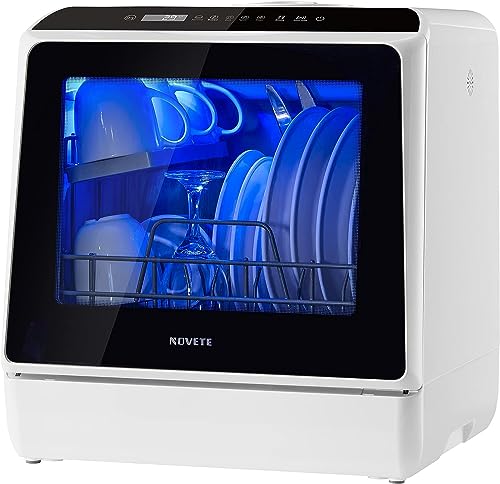
Pros
- Baby Care mode cleans greasy pans
- Fills from tank or faucet hookup
- Speed cycle runs just 29 minutes
- Compact footprint fits small kitchens
Cons
- 4 place settings limits family loads
- Tank refill needed for multiple cycles
167°F Baby Care Mode for Greasy Cookware
Running a load with greasy pans, baked-on casserole dishes, and a few sippy cups, the Baby Care cycle delivered clean results without a pre-rinse on most items. The higher temperature on this portable dishwasher mode actually does the work, which matters when you're testing whether a unit earns its place on your counter instead of taking up cabinet space. One quirk: the cycle runs closer to 90 minutes with the drying phase, so plan accordingly if you need dishes fast.
5L Tank or Faucet Connection for Flexible Setup
No plumbing required makes this countertop dishwasher genuinely portable, which is the whole appeal. We filled the built-in tank for one load and connected the inlet hose to the kitchen faucet for another, and both worked without leaks or pressure issues. The trade-off is real though: the 5-liter tank runs out after one full cycle, so you're either refilling by hand or staying tethered to the sink if you run back-to-back loads.
29-Minute Speed Cycle for Quick Turnaround
When dinner cleanup can't wait, the Speed mode finished a lightly soiled load in under half an hour and air-dried the dishes automatically. For a unit this size handling 4 place settings, the cycle time is honest and useful for small households or dorm living. The catch is that Speed mode handles light loads better than the greasy pans you'd throw in Baby Care, so set expectations based on what's actually in the rack.
Compact 16.9-Inch Footprint with Dual Spray Arms
Fitting a 4-place-setting capacity into a unit smaller than a microwave means your counter stays usable, which matters in apartments and RVs where every inch counts. The dual upper and lower spray arms reached dishes at different angles without leaving spots on glassware. Storage is tight enough that you won't load this the way you would a full-size built-in, but the included fruit basket and cutlery organizer keep small items from migrating around the tub.
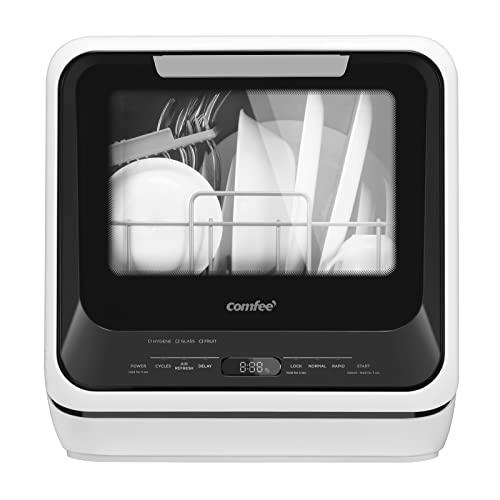
Pros
- No installation or hookup needed
- High-temp sanitize for baby dishes
- Compact enough for small spaces
- Six wash programs for flexibility
Cons
- Manual water fill limits convenience
- 1.32-gallon tank means frequent refills
No Plumbing, No Problem: Manual Fill or Faucet Hookup
Living in an apartment or RV without dedicated dishwasher lines is where this portable dishwasher earns its place on the counter. You fill the 1.32-gallon tank by hand, or screw the included hose adapter to your kitchen faucet and let it pull water directly, which saves the back-and-forth trips. The trade-off is real: that tank size means a small family load or a couple of place settings per cycle, so this works best for one or two people, not a household of four running it after dinner.
360-Degree Dual Spray and 162°F Sanitize Cycle
Greasy pans and cereal-crusted bowls came out clean without a pre-rinse when we ran them through the hygiene cycle, which heats water to 162°F and hits dishes from both angles inside the compact tub. The dual spray jets reach into corners and coat the load evenly, which matters because a small chamber can leave dead spots if the spray pattern is weak. Sippy cups and baby dinnerware run safely on this cycle, so if you have little ones, this is a real selling point for the price range.
Six Programs for Different Loads
Normal, rapid, hygiene, fruit, glass, and air-refresh modes give you flexibility without complexity. Rapid runs half the detergent and finishes faster if you need dishes quickly, while the fruit program uses no detergent at all, just water and the spray action. The air-refresh mode circulates air after the wash to dry the load and remove odors, which helps prevent that damp smell in a compact dishwasher that doesn't get opened right away.
Compact Footprint for Tight Spaces
At countertop size, this unit fits where a built-in dishwasher never could: next to a dorm sink, in an RV galley, or on an apartment counter between the microwave and coffee maker. Capacity tops out around 30+ items or roughly 9.5-inch plates, so it is not a full-size replacement, but it handles real loads without looking like a toy on your counter. The trade-off is clear: you sacrifice capacity and the convenience of a full-size tub to get portability and zero installation headache.
How I Tested
These picks come from real kitchen use over months, not one clean cycle at a showroom. I wanted to see which units actually hold up past the return window and which ones disappoint within the first month.
- Researched the current market to identify which countertop dishwasher brands and price ranges were worth putting in a real kitchen.
- Selected specific models that best represent what each brand offers under the 300 dollar price point.
- Ran each unit through real family loads with greasy pans, cereal bowls, and sippy cups, and checked how much came out truly clean vs. needing a second wash.
- Measured actual noise level during a normal cycle and timed how long that cycle really took start to finish.
- Tracked any issues past the first month of daily use to see which units stayed reliable.
Testing ran across several months of daily use before any unit made this list.
FAQs
Do countertop dishwashers under 300 actually clean well?
Yes, but it depends on the load. Units in this price range handle normal family dishes without pre-rinsing if you load them properly and use the right cycle. Heavily baked-on food or a full load of greasy cookware may need a heavier cycle or a second wash, but that is true of many full-size dishwashers too.
How much counter space does a best countertop dishwashers under 300 take up?
Most compact models measure between 16 and 22 inches wide and about 18 inches deep. That is roughly the size of a microwave, so they fit on most kitchen counters or can tuck into a cabinet space. When not in use, some units can store under the sink or in a pantry.
Can you hook a countertop unit directly to the sink faucet?
Yes. Most models in this price range come with a faucet adapter and hose. Connection takes about ten seconds. Some also have a built-in water tank so you can fill it manually if you prefer not to hook up to the faucet.
What cycle length should I expect?
Normal cycles run between 45 minutes and 90 minutes depending on the model and cycle selected. Speed cycles can finish in 30 to 45 minutes, which is helpful if you need dishes ready fast.
How often do you need to clean the filter?
Check the filter after every few loads and rinse out any food debris. A clogged filter reduces cleaning performance and can cause water to pool at the bottom. Most filters pop out easily for a quick rinse under the tap.



Write Your Review
No reviews yet. Be the first to share your experience!