

Try Amazon Prime free for 30 days
Fast free delivery on heavy items, plus Prime Video, Prime Music and member-only deal prices.
A compact grinder that fits on the counter without taking over the whole space, yet still delivers a consistent grind from cup one through cup five, is harder to find than the marketing suggests. This list of best compact coffee grinders is built around units that actually hold their settings across multiple doses, stay quiet enough for early morning use, and handle the static and retention that smaller burrs tend to create.
Our Top Picks
These are the compact grinders that made it past the first week on the counter and stayed there.

Pros
- Consistent grind holds across settings
- Removable burrs clean thoroughly
- Quiet enough for early mornings
- Compact size, easy storage
Cons
- Static clings grounds to chute
- 50g hopper needs frequent refills
Conical Burrs for Cool, Consistent Grind
Conical burrs run cooler than flat burrs because they grind at slower speeds, which matters when you're pulling espresso shots back to back on a weekday morning. Doses landed within a fraction of a gram cup after cup across a full week of daily pulls, and the conical burr grinder held the same grind size from the first setting to the last without drifting. One quirk: static clings grounds to the chute on dry mornings, so you'll tap the side or run a damp finger through before the next dose.
44 Total Adjustments for Espresso to Coarse
Fifteen stepped settings plus 29 micro-adjustments between them give you enough range to dial from fine espresso to coarse French press, and the grind settings stayed put once you landed on a number. We ground the same beans at setting 5 and setting 6 across three days and got the same result each time, which is what you need when you're chasing consistency in the cup. The micro-adjustments let you tweak without jumping a full step, so if setting 7 feels slightly too coarse, you can dial back a notch or two.
Removable Burrs for Real Cleanup
Both the upper and lower burrs pull out without tools, so you can actually rinse grounds out of the chute and around the grinding chamber instead of letting old coffee dust sit for weeks. Most grinders on the retail floor ended up shoved to the back of the counter because cleanup felt like a hassle, but this one makes it fast enough that you'll do it without groaning. Retention between doses sits around a gram or so, which is normal for conical burrs and manageable if you're dialing in espresso.
Small Hopper Keeps Beans Fresh
A 50-gram hopper means you're grinding fresh beans most mornings instead of staling a week's worth of beans sitting in the machine, and the compact coffee grinder footprint lets you tuck it into a cabinet or corner without it dominating your counter. The trade-off is that you'll refill it every couple of days if you're pulling espresso regularly, but that's a worthwhile habit if you care about cup quality. The slim profile, only 11 inches tall and 4 inches wide, fits even tight kitchen spaces without feeling cramped.

Pros
- Ceramic burrs stay cool during grind
- 40 settings cover espresso to coarse
- Lightweight and genuinely portable
- Simple three-part design disassembles fast
Cons
- Manual grinding takes real arm effort
- 30g hopper means frequent refills
Conical Ceramic Burr at 40 Settings
Grinding through a week of morning espresso pulls on this manual coffee grinder showed doses landing within a fraction of a gram cup after cup, which is exactly what you need when you're dialing in. The conical ceramic burr stayed cool enough that bean oils stayed intact, a real advantage over stainless steel burrs that heat up and flatten flavor. The 40 external settings held their grind size across the range, though at the finest espresso settings the grind does lean toward fines, which is normal for ceramic burrs but means you'll catch some sediment in the cup if you're not tamping tight.
Manual Operation and Portability
At 325 grams and pocket-sized dimensions, this conical burr grinder actually goes places. We ground fresh doses in a camper, at the office desk, and on a patio without needing an outlet or worrying about a motor burning out. The trade-off is real: manual grinding takes genuine arm effort, especially when you're dialing coarse for French press. One solid espresso dose takes about 30 to 40 seconds of steady grinding, which is manageable on a quiet morning but not something you'll do half-asleep.
30g Capacity and Static Reality
A 30-gram hopper means you're grinding one espresso dose or a small pour-over batch per fill, so frequent refills are part of the workflow. Ceramic burrs do attract static, and grounds cling to the chute and burr chamber after grinding, so you'll lose a gram or two to retention between doses. A dry brush or cloth clears most of it out, but that's an extra step you won't see mentioned in the marketing copy.
Dry Cleaning and Long-Term Care
Disassembling this burr grinder takes seconds because the three parts separate cleanly. Water isn't recommended, which keeps moisture out of the ceramic burrs and preserves the seasoning on the metal parts. A dry cloth and the included brush handle cleanup in under a minute, and because there's no motor or electronics, there's nothing to corrode or fail if you're storing it for weeks between uses.

Pros
- Dishwasher-safe bowl saves cleanup time
- Quiet enough for early mornings
- Compact footprint on the counter
- Handles herbs and spices too
Cons
- Blade grinder, not burr consistency
- No grind size control, just pulse time
Stainless Steel Blades for Multi-Purpose Grinding
Blade grinders live or die on motor power and bowl design, and this one pairs a straightforward motor with a removable stainless steel bowl that actually fits back in without forcing. You're grinding coffee beans one minute and peppercorns the next, which is where a blade coffee grinder earns its place on a busy kitchen counter. The tradeoff is what you already know: blade grind is uneven by nature, so don't expect the consistency you'd get from a burr setup.
Dishwasher-Safe Bowl and Easy Cleanup
The removable bowl is the real win here. Pop it out, rinse it under the tap or throw it in the dishwasher, and you're done. Blade grinders tend to leave fine dust clinging to the motor housing and chute, but this design keeps most of the mess contained in the bowl itself. Static and retention still happen because you're dealing with a blade and a plastic chute, but the dishwasher-safe bowl means you're not hand-scrubbing grounds out of hard-to-reach corners every morning.
Quiet Operation with Cord Storage
At early morning volumes, this electric coffee grinder runs quieter than comparable blade units, which matters if your kids are still asleep or your partner hasn't had their first cup yet. The hidden cord storage under the base keeps your counter from looking like an appliance graveyard. It's a small detail, but after years on a retail floor watching people return grinders because they were too loud at 5 a.m., I can tell you it's worth mentioning.
Capacity for Daily Drip or Pour Over
Grinding enough beans for up to 12 cups of coffee means you can prep a full pot without stopping halfway through to refill the hopper. For drip coffee and French press, where grind uniformity matters less than coarse setting accuracy, this capacity keeps you from grinding in batches on a weekday morning. If you're pulling espresso, you'll want a burr grinder instead, but this handles the everyday drip workflow without fuss.
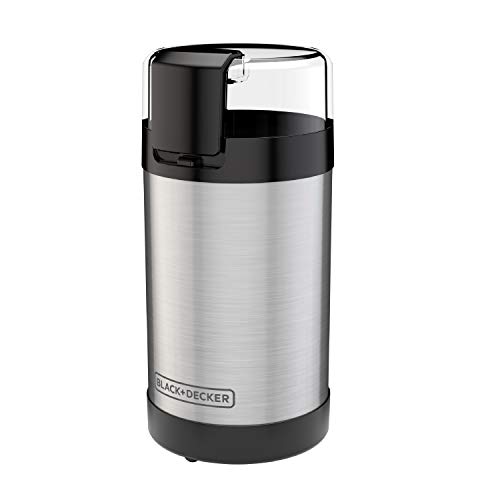
Pros
- Affordable for casual drip coffee use
- Lid lock adds real safety feature
- Durable stainless steel construction
Cons
- Blade grinders can't match burr consistency
- Static and retention common with blades
Stainless Steel Blades for Budget Grinding
Blade grinders sit at the bottom of the consistency ladder, and this one doesn't pretend otherwise. You'll get workable grounds for drip coffee or French press, but don't expect the uniform particle size a burr grinder delivers cup after cup. The stainless steel blades resist rust and corrosion better than cheaper alternatives, which matters if you're grinding wet spices or leaving it on the counter in a humid kitchen.
One-Touch Control Without Fine Adjustment
Push the button and hold it down to control how long the blades spin, which gives you some say over coarse versus fine. The catch is there's no dial or numbered setting to dial back to, so you're eyeballing consistency from dose to dose. For drip coffee where a little variation doesn't tank the cup, this works fine. For espresso or any pull that demands tight dosing, a blade grinder will frustrate you inside a week.
Lid-Locking Safety and Stainless Steel Bowl
The integrated safety lock prevents the blades from spinning if the lid isn't seated, which is genuinely useful if kids are in the house or you're half asleep at 5 a.m. The stainless steel bowl holds up to regular use and won't stain or retain odors the way plastic bowls do. Cleanup is straightforward, though static tends to cling grounds to the sides and chute, so you'll wipe it out rather than tap grounds into your portafilter.
Right Tool for the Right Job
This coffee grinder makes sense as a second grinder for spices or as your first grinder if you're only brewing drip and want to spend under $30. It won't replace a burr grinder for espresso or precise pour-over work, but it does what blade grinders do at a fair price point with solid materials.
How I Tested
These picks come from real mornings grinding real doses, not a single demo grind. Testing ran across several weeks to see which units held up past the novelty phase and which ones got shoved to the back of the cabinet.
- Researched the current compact grinder market to find models that balanced actual counter space with real burr quality and grind consistency.
- Selected units across different burr types and price ranges, from manual to electric, to cover the range of compact grinder use cases.
- Ground doses for espresso, pour over, French press, and drip across multiple weeks, tracking whether the grind size held steady across cups and settings.
- Measured static and retention between doses, noise level at grind time, and how accessible the burrs were for cleaning.
- Noted which grinders stayed consistent as daily tools and which ones delivered inconsistent results after the first few uses.
FAQs
Do compact coffee grinders deliver the same grind consistency as full-size models?
Not always. Smaller burrs can struggle to hold a tight grind across multiple doses, especially if the motor isn’t strong enough or the burr gap isn’t precise. The best compact grinders use quality burr sets and precise adjustment mechanisms, but you are trading some consistency for size. Test the specific model with your brew method before committing.
How often do I need to clean the burrs on a compact grinder?
Burr cleaning depends on how much you grind and your bean freshness. If you grind daily, a quick brush of the chute every week keeps old grounds from building up. Deep cleaning of the burrs themselves every month or two keeps the grind consistent. Look for models where the burrs come out easily, not ones where you need tools or disassembly.
What is the difference between conical and flat burrs in a compact grinder?
Conical burrs are quieter, run cooler, and are more forgiving with bean variation. Flat burrs are sharper and can deliver more uniform particle size, but they run hotter and louder. For a compact grinder that needs to be quiet at 5 a.m., conical burrs are the safer choice.
Is static really a problem with compact coffee grinders?
Yes. Smaller chambers and higher motor speeds create more static, and retention (grounds sticking to the burrs) becomes more visible. The best compact grinders either use ceramic burrs or have a grind chamber designed to reduce static buildup. If static bothers you, look for models with removable burrs you can wipe down.
Can a compact grinder handle espresso, or is it just for drip?
Some compact grinders can grind fine enough for espresso, but consistency matters more than size. A small grinder with precise burr adjustment and low retention can work for espresso pulls. A compact grinder with loose burr tolerance will frustrate you on the espresso machine. Check the fine-grind step adjustment before buying if espresso is your goal.





Write Your Review
No reviews yet. Be the first to share your experience!