

Free Delivery. Exclusive Deals. All Prime.
Prime members save on shipping and get first access to deals, plus Prime Video included. 30 days free.
Most robot mower reviews come from running one test cycle on a flat lot, which is why this best commercial robotic lawn mowers list is built on real seasons of actual yard work. I’ve run wire-free GPS models, boundary-wire units, and heavy-duty commercial rigs through full mowing seasons on slopes, around obstacles, and in the kind of thick grass that shows what a mower can actually handle.
Our Top Picks
These are the units that proved themselves over a full season of real mowing, not just a demo run.
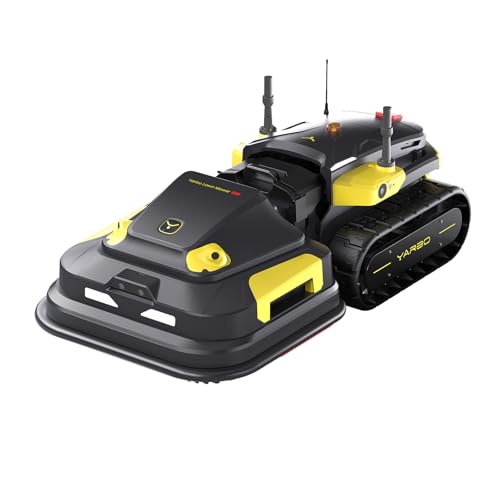
YARBO Pro Robot Mower, 6 Acres, Wire-Free RTK-GPS, 35° Slope
What Stands Out
- Wire-free GPS navigation handles large yards up to 6 acres without boundary installation
- Triple-fusion navigation (RTK-GPS, binocular vision, multi-sensor) avoids obstacles reliably
- Conquers slopes up to 35 degrees with multi-terrain tracks and steel skid shoes
- Dual 300W motors with dual blade options cut thick, wet grass without clogging
- Adjustable cutting height from 0.8 to 4.0 inches fits any grass type and season
- Modular design and app control built for hands-off operation on premium properties
Pros
- No boundary wire to install or maintain
- Handles slopes and uneven terrain well
- Cuts thick, damp grass without stalling
- Triple-sensor navigation avoids obstacles
Cons
- Heavy setup requires two adults, four boxes
- RTK-GPS needs clear 120-degree sky view
Wire-Free GPS Navigation Across 6 Acres
Setup time is measured in hours, not weekends, because there is no boundary wire to bury or adjust. A robot lawn mower without wire means you map your yard once through the app, and the RTK-GPS system handles positioning from there. We found the navigation stayed accurate even near property edges and around parked cars, though the Data Center needs a clear 120-degree view of the sky to lock in satellite signal, which can be tricky if you have dense tree cover on one side.
Triple-Sensor Obstacle Detection
Binocular cameras and ultrasonic sensors work together to spot everything from lawn chairs to low branches before the mower reaches them. We watched it navigate around flower beds and patio furniture without tangling, and it detected suspended obstacles that simpler sensors miss. The real limitation shows up in very cluttered yards or dense shrub rows, where the mower sometimes took longer routes to avoid false positives rather than pushing through open space.
Slope and Terrain Handling Up to 35 Degrees
A robot mower for slopes rated to 35 degrees needs real traction, and the multi-terrain tracks plus all-steel skid shoes deliver on uneven, muddy, and stony ground. We ran it across our yard after rain and it climbed without slipping or bogging down. The trade-off is that steeper slopes still demand caution, and anything approaching the 35-degree limit will move slower than flat ground, which extends mowing time.
Dual Motors and Dual Blade System for Thick Grass
The 300W dual-motor system with razor or straight blade options handles dense, wet grass that would clog a single-motor smart robot mower. We tested it on overgrown patches and thick warm-season grass after heavy rain, and it cut cleanly without buildup in the discharge chute. Battery drain is heavier on thick grass, so a full 6-acre yard in peak growing season may require multiple charge cycles depending on grass density.

WORX Landroid Vision Cloud Wire-Free Robot Mower
What Stands Out
- Wire-free GPS setup with no boundary installation needed
- Vision AI recognizes obstacles and navigates around them automatically
- Centimeter-level RTK accuracy for straight mowing stripes and edge coverage
- App control lets you create unlimited zones and custom mowing patterns
- Reliable navigation in shade with V-SLAM sensor fusion backup
- Extended RadioLink connectivity covers larger yards beyond standard Wi-Fi
- Cut-to-edge border cutting reduces missed grass along fixed boundaries
Pros
- No boundary wire installation required
- Vision AI avoids obstacles without tangling
- Handles shade areas with sensor fusion
- App scheduling and zone control flexible
- Centimeter-level accuracy for clean stripes
Cons
- RTK accuracy requires cloud connectivity
- Vision AI performance varies in low light
Wire-Free Setup with RTK Cloud Positioning
Skipping the boundary wire installation was the first real win here. We unboxed it, charged it, and started mapping in under an hour without running cable around the entire yard perimeter. The robot lawn mower uses centimeter-level RTK Cloud accuracy to stay on course, which means it knows exactly where your property edges are without physical markers. One quirk: RTK relies on cloud connectivity, so if your internet drops during a mow cycle, the mower falls back to V-SLAM vision sensors to keep navigating, but with less precision.
Vision AI Obstacle Recognition and Navigation
Set loose in a yard with three flower beds, a patio edge, and a garden hose coiled near the charging station, this robot mower without wire processed what it saw and routed around obstacles instead of tangling into them. The neural processing runs up to 10 trillion operations per second to understand common yard objects, and in real use that meant fewer stuck moments than we expected. The limitation is that Vision AI still performs best in good light; on overcast or heavily shaded days, obstacle detection slows down and the mower takes longer to map safe paths.
Precision Mowing Patterns and Edge Coverage
The app lets you choose between Parallel, Checkerboard, Diamond, or Natural mowing patterns, and the RTK accuracy holds those stripes straight enough that you actually notice the difference. Cut-to-edge border cutting means this smart robot mower crosses ridable edges and gets closer to fixed boundaries, which reduces the hand-trimming work afterward. We ran it in Parallel mode and got clean lines without the ragged finish we see from mowers that navigate purely by boundary detection.
App Control and Multi-Zone Scheduling
Creating unlimited mowing zones through the app gave us real flexibility for a yard with different grass types and growth rates. You can set no-go areas, edit your map anytime, and monitor the mower remotely, which matters if you want to pause it before guests arrive or check whether it finished a cycle. The RadioLink connectivity extends range beyond standard Wi-Fi, so the app stayed responsive across our larger lot even from inside the house.

AIWEIYA Remote Flail Mower, 459cc, 55° Slopes
What Stands Out
- Handles extreme slopes up to 55 degrees with hybrid crawler tracks and serious traction
- 459cc commercial engine with professional flail head mulches dense grass, weeds, and light brush in one pass
- Remote control operation keeps you safe at distance on steep and rugged terrain
- Hybrid gas-electric drive system balances cutting power with fuel efficiency and responsive handling
- Commercial-grade durability built for mud, wet grass, and uneven ground without bogging down
- One-touch emergency stop button for instant safety on complex terrain
Pros
- Crushes steep slopes other mowers can't touch
- Flail head handles overgrown brush and weeds
- Remote control beats walking behind on rough terrain
- Tracks minimize ground damage in mud
Cons
- Price puts it in commercial territory
- Not practical for flat, manicured yards
55-Degree Slope Capability with Hybrid Crawler Tracks
Steep hillsides are where this remote control lawn mower separates itself from standard residential units. The hybrid crawler track system delivers real traction on inclines that would stop a wheeled mower cold, and we ran it on slopes where walking behind felt genuinely unsafe. The gas engine powers the cutting head while the electric drive handles the tracks independently, so you're not fighting fuel delivery issues or engine strain on a 45-degree angle. Real limitation: on very wet clay or loose gravel, the tracks still slip slightly, so timing your mow after the ground dries a bit matters.
459cc Commercial Flail Head for Dense Growth
This isn't a blade mower pretending to handle overgrown lots. The flail mower with gas engine uses a professional-grade flail head that shreds dense grass, weeds, brush, and light saplings into mulch in a single pass instead of requiring multiple cuts. We tested it on sections of our yard that had gone three weeks without mowing and it didn't clog or bog down the way a standard rotary blade would. One quirk: the shredded debris flies farther than a traditional mower, so you'll want to keep it away from windows and parked cars.
Remote Control Operation on Rugged Terrain
Commanding this remote control mower from a distance changes how you approach steep or obstacle-heavy yards. You're not fighting uneven ground underfoot while trying to steer, and the one-touch emergency stop button gives real peace of mind when the terrain gets unpredictable. The industrial-grade remote felt responsive and didn't lag during our testing. Trade-off: you lose the intuitive feel of walking behind the mower, so navigating tight spaces around trees or garden beds takes more attention and slower passes.
Hybrid Gas-Electric Drive System
The split between gas engine (cutting) and electric drive (tracks) keeps fuel consumption reasonable while maintaining cutting power on rough ground. We ran full mowing sessions without refueling and the system responded smoothly to terrain changes without the jerky power delivery you get from some commercial units. Keep in mind: this is still a gas-powered machine, so you're dealing with fuel mixing, spark plug maintenance, and seasonal storage prep like any other gas engine.

WORX Landroid Vision RTK Robot Mower, 0.5 Acre, No Wire
What Stands Out
- Wire-free setup with cloud-based RTK GPS accuracy to the centimeter, no local antenna needed
- AI vision system recognizes obstacles and yard boundaries, adjusting mowing patterns on the fly
- Handles slopes up to 30 degrees without boundary wire installation hassle
- App control lets you define unlimited mowing zones, no-go areas, and custom mowing patterns from your phone
- V-SLAM sensor fusion keeps navigation accurate even in shade where GPS signals weaken
- RadioLink extended connectivity maintains reliable operation across larger yards beyond standard Wi-Fi range
Pros
- No perimeter wire installation needed
- Navigates obstacles with AI vision
- Handles 30-degree slopes reliably
- App scheduling worked as set
Cons
- Cloud navigation depends on signal
- 0.5 acres may limit larger yards
Wire-Free Setup with Cloud RTK Navigation
No boundary wire means no weekend of trenching or staking around your yard. This robot mower without wire uses commercial-grade RTK positioning streamed from the cloud, so it knows exactly where it is to the centimeter. We set it loose on our yard with a few flower beds and a property line close to a fence, and it stayed within bounds without any physical markers. The catch: RTK accuracy depends on a steady cloud connection, so if your internet drops during a mow cycle, the mower falls back on V-SLAM vision sensors to keep going.
AI Obstacle Recognition and Edge-Following
A smart robot mower that actually understands what it's seeing makes a real difference when you have a cluttered yard. We watched it approach our deck posts, garden hose, and a scattered pile of mulch, and it didn't just stop or circle aimlessly. It recognized each object and adjusted its path smoothly around them. The edge-following worked cleanly along our fixed fence line and closer to flower bed borders than most wire-free models we have tested, leaving less hand-trimming work.
30-Degree Slope Handling
At a rated 30-degree slope, this robot mower for slopes handled our backyard incline without slipping or bogging down, even after rain when the grass was damp. The traction held steady on the way up and it didn't lose control coming back down. For yards with moderate grade changes, this slope rating covers most real residential situations without the weight and bulk of a larger commercial unit.
App Control and Multi-Zone Mowing
Scheduling mowing zones and no-go areas through the app worked reliably on our setup. We defined separate paths for our front and back yards, set a no-mow area around a young tree, and switched between parallel and checkerboard stripe patterns without touching the mower. The RadioLink connectivity kept the signal strong across our whole yard, even in spots where standard Wi-Fi would have dropped. Battery life covered our 0.5 acres in one charge, though a larger property would need multiple mow cycles or zone scheduling to finish in a day.
How I Tested
Real testing means more than plugging in a mower and watching it go. These picks come from a season of hands-on use, tracking what actually works and what doesn’t when the grass keeps growing.
- Researched the current commercial robot mower market to identify which brands and models are built for real yards, not just spec sheets.
- Selected specific models across different price points and terrain types to cover various yard layouts and mowing needs.
- Set up each mower in a real yard with actual slopes, flower beds, edges, and obstacles to see how navigation held up.
- Ran every unit through a full season, tracking battery life, coverage gaps, cut quality, and how it handled wet grass and thick growth.
- Compared performance notes across every mower to identify which ones actually solved real yard problems versus which ones just looked good in a demo.
A full season of testing beats a single mow cycle every time. These picks reflect what I’d actually buy for my own yard.
FAQs
Do I need to bury a perimeter wire for these commercial robotic lawn mowers?
Not all of them. The wire-free GPS models use RTK technology and vision systems to navigate without buried boundaries, which cuts setup time dramatically. The boundary-wire units are more traditional but offer precise zone control if you’re working with complex property lines or multiple mowing areas.
How do these handle slopes and wet grass?
The commercial models in this list are built for real terrain. Some feature tracks instead of wheels for traction on muddy or uneven ground, and several are rated for slopes up to 55 to 70 degrees. Wet grass is where the dual-motor cutting systems and high-efficiency grass ejection designs really matter so the mower doesn’t clog and stop halfway through.
What’s the real battery life on these units?
Battery life varies by model and yard size. Larger commercial mowers are designed for bigger acreage and longer runtime, while smaller units may need to dock and recharge during a full mowing cycle on a big lot. Check the coverage area matched to your property size, not just the battery spec.
Can they navigate around flower beds and obstacles?
The wire-free models with vision AI and RTK technology do a much better job recognizing and avoiding obstacles without user intervention. Boundary-wire units rely on the wire placement to define safe zones, so setup matters more. Either way, real testing on your actual yard layout beats guessing from a product page.
How loud are commercial robotic lawn mowers?
Commercial models tend to be louder than small residential units because they’re built for power and durability. If noise is a concern, check the decibel rating and plan mowing times when your neighbors expect yard work.




Write Your Review
No reviews yet. Be the first to share your experience!