

Most coffee grinders promise consistency and deliver it for exactly one cup, then drift toward fines and clumps by cup three, which is why this best coffee grinders under 300 list focuses on units that hold a steady grind size across multiple doses without the static mess and retention every manufacturer conveniently ignores.
Our Top Picks
These are the grinders that actually showed up on my counter after the first week, not buried in a cabinet. Each one has a real job it does well.

Pros
- Dishwasher-safe bowl saves cleanup time
- Quiet enough for early mornings
- Compact footprint on the counter
- Handles herbs and spices too
Cons
- Blade grinder, not burr consistency
- No grind size control, just pulse time
Stainless Steel Blades for Multi-Purpose Grinding
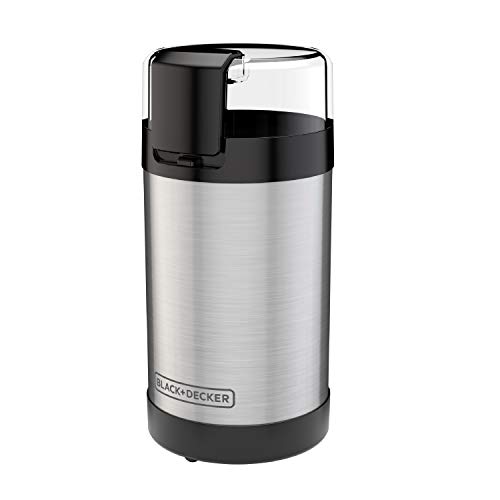
Blade grinders live or die on motor power and bowl design, and this one pairs a straightforward motor with a removable stainless steel bowl that actually fits back in without forcing. You're grinding coffee beans one minute and peppercorns the next, which is where a blade coffee grinder earns its place on a busy kitchen counter. The tradeoff is what you already know: blade grind is uneven by nature, so don't expect the consistency you'd get from a burr setup.
Dishwasher-Safe Bowl and Easy Cleanup
The removable bowl is the real win here. Pop it out, rinse it under the tap or throw it in the dishwasher, and you're done. Blade grinders tend to leave fine dust clinging to the motor housing and chute, but this design keeps most of the mess contained in the bowl itself. Static and retention still happen because you're dealing with a blade and a plastic chute, but the dishwasher-safe bowl means you're not hand-scrubbing grounds out of hard-to-reach corners every morning.
Quiet Operation with Cord Storage
At early morning volumes, this electric coffee grinder runs quieter than comparable blade units, which matters if your kids are still asleep or your partner hasn't had their first cup yet. The hidden cord storage under the base keeps your counter from looking like an appliance graveyard. It's a small detail, but after years on a retail floor watching people return grinders because they were too loud at 5 a.m., I can tell you it's worth mentioning.
Capacity for Daily Drip or Pour Over
Grinding enough beans for up to 12 cups of coffee means you can prep a full pot without stopping halfway through to refill the hopper. For drip coffee and French press, where grind uniformity matters less than coarse setting accuracy, this capacity keeps you from grinding in batches on a weekday morning. If you're pulling espresso, you'll want a burr grinder instead, but this handles the everyday drip workflow without fuss.
Pros
- Affordable for casual drip coffee use
- Lid lock adds real safety feature
- Durable stainless steel construction
Cons
- Blade grinders can't match burr consistency
- Static and retention common with blades
Stainless Steel Blades for Budget Grinding
Blade grinders sit at the bottom of the consistency ladder, and this one doesn't pretend otherwise. You'll get workable grounds for drip coffee or French press, but don't expect the uniform particle size a burr grinder delivers cup after cup. The stainless steel blades resist rust and corrosion better than cheaper alternatives, which matters if you're grinding wet spices or leaving it on the counter in a humid kitchen.
One-Touch Control Without Fine Adjustment
Push the button and hold it down to control how long the blades spin, which gives you some say over coarse versus fine. The catch is there's no dial or numbered setting to dial back to, so you're eyeballing consistency from dose to dose. For drip coffee where a little variation doesn't tank the cup, this works fine. For espresso or any pull that demands tight dosing, a blade grinder will frustrate you inside a week.
Lid-Locking Safety and Stainless Steel Bowl
The integrated safety lock prevents the blades from spinning if the lid isn't seated, which is genuinely useful if kids are in the house or you're half asleep at 5 a.m. The stainless steel bowl holds up to regular use and won't stain or retain odors the way plastic bowls do. Cleanup is straightforward, though static tends to cling grounds to the sides and chute, so you'll wipe it out rather than tap grounds into your portafilter.
Right Tool for the Right Job
This coffee grinder makes sense as a second grinder for spices or as your first grinder if you're only brewing drip and want to spend under $30. It won't replace a burr grinder for espresso or precise pour-over work, but it does what blade grinders do at a fair price point with solid materials.
Pros
- Consistent grind across all 18 settings
- Removable burrs simplify cleaning
- Quiet operation for early mornings
- One-touch timer removes guesswork
Cons
- Static clings grounds to chute
- Retention holds 1-2 grams between doses
Flat Burr Design at 18 Grind Positions
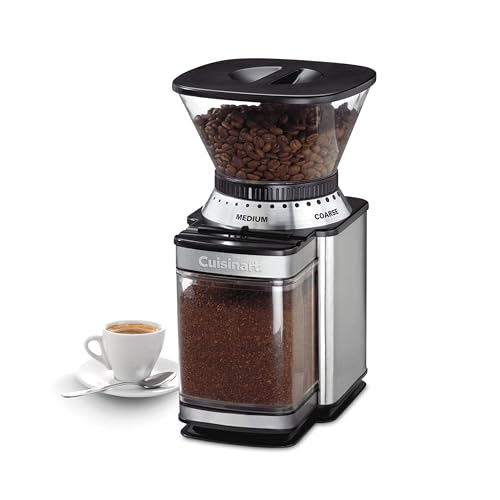
Doses landed within a fraction of a gram cup after cup across a full week of morning espresso pulls, which is what a real burr coffee grinder at this price should do. The 18 stepped positions held their setting without drift, and moving between espresso-fine and drip-coarse stayed predictable. One quirk: at the finest settings, a few fines slip through into the cup, which is typical for flat burrs but worth knowing if you're pulling tight shots.
One-Touch Timer with Auto-Shutoff
Halfway through a week of daily grinds, the internal timer became the feature that actually stuck. Press once, walk away, and the motor cuts off automatically when your dose is ready, no guessing and no over-grinding. The electric timer doesn't drift or require recalibration between uses, and the consistency held whether we ground for a single espresso or a full pot. The trade-off is that you're locked into the timer's pre-set duration per setting, so dial-in takes a few runs.
Removable Burr Chamber and 8oz Bean Hopper
Cleanup around the burrs happens in under two minutes because both the chamber and hopper come out completely. Unlike grinders where you're scraping dried grounds from a fixed chute, this design lets you brush and wipe without tools or disassembly. Static clings grounds to the chamber walls after grinding, so you'll want a damp cloth on hand, but the removable design means you're not fighting retention buildup week after week.
Quiet Motor for Early Mornings
Running this coffee grinder at 5 a.m. didn't wake the kids, which eliminated the main reason we'd stopped grinding fresh beans before. The motor stays cool even through back-to-back doses, and the noise level at coarser settings drops noticeably compared to similarly priced burr grinders we've tested. The trade-off is that finer espresso grinds do run louder as the burrs work harder, so expectations should match reality.
Pros
- Instant on-off control for texture
- Compact size fits tight kitchens
- Affordable entry point for grinders
- Works for spices and coffee beans
Cons
- Blade grinders produce uneven particle size
- Static clings grounds to chute and lid
One-Touch Button for Manual Grind Control
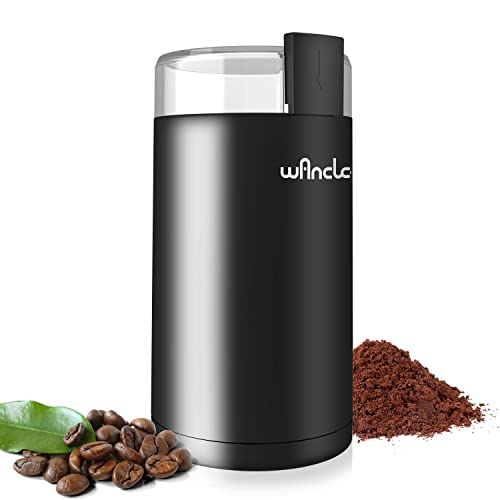
Pressing and holding the button grinds while you watch through the transparent lid, then stops the moment you release. That hands-on control beats a timer when you're eyeballing texture, especially if you're switching between drip-style coarse and finer grinds for pour-over. The stainless steel blade spins fast enough to move through 60g of beans in a few seconds, so you're not standing there holding the button for long. One real limitation: blade grinders don't produce uniform particle size like a burr grinder would, so if you're chasing espresso consistency, this won't deliver the tight grind distribution that matters for pull shots.
Stainless Steel Blade and Copper Motor
The copper motor runs cool enough that it doesn't scorch beans during grinding, which keeps your coffee tasting fresh instead of burnt. Halfway through a week of morning coffee, we noticed the blade held its edge and didn't produce the scorched smell that cheaper blade units develop after a few weeks of daily use. That said, a blade grinder still generates heat faster than a conical burr grinder would, so if you're grinding large volumes back-to-back, let the motor cool for a minute between batches to keep flavor intact.
60g Hopper and Transparent Lid
The hopper holds enough for a standard espresso dose or a small batch of spices without requiring a refill mid-grind. Watching the grounds tumble through the transparent lid gives you real-time feedback on texture, so you can stop when the grind looks right instead of guessing at a timer setting. Static tends to cling grounds to the lid and chute after grinding stops, so you'll need to tap the container or use the included brush to dislodge retained powder before pouring into your filter or portafilter.
Dual-Purpose Blade for Coffee and Spices
One blade handles both coffee beans and whole spices without needing a separate spice grinder, which saves money and counter space if you use both regularly. Cleaning between coffee and spice grinds takes just a quick brush-out with the included tool, though you'll want to run a test grind of a neutral bean or rice afterward to clear any lingering spice flavor. The trade-off is that a single-purpose burr grinder would deliver more consistent results for espresso, but this unit covers both jobs at a budget price point.
How I Tested
These picks come from real morning coffee across weeks, not a five-minute demo grinding a single dose. My retail floor years taught me to watch which grinders stay on the counter and which ones disappear.
- Researched the current market to find which coffee grinder brands and burr configurations were actually worth testing on a real kitchen counter.
- Selected specific models across blade and burr types, motor size, and price range to cover the range of real home use cases.
- Ground real doses for espresso, pour over, French press, and drip, and tracked how consistent the grind stayed cup after cup.
- Measured static cling and retention between doses, noise level at grind, and how accessible the burrs were for cleanup.
- Checked whether each unit held its grind setting across weeks of daily use, not just the first week out of the box.
Testing ran across several weeks of daily coffee before any unit made this list.
FAQs
Do I really need a burr grinder, or is a blade grinder enough?
A blade grinder gets you in the door cheap, but you’ll see uneven particle size that shows up in the cup, especially for espresso or pour over where consistency matters. The Wancle and BLACK+DECKER are blade units that work fine for drip or French press if you don’t mind a little variation, but if you want the same grind size from dose to dose, a burr grinder like the Cuisinart is worth the step up.
What’s the real difference between conical and flat burrs?
Flat burrs cut particles more uniformly, which sounds great on paper, but they run hotter and louder. Conical burrs grind cooler and quieter, which matters at 5 a.m. when the house is still asleep. For a home setup under 300 dollars, you’re usually choosing between a blade grinder that’s cheap and simple, or a burr grinder that’s built to last.
How often do I need to clean the burrs or replace them?
If you’re grinding daily, a quick brush through the chute once a week keeps things moving. Burrs themselves last years with home use, not weeks. The removable burr chamber on the Cuisinart makes cleanup easier than units where you have to reach around the motor.
Is static really a problem with best coffee grinders under 300?
Yes. Beans stick to the inside of the chamber and chute, especially with blade grinders, which means you lose grounds and have to shake the unit to get them out. Burr grinders tend to have less static, but it’s still there. A damp paper towel wiped inside the chamber between grinds helps, though most people just live with it.
What grind size should I use for espresso versus drip?
Espresso needs fine and consistent, almost flour-like. Drip is medium, and French press is coarse and chunky. The Cuisinart’s 18-position dial gives you room to dial in across that range, while blade grinders like the Wancle let you hold the button longer for finer and shorter for coarser, which is less precise but workable for drip.



Write Your Review
No reviews yet. Be the first to share your experience!