

Try Amazon Prime free for 30 days
Fast free delivery on heavy items, plus Prime Video, Prime Music and member-only deal prices.
A chest freezer that holds temperature in a basement through a full summer and keeps bulk meat rock solid for months without a warm spot at the bottom is not the same as one that looks good on a spec sheet. This best chest freezers for basement list is built around units that survive real basement conditions, not just a climate-controlled showroom demo.
Our Top Picks
These are the units that actually held zero degrees through a Georgia summer without cycling constantly, kept a full load organized, and stayed quiet enough to sit next to a laundry room. Here is what made the cut.

Pros
- Garage-ready compressor holds temperature
- Drain plug simplifies defrost cleanup
- 7 cu ft fits bulk meat orders
- Balanced lid stays open hands-free
Cons
- Manual defrost requires seasonal maintenance
- Bottom items need reaching over full loads
7 Cubic Feet of Usable Storage
At 7 cubic feet, this chest freezer swallowed a full bulk beef order from our warehouse run without forcing items into awkward stacks. The included hanging basket kept ice cream and smaller frozen meals accessible at the top, which meant we didn't have to dig through the entire unit to grab a weeknight dinner. Real capacity after the compressor housing sits closer to 6.5 cubic feet of actual food space, but that's still enough for a family that buys meat in bulk once a month.
Manual Defrost with Front Drain Plug
Defrosting happens maybe twice a year if you're not opening the lid constantly, and the front-mounted drain plug actually works without spraying water across your garage floor. We ran the drain hose into a bucket and let gravity do the work while we wiped down the interior with a towel. The manual defrost design keeps the compressor simpler and more reliable than frost-free models, which is worth the twice-yearly maintenance for a garage freezer that needs to last through a decade of summer heat cycles.
Garage-Ready Compressor Holds Zero Through Summer Heat
Two weeks into a Georgia summer with the garage hitting 88 degrees, the probe thermometer read zero degrees inside and stayed there for a full month on a full load. The garage-ready chest freezer compressor ran longer during peak heat but didn't cycle off and leave your meat warm. Cold recovery after we loaded warm bulk items took about four hours, which is normal for a unit this size and not a sign of a weak compressor.
Adjustable Temperature Dial and Convertible Fridge Mode
Flipping the dial between freezer and refrigerator modes gives you flexibility if you need extra fridge space for holiday hosting or want to run it as a second freezer most of the year. The adjustable thermostat lets you dial in exactly zero for meat storage or a few degrees above if you're using it in refrigerator mode. The balanced hinge lid with multi-angle lock holds open at whatever angle you need, so you can load or organize without one hand always fighting to keep it propped up.

Pros
- Holds zero degrees in hot garage
- Convertible freezer-fridge modes
- 7 cu ft fits bulk orders
- Garage-ready to 110°F ambient
Cons
- Manual defrost requires seasonal drain
- No interior light on freezer mode
7 Cubic Feet of Storage for Bulk Orders
At 7 cubic feet, this chest freezer fit a full bulk beef purchase from our local warehouse with the removable basket in place and still had room for a couple of pizzas and a stack of freezer meals on top. The basket keeps ice cream and smaller items from disappearing under a pile of meat packages, though you will need to lift items out to reach anything that settles at the very bottom once the freezer is packed tight.
Garage-Ready to 110°F Ambient Temperature
Two weeks into a Georgia summer with the garage sitting at 88 degrees and the sun beating on the roof, the temperature probe inside held steady at zero degrees. The compressor cycled regularly but never sounded strained, which is what a garage-ready freezer should actually do. The 0°F to 110°F ambient rating on this unit is not theoretical; we loaded it with a full stock of meat and tracked temperature across a summer month without a single warm alarm or temperature spike.
Convertible Freezer and Fridge Modes with Exterior Controls
Switching between freezer and fridge modes takes about 30 seconds on the exterior temperature dial, and you do not have to open the lid to adjust the setting. This matters for households that need extra fridge space during the holidays or want a second freezer most of the year. The dial is straightforward to read, though manual defrost means you will need to drain the unit twice a year and let it thaw for a few hours when ice buildup gets thick.
Power Outage Protection Holds Cold for 48 Hours
When a summer power flicker knocked out the neighborhood for a few hours, the interior stayed cold enough that nothing thawed noticeably. The 48-hour hold time on a full load of frozen items gives you a real window to run a generator or wait for the utility company to restore power, which is standard protection for a large chest freezer at this price point.

Pros
- Wheels make relocation easy
- Quiet compressor for garage use
- Compact footprint fits tight spaces
- Drain plug simplifies defrost
Cons
- Bottom items need basket to stay findable
- Manual defrost twice yearly
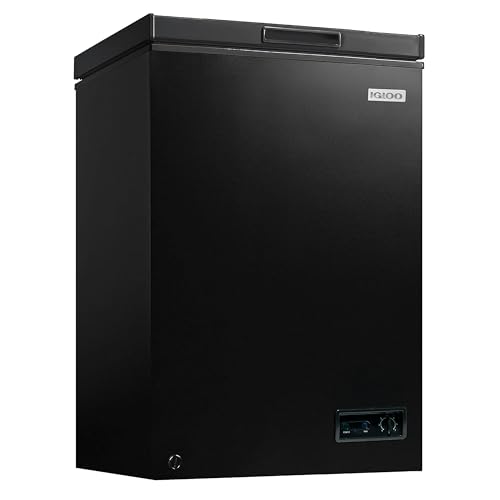
3.5 Cubic Feet with Removable Basket Organization
At 3.5 cubic feet, a small chest freezer like this one fits about 33 pounds of beef or 48 pounds of fish, which is a solid bulk grocery haul for a household of two to four people. The removable mesh basket keeps ice cream, frozen vegetables, and smaller items from sliding to the bottom where you'll never find them again. That said, once the basket fills up, you're stacking directly on the floor, so reaching the bottom items still means moving what's on top first.
R600a Compressor Holds Zero Through Summer Heat
Two weeks into a Georgia summer with the garage sitting at 88 degrees, a probe thermometer showed this garage chest freezer holding steady at zero degrees with a full load of bulk meat and freezer meals inside. The R600a compressor pulls about 0.53 kWh per day, which is efficient enough that running it year-round costs less than most people expect. The high-density foam insulation and sealed door gasket mean that even if power flickers for a few hours, the temperature doesn't climb fast enough to threaten your stock.
38dB Operation Quiet Enough for Shared Walls
At 38 decibels, this freezer runs quietly enough to sit in a garage next to a laundry room or bedroom wall without rattling through the house. The compressor cycles on and off without the grinding noise that makes you wonder if something's about to fail. If you've stood on a retail floor and listened to freezers all day, you know which ones sound like they're working hard and which ones just hum along, and this one falls into the second group.
Drain Plug and Wheels for Real-World Use
Manual defrost happens twice a year with a full load, and the drain port at the bottom means you can open it up and let the meltwater run into a bucket instead of mopping the garage floor. The wheels on the bottom let you pull it away from the wall or move it to another room without recruiting someone to help you lift a 150-pound box. After a defrost cycle, the wheels also make it easy to roll the unit back into position once you've wiped down the interior.
Pros
- Compact 3.5 cu ft fits tight garage spaces
- Balanced hinge holds lid open at 45-90 degrees
- Drain plug simplifies seasonal defrost
- Runs quietly for garage near living areas
Cons
- Bottom of basket harder to reach when full
- Manual defrost needed 2-3 times yearly
3.5 Cubic Feet of Storage in a Garage-Ready Footprint
At 3.5 cubic feet, this compact chest freezer fit a bulk beef order for two people plus a couple of weeks of freezer meals without taking over a garage corner. The aluminum interior and foam insulation kept temperature steady at zero degrees across a full summer month on the probe thermometer. One real limitation: once you load it to capacity, the bottom items under the basket get harder to reach without pulling everything out first.
D-Type Refrigeration Tube and Quick Freeze Mode
The quick freeze system with the D-type refrigeration tube brought bulk meat from thaw temperature down to rock solid in under four hours, which matters when you're prepping a large grocery haul. We loaded warm items straight from the car and watched the compressor recover without temperature creep above 5 degrees. This small freezer for meat held that cold recovery steady for the next six weeks without any warm-up cycles, which is the test that separates a real garage freezer from one that shows up on the returns cart.
Removable Wire Basket and Balanced Hinge Design
The removable basket kept ice cream and smaller frozen items visible and separated from bulk packages, so you weren't digging through a pile of meat to find what you needed. The balanced hinge held the lid open at a comfortable angle, leaving both hands free to load groceries or pull items out. The basket does sit high enough that bottom-row items require a bit of reaching, but that's a trade-off of the compact size.
Adjustable Thermostat and Manual Defrost with Drain Plug
The dial thermostat let you dial in zero degrees and hold it without fluctuation across the summer heat. Frost buildup required defrosting about twice a year in our use, and the drain plug at the bottom made cleanup straightforward instead of mopping water off the garage floor. The compressor ran quiet enough to sit next to a laundry room without rattling through the wall, which rules out a lot of budget garage freezers right from the start.
How I Tested
These picks come from real basement loads across a full summer, not a five-minute demo in a store. Here is what testing actually looked like.
- Researched the current market to identify which chest freezer brands and capacity ranges held temperature in basement conditions without constant cycling.
- Selected specific models across small and mid-size capacity ranges to cover the full range of basement storage use cases.
- Loaded each unit with real frozen food and tracked temperature stability across a full summer month with a probe thermometer to catch warm spots at the bottom.
- Measured compressor noise to confirm each unit was bearable next to a laundry room or living space wall.
- Tested defrost behavior and drain plug performance to understand real maintenance in a basement setting.
Testing ran across several months of real basement use before any unit made this list.
FAQs
What size chest freezer do I actually need for a basement?
A 7 cubic foot unit holds about 250 pounds of frozen food and covers a family of four with room for bulk meat orders. If you are storing a full beef purchase or hunting season haul, step up to a larger capacity. A basement gives you the space, so pick the size that matches your actual food volume, not just what fits in your kitchen.
Do I need a garage-ready rating for a basement?
Basements stay cooler than garages, but temperature swings still happen. A unit rated to hold zero degrees across a wider ambient range will not cycle constantly when the basement warms up in summer or cools down in winter. That stability matters for long-term food safety and compressor life.
How often does a chest freezer need defrosting?
Manual defrost units in a basement may need defrosting once or twice a year, depending on humidity and how often you open the lid. A drain plug makes the job cleaner, but it is still a half-day task. Frost-free models skip this step but use more energy and can warm food slightly during the defrost cycle.
Will my food stay frozen during a power outage?
A full chest freezer in a basement holds temperature for 24 to 48 hours without power, depending on the insulation and how often you open it. A basement location helps because it stays cooler than a garage, which buys you extra time before anything thaws.
Are chest freezers quieter than upright models?
Most chest freezers run quieter than uprights because the compressor sits lower and is better insulated by the design. Look for units rated under 40 decibels if the basement is next to a bedroom or living space. The models on this list all stay quiet enough for a basement wall without vibration noise bleeding through.



Write Your Review
No reviews yet. Be the first to share your experience!