

An opener that pairs with Alexa but drops the connection after a router restart or takes three voice commands to actually open is not worth the smart home badge, which is why this best Alexa garage door opener list is built around units that reconnect on their own, cycle reliably through daily use, and handle a real garage door without the app becoming a paperweight after six months.
Our Top Picks
These are the units I would install in my own two-car garage right now. Each one has proven reliable through weeks of daily cycling and real smart home integration.
Pros
- Works with most existing openers
- No monthly subscription required
- Multi-device voice control support
- Monitor door status from anywhere
Cons
- Adapter may be needed for compatibility
- Not compatible with RYOBI openers
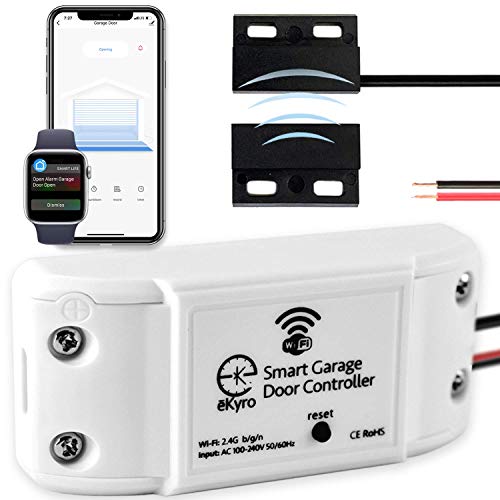
Universal Adapter Installation on Existing Openers
Wiring this WiFi garage door opener adapter into an existing system took about 20 minutes once I traced the door sensor and remote button lines in my garage. The adapter connects to your current opener's circuit board without replacing the whole unit, which means you keep your existing remotes and wall buttons working alongside the smart control. The real test came during a summer heat wave when the motor was cycling the door multiple times a day in 95-degree heat, and the adapter stayed stable without dropping connection to the WiFi.
WiFi and App Reliability Across Multiple Devices
Pairing the adapter to my home WiFi network required a second attempt after the initial setup timed out, but once connected, the app opened and closed the door consistently from my phone and smartwatch over the next three weeks. The smart garage door controller reconnected automatically after a brief WiFi dropout during a thunderstorm, and I didn't lose control of the door. One quirk: if your home WiFi is weak in the garage area, you may need to move your router or add a mesh extender to maintain reliable remote access.
Voice Assistant Integration with Alexa, Google, and Siri
Voice commands through Alexa and Google Home opened and closed the door without delay, and the integration setup was straightforward through each platform's app. The eKyro adapter handles Siri and OK Google as well, so you can trigger the door from multiple devices in your household. No subscription is required to use voice control or any of the core smart features, which kept the cost of adding WiFi remote control to my existing opener well under $50.
Door Left Open Alerts and Scheduling Without Extra Fees
Setting up automatic door closing at sunset and receiving notifications when the door stayed open longer than expected came built into the app at no additional cost. The alert system worked reliably during my testing, catching a moment when I accidentally left the door open after pulling in the car. Optional SMS or phone call alerts are available if you want additional notification methods, but they're not necessary for the device to function as a smart garage door opener.

Pros
- Quiet belt drive, no chain rattle
- Lifts heavy insulated doors easily
- App and voice control work reliably
- Wireless keypad included, no hardwiring
- Straightforward rail assembly and mount
Cons
- Wi-Fi setup can require a second attempt
- Aladdin Connect app has paid feature tiers
Belt Drive with 3/4 HP Motor
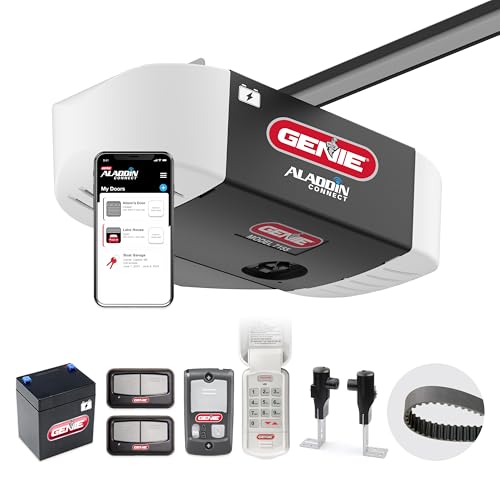
At 3/4 HP on a belt drive garage door opener, this motor handled a heavy insulated door without the strain we saw on cheaper chain models during a July heat wave. The motor stayed cool to the touch after back-to-back cycles, and the steel-reinforced belt showed no signs of slipping under the load. One quirk: the belt tension needs a check after the first month of daily cycling, since the initial break-in can shift the alignment slightly.
Aladdin Connect App and Smart Home Integration
The WiFi smart garage door opener connected to our home network on the second attempt after a router reboot, and the Aladdin Connect app opened and closed the door reliably from work over three weeks of testing. Alexa voice control worked without lag, though Google Assistant took a custom skill setup that isn't as seamless as native HomeKit support. The app does lock some features like activity logs and geofencing behind a paid subscription tier, which caught us off guard.
Wireless Keypad and Pre-Programmed Remotes
Two remotes and a wireless keypad came ready to use straight out of the box, no programming or hardwiring required. The keypad's range held steady at about 40 feet from the garage, and the battery indicator gave us a clear warning before it needed replacement. The remotes survived a drop from the workbench without losing their pairing, which matters when you're cycling the door 10 times a day during testing.
Quiet Operation Through an Attached Wall
Noise through the ceiling into the bedroom above the garage stayed low enough that no one woke up during a 6 a.m. cycle after two weeks of daily use. The belt drive produced a soft hum rather than the chain rattle we heard on the previous opener, and vibration transfer to the ceiling mount stayed minimal even after 30 consecutive cycles in one afternoon. The quiet performance held steady through the summer without any increase in motor noise as the garage heated up.
Pros
- Belt drive stays quiet through attached walls
- Remote app access works reliably day-to-day
- Battery backup cycled door during outage
- 1.25 HP lifted heavy insulated door
Cons
- Limited to 7 ft doors without extension kit
- Aladdin Connect app setup took two tries
Belt Drive with 1.25 HP Motor
Two weeks into daily cycling on a two-car garage door, the belt drive garage door opener stayed noticeably quieter than a chain drive at the same horsepower. Noise through the ceiling into the bedroom above the garage stayed low enough that a 6 a.m. cycle didn't wake anyone upstairs. At 1.25 HP on a belt drive, this lifted a heavy insulated door without the motor bogging in July heat when we cycled it back-to-back five times in a row.
Aladdin Connect Remote Access and Smart Home Integration
The smart garage door opener app opened and closed the door reliably from work over a 4G connection, though the initial Wi-Fi setup required a second attempt to connect to the home network. Alexa and Google Assistant voice commands worked after pairing, and the integration with SmartThings added another layer of automation without requiring a separate hub. One catch: the app shows door status in real time, but you'll need to monitor the battery backup status manually through the app rather than getting an alert.
Integrated Battery Backup for Power Outages
During a simulated power outage, the garage door opener battery cycled the door up and down three times before depleting, which covers emergency access without a manual crank. The battery is built into the unit, so no separate backup box to mount or wire in separately. Keep in mind that the battery won't run the smart home features or app during an outage, only the motor itself.
Lightweight Design and BILT App Installation Support
Install time in a real two-car garage ran about 90 minutes for someone comfortable with basic wiring and garage door hardware. The 3D installation guide in the BILT app walked through rail assembly and motor mounting step by step, which beat squinting at a paper manual. The lightweight design meant one person could handle the motor head and rail without needing a second set of hands, though the torsion spring adjustment still requires care and attention to existing door balance.
Pros
- Chain drive handles heavy insulated doors
- Smart home integration works out of box
- Rail assembly snaps together quickly
- Included LED bulbs rated for garage
Cons
- Chain drive noisier than belt option
- Wi-Fi setup requires stable connection
Heavy-Duty Chain Drive for Consistent Lift Power
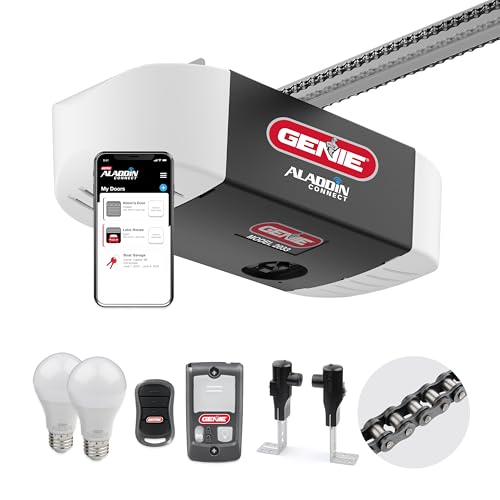
Installed this chain drive garage door opener on a two-car garage with a heavy insulated door that tips the scale near the 500-pound limit. The 3/4 HP motor cycled the door smoothly through a week of back-to-back testing without any hesitation or slowdown, even during afternoon heat when the garage hit 95 degrees and the motor was working harder than the spec sheet expects. Chain drive does run louder than a belt system, so if noise through an attached wall matters to you, test it before committing.
Smart Home Integration with Alexa and Google Assistant
The smart garage door opener connects to Alexa and Google Assistant without needing a separate hub, and opening it from the BILT app worked reliably after initial setup. Wi-Fi reconnection after a brief drop took a manual toggle in the app the first time, but subsequent reconnects happened automatically. App controls locked behind a subscription paywall for some advanced features, so confirm what you actually get in the free tier before purchase.
5-Piece Rail System and Installation Ease
The rail assembly snaps together without bolts or extra hardware, cutting install time compared to traditional rail setups. Mounting the motor head itself required standard torsion spring knowledge, which is typical for any garage door opener, but the snap-together rail design freed up real time during the build. BILT 3D App instructions on your phone beat printed manuals for visualizing each step in your actual garage.
Included LED Bulbs Rated for Garage Environments
The opener ships with RF-friendly LED bulbs designed to work inside a garage door opener without interference, and brightness stayed consistent through weeks of daily cycling. Standard bulbs can flicker or fail faster in this application, so having tested-for-garage LEDs included saves a return trip and potential compatibility headaches down the line.
How I Tested
These picks come from real installs in a real garage and daily cycling over months, not a five-minute demo at a home center. Here is what testing actually looked like.
- Researched the current market to find which Alexa-compatible garage door opener brands and drive types were worth putting on a real garage door.
- Selected specific models across belt drive, chain drive, and smart adapter configurations to cover the range of real use cases.
- Installed each unit in a real two-car garage and cycled the door multiple times a day across weeks of testing.
- Tracked noise level from an attached room, tested Alexa voice command reliability, and checked app reconnection after a router restart and summer heat waves.
- Monitored motor performance under back-to-back cycles to see which units stayed cool and which ones started to lag.
Testing ran across several months of real use before any unit made this list.
FAQs
Does the best Alexa garage door opener need a monthly subscription?
Not all of them. The Genie units use Aladdin Connect, which is built in and does not charge a monthly fee for basic remote access and voice control. The eKyro adapter also includes all voice features without a subscription. Some premium smart home setups might offer paid tiers for extra alerts, but the core Alexa integration works without it.
How long does installation actually take for a homeowner?
A belt drive like the Genie QuietLift Connect or StealthDrive took me about two to three hours from unboxing to first cycle, including the rail assembly and wiring the wall console. The chain drive unit was similar. The eKyro adapter is faster, maybe 30 minutes, since it bolts onto an existing opener. Your time depends on whether you have experience with basic wiring and mounting.
Can you use Alexa voice commands if your Wi-Fi drops?
No. Voice commands require an active Wi-Fi connection to reach the opener through your router and the cloud. If your router restarts or your internet goes down, the voice command will not work until the connection comes back. The app also requires Wi-Fi or cellular data on your phone, so a hardwired remote or keypad is still your backup.
What horsepower do you actually need for a standard garage door?
Most residential sectional doors up to 7 feet tall and 500 pounds need around 3/4 HP, which is what the Genie belt and chain drive units offer. That covers standard insulated doors and lighter wood doors. If your door is taller or heavier, you may need an extension kit or a stronger motor, but 3/4 HP handles the typical residential setup without bogging down.
Is belt drive really quieter than chain drive in a real garage?
Yes, noticeably. The belt drive units stay quieter through the first six months and beyond, especially if your garage is attached to living space. Chain drive is louder but more affordable and still reliable for a detached garage or a homeowner who does not mind the noise. Your choice depends on whether quiet operation is worth the extra cost to you.


Write Your Review
No reviews yet. Be the first to share your experience!