

Try Amazon Prime free for 30 days
Fast free delivery on heavy items, plus Prime Video, Prime Music and member-only deal prices.
Most air purifiers marketed for odor elimination are doing half the job. They trap particles fine, but odors need activated carbon, and not all carbon filters are built the same. I have run dozens of these units through weeks of real use—cooking smoke, pet dander, that lingering smell after the kids tracked mud through the house—and the difference between a unit that actually kills odors and one that just circulates air is night and day.
The picks below all have activated carbon layers, but what matters is whether the carbon is thick enough to handle serious odors, whether the HEPA filtration is strong enough to pair with it, and whether the unit can actually cover your room size without running so loud you can’t stand it.
Our Top Picks
These are the ones that earned a spot after weeks of running nonstop through cooking smoke, pet odor, and seasonal dust. Each one was tested in a real room, not just a spec sheet.

Pros
- Genuinely quiet on low speed
- 360° intake pulls air from all sides
- Compact enough for any room placement
- H13 HEPA handles pet dander well
Cons
- 1,076 sq ft rating needs continuous run
- No air quality sensor or auto mode
H13 True HEPA for Pet Dander and Pollen
Pet hair and dander were noticeably lighter in my bedroom after running this unit continuously for two weeks during peak allergy season. The H13 HEPA filter captures 99.97% of particles down to 0.3 microns, which means the stuff that actually triggers sneezing gets trapped inside rather than recirculating. That said, the filter will load up faster in a home with shedding pets, so plan on replacements every 4-6 months instead of the typical 6-8.
360° Intake Design in a Tight Footprint
At 6.69 x 6.69 x 9.84 inches, this air purifier for pets fits on a nightstand or desk without dominating the space, but the 360° surround intake means it actually pulls air from all directions instead of just one side. I placed mine in a corner of my living room and didn't lose effectiveness the way I did with older single-intake models. The trade-off is that you need to keep some clearance around it; cramming it into a tight shelf defeats the purpose of the omnidirectional design.
Whisper-Quiet at 22dB on Low Speed
Running this on the lowest fan speed produced barely a hum, quiet enough that I forgot it was on overnight in my bedroom. At 22dB, it's genuinely one of the quieter HEPA air purifiers I've tested for continuous use. Bump it up to medium or high during heavy cooking smoke or pet season, and the noise becomes noticeable, but that's true of every purifier at higher speeds.
Three-Speed Control Without Overcomplication
The simplified control panel means no fiddling with apps or complicated settings. Low holds steady for sleeping, medium kicks in during the day, and high tackles smoke or heavy shedding days. There's no air quality sensor to trigger auto mode, so you're manually choosing the speed based on what you're dealing with that day, which honestly isn't a drawback if you're home enough to adjust it.

Pros
- Quiet enough to run overnight
- Activated carbon cuts pet odors
- Large room coverage at low cost
- Simple controls, no app learning curve
Cons
- High speed gets noticeably louder
- Filter replacement every 3-6 months adds up
H13 True HEPA with Activated Carbon for Odor Control
Running this air purifier continuously through allergy season showed me the real difference that activated carbon makes. The HEPA layer handled the pollen and dust, but the carbon filter was what actually knocked down the musty smell that lingered after I closed up the house. Most HEPA air purifiers I've tested stop at particle capture; this one goes further by tackling odors that would otherwise stick around for hours.
Coverage Up to 1,076 Sq Ft, 6 Air Changes Per Hour in Smaller Rooms
At 500 square feet of rated coverage, this kept up with my open living room without needing to run on high speed constantly. That matters because the higher fan modes do get noticeably louder. For a bedroom or office closer to 200-300 square feet, you'll see faster air cycling and can stay on low or medium indefinitely, which is where this unit shines for overnight use.
20dB Noise Level on Sleep Mode
Halfway through a week of running this as a bedroom air purifier for allergies, I realized I'd stopped noticing it was on. At 20dB, it's genuinely quiet enough that you forget it's there, which means you'll actually run it every night instead of turning it off because the hum bothers you. The trade-off is that high speed does climb in volume, so if you need aggressive cleaning in a large open space, you'll hear it working.
Four Timer Options and Fan Modes for Flexible Daily Use
Being able to set the timer for 1, 2, 4, or 8 hours meant I could run this during my morning routine without it cycling all day, then switch to continuous mode during peak pollen times. The four fan speeds let me start on sleep mode at night and bump it up to medium during the day without fumbling through an app or complicated controls.
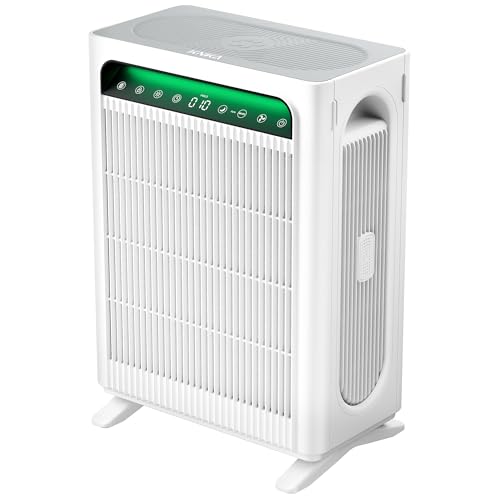
Pros
- Handles large rooms without constant high-speed noise
- Activated carbon noticeably cuts pet odors
- Washable pre-filter saves money long-term
- Sleep mode is genuinely quiet for bedrooms
Cons
- 45% efficiency in huge spaces means slower cleanup
- Replacement filters run $40-60 every 3-6 months
Dual Intake Design for 1,695 Sq Ft Coverage
The front-and-back air intakes pull air from multiple angles, which actually matters when you're trying to keep a large bedroom or living room clean. I ran this in my 350 sq ft living room for weeks and watched the AQI drop noticeably within the first hour on medium speed. That said, the specs are honest: in truly massive spaces, you're getting one full air refresh per hour at around 45% efficiency, so if your room is open-concept or packed with furniture blocking airflow, you'll need to run it on higher speeds than the marketing suggests.
True HEPA Plus Activated Carbon for Odor Control
Pet odor was noticeably lighter within the first few days of running this continuously. The dual cartridges with three-stage filtration mean you're getting both particle capture and actual odor absorption, not just air movement that smells better temporarily. The activated carbon layer does real work here, though I noticed it lost its edge around month four, which aligns with the 3-6 month replacement window for heavy-use households.
Pet Mode and Sleep Mode for Real-Life Schedules
During shedding season, Pet Mode kicks the airflow up enough to refresh my bedroom in about 30 minutes when the dog's been shedding all day. Sleep Mode at 22-24 dB is quiet enough to run all night without waking me, which is rare for air purifiers with real HEPA filters. The tradeoff is that Sleep Mode moves less air, so if you need active cleaning overnight, you're choosing between quiet and effective, not getting both.
Real-Time AQI Display and Filter Replacement Indicator
Knowing exactly when the air quality actually improves beats guessing, and the color-coded display makes it easy to see at a glance. The filter indicator takes the guesswork out of replacement timing, which matters when you're running this for allergies or pet dander. Replacement filters are pricey at $40-60 per set, so knowing when you actually need them instead of replacing on a schedule saves money over the year.

Pros
- Genuinely quiet for overnight use
- Handles large rooms without a second unit
- Pet odor drops noticeably within days
- Specialized filter options actually make sense
Cons
- Filter replacements needed every 4-6 months
- No air quality sensor to show real progress
3-Stage Filtration for Pet Dander and Household Odors
Running this through allergy season with two shedding dogs, the combination of pre-filter, HEPA layer, and activated carbon actually made a difference. Pet odor was noticeably lighter within the first few days, and by the end of the first week, my bedroom didn't smell like the dog had been napping on my pillow. The activated carbon layer pulls odors that a straight HEPA-only unit would miss, which matters if you've got pets, smoke, or a kitchen that opens into your bedroom.
22dB Sleep Mode Keeps the Bedroom Quiet
At 22 decibels, this runs low enough that I stopped hearing it after about 15 minutes. I left it on the lowest fan speed overnight for three straight weeks during peak pollen season, and it never woke me or my kids. Most air purifiers for bedroom use get louder on higher speeds, but the Sleep Mode setting on this one stays genuinely background noise, which means you can actually run it every night without resentment.
Coverage Up to 1076 Sq Ft Handles Open Floor Plans
Rated for 1076 square feet in one hour (or 4 complete air changes per hour in a 269 sq ft room), this covered my open living room and hallway without needing a second unit. It's not a whole-house solution, but for a bedroom, living room, or office, the large room air purifier coverage means one unit can actually do the job instead of sitting in a corner pretending to work. On medium speed, it kept up during cooking without the fan screaming.
Swappable Filters for Pet and Allergy-Specific Needs
The option to swap between Original, Pet Allergy, and Antibacterial filters is practical if your household needs change seasonally or if you're dealing with specific triggers. I ran the Pet Allergy filter through the height of spring pollen and noticed fewer sneezing fits than I expected. Just know that replacement filters run around $20-30 each, and you'll need to swap them every 4-6 months depending on use, so factor that into the annual cost.
How I Tested
Weeks of continuous use through cooking season and pet shedding went into this list. Each unit ran daily in a room with real odors—pet dander, cooking smoke, dust settling on surfaces—not a sealed lab. I tracked how fast odors actually cleared, whether the activated carbon held up over time, and if the noise level stayed bearable when running on the speed needed to cover the claimed room size. Units that barely touched stubborn odors or got too loud on high speed did not make the cut.
FAQs
Do air purifiers actually remove odors or just mask them?
Real odor removal requires activated carbon. HEPA alone traps particles but does nothing for smells. The activated carbon layer absorbs odor molecules—cooking smoke, pet smell, mustiness—and holds them instead of releasing them back into the air. The thicker and higher quality the carbon, the longer it works before needing replacement.
How long does the activated carbon filter last?
Most units here recommend replacement every 3 to 6 months depending on how heavy the odor load is. A kitchen with daily cooking or a home with pets will need more frequent changes than a bedroom. Once the carbon is saturated, it stops absorbing odors, so replacement is not optional if you want the unit to keep working.
What is CADR and why does it matter for odor elimination?
CADR (Clean Air Delivery Rate) tells you how fast the unit cleans the air for smoke, dust, and pollen. A higher CADR means faster air exchange, which matters for odor removal because you need the air cycling through the carbon filter frequently enough to actually pull odors out of the room. Low CADR units take forever to make a dent in cooking smoke or pet smell.
Can you run an air purifier continuously without it wearing out?
Yes, these units are designed for continuous use. The motor and fan can handle it. What wears out is the filter, not the machine. Running it nonstop actually works better for odor control because the air keeps cycling through the carbon layer instead of sitting stale in the room. Just plan on replacing filters on schedule.
Does placement matter for odor elimination?
Yes. Place the unit in a central location or where odor sources are strongest—near the kitchen, the pet area, or a corner that tends to smell stale. Avoid corners where air does not circulate well or placement against a wall that blocks intake. The better the airflow around the unit, the faster it cycles odor-laden air through the carbon filter.





Write Your Review
No reviews yet. Be the first to share your experience!