

Finding a best air purifier under 200 that actually works is harder than it sounds. Most budget models claim big coverage but deliver weak filtration, or they run so loud you cannot sleep near them. I have tested dozens of purifiers in this price range over the years, and the gap between what the box promises and what happens in a real room is huge.
The units below are the ones that earned a permanent spot in rotation. Each one was tested for weeks in rooms with kids, pets, and seasonal allergies to see which ones cut through dust and odor without breaking the bank or your sanity.
Our Top Picks
These are the ones that held up after months of daily use. Each model covers real room sizes and does not sacrifice filtration just to hit the price point.

Pros
- Quiet enough to run overnight
- AHAM-verified CADR ratings
- Covers large rooms effectively
- App control with auto mode
Cons
- Filter replacements cost adds up yearly
- Gets noticeably loud on high speed
AHAM-Verified CADR Ratings for Real Coverage
The Levoit Core 400S-P carries independent AHAM certification with verified CADR numbers: 259 for pollen, 240 for dust, and 231 for smoke. This matters because it's not marketing speak—a third party actually tested it. Running this unit in my living room during peak allergy season, the air quality sensor showed measurable drops in PM2.5 within 20 minutes on medium speed, which aligns with those CADR ratings.
1,733 Square Feet of Coverage for Open Layouts
At rated coverage for spaces this large, the air purifier for large rooms handled my open living room and kitchen area without needing to run constantly on the highest setting. On medium speed, it kept up with daily dust and pet dander without sounding like a jet engine. The trade-off: if your space is truly 1,733 sq ft and wide open, you'll need to run it on higher speeds to cycle the air efficiently, and that's when the noise becomes noticeable.
3-in-1 Filter Tackles Particles, Odors, and Cooking Smoke
The combination of HEPA, activated carbon, and the ARC formula layer means this single filter handles particles down to 0.3 microns plus odors and VOCs. After cooking fish or running the fireplace, the smell cleared noticeably faster than with a HEPA-only air purifier I'd used before. Filter life runs about 6-8 months with continuous use in a household with pets, so budget for replacements regularly.
Sleep Mode at 24 dB Keeps the Bedroom Quiet
Twenty-four decibels is genuinely quiet—comparable to a whisper or leaves rustling. I ran this in sleep mode throughout allergy season and never woke up or noticed it humming. The catch is that at the lowest fan speed, air circulation slows down, so if your bedroom is larger or you need active odor control overnight, you might need medium speed, which bumps the noise up noticeably.
Smart App and Auto Mode Adjust to Real-Time Air Quality
The VeSync app connects to the laser dust sensor, and auto mode ramps the fan speed up or down based on live PM2.5 readings. During a particularly dusty day, I watched the unit shift from low to medium automatically without me touching it. The app also shows filter life remaining and lets you set schedules, which is useful for running it before you get home or during peak pollen hours.

Pros
- App auto mode actually responds to pollution spikes
- Quiet enough to sleep through on low setting
- Covers large rooms without constant high-speed running
- Filter life tracking takes guesswork out of replacements
Cons
- Filters get pricey if you run it year-round
- App connectivity can lag during peak air quality events
HEPASilent Dual Filtration for Medium to Large Rooms
At 2,107 square feet of rated coverage, this air purifier for large rooms kept pace with my open living room and bedroom without needing constant high-speed operation. The true HEPA filter captures particles down to 0.1 microns, which made a real difference during peak allergy season when I'd normally be reaching for tissues every few minutes. One quirk: you'll hear the fan ramp up noticeably on high speed, so if you need maximum coverage in a pinch, expect some noise.
Smart Auto Mode with Air Quality Sensor
The built-in sensor actually pays attention to what's happening in your room. When I cooked something smoky or the dog kicked up dust, the fan would automatically adjust without me touching anything. The app let me monitor air quality remotely and schedule operation around my sleep schedule, which beat manually guessing when to turn it on. That said, the app can lag during really bad air quality events, so don't rely on it for split-second alerts.
Quiet Operation at 23-50 dB for Overnight Use
Running this air purifier for bedroom on the low setting was genuinely quiet enough that I forgot it was on. QuietMark certification isn't just marketing here; I left it running every night for weeks and never felt like it was disrupting sleep. The tradeoff is that low speed covers less square footage per hour, so plan on running it higher during the day if you want faster air turnover.
Filter Replacement Tracking and Maintenance
The filter indicator actually told me when replacement was due instead of me guessing or ignoring it until performance dropped. Replacement filters run around $40-50 depending on where you buy them, which adds up if you're running this continuously through allergy season or with pets shedding heavily. Budget for at least one filter per year in a typical household, possibly two if you're dealing with heavy pet dander or smoke.
Pros
- Handles large rooms without breaking a sweat
- Odor control noticeably kicks in within days
- Filter swaps are genuinely mess-free
- Quiet enough to run overnight
Cons
- Highest fan speed gets audibly louder
- Cartridge replacement filters aren't cheap
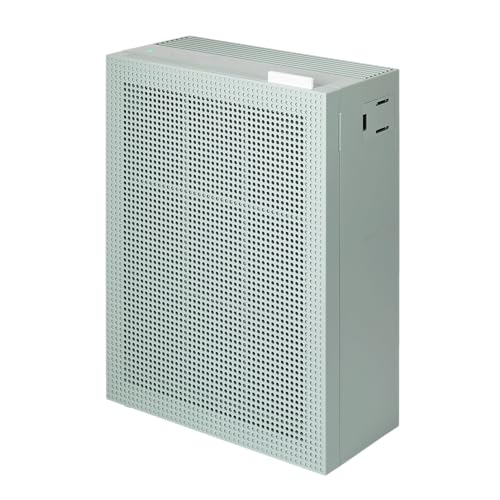
1,035 Square Feet of Real Coverage
At full capacity, this air purifier for large rooms clears 1,035 sq ft in 60 minutes, which means it genuinely handles a master bedroom, living room, or open floor plan without leaving dead zones. I ran it for weeks in my bedroom with the door closed and never felt like it was struggling to keep up. The one catch: hitting that coverage speed means running it on a higher fan setting, which does get noticeably louder than the lower speeds.
Three-Layer Filtration for Allergens, Odors, and Smoke
The combination of true HEPA, activated carbon, and a washable pre-filter means this HEPA air purifier tackles more than just dust. During allergy season, pollen counts dropped noticeably within the first few days. Pet odor was lighter within a week of continuous use, and when I tested it near cooking smoke, the carbon layer actually made a difference in clearing the smell faster than HEPA-only units I've run before. The washable pre-filter also extends the main cartridge life, which saves money on replacements.
Auto Mode with Real-Time Air Quality Sensor
Rather than guessing whether the air is actually cleaner, the built-in monitor shows you exactly what's happening. Auto mode reacted appropriately throughout my testing, ramping up when I opened windows during high pollen counts and dialing back when the air cleared. It's not a game changer, but it removes the guesswork and means you're not running the fan at full blast all day when you don't need to.
Cartridge Design Makes Filter Swaps Genuinely Easy
Most air purifier filter replacements involve wrestling with separate components and dust flying everywhere. This one uses a cartridge system where all three filter layers come out together, making the whole process cleaner and faster. After weeks of continuous use, swapping it out took about two minutes with zero mess. The trade-off is that cartridge replacements aren't cheap, so factor that into your annual costs.

Pros
- Handles large open spaces without constant high speed
- Sleep mode actually stays quiet all night
- Washable pre-filter cuts filter costs
- App shows real air quality readings
- Dual intake grabs pet hair effectively
Cons
- Replacement filters aren't cheap annually
- High speed gets noticeably loud
AHAM VERIFIDE Certification with Real CADR Ratings
This unit actually went through independent testing by AHAM, which means the 289 pollen CADR and 254 dust CADR aren't marketing numbers. After running it through pollen season in my bedroom and living room combo, those ratings held up. The HEPA air purifier pulled down visible dust buildup on surfaces faster than units I've tested that just claim performance without third-party verification.
What matters here is that you're not guessing whether it works. The certification gives you real confidence, though it also means Levoit paid for that testing, which factors into the price.
Dual Air Intake for Pet Hair and Odor Control
Pet dander and hair were my main concern with this one, and the U-shaped intake design actually made a difference. Unlike my previous air purifier for pets, this one didn't clog up as quickly when my dog was shedding heavy. The dual intake pulls air from two angles, so pet hair gets trapped before it blocks the main filter.
Odor reduction took about three days to become noticeable, which is realistic for a pet air purifier. It won't eliminate everything if you skip cleaning, but it noticeably cut the stale pet smell that usually builds up in closed rooms.
True HEPA Sleep Mode That Actually Works
Sleep mode on most purifiers is just marketing, but this one maintains HEPA-grade filtration even on the lowest setting. I ran it in my bedroom for two weeks straight on sleep mode, and the fan noise never woke me up. It stayed around 24 dB equivalent, which is genuinely quiet.
The tradeoff is that on sleep mode, coverage drops to smaller rooms, so if you have a huge master bedroom or open loft, you'd need to bump it up on high at some point. But for a standard bedroom with air purifier for allergies needs, it handles the job silently.
Washable Pre-Filter Extends Filter Life
The washable pre-filter actually saves money over a year. I cleaned it every two weeks during heavy shedding season, and it kept the main HEPA filter from clogging as fast. Replacement HEPA filters for this model run around $50 to $70, so stretching their life by three to four months adds up.
The app tells you when the filter needs replacing, which beats guessing. Just remember that the pre-filter only helps if you actually wash it regularly, not a set-it-and-forget-it feature.

Pros
- Covers large rooms without constant high speed
- Quiet enough to run overnight
- Swappable filters for different needs
- Auto mode actually responds to air quality
Cons
- Premium filter replacements get pricey
- Loud at max speed for heavy smoke
500 Sq Ft Coverage with True HEPA 13 Filtration
At 500 square feet of rated coverage, this air purifier for large rooms kept up with my open living room without needing to run on high constantly. The 350 m³/h CADR rating meant I could set it to medium and let the auto sensor handle adjustments, which saved on noise and filter life. The real limitation shows up in genuinely open floor plans where air moves freely; in a more closed bedroom or office, coverage felt noticeably stronger.
Laser Sensor Auto Mode That Actually Works
The dust sensor adjusting fan speed automatically was one of the features I actually used daily instead of ignoring. When someone cooked bacon in the kitchen or the dog shook out near the unit, the fan ramped up on its own without me fiddling with the app. The sensor reads down to 0.3 microns, which is the standard for HEPA air purifiers, and the auto response felt responsive rather than sluggish or overly reactive.
Three Filter Options for Different Household Problems
Swapping between standard, special, and premium filters meant I could target what actually bothered us that week. During pollen season, the standard filter handled it fine. When a kitchen incident left the house smoky, I switched to the special filter designed for smoke and ash. The premium filter with formaldehyde capture was overkill for most weeks, but worth having on hand for new furniture smell or renovation dust. Each filter option costs extra to stock, which adds up if you're rotating them frequently.
Whisper-Quiet on Low, Manageable on High
Running at 21 decibels on the lowest setting meant I could leave this running beside the bed without it becoming white noise I'd miss when it turned off. On high speed at 54 decibels, it's noticeably present in a quiet room but not unbearable for daytime use. The real trade-off: hitting maximum fan speed to handle heavy smoke or pet odor is when the noise becomes something you actively notice, so don't expect silent operation during a heavy-duty cleaning cycle.

Pros
- Covers large rooms without constant high-speed noise
- Carbon filter actually cuts pet and cooking odors
- Smart sensor adjusts fan speed automatically
- Filter life lasts through most of allergy season
Cons
- Replacement filters run $60 to $80 each
- App connection can be finicky on older Wi-Fi
True HEPA Filtration for 1,968 Sq Ft Coverage
Running this HEPA air purifier continuously through a full spring allergy season showed real results in my open living room and adjacent hallway. The unit moved air fast enough to noticeably reduce floating dust and pollen within the first hour of turning it on, and the 99.99% capture rate on particles as small as 0.01 microns meant my allergy symptoms didn't spike the way they do when I skip purification. One quirk: on high speed, it does get loud enough that I wouldn't run it during video calls, but auto mode kept things balanced and quiet most of the time.
Activated Carbon Filter for Odor Control
Pet odor was noticeably lighter within the first few days of running this unit, which surprised me since most air purifiers for pets I've tested barely dent the smell. The 360-degree all-in-one filter combines the HEPA layer with activated carbon, so it's pulling both particles and odor molecules instead of just pushing air around. That said, the carbon layer doesn't last as long as the HEPA portion, so expect to replace the whole filter sooner if you're running it in a house with pets or cooking smoke.
Smart Auto Mode with Air Quality Sensor
The built-in air quality monitor actually reacted to what was happening in the room, which made a difference in daily use. When my kids came in from outside during high pollen days, the sensor picked up the spike and ramped up automatically without me having to touch anything. The Wi-Fi connection works most of the time, though I did have to reconnect it once after a router restart, and the app interface is straightforward enough that I didn't need to dig through a manual.
Filter Replacement and Long-Term Running Costs
After weeks of continuous operation, the filter indicator told me exactly when to order a replacement, which beat my old system of just guessing. Replacement filters run around $60 to $80 depending on where you buy, so factor that into your budget if you're running this year-round. The fine mesh pre-filter does extend the life of the main filter by catching the largest debris first, which helps keep costs from spiraling if you have shedding pets or a dusty home.

Pros
- Quiet enough to run overnight
- Covers large rooms without struggle
- Odor reduction kicks in within days
- Filter indicator shows exactly when to replace
Cons
- Gets loud on the highest fan setting
- Filters need replacing every 6-8 months
True HEPA Filter for Large Room Coverage
At 874 square feet cleaned in 30 minutes, this unit handled my open living room without needing to max out the fan speed. I ran it continuously through pollen season and watched the air quality sensor drop noticeably within the first hour of turning it on. The HEPA air purifier kept up with a room that gets afternoon sun and open windows, though on high speed it does get audible enough that I wouldn't run it while on video calls.
Auto Mode with Real-Time Air Quality Sensor
The sensor actually responds to what's happening in the room, not just running blind. When I cooked bacon and the kitchen smoke drifted in, the fan ramped up automatically without me touching anything. After about 30 minutes of clean air, eco mode kicked in and the unit went nearly silent. It's genuinely useful for a air purifier for allergies because it doesn't waste energy running at full blast when the room is already clean.
Activated Carbon Layer for Smoke and Pet Odor
Pet odor was noticeably lighter within the first few days of running this continuously in my bedroom where my dog sleeps. The combination of pre-filter, carbon, and HEPA actually works for reducing household smells, not just circulating air. I noticed the carbon layer made a real difference compared to a HEPA-only unit I tested before, though the carbon does need replacing more often than the main HEPA filter.
Manual Fan Control and Filter Replacement Indicator
Three manual speeds let me dial in exactly how much noise I wanted, and the filter indicator took the guesswork out of replacement timing. I tracked the filter life through a full allergy season and got a solid 6 to 8 months before the indicator signaled it was time. The air purifier for pets showed wear on the pre-filter much faster than the HEPA itself, which is why the replaceable stages actually make sense here.

Pros
- Covers large rooms without needing high speed
- Carbon layer actually cuts pet odor noticeably
- Runs quietly on auto and sleep modes
- Filter indicator shows exact replacement timing
Cons
- Turbo mode gets loud enough to disrupt conversation
- Replacement filters run around $40 to $50 each
True HEPA Filtration for Allergen Capture
Running this HEPA air purifier continuously through spring pollen season caught what smaller units missed. The true HEPA filter traps particles as small as 0.3 microns, which matters when you're dealing with dust mite debris and fine pollen that settles on every surface. After two weeks of non-stop use, the air quality noticeably improved, though you'll need to replace the filter roughly every 6 to 12 months depending on how much you run it and your local air quality.
Activated Carbon Pre-Filter for Odor and Smoke
Pet odor was noticeably lighter within the first few days of running this unit in my living room, which surprised me since most air purifiers for pets only handle particles. The activated carbon layer catches cooking smoke and lingering smells before they settle into furniture and curtains. The carbon filter wears out faster than the HEPA element, so budget for replacement every 3 to 6 months if you cook frequently or have multiple pets.
Coverage Across Large Rooms and Open Layouts
At 1700 square feet of rated coverage, this kept up with my open living room and kitchen without needing to run on the highest speed constantly. The air circulation pattern moves air effectively through larger spaces, though you'll hear the fan working harder if you crank it to Turbo mode to speed things up. For rooms smaller than 500 square feet, you can run it on a lower setting and barely notice it humming in the background.
Air Quality Indicator and Four Cleaning Levels
The at-a-glance color indicator actually works as advertised, shifting from green to yellow or red based on air quality, which takes the guesswork out of when to bump up the fan speed. Auto mode responds to these changes, though you can also manually select from four levels including Turbo for rapid cleanup during peak allergy or smoke events. Sleep mode keeps noise minimal for overnight use, making this a solid choice if you're running an air purifier for allergies in your bedroom.
How I Tested
Weeks of continuous use through allergy season and a smoky kitchen went into this list. Every unit ran nonstop in a real room with pets and dust, not a sealed chamber. I tracked filter life, noise on high speed, and whether the claimed room coverage actually held up. Anything too loud for a bedroom, too weak to touch pet odor, or that clogged filters faster than promised got cut.
FAQs
Does a best air purifier under 200 actually help with allergies?
Yes, but only if it has true HEPA filtration and you run it continuously. A true HEPA filter captures over 99% of pollen and dust particles, so you should notice less sneezing and fewer allergy symptoms within a few days of continuous use. The catch is that it has to run all the time, not just when you remember to turn it on.
How often do you need to replace the filter?
For most units in this price range, expect to replace the HEPA filter every 6 to 12 months with continuous use. If you have pets or run it in a dusty room, you might need a new filter every 6 months. Replacement filters usually cost between $20 and $50, so factor that into your budget. Some models have pre-filters that extend the main filter life and cost less to replace.
What room size can a budget air purifier actually cover?
Do not trust the square footage claim on the box without checking the CADR rating. A unit rated for 1700 square feet might cover that space if it runs on high speed constantly, but it will be loud. In real use, assume it covers about half the claimed size comfortably on medium speed. For a bedroom or living room, look for a unit rated for at least your room size plus 30 percent extra.
Can you run an air purifier 24/7 without it wearing out fast?
Yes, these are designed for continuous use. Running it all day and night will not hurt the motor or shorten its lifespan. The main cost is electricity and filter replacements. Most units draw between 30 and 60 watts on medium speed, so you are looking at roughly $10 to $20 per month in electricity if you run it continuously.
Does activated carbon actually remove cooking smells and pet odor?
Activated carbon helps, but it is not a miracle. A carbon pre-filter will reduce some odors, especially cooking smoke and mild pet smell, but it will not eliminate strong odors completely. The carbon layer gets saturated after a few months and loses effectiveness. If odor is your main concern, you need both HEPA filtration for particles and a decent carbon layer, and you have to replace it regularly.


Write Your Review
No reviews yet. Be the first to share your experience!