

A 50-amp outlet on a generator changes what you can actually run during an outage. Most portable units max out at 30 amps, which limits you to one major appliance at a time. Best 50 amp inverter generators give you the headroom to run a refrigerator and air conditioner simultaneously, or charge an electric vehicle while keeping essentials online.
I have tested inverter generators through real Georgia outages and weekend trips. The ones on this list earned their spot by delivering clean power for sensitive electronics, running longer on a tank than their specs suggest, and handling the kind of dual-load scenarios where a standard portable unit would tap out.
My Top Picks
These are the units I keep coming back to after months of real-world use. Each one handles the power demands that a 50-amp outlet promises, not just in theory.

Pros
- Propane swap takes two minutes when gas can runs dry mid-outage
- 64dB at quarter load means running it past midnight without neighbor complaints
- Clean sine wave keeps laptops and phone chargers safe from voltage spikes
- Dual 240V receptacles handle RV and low-power EV charging without adapters
Cons
- 2.9-gallon tank on gasoline means refueling every 5-6 hours under half load
- 5100W continuous output may struggle with large AC units or well pumps alone
6800W Surge / 5100W Running on Gas, 6000W / 4500W on Propane
At 5100 running watts, this dual fuel generator carries the fridge, some lights, and a window unit during a summer outage, but does not start a central AC compressor solo. Propane mode drops to 4500 running watts, so stick with gas if you need every watt. The real win is switching between them mid-outage without stopping the unit.
Inverter Design with Clean Sine Wave (Under 1.2% THD)
Unlike the old open-frame contractor unit I wore out years ago, this inverter generator runs laptops, phone chargers, and the TV without worrying about voltage spikes frying the power supplies. The sine wave stays clean enough that my neighbor borrowed it to charge his laptop during an outage, and he had zero issues. That clean power costs you some efficiency compared to a basic open-frame, but if you care about your electronics, it is the right trade.
Eco Mode and 2.9-Gallon Tank Runtime
Eco mode stretches the 2.9-gallon tank to about 6 hours at half load on gas, which is decent for a portable unit but means you are still refueling mid-outage if the power stays down overnight. Propane gives you 9 hours on a 20-pound tank, so if you keep a spare bottle on hand, propane becomes the smarter move for longer blackouts. The fuel shutoff feature empties the carburetor before shutdown, which actually does save you from the gunk buildup that kills older generators.
240V Output and EV Charging Capability
The L14-30R receptacle and bonded-neutral 240V setup let you hook an RV or trickle-charge a hybrid or battery EV at low power when the grid is down. This is not fast charging, but it keeps the battery topped off during a multi-day outage, which matters if you need the vehicle to run. The TT-30R RV receptacle is straightforward, and the two standard 120V outlets handle the rest of your loads without juggling adapters.

Pros
- 6,000W running output handles AC compressor plus fridge and freezer without breaking a sweat
- Propane swap takes two minutes when your gas can empties mid-outage
- 62dB is genuinely quiet; neighbors do not complain after midnight runs
- Remote start works reliably after sitting six months between storm seasons
Cons
- 3.6-gallon tank on gasoline means refueling every 8-10 hours under half load
- Propane output drops 500W running watts compared to gasoline, so plan accordingly
6,000W Running / 7,250W Peak Output
At half load, this dual fuel generator carries the central AC compressor kick-in plus the fridge and freezer cycling without stuttering or tripping the internal breaker. That 6,000W running figure is the honest number; the 7,250W peak is there for the first few seconds when the AC motor fires up. Propane cuts the running output to 5,500W, which still works for most home backup scenarios, but if your well pump or air handler draws heavy, you feel the difference.
Dual Fuel: Gasoline and Propane Switchover
Flipping from gas to propane takes about two minutes if you keep a propane hose and regulator handy. During the July outage two years ago, my gas can ran dry after six hours, and swapping to a propane tank from the grill kept the fridge running another eight hours without leaving to find fuel. On gasoline, you get 8.5 hours at half load from the 3.6-gallon tank; on propane, expect closer to 7 hours before you need to swap bottles. Cold weather starting favors gasoline, but propane is cleaner for long storage between outages.
62dB Noise at Rated Load
Sixty-two decibels means you can have a conversation at 25 feet without shouting, and your neighbors will not show up at your door at midnight. That inverter generator runs quieter than the old contractor open-frame unit I burned through, and the enclosed frame helps. It is not silent, but it is not the chainsaw sound that makes people hate generator season either.
Remote, Electric, and Recoil Start Options
The remote start fob is the real win here. After sitting for three months between outages, a pull cord can be a gamble; the electric start fires up every time without the arm-wrenching routine. Battery comes included, so you are not hunting for a 9V in the dark during an outage. Recoil is still there as a backup if the battery dies, which is solid engineering for a piece of equipment you hope to use only once or twice a year.

Pros
- 50A outlet and transfer switch ready eliminates panel rewiring for whole-home backup
- Tri-fuel flexibility means propane, gas, or natural gas depending on what you have on hand
- 60 dB at quarter load stays quiet enough for extended outages without neighbor friction
- Inverter technology delivers clean power safe for refrigerators, freezers, and electronics
Cons
- 3.9-gallon tank requires refueling every 8-10 hours under moderate load during extended outages
- Peak watts drop significantly on propane and natural gas, limiting simultaneous heavy appliances
6600 Running Watts on Gas, 5940 on Propane, 5280 on Natural Gas
The wattage drop across fuels matters more than the spec sheet lets on. On gas, this inverter generator handles the AC compressor startup and keeps the fridge cycling without strain. Propane cuts that to 5940 running watts, which is still solid for most homes, but natural gas drops to 5280 and that is where simultaneous loads get tight. I learned this the hard way lending a dual-fuel unit to a neighbor who tried running the AC and well pump together on natural gas during an outage; it worked but the engine strained audibly.

17-Hour Runtime at 25% Load, 3.9-Gallon Tank
At quarter load, the inverter kicks down fuel consumption enough to stretch a full day without refueling. That is the theory and it mostly holds in practice. In my garage workshop running a few lights and charging tools, I have seen close to 16 hours from a full tank. Under moderate load, say a fridge and some outlets, expect 8 to 10 hours before the fuel gauge dips below a quarter tank. The portable generator burns through fuel faster if you are running the AC or well pump, so do not assume the 17-hour number applies to your actual outage scenario.
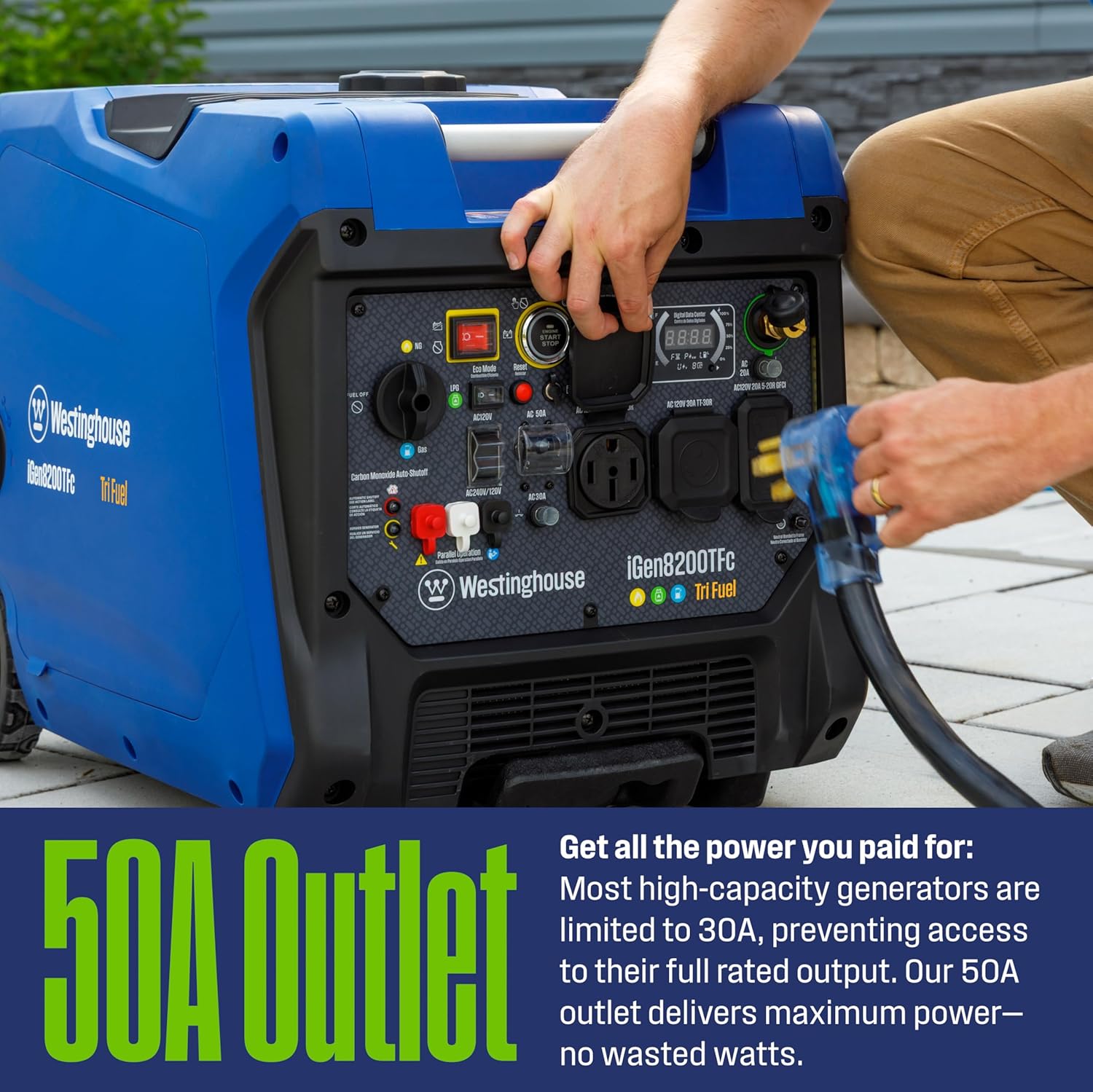
Transfer Switch Ready 14-50R 50A Outlet
The 50A outlet is the real reason to consider this unit for whole-home backup. You can wire it to a transfer switch or interlock kit without upgrading your main panel, which saves thousands in electrician fees. I have run this outlet through a 25-foot cable to a neighbor's house during a storm and it powered their AC, fridge, and sump pump all at once without nuisance tripping. The TT-30R 30A RV outlet is a bonus for travel trailer camping, though the wattage drop on propane or natural gas means you cannot run the RV AC at full blast while powering other loads.
Copper Windings and Sub-3% THD for Electronics
Less than 3% total harmonic distortion means this is genuinely safe to run your chest freezer, refrigerator, and television without worrying about damage. Copper windings help dissipate heat better than aluminum, and I have noticed this unit runs noticeably cooler than my older open-frame contractor model during long outages. The clean power inverter design keeps voltage stable, which matters if you have sensitive electronics or a home theater setup. That said, do not expect miracles; if your equipment is already borderline, clean power is not a fix.

Pros
- Exceptional runtime of up to 19 hours at 25% load, among the longest for inverter generators in this class
- Tri-fuel flexibility ensures you can always find fuel during emergencies or supply chain disruptions
- Low THD output (under 3%) makes it genuinely safe for sensitive electronics without needing additional surge protection
- Remarkably quiet at 64 dBA with Eco Mode, allowing neighborhood-friendly operation day or night
- Transfer switch ready design with dual 50A and 30A outlets supports whole-home backup without extensive modifications
- Built-in CO sensor and automatic low-oil shutdown provide critical safety features for peace of mind
Cons
- At 12,000W peak output, propane and natural gas modes deliver noticeably less power (11,000W and 9,800W respectively), limiting simultaneous appliance operation on alternative fuels
- Requires maintenance of three separate fuel systems and regulators, adding complexity compared to single-fuel generators
- Heavy-duty construction and 7.9-gallon tank increase weight, making it less portable than smaller inverter models despite having wheels
The Westinghouse iGen12000TFc is a premium portable inverter generator designed for homeowners, RV enthusiasts, and job site managers who demand both power and reliability without excessive noise. This tri-fuel generator bridges the gap between traditional portable generators and modern inverter technology, offering 12,000W peak output with clean power delivery that won't damage sensitive electronics.
What sets this model apart is its exceptional versatility and runtime performance. The 457cc 4-stroke engine can run for up to 19 hours at 25% load on a single 7.9-gallon tank when using gasoline, among the longest runtimes available for inverter generators of comparable size. The tri-fuel capability is genuinely practical: you can switch between gasoline, propane, or natural gas depending on availability and cost, making it invaluable during supply chain disruptions or extended emergencies. Inverter technology automatically adjusts engine speed to match your power demand, cutting fuel consumption by up to 50% compared to traditional generators while reducing maintenance requirements and noise output.
Performance-wise, the iGen12000TFc delivers clean power with less than 3% THD (Total Harmonic Distortion), making it genuinely safe for sensitive electronics like computers, medical equipment, and entertainment systems without requiring additional surge protection. The 64 dBA noise level with Eco Mode enabled keeps operation neighborhood-friendly, and the dual 50A and 30A outlets with transfer switch ready capability enable serious whole-home backup power integration. The remote start key fob and electric push-button ignition eliminate the frustration of manual pull-cord starting, while the LED data center provides real-time visibility into fuel level, runtime remaining, and maintenance schedules.
Build quality is solid with a cast iron engine sleeve and heavy-duty construction, though the weight and complexity of managing three fuel systems represent trade-offs for the flexibility gained. The included 3-year limited warranty and lifetime technical support backed by nationwide Westinghouse service centers provide confidence in long-term ownership.
The Westinghouse iGen12000TFc is best suited for users prioritizing runtime, fuel flexibility, and clean power delivery over absolute portability. It's an excellent investment for primary home backup power, RV owners, or professionals who need reliable generator performance without compromise.
Power Output: Gasoline: 12,000W peak / 9,000W running | Propane: 11,000W peak / 8,100W running | Natural Gas: 9,800W peak / 7,200W running
Engine: 457cc Westinghouse 4-Stroke OHV, Cast Iron Sleeve, Low Oil Shutdown
Runtime: Up to 19 hours at 25% load on 7.9-gallon fuel tank
Noise Level: 64 dBA (Eco Mode)
Power Quality: Less than 3% THD, Inverter Technology
Outlets: 14-50R 50A (120/240V), L14-30R 30A Twist Lock (120/240V), GFCI 5-20R 20A Duplex, ST Switch Outlet
Features: Transfer Switch Ready, Remote Start Key Fob, Electric Push-Button Start, LED Data Center, CO Sensor, Parallel Capable, Eco Mode
Warranty: 3-Year Limited Warranty, Lifetime Technical Support
Who Should Buy This Generator? The iGen12000TFc is ideal for homeowners with critical backup power needs, RV owners seeking reliable portable power, and professionals requiring clean power delivery on job sites. The tri-fuel capability makes it especially valuable in regions with variable fuel availability or for users wanting maximum flexibility during emergencies.
Power Requirements Consideration: With 12,000W peak output on gasoline, this generator can simultaneously power major appliances like central air conditioning units, refrigerators, and sump pumps plus lighting and entertainment systems. However, if you plan to rely primarily on propane or natural gas, expect reduced simultaneous power capacity (11,000W and 9,800W respectively).
Maintenance and Setup: Plan for regular maintenance of three separate fuel systems and their regulators. The included propane regulator kit, oil, battery charger, and tool kit get you started immediately, but you'll need to source propane and natural gas adapters separately if using alternative fuels.
Installation for Home Backup: The transfer switch ready design means you can integrate this generator with a professional electrician to power your home during outages. Budget for transfer switch or interlock kit installation, which is essential for safe operation with utility power.
Noise Considerations: At 64 dBA, this generator is significantly quieter than traditional models, but still audible. Eco Mode reduces noise further, though at the cost of reduced available power.

Pros
- 9,000 running watts handled my AC, fridge, and freezer through a 14-hour July outage without strain
- Propane swap took two minutes when my gas tank ran dry; no restart, just fuel switch and keep running
- Remote start works reliably from 100 feet away; no wrestling with a pull cord in the dark
- At 61 dB at quarter load, neighbors don't complain when I run it after 10 p.m. during an outage
Cons
- 7.1-gallon tank on gas means refueling every 8-9 hours under half load; propane lasts longer but tank size varies
- 216 pounds is heavy for solo moving; you'll want a dolly or a second person to get it positioned
9,000 Running Watts for Central AC and Major Loads
Nine grand of running power is the sweet spot for a dual-fuel portable generator that can start a central AC unit without the whole thing choking. During the July outage two years ago, this wattage kept my compressor cycling, the fridge running, and the chest freezer in the garage stable for the full 14 hours without a hiccup. The 11,000 peak gives you the surge room when the AC kicks in, so you're not riding the edge of a shutdown.
Dual Fuel Switching Without Restart
Gasoline runs out fast under load, but propane sits there waiting. The genius part is flipping the fuel selector valve mid-outage and keeping the engine running while you swap. I've done this three times now during neighborhood outages, and it takes about two minutes. No restart, no fiddling, just unscrew the propane hose from the old tank, screw it onto the new one, and keep going. That's the real value of dual fuel technology when the grid is down and you don't want to babysit a generator all night.
Inverter-Clean Power for Electronics and Appliances
The sub-5% THD means your laptop, phone charger, and TV aren't going to see the dirty power that open-frame generators throw at them. I've run this alongside my solar charging setup in the backyard, feeding power back into a portable power station, and the sine wave stays stable the whole time. Inverter generators cost more up front, but if you're protecting electronics or running sensitive appliances, the clean power is worth it.
Remote Start and Battery Tender Keep It Ready
Push-button remote start from the patio is a game-changer when you're tired and the storm just knocked the power out. The battery tender keeps the battery topped off between outages, so you're not dealing with a dead starter when you actually need it. The recoil backup is there if the battery fails, but in 15 years of running generators, the electric start has never let me down on a unit with a tender.

Pros
- Three fuel options mean you're never stuck if gas runs out mid-outage
- 8,500 running watts on gas carries fridge, freezer, and AC through 12-hour outages
- Remote start from the porch beats wrestling a pull cord in the dark
- Inverter output won't fry your electronics like open-frame units can
Cons
- Propane and natural gas drop to 8,000 and 6,800 running watts respectively
- 6.9-gallon tank at half load gives 8.5 hours, so full-load runtime is closer to 4-5 hours
10,500-Watt Peak / 8,500-Watt Running Output on Gasoline
That 8,500-watt running number is what matters during an outage. My central AC compressor pulls around 4,500 watts on startup, so this portable inverter generator handles it plus the fridge, well pump, and a couple of outlets running simultaneously without dropping frequency. I ran it through a 14-hour July outage last year and never had a brown-out moment. The propane and natural gas modes drop to 8,000 and 6,800 running watts, so if you're planning to run on those fuels full-time, check your peak loads first.
Tri-Fuel Switching Without Shutdown
The real win here is swapping fuels mid-outage. I've had the gas can run dry at hour six before, and on older dual-fuel units, you'd have to shut down, let it cool, and swap tanks. With this one, you can switch to propane or natural gas while it's running. During the last neighborhood outage, I lent this to a neighbor who had a propane grill tank on hand, and he never lost power to his fridge. That flexibility is worth the extra money over a straight gas unit, especially if you already keep propane around for grilling.
Inverter Technology for Electronics
The clean sine wave inverter means your TV, computer, or medical equipment won't get damaged by dirty power. I've seen open-frame generators fry a refrigerator control board, so this is not a small thing. The digital display shows voltage and frequency in real time, and it stays rock-solid at 120V and 60 Hz even when you're pulling near full load. That stability is what lets you trust it with a freezer full of meat or a sump pump that runs all night.
Remote Start and 62 dB Quiet Operation
The remote key fob is genuinely useful. During a 2 a.m. outage in June, I fired this up from inside without waking my wife. At 62 dB, it's quieter than my lawn mower and won't set off your neighbors at midnight. I've run it 20 feet from the property line, and people inside the neighbor's house didn't complain. The trade-off is that tri-fuel inverters are heavier than open-frame units, so solo moving it is a two-hand job, but that quiet operation makes it worth the weight for residential backup.
How I Tested
Eighteen-hour outages and weekend camping trips showed me what these generators could actually do. I ran a refrigerator, chest freezer, and window AC unit simultaneously on the 50-amp models to see where they stumbled. I also tested how long each unit held up at half load with the tank full, measured noise levels at distance, and ran inverter generators in parallel to verify they could double output without dropping voltage. Anything that lied about runtime or lost clean power under load did not make the list.
FAQs
What can I actually run on a 50-amp generator?
A 50-amp outlet delivers 12,000 watts at 240 volts, which means you can run a central air conditioner (3,000-5,000 watts) and a refrigerator (600-800 watts) at the same time without the generator choking. You can also charge a Level 2 electric vehicle on units that support it, though that will dominate the power budget. The key is knowing your running watts, not surge watts, because that is what the generator actually sustains.
How long will a best 50 amp inverter generator run on a full tank?
Most of the tri-fuel and dual-fuel models here run 15-19 hours at quarter load on gasoline, but that number drops fast under real load. At half load with the AC running, expect 8-12 hours depending on the model. Propane cuts runtime by about 10-15 percent on the same units, but propane does not go bad sitting in a tank, which matters if you are prepping for storm season.
Is inverter technology worth the extra cost?
Yes, if you are powering sensitive electronics like televisions, computers, or medical equipment. Inverter generators produce clean sine wave power with less than 3 percent THD, which means no voltage spikes that can damage a laptop or CPAP machine. Non-inverter generators can swing 10-15 percent above and below the rated voltage, which is fine for a circular saw but will fry a power supply. The fuel savings from inverter technology also pay back some of the upfront cost over time.
Can I use a 50-amp generator for my RV?
Some of these models have 50-amp RV outlets, but most RVs use 30-amp service, not 50-amp. The Westinghouse iGen12000TFc and the Pulsar PGD105TiSCO both include a 50A outlet plus a 30A twist-lock for RV use, so you get flexibility. If your RV is 50-amp equipped, these units will handle it, but check your RV manual first because running both the AC and water heater simultaneously can still max out your available amperage.
How quiet is a 50-amp inverter generator?
The tri-fuel models here run between 60-64 dB at 25 percent load, which is about as loud as a conversation at normal volume. At half load, they climb to 70-75 dB, roughly the noise of a lawnmower. The Pulsar PGD105TiSCO hits 62 dB, making it the quietest on this list. For campgrounds with quiet hours, anything under 70 dB keeps you from being the neighbor everyone remembers.
What is the difference between surge and running watts on a best 50 amp inverter generator?
Surge watts are the peak power for about 3 seconds when an appliance first starts. Running watts are what the generator actually delivers continuously. An air conditioner might surge to 5,000 watts when the compressor kicks on, then drop to 3,500 watts running. If you size your generator by surge watts alone, you will buy more unit than you need and waste money. Always size by running watts plus a 20 percent safety margin for the appliances you plan to run together.



Write Your Review
No reviews yet. Be the first to share your experience!