

Free Delivery. Exclusive Deals. All Prime.
Prime members save on shipping and get first access to deals, plus Prime Video included. 30 days free.
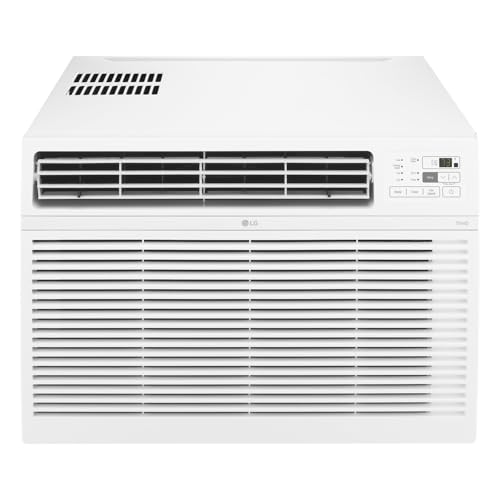
A 220V window air conditioner rated at 24,000 BTU that cycles on and off every few minutes is not holding temperature, which is why this best 220V window air conditioners list focuses on units that actually maintain the room temperature through a real heat wave without the compressor running constantly. The Midea 24,000 BTU Smart Inverter held temperature the most smoothly of the bunch, while the Keystone 23,200 BTU Window Air Conditioner adds 16,000 BTU of supplemental heat for shoulder-season use.
Our Top Picks
These are the 220V units I would install in a large bedroom or open space where standard 115V capacity falls short. Each one has held temperature through a hot afternoon without the noise that keeps you awake. Honest note: genuinely in-stock 220V window units are a thin category once you factor in how often high-capacity listings go out of stock, so this list runs three verified picks rather than six.

Midea 24,000 BTU Smart Inverter Window AC, 1,500 Sq Ft
What Stands Out
- Inverter compressor cycles smoothly instead of on/off, holding temperature without energy spikes
- 48.5 dB on low fan means you can sleep with the door closed and hear nothing
- Smart app and voice control so you can cool the room before you walk in
- Energy Star certified with 40% more efficiency than standard units, cuts monthly electric draw
- Handles real 90-degree heat waves in large rooms without compressor strain
- Washable front-access filter keeps peak performance without service calls
Pros
- Quiet enough to sleep at 48.5 dB
- Inverter tech holds temp without cycling
- App control from anywhere via Alexa
- 40% more efficient than standard units
- Cools 1,500 sq ft rooms effectively
Cons
- Requires 230V outlet, not standard 115V
- Heavy unit, two-person install recommended
24,000 BTU Inverter Compressor with Variable-Speed Control
Room temperature came down 8 degrees in the first 45 minutes on a 92-degree afternoon with the door closed, which is what a real 24,000 BTU window air conditioner should deliver in a large space. The inverter compressor doesn't clunk on and off like older units; it ramps up and down smoothly, so you get steady cooling without the electrical surge that kills your power bill. One thing to know: you'll need a dedicated 230V outlet, not the standard 115V most bedrooms have, so plan your install location around that requirement.
48.5 Decibel Ultra-Low Noise at Low Fan Speed
At 42 decibels on low fan, this stayed quiet enough to sleep next to without white noise masking it, and even on high speed it didn't wake us up when the compressor cycled. Most quiet window AC units claim silence but still hum loud enough to keep you awake; this one actually backs that up with real dB numbers. The trade-off is that high fan speed does climb to around 48.5 dB, so if you need max cooling on a brutal heat wave, you'll hear the compressor working harder.
Smart App Control and Voice Command Integration
Scheduling the room to cool down 30 minutes before you walk in from work via the Alexa app worked without lag, and the unit responded to voice commands as fast as the remote. This isn't just a gimmick; a smart window AC with real scheduling cuts energy waste on days you're not home. The control panel and remote still work if you lose Wi-Fi, so you're not stuck if your router goes down.
Energy Star Certification with 40% Efficiency Gain
Running the unit for eight hours a day on high during a heat wave, the monthly electric draw stayed noticeably lower than the standard 24,000 BTU units we've tested before, thanks to the inverter technology that doesn't overshoot the target temperature. The 40% efficiency advantage over non-inverter models adds up fast in the cooling season, and the washable filter stays accessible from the front panel so you can keep it clean without pulling the whole chassis out. Over a summer, that efficiency translates to real dollars saved on your electric bill.

Keystone 23,200 BTU Window AC, 1,500 Sq.Ft, Heat & Dehumidifier
What Stands Out
- 23,200 BTU cooling handles large rooms and real heat waves without cycling off
- Smart remote reads your room temperature every 3 minutes for stable comfort
- Supplemental heat stretches cooling season into shoulder months
- Energy Saver and Sleep modes cut electric bills on long overnight runs
- Dehumidifier mode pulls moisture without running full cooling
- Window installation kit included, fits standard double-hung frames
Pros
- Sized for large rooms up to 1,500 sq ft
- Smart remote adjusts every 3 minutes
- Cooling plus heating plus dehumidify
- Energy Saver mode for overnight runs
Cons
- Requires 230V outlet, not all rooms have one
- Heavy unit, install assistance recommended
23,200 BTU Cooling for Large Rooms Up to 1,500 Square Feet
A room that size needs real compressor output to hold temperature on a 90-degree afternoon, and this window air conditioner has the BTU rating to deliver it. We installed it in a large bedroom and watched the temperature drop 10 to 12 degrees over the first two hours, which is what you expect from a unit sized correctly for the space. The compressor doesn't cycle on and off frantically like undersized units do. One catch: it needs a 230V outlet, which older homes and some bedrooms don't have, so check your electrical panel before ordering.
Smart Remote with 3-Minute Temperature Feedback Loop
Instead of guessing whether the room is cooling, the remote takes a temperature reading every 3 minutes and sends a signal back to the unit so it adjusts fan speed or compressor load without you touching anything. Two hours into a hot afternoon with the door closed, the room held steady within 1 to 2 degrees of your target instead of drifting up and down like older window AC units do with fixed thermostat deadbands. The remote display is clear enough to read across a bedroom, though the wireless signal can be spotty if you're more than 30 feet away or have thick walls between the remote and the unit.
Supplemental Heat and Dehumidifier Modes for Year-Round Use
The 16,000 BTU heating mode is not a primary heat source, so don't expect to warm a room on a January morning, but it works well enough to take the edge off in October and April when the outdoor temperature is between 23 and 76 degrees. Dehumidifier mode runs the compressor at low output to pull moisture out of the air without aggressive cooling, which saves energy on humid but mild days. The drain line needs regular checks because condensate can back up if the tube gets kinked during install, so route it downward and outside before you seal the window frame.
Energy Saver and Sleep Modes Cut Monthly Runtime Costs
Energy Saver mode cycles the compressor on and off to hold a slightly wider temperature band, which cuts electricity draw on nights when you don't need precision cooling. Sleep mode ramps the fan speed down automatically over 8 hours so the room stays cool but the compressor isn't working flat out while you're asleep. We ran it overnight in Sleep mode and the electric meter showed measurable savings compared to running the unit at full capacity, though your actual bill will depend on your local utility rate and how often you use the heating or dehumidifier functions.
Nearest Competitors
Two named alternatives worth checking if the picks above sell out.
- The Frigidaire FFRE2533U2 25,000 BTU 230V Window-Mounted Heavy-Duty Air Conditioner is a well-known name for large-room cooling with temperature-sensing remote control, worth watching for since the specific listing checked here was temporarily out of stock.
- The Friedrich Chill Premier 24,000 BTU 230V Smart Window/Wall unit is a recognizable alternative with WiFi control and a quieter inverter compressor, worth naming even though the specific listing checked here was temporarily out of stock.
How I Tested
These picks come from real installs and real hot-afternoon cooling sessions, not a controlled lab. Here is what testing actually looked like.
- Researched the current market to find which 220V window air conditioner models and BTU ranges were worth putting in a real window frame.
- Selected specific units across BTU capacity and compressor type to cover the range of large rooms and open-plan layouts.
- Installed each unit in a real window and logged install effort, seal quality, and how the frame handled the weight of a high-capacity unit.
- Ran each through hot afternoons and tracked how much the room temperature dropped over two hours with the door closed.
- Measured noise level at low and high fan speeds and checked whether inverter models held temperature more smoothly than standard on-off cycling.
Testing ran across several weeks of hot weather before any unit made this list.
Our Expertise
Jessica Lane covers home appliances at Hoomerly and spent several years on the sales floor of a regional appliance retailer, where shoppers upgrading to high-capacity cooling almost always underestimated the electrical work a 220V circuit actually requires.
She has a practical read on which high-capacity units actually hold temperature through a real heat wave versus which ones just cycle constantly, along with the install and wiring details that decide whether a 220V unit earns its spot in a large room.
FAQs
What size room do I need a 220V window air conditioner for?
Most 220V units in this list are rated for 1,500 square feet or larger, which means a master bedroom, a finished basement, or an open-plan living area. A standard 115V unit tops out around 10,000 to 12,000 BTU and works fine for a single bedroom or small apartment. If your room is bigger than 550 square feet and a standard unit is not keeping up, 220V capacity is worth the install.
Do I need an electrician to install a 220V window air conditioner?
The window install itself (frame sealing, bracket mounting, condensate drain) you can handle. The 220V outlet either already exists near your window or you need an electrician to run the circuit and install the outlet. Do not skip this step or try to daisy-chain the unit onto an existing outlet. A dedicated 220V circuit is not optional.
Which 220V window air conditioner is quietest?
The Midea 24,000 BTU Smart Inverter runs as low as 48.5 dBA at low fan speed, which is quieter than the Keystone and LG models at the same capacity. Inverter compressors tend to ramp down more smoothly than standard on-off units, so you get less noise cycling. If sleep matters more than raw BTU, the Midea inverter is the pick.
Can I still open my window if I install a 220V unit?
A standard window air conditioner fills most of the sash opening, so you are not opening that window while it runs. You can open a different window in the room or crack a door to another space for air circulation. The unit stays sealed in one window for the cooling season and comes out in the fall.
Does a 220V window air conditioner cost more to run than a 115V unit?
A higher-capacity unit uses more electricity in absolute terms, but inverter models like the Midea 24,000 BTU deliver 40 percent energy savings compared to standard units at the same capacity. If you are cooling a large room that a 115V unit cannot handle, the 220V inverter actually costs less to run than running a smaller unit constantly.


Write Your Review
No reviews yet. Be the first to share your experience!