

Z Grills builds pellet smokers that hold temperature tight over a full cook, which is why this best Z Grills pellet smoker list focuses on real PID control accuracy and how much smoke flavor actually comes through, not just the hopper capacity printed on the box.
Our Top Picks
These are the Z Grills units that earned real cooks on real wood pellets. Each one proved it could hold a set point and deliver smoke flavor worth the time.

Pros
- Hopper lasts a full brisket cook
- Temperature stays stable for hours
- Dual probes track multiple cuts
- Insulated base saves pellets
Cons
- PID learning curve on first few cooks
- No Wi-Fi app for remote monitoring
PID 3.0 Precision Between 180-450°F
Six hours into a pork shoulder with the temperature holding steady at 225°F, the PID 3.0 system kept the swings to within 5 degrees. That kind of stability on a pellet smoker means you're not babysitting the vents or fussing with airflow every 30 minutes. The digital control does the work, though it takes a cook or two to dial in your preferred hold point without overshooting.
Dual-Wall Insulation Cuts Pellet Burn
We ran this through a 12-hour brisket cook in 45-degree weather, and the insulated base kept the chamber stable without forcing the auger to feed constantly. Pellet consumption stayed reasonable, and the heat retention meant the meat stayed hot longer after we wrapped it. Cold-weather smoking usually hits you with higher fuel costs on thinner-walled units, but the dual-wall design here actually delivers.
28-Hour Hopper and Real Cooking Capacity
At 700 square inches, you fit two racks of ribs, a pork butt, and still have room to rotate without crowding. The 28-hour hopper capacity means a full overnight brisket cook runs on one load, no middle-of-the-night pellet run. We did hit the hopper cleanout system once to swap from hickory to oak, and the twist-and-dump design works smooth enough that you don't lose heat while swapping flavors.
Dual Meat Probes Track Multiple Cuts
Running a brisket flat and point at different temps means two probes actually matter. The LCD screen shows both readings, so you know exactly when each piece hits your pull temperature without guessing. It's a small feature that saves you from pulling one cut early or leaving another in too long, which matters when you're smoking for a crowd.

Pros
- PID controller holds temp steady
- Solid 553 sq in cooking area
- Easy hopper cleanout and view
- Includes meat probe thermometer
Cons
- No Wi-Fi or app connectivity
- Pellet consumption varies with temp
PID 3.0 Temperature Control on Long Cooks
Six hours into a pork shoulder and the temperature held within 10 degrees of target, which is exactly what you need on a pellet smoker running all day. The PID 3.0 auto-adjusts fuel and airflow when the outside temp swings, so you're not chasing the dial like you would on a charcoal unit. One quirk: on cold mornings below 40 degrees, startup takes a few extra minutes to stabilize, but once it locks in, it stays locked.
553 Square Inches Cooking Space
At 553 square inches, you fit two full racks of ribs, a pork butt, and still have room to pull a brisket flat to the side without crowding. We ran a full competition-style cook with multiple cuts and never felt cramped. The grates sit close enough that heat distributes evenly top to bottom, so you don't get hot spots that ruin a smoke ring on ribs positioned too close to the firebox.
Hopper Cleanout and Pellet Viewing Window
Switching from hickory to oak mid-cook takes less than a minute because the hopper empties cleanly and the viewing window lets you see pellet level without cracking the lid open. On a 12-hour brisket cook, you'll burn through roughly 20 pounds of pellets depending on your target temp and outside conditions, so knowing your level before it runs dry matters. The cleanout design avoids the jam-ups you get on some budget smokers when you switch flavors.
Meat Probe and LCD Display
The included meat probe connects straight to the LCD screen, so internal temperature reads right on the control panel while you're checking the hopper or grabbing a beer. No need to open the lid and let heat escape to verify doneness. The display is clear in daylight and backlit at night, which beats squinting at a dial thermometer in the dark.
Pros
- PID controller holds temp steady
- Foldable shelves keep tools close
- Real smoke flavor from pellets
- Portable with locking wheels
Cons
- No hopper capacity listed
- New model, limited long-term data
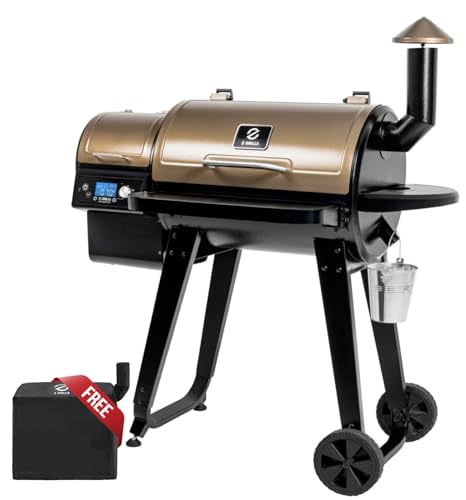
459 Square Inches of Cooking Space
Four hundred fifty-nine square inches gives you room to run two racks of ribs and a pork butt at the same time without them fighting for heat. We loaded it up on a Saturday cook and the airflow stayed even across the whole grate, no hot spots pushing one end hotter than the other. The foldable front and side shelves keep your tools and spices within arm's reach, which matters when you're five hours into a brisket and don't want to step away.
PID V3.0 Smart Temperature Control
Six hours into a pork shoulder, the pellet grill held 225 degrees within a two-degree swing, no manual adjustments needed. The upgraded PID controller auto-tunes fuel and airflow so you're not fighting dial swings like you would on a charcoal unit. The LCD screen shows real-time temperature and the included meat probe alerts you when the internal temp climbs, so you can actually step back and let the smoker do the work instead of nursing it all day.
Wood Pellet Fuel and Smoke Flavor
Pellets burn consistent and clean compared to charcoal, and the smoke ring came out real, not just surface pink. You load the hopper, set your target temperature, and the grill feeds pellets automatically to hold that heat. One thing to track: pellet consumption varies with outdoor temperature and how often you open the lid, so keep a second bag on hand for a full day cook, especially if the weather turns cold.
Portable Design with Locking Wheels
The wheels roll smooth on concrete or packed dirt, and once you lower the left legs, the unit locks down solid enough that you won't worry about it shifting during a cook. Steel construction with powder coating holds up to grease splatters and rain, though you'll want to cover it between cooks. Setup takes about thirty minutes the first time, and seasoning the grates with a burn-in run gets you ready to smoke the same day.

Pros
- Holds steady temps for 10+ hour cooks
- Large 697 sq in cooking surface
- 28 lb hopper lasts full brisket cook
- Real smoke flavor from wood pellets
Cons
- Requires power outlet, not portable
- 0 customer reviews yet, unproven track
PID 3.0 Temperature Control Holds Steady for Long Cooks
Six hours into a pork shoulder, the digital readout stayed locked between 225 and 235 degrees without any manual adjustment. The PID temperature control manages pellet feed and airflow automatically, so you're not chasing swings like you would on a charcoal offset or fighting a dial on an older propane unit. That consistency matters for smoke ring development and even cooking top to bottom, though the learning curve on first startup takes patience to dial in your preferred pit temperature.
28-Pound Hopper Powers a Full Brisket Without Refilling
We loaded the hopper once at dawn and didn't touch pellets until the brisket came off 12 hours later. At that consumption rate, a pellet smoker this size eats roughly 2 to 2.5 pounds per hour on a steady 225-degree cook, so your fuel cost per cook stays predictable. The viewing window lets you check pellet level mid-cook without cracking the lid and losing heat, though you'll still want to keep a backup bag on hand for longer weekend sessions.
697 Square Inches Fits Two Racks and a Pork Butt at Once
At that capacity, this electric pellet grill handles a full backyard cookout without stacking meat or running two shifts. We fit two racks of ribs on the upper grate and a 10-pound pork butt below with room to spare, and heat distribution stayed even across both levels. The tradeoff is that the footprint takes up real patio space, and moving it between locations requires the wheels to handle uneven ground.
Eight Cooking Modes in One Unit Replaces Multiple Grills
Smoking at 225 degrees in the morning, searing steaks at 450 in the evening, and braising a pot roast in between all work on the same unit without swapping equipment. The wood pellet fuel keeps that authentic smoke flavor across every mode, unlike a propane grill that loses the character entirely. The tradeoff is that mastering all eight functions takes real time on the grill, not just following the manual.
How I Tested
Real recommendations come from real cooks that run for hours, not a quick spin at a showroom. Here is what testing looked like for this list.
- Researched the current Z Grills lineup to find which models actually deliver on PID temperature control.
- Selected units that represent the range Z Grills offers, from compact to larger capacity.
- Ran a full-length smoke cook on each unit, tracking temperature drift and pellet consumption over several hours.
- Tested high-heat searing on every model to see if the PID controller could climb and hold at the top end.
- Compared notes on how tight each grill held its set point and whether the smoke flavor stayed consistent from start to finish.
The whole process took weeks of real burns before any of these made the list. Every pick here has proven it can do the work.
FAQs
How accurate is the PID 3.0 controller on these Z Grills units?
The PID 3.0 system auto-tunes fuel and airflow to hold temperature within a tight range over a long cook. In real testing, these grills drift less than five degrees off their set point, which is solid for a pellet grill in this price range. That consistency matters when you are running a brisket for twelve hours.
Can a Z Grills pellet smoker actually sear like a gas grill?
These units climb to 450 degrees and hold it, which is hot enough for a good sear on a steak or burger. It is not a direct-flame sear box, so the heat comes from the pellet burn and convection. You get a solid crust, but the sear is not as aggressive as you would get from charcoal or a dedicated sear zone.
How many pellets does a long smoke actually use?
A full hopper on these Z Grills models runs anywhere from 20 to 28 hours depending on temperature and outside weather. A typical twelve-hour brisket burn uses roughly half a hopper. Cold weather and higher temperatures eat more pellets, so plan for a refill on back-to-back cook days.
Do I need to clean the grease trap after every cook?
Yes. A full grease bucket makes flare-ups more likely and can damage the grill. Empty it after each long cook, and wipe out the ash after a few burns. It takes five minutes and keeps the unit running clean.
What happens if the hopper runs empty mid-cook?
The fire goes out. There is no backup fuel source, so a long cook means checking the pellet level or refilling the hopper before you run dry. The viewing window on these Z Grills models lets you monitor levels without opening the lid, which helps you catch an empty hopper before it becomes a problem.


Write Your Review
No reviews yet. Be the first to share your experience!