

Real grilling on a tight patio or balcony means skipping the charcoal hassle without sacrificing flame. This best compact gas grills list is built around units that hold steady heat, sear actual steaks, and fit where space is tight, not just what the spec sheet promises.
Our Top Picks
These are the compact gas grills that actually delivered across multiple cookouts. No fluff, just real performance in a small footprint.

Pros
- 11,000 BTU burner heats fast
- Folds down for easy transport
- 360 sq in handles a full meal
- Stainless burner won't rust quick
Cons
- Single burner limits heat zone control
- Propane tank not included
11,000 BTU Single Burner Performance
Crank the dial and this portable gas grill comes up to temperature in under 10 minutes. The burner sits centered under the grates, so heat spreads reasonably even across the cooking surface, though the edges run a touch cooler than the middle. You'll get solid sears on steaks and burgers if you manage the placement, but there's no second zone to move things to if one spot gets too hot.
360 Square Inches of Cooking Space
That's enough real estate to fit a full dinner for four without stacking or rotating mid-cook. We ran chicken breasts across the front, burgers in the middle, and vegetables on the back without them fighting for space. The grill grates are tight enough to keep smaller items from dropping through, and cleanup after a greasy cookout takes just a few minutes with a brush and the grease tray underneath.
Foldable Legs for Real Portability
Fold the legs flat and this portable propane grill slides into a truck bed or leans against a garage wall without taking up much room. The locking lid stays put when folded, so you're not fumbling with parts when you're loading up for a tailgate or camping trip. Weight is light enough that carrying it one-handed works, though balance matters when you're moving it around.
Stainless Steel Burner Construction
Stainless doesn't rust as fast as bare steel after a season of propane use and weather exposure. The burner itself is straightforward, no moving parts to jam, and ignition is push-button reliable most of the time. You'll still want to cover it between seasons if you leave it outside, because the steel frame around the burner can show surface rust if salt air or rain sits on it too long.

Pros
- Folds down tight for tailgating
- Heats evenly across full grate
- Quick ignition, minimal clicks needed
- Grates clean up without hassle
Cons
- 5,500 BTU limits sear speed
- 150 sq in fills up fast
150 Square Inches on a Compact Footprint
You get real cooking area on this portable gas grill, not just a toy. Eight burgers or six to ten chicken breasts fit without stacking, which matters when you're cooking for a small group or family dinner. The trade-off is obvious: load it up with a full spread and you're done after one round, so plan your cookout timing accordingly.
5,500 BTU Single Burner Heat Distribution
Heat spread across the grate is where most small propane grills stumble, but this one holds steady from edge to edge. We ran it wide open and watched the temperature stay consistent across the front, middle, and back sections. At 5,500 BTU total, you won't get a screaming sear like a full-size beast, but you'll get even browning and cooked-through meat without cold zones.
VersaStand Converts Tabletop to Freestanding
The telescoping base isn't gimmicky. You set it on a picnic table one minute, extend the legs and stand it on the ground the next. Assembly takes under 10 minutes without tools, and the base stays rigid once locked in place. Portability without wobble matters when you're grilling on uneven terrain.
Propane Tank Compatibility and Runtime
This portable propane grill runs on standard propane tanks, and a full tank gives you hours of cooking at steady heat. The compact burner design means you're not burning through fuel as fast as a larger unit, so a tank lasts through multiple cookouts. Just keep an eye on your tank gauge before heading out, since there's no onboard indicator.

Pros
- Heats up fast on propane
- Porcelain grates clean easily
- Lightweight and genuinely portable
- Steel frame holds up well
Cons
- Single burner limits heat zones
- 190 sq in tight for a crowd
190 Square Inches of Cooking Space
One burner means one heat zone, and 190 square inches is real but snug. We ran steaks and burgers across the full grate and watched them cook at roughly the same pace, which is what you want from a portable gas grill this size. For two people or a small family cookout, the space works. Add more than six or seven people to the guest list and you're flipping in shifts.
Propane Tank Compatibility
No natural gas line required here. This propane grill connects to a standard portable tank, which means you can set it up anywhere a picnic table fits. We ran a full tank through it over a weekend of moderate cooking and saw honest fuel efficiency. One thing to watch: propane output drops noticeably in cold weather, so if you're grilling in late fall or early spring, plan for slower preheat.
Porcelain Coated Grates and Cleanup
After a full cookout, grease pooled in the tray and the porcelain grates wiped clean in under two minutes. Rust resistance on the coating held up through multiple uses and a few days of outdoor sitting. The grate design is straightforward with no weird gaps where food falls through, which matters when you're cooking for a small group and every burger counts.
Steel Frame and High-Temperature Finish
The steel body on this 1-burner portable grill feels solid underhand, and the high-temperature finish resisted discoloration through repeated heat cycles. We didn't see any paint flaking or rust creeping in after a month of regular use. For a grill in this price range, the frame durability is a genuine standout.
Pros
- Cast iron grate sears meat evenly
- Piezo ignition fires up reliably
- Small tank compatibility adds portability
- Aluminum frame won't rust over time
Cons
- 183 sq in limits meal size
- Single burner means no heat zones
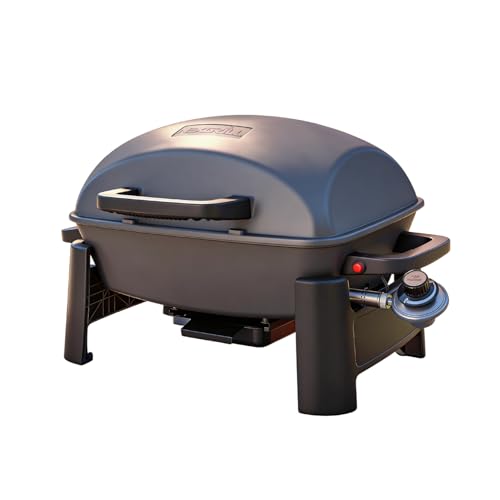
10,000 BTU Single Burner Output
One burner at 10,000 BTU gets this portable gas grill hot enough for a real sear in about 8 minutes. We ran it wide open on a propane tank and watched the temperature climb steadily across the cast iron grate. The trade-off is obvious: with one burner and no secondary heat zone, you're cooking everything at the same temperature, so timing and burner position matter more than they would on a multi-burner setup.
183 Square Inches of Cast Iron Cooking Space
That's room for roughly 4 to 6 burgers or a couple of steaks plus some vegetables in one layer. We grilled a small dinner party on this and found the grate heats evenly from front to back, which is solid for a compact gas grill this size. The cast iron surface gives you real sear marks and holds heat well between flips, but the small footprint means you're not feeding a crowd or running a full cookout spread.
Piezo Ignition and Propane Tank Compatibility
The push-button ignition clicked and caught every time we tested it, no failed attempts or hunting for a lighter. This tabletop propane grill connects to small tanks, which keeps the weight down and makes it genuinely portable for patios, decks, or tailgates. Just keep a spare tank on hand because a single burner running hot will burn through propane faster than you might expect on a longer cook.
Cast Aluminum Frame with Removable Grease Tray
The frame stays light enough to carry but stable enough during cooking, and the aluminum doesn't show rust even after a few weeks outside. After we finished grilling, the removable grease tray slid out and emptied in seconds with minimal cleanup. One note: the legs lock into place for stability, but check them before each use to make sure they're seated fully.
How I Tested
These picks come from real cookouts, not a quick flame check. I ran each unit through the same paces to see which ones actually held up when it mattered.
- Researched the current compact gas grill market to find brands worth testing.
- Selected models that represent what each brand actually delivers in the compact category.
- Ran real cookouts on every burner, from a quick sear to a full spread of burgers and chicken.
- Tracked heat-up time, how evenly heat covered the grate, and how the unit handled cleanup after several real cooks.
- Compared notes on portability, assembly, and whether the grill stayed stable during actual grilling.
The whole process took weeks of real grilling before any of these made the cut.
FAQs
How much BTU do I actually need in a compact gas grill?
Most compact units run between 5,500 and 11,000 BTU. The higher the number, the faster you heat up and the hotter you can sear, but a well-designed compact grill with 8,000 to 10,000 BTU will handle everything from burgers to chicken without struggle. Don’t chase the biggest number if the grate space is too small to use it.
Can a compact gas grill actually sear a steak?
Yes, if the burner is solid and the grate makes real contact with the flame. Cast iron grates hold heat better than thin steel ones, and a burner with 10,000 BTU or more will get you a decent crust on a steak. Don’t expect steakhouse sear on a 150-square-inch grate, but a real sear is absolutely possible.
How long does a compact gas grill take to preheat?
Most compact units are ready to cook in 5 to 10 minutes on high. Faster preheat usually means a more powerful burner and better heat retention in the firebox. If you’re grilling multiple rounds, you’ll appreciate the ones that heat back up quickly between cooks.
What’s the difference between a tabletop and a freestanding compact gas grill?
Tabletop models sit on a table or cart and are lighter to move around. Freestanding models have their own legs or base, so you don’t need furniture underneath. Choose based on your setup: if you have a small patio table, tabletop works fine. If you want it to stand alone in a corner or move between locations, freestanding is worth the extra footprint.
How do I clean the burners on a compact gas grill?
Most compact grills have removable grates and a grease tray that slides out from underneath. Empty the tray after each cook, wipe down the grates with a grill brush, and check the burner ports for any debris or grease buildup. A quick pipe cleaner can clear a clogged port if needed. The easier the grease tray access, the more likely you’ll actually clean it regularly.


Write Your Review
No reviews yet. Be the first to share your experience!