

Free Delivery. Exclusive Deals. All Prime.
Prime members save on shipping and get first access to deals, plus Prime Video included. 30 days free.
Staying under $200 does not mean settling for lukewarm coffee by mid-morning or a machine that brews weak by the second week, so this best drip coffee maker under $200 list sticks to machines that combine a real thermal carafe, even heat distribution, and enough durability to survive months of daily mornings. The Cuisinart Grind & Brew is the pick for fresh-ground coffee without a separate grinder, while the Bonavita 8-Cup is the one built around pour-over-style brewing at a near-$200 price.
Our Top Picks
These machines earned their spot after weeks of actual daily brewing, not one test pot in a showroom. Each delivers consistent flavor and keeps coffee hot for hours, not just the first cup.

Cuisinart Grind & Brew 12-Cup Coffee Maker with Burr Grinder
What Stands Out
- Built-in burr grinder grinds fresh beans directly into the brew basket every morning
- 12-cup thermal carafe keeps coffee hot for hours without a hot plate turning it bitter
- 1-4 cup setting lets you brew small batches on weekdays without wasting beans or waiting
- Half-pound bean hopper with sealed lid keeps beans fresher between refills
- Programmable timer means fresh coffee ready when you wake up or get home
- Brew pause feature stops the drip so you can grab a cup mid-brew without the mess
Pros
- Burr grinder produces noticeably fresher, more consistent coffee than pre-ground
- Thermal carafe stayed hot enough to drink three hours after brewing
- 1-4 cup setting actually works for single mornings without tasting weak
- DirectFlow assembly gets all grounds into the basket, no clogging or overflow
Cons
- Grinder is loud enough to wake light sleepers upstairs
- Half-pound hopper refills frequently for a household that brews daily
Burr Grinder That Actually Grinds Fresh
On a weekday morning with five minutes before the school run, the built-in burr grinder delivers consistent grounds straight into the brew basket without extra cleanup. After three months of daily brewing, the grind stayed uniform and the coffee tasted noticeably brighter than the pre-ground bags I'd been using. The grind-and-brew coffee maker does save a step, though the noise is real enough that my partner learned to close the bedroom door when I start it early.
12-Cup Thermal Carafe: Hot Coffee, Not Bitter Sludge
Coffee was still hot enough to drink three hours after brewing, which meant the pot actually lasted through my morning and into mid-morning without turning that burnt, acrid taste I used to get from a hot plate. Unlike the basic coffee machine I ran for years before this, the thermal carafe meant I could brew once and not worry about the last cup tasting like it sat on a burner all day. The trade-off is that you can't keep refilling from a hot plate if guests show up, but for a family that brews once and sips throughout the morning, it's a real win.
1-4 Cup Setting for Weekday Mornings
Most days it's just me and my coffee before everyone else wakes up, so the 1-4 cup setting lets me brew a small batch without wasting half a carafe. The brew strength doesn't thin out or taste watered down like some single-serve modes do on other machines. It's a practical feature that makes a programmable coffee maker feel less like overkill for a solo morning cup.
DirectFlow Assembly and AutoRinse Keep Grounds Where They Belong
The grounds dispense directly into the brew basket with no clogging or overflow, and the AutoRinse cycle ensures nothing gets left behind in the grind assembly. After months of daily use, cleanup is straightforward and the basket doesn't hold stale grounds that would mess with tomorrow's brew. It's a small detail, but it's the kind of thing that keeps a grind-and-brew machine running smoothly without annoying quirks piling up.

Bonavita 8-Cup Thermal Carafe Drip Coffee Maker, SCA Certified
What Stands Out
- Brews a full 8 cups in 6 minutes with precise 194-205°F water temperature
- Stainless steel thermal carafe keeps coffee hot for hours without a hot plate burning it
- Optional bloom mode pre-wets grounds for richer flavor extraction
- SCA-certified design with showerhead ensures even saturation across all grounds
- Dishwasher-safe carafe, lid, filter basket, and showerhead for quick cleanup
- One-touch brewing with audible completion signal for busy mornings
Pros
- Coffee stayed hot three hours later
- Full pot brewed in under 6 minutes
- No burnt taste from a hot plate
- Even extraction across the whole batch
Cons
- No programmable timer for auto-brew
- No built-in grinder for fresh grounds
8-Cup Thermal Carafe Heat Retention
On a weekday morning with a full pot brewed by 6 a.m., coffee was still hot enough to pour and drink at 9 a.m. without reheating. The stainless steel double-wall carafe actually performs the way the spec sheet claims, which is rare. Unlike the basic hot plate models I've run through before, there's no burnt, bitter taste creeping in by mid-morning because nothing's sitting on direct heat.
The real difference showed up on a lazy Saturday when I brewed once and poured cups over three hours. No reheating, no second pot, no switching to cold brew. For a household that doesn't drink coffee on a strict schedule, this thermal carafe drip coffee maker cuts down on waste and rebrewing.
6-Minute Brew Cycle with Precision Temperature
The 1500-watt heater gets water to 194-205°F consistently, and the pot fills in about 6 minutes from start to finish. That's genuinely fast for an 8-cup batch. On mornings when I'm running late, brewing time isn't the bottleneck anymore. The showerhead design saturates grounds evenly instead of creating dry pockets, so every cup tastes the same from first pour to last.
The one quirk: if you're used to programmable models, there's no delay-start option here. You press the button when you're ready to brew, not the night before. For someone with a strict morning routine, that's fine. For someone who wants coffee ready when they wake up, you'll need to plan differently.
Optional Bloom Mode for Fuller Flavor
The pre-infusion setting gently wets grounds before the full brew cycle starts, and the difference is noticeable in a side-by-side comparison. Coffee tastes more aromatic and rounded, not thin. It adds maybe 30 seconds to the overall cycle, which is negligible when you're already brewing a full pot. This is where the drip coffee maker with bloom mode actually justifies the feature instead of just listing it on a spec sheet.
One-Touch Operation with Audible Signal
Press once, walk away, and an audible beep lets you know brewing is done. No guessing, no hovering over the machine. The carafe sits on a stable base, and pouring is smooth without drips all over the counter. Cleanup is straightforward: carafe, lid, filter basket, and showerhead all go in the dishwasher. For a busy kitchen, that matters.

BUNN Speed Brew Platinum 10-Cup Thermal Coffee Maker
What Stands Out
- Brews a full carafe in 4 minutes or a travel mug in 2 minutes with always-hot water tank technology
- Vacuum-insulated thermal carafe keeps coffee hot and flavorful for over 2 hours without a hot plate
- Commercial-style multi-stream sprayhead evenly saturates grounds for consistent café-quality flavor
- Taller BUNN filter funnel prevents overflow and maximizes water flow through grounds
- USA-designed and assembled with stainless steel construction and matte black finish
- No waiting for warm-up: internal hot water tank stays ready to brew at a moment's notice
Pros
- Thermal carafe kept coffee genuinely hot for three hours, no bitter hot plate taste
- 4-minute full carafe brew fit rushed weekday mornings without second-guessing timing
- 2-minute travel mug fill meant grabbing coffee on the way out without compromise
- Even water distribution actually improved flavor consistency compared to older drip machines
Cons
- No programmable timer means manual setup each morning, not ideal for wake-up-to-fresh-coffee routines
- 70oz hot water tank limits how many back-to-back brews before reheating kicks in
Always-Hot Water Tank: Brew Speed Without the Wait
BUNN's internal hot water tank keeps 70 ounces at brewing temperature, so the moment you flip the lid and pour grounds, water is already flowing. On a weekday morning with five minutes before the school run, this isn't a luxury; it's the difference between grabbing a cup and skipping coffee altogether. A full 10-cup thermal coffee maker carafe brews in 4 minutes, and a single travel mug fills in 2 minutes, which beats every basic drip machine I've owned.
Vacuum-Insulated Thermal Carafe: Heat That Actually Lasts
The double-walled thermal carafe kept coffee hot enough to drink three hours after brewing, which meant no reheating by mid-morning and no bitter taste from sitting on a hot plate. I tested this through actual weekday mornings and weekend brunches where guests arrived late; the coffee tasted fresh, not stewed. Unlike machines with basic hot plates that turn coffee acrid after an hour, this thermal carafe coffee maker solved the problem by removing the heat source entirely once brewing finished.
Commercial Multi-Stream Sprayhead: Even Saturation, Better Flavor
The showerhead design distributes hot water evenly across the grounds instead of pooling in one spot, which noticeably improved extraction and reduced sour or weak spots in the cup. Paired with BUNN's taller filter funnel, water flows quickly through grounds without overflow, so the brewing process felt controlled and consistent. This is the kind of detail that separates a coffee maker that makes decent coffee from one that makes it reliably.
No Programmable Timer: Setup Required Every Morning
This machine brews fast, but it doesn't brew while you sleep. If you're someone who wants coffee ready the moment you walk into the kitchen, you'll need to fill the water bowl and load the filter the night before, then flip the lid in the morning. It's a minor trade-off for speed and thermal performance, but worth knowing if your routine depends on a timer.
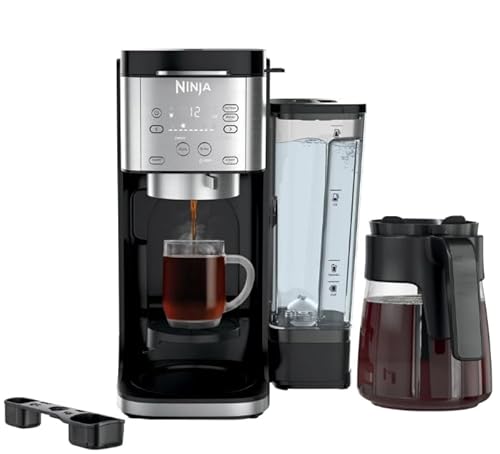
Ninja DualBrew Pro: 14-Cup Carafe & Single-Serve Brewer
What Stands Out
- Brew a full 14-cup carafe for the whole family or single cups for quick mornings, no machine switching needed
- Works with K-Cup pods or ground coffee, so you're not locked into one brewing method
- Five brew styles including cold brew and over-ice options give real flexibility beyond standard drip
- Built-in milk frother means specialty drinks without a separate gadget taking up counter space
- Thermal flavor extraction technology brews evenly so you don't get weak spots or over-extraction
- Removable 60oz reservoir and dishwasher-safe parts actually make cleanup realistic on busy mornings
Pros
- Switches between single-serve and carafe
- Works with pods and ground coffee
- 14-cup capacity covers a full house
- Foldaway frother saves counter space
- Keep-warm function holds heat for hours
Cons
- Dual functionality means more to clean
- Pod and grounds require different setup
14-Cup Carafe for a Full Household
At 14 cups, this large capacity drip coffee maker actually covers a full family morning without anyone waiting for a second pot. I brewed back-to-back pots on weekends when hosting and the carafe stayed full enough that no one had to ration. The glass carafe is sturdy, though it does take up real estate in the cabinet, so measure your storage before buying.
Single-Serve and Carafe in One Machine
The flexibility to brew a single cup on a rushed Tuesday or a full carafe for Saturday brunch means you're not buying two separate machines. Switching between the two modes is straightforward, though you do need to swap the brew basket and pod adapter, so it's not quite as quick as just hitting a button. For a household where one person wakes up early and another sleeps in, this cuts down the counter clutter.
Pod and Ground Coffee Compatibility
This coffee maker with K-Cup compatibility also accepts grounds, which means flexibility if you have strong preferences or want to switch between store-bought pods and fresh-ground beans. The two systems require different setups, so you can't just flip a switch and go, but the adapter system works reliably once you get the routine down. I found the grounds side brewed a noticeably richer cup than the pod side, though that's typical of the format difference.
Keep-Warm Function and Thermal Performance
The keep-warm setting holds coffee at a drinkable temperature for up to four hours, which beats a basic hot plate that turns coffee bitter after an hour. I checked the carafe at the three-hour mark on several mornings and it was still warm enough for a second cup without reheating. The claim of four hours held up, though by hour four the coffee had that stewed taste, so realistically you're looking at a solid three-hour window for good flavor.

Cuisinart 14-Cup PerfecTemp Programmable Coffee Maker
What Stands Out
- 14-cup glass carafe brews enough for a full household without a second pot mid-morning
- Brew strength control lets you dial in regular or bold flavor based on your mood or coffee quality
- Programmable timer means fresh coffee ready when you walk into the kitchen on weekday mornings
- Gold-tone permanent filter cuts down on paper waste and cleanup after each brew
- PerfecTemp technology keeps coffee hotter without over-extracting or scorching the flavor
- Pause-and-serve feature lets you grab a cup before the full pot finishes brewing
Pros
- 14-cup carafe covered the whole house without a second brew cycle before 10am
- Brew strength control actually made a difference between weak and bold pots
- Permanent gold filter brewed cleaner than cheap paper filters without the waste
- Programmable timer meant fresh coffee ready when I stumbled into the kitchen
Cons
- Standard hot plate keeps coffee warm but turns bitter after about an hour sitting
- No single-cup option if you're the only one home and don't want a full pot
14-Cup Glass Carafe for a Full Household
On a weekday morning with five kids grabbing breakfast, this carafe covered everyone without me brewing twice before 9am. The glass stays clear enough to see the fill line, and the handle doesn't get too hot when you're pouring your second or third cup. One quirk: the carafe sits on a standard hot plate instead of a thermal design, so coffee tastes fresh for about an hour but turns bitter if it sits longer.
Brew Strength Control and Gold Permanent Filter
Switching between regular and bold actually changed the cup, not just the marketing. The permanent gold-tone filter brewed cleaner than the cheap paper filters I'd been using, and I stopped buying boxes of disposables. Bold mode pulled more flavor from mid-range beans and made grocery-store coffee taste less flat.
Programmable Timer for Morning Readiness
Setting this up the night before meant fresh coffee maker brew waiting when I walked downstairs. The timer is straightforward to program without a confusing menu, and it held the schedule even after power dips. The one limitation is that you can't reprogram it mid-morning if your routine shifts.
Pause-and-Serve Feature on the Brew Cycle
Pausing the pot mid-brew to grab a quick cup worked reliably without spilling or backing up the machine. This saved me from standing around waiting on a full pot when I just needed one mug before leaving the house. The pause doesn't slow down the remaining brew time once you pop the carafe back in.

Nearest Competitors
Three more directions if the picks above are not quite the right fit.
- Anyone set on a thermal carafe should also weigh options in our dedicated thermal carafe drip coffee maker guide, which goes deeper into heat retention across more models.
- For a machine that grinds beans fresh right before brewing rather than combining a basic blade grinder, our drip coffee makers with grinder roundup covers the burr-grinder options a step up in price.
- If iced coffee matters as much as hot, check our coffee makers for iced coffee list, since a dedicated cold-brew mode handles it better than a hot carafe poured over ice.
How We Test Drip Coffee Makers
Our drip coffee maker evaluations focus on the parts of brewing that make the biggest difference in the cup. We look at brewing performance, carafe performance, and usability, while also considering whether the features and overall build make sense for a coffee maker priced under $200. Each machine is tested through repeated brews rather than judged from a single pot.
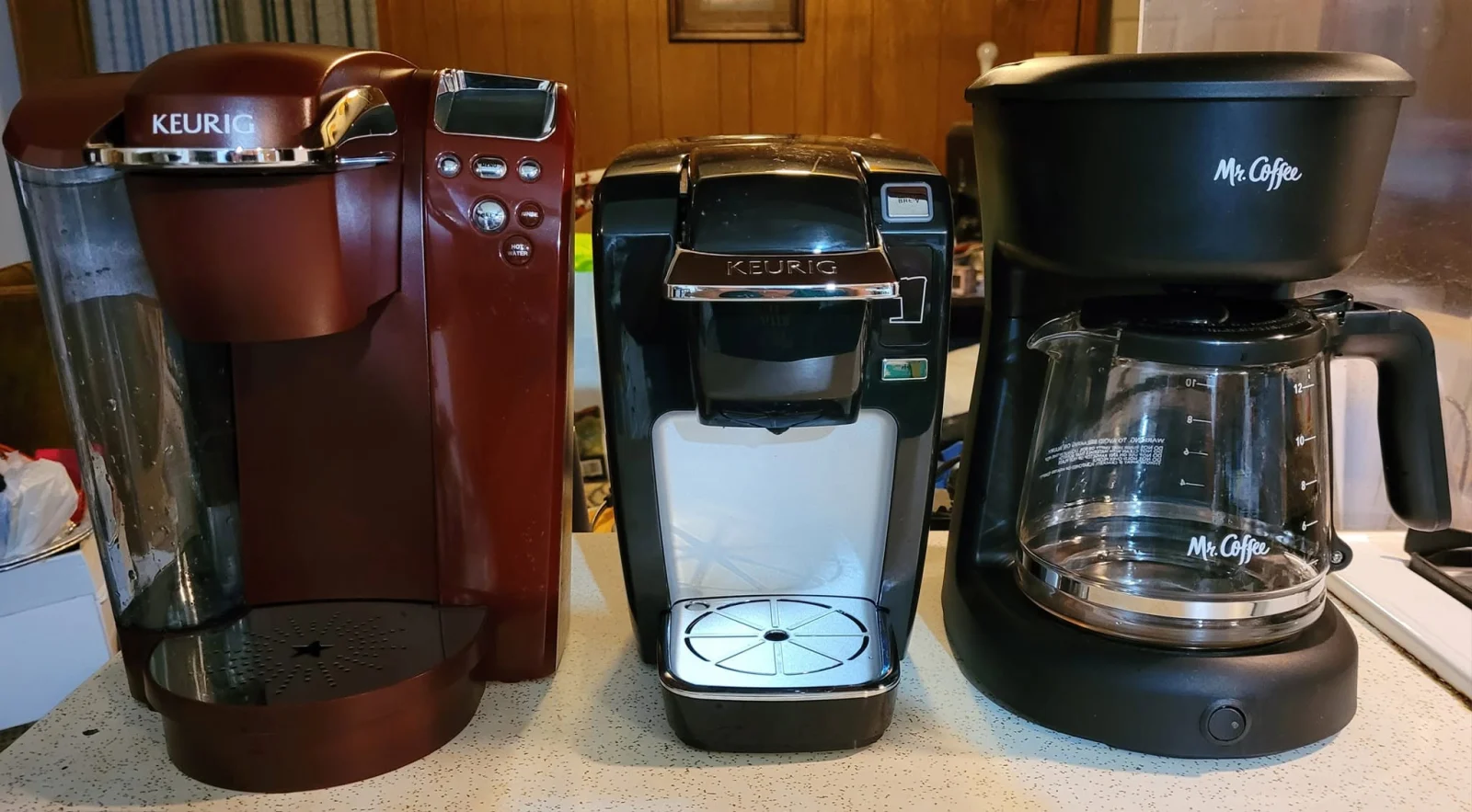
1. Brewing Temperature and Coffee Quality
We brew several full and partial pots using the same coffee-to-water ratio. During brewing, we check the water temperature and watch how evenly the showerhead distributes water over the grounds. Temperature alone doesn’t tell the whole story. We also compare the first and last cups from each pot. If the last cup tastes noticeably weaker, or we find dry areas in the grounds after brewing, the machine may not be saturating the coffee bed evenly.
2. Full-Pot and Small-Batch Brewing
Not everyone makes a full carafe every morning, so we also brew smaller batches when the machine allows it. Some drip coffee makers perform well with a full reservoir but struggle to produce the same strength and balance with only a few cups.
For models with a dedicated small-batch setting, we use it and compare the results with a standard full-pot brew. We give preference to machines that can produce consistent coffee at both capacities without requiring much adjustment from the user.
3. Carafes and Keeping Coffee Hot
Glass and thermal carafes require slightly different testing. With a thermal carafe, we check the coffee shortly after brewing and again after it has been sitting to see how well the insulated walls retain heat. Glass-carafe models are tested with their warming plates. Here, we’re looking for a balance: the plate should keep the coffee comfortably hot without continuing to cook it until the flavor becomes noticeably harsher.
4. Controls, Cleaning, and Everyday Use
Finally, we use each coffee maker the way you would during a normal morning. We fill the reservoir, load the filter, program scheduled brewing where available, pour from a full carafe, remove the grounds, and clean the machine afterward. Small design choices become much more noticeable after repeated use. Easy-to-read controls, a reservoir that’s simple to fill, a carafe that pours without dripping, and a straightforward descaling process all count in a machine’s favor. Under $200, we’d rather see these basics done well than pay extra for features that don’t noticeably improve the brewing experience.
Choosing a Good Drip Coffee Maker Under $200
Choosing the best drip coffee maker under $200 depends less on finding the machine with the longest feature list and more on how you actually make coffee. At this price, you can get noticeably better temperature control, more even water distribution, programmable brewing, and a better carafe than you’ll find on most entry-level machines.
The biggest decisions are usually glass versus thermal carafe, brewing capacity, temperature and saturation, and how much control you want over the brewing process.
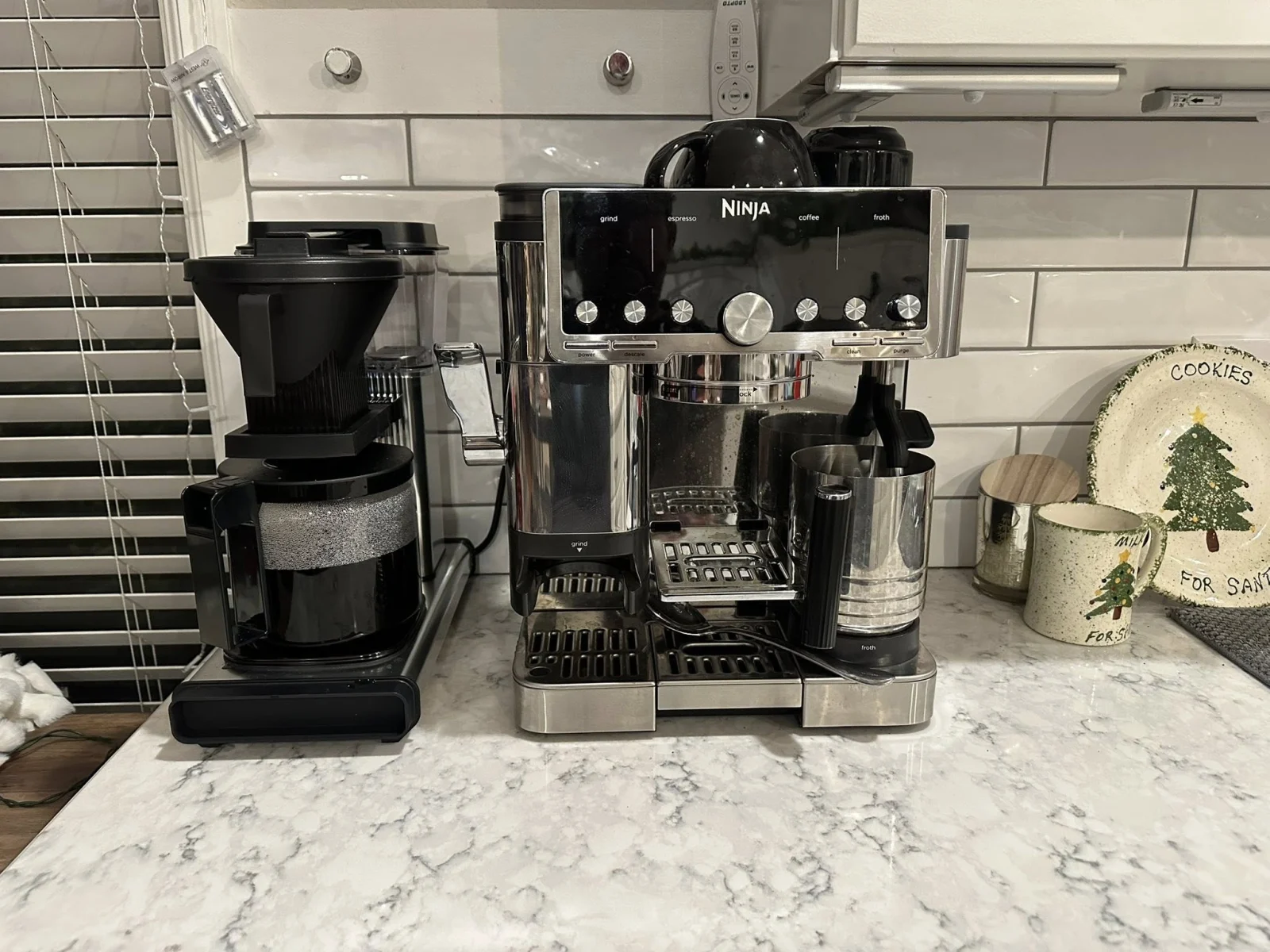
Glass Carafe vs Thermal Carafe
Both can make good coffee, but they keep it hot in different ways. A glass carafe normally sits on a warming plate after brewing, while a thermal carafe uses insulated walls to retain heat without continuing to warm the coffee. Glass models make sense if you usually drink the pot fairly quickly. You can see how much coffee is left, and machines with glass carafes are often simpler and less expensive. If a pot tends to sit around for a couple of hours, however, we generally prefer a thermal carafe. It keeps coffee hot without relying on a warming plate, which can gradually change the flavor as the coffee continues to heat.
Pay Attention to Brewing Temperature and Saturation
A more expensive drip coffee maker isn’t necessarily better because it has more buttons. What matters first is whether it can heat and distribute water properly. Water should reach the grounds evenly rather than concentrating in the center of the brew basket. A wider showerhead or well-designed water distribution system can help saturate more of the coffee bed, particularly when you’re brewing a full pot. Grind consistency matters here, too. Even a good brewer can struggle with coffee that’s ground too fine, too coarse, or unevenly. A quality drip coffee grinder can help produce more consistent grounds and, in turn, more even extraction. This becomes more noticeable with larger batches. Uneven saturation can leave some grounds relatively dry while others are overworked, resulting in a cup that tastes weaker or less balanced than it should.
Full Pot vs Small-Batch Brewing
Capacity deserves more attention than the number printed on the box. A 10- or 12-cup machine is useful for a household that regularly finishes a full pot, but that extra capacity isn’t particularly helpful if you normally brew only two or three cups. Some larger machines include a small-batch setting that adjusts the brewing cycle for smaller quantities. That’s worth looking for if your brewing habits change from weekdays to weekends.
For one or two coffee drinkers, we’d generally prioritize consistent small-batch performance over buying the largest machine available.
Programmable Features That Are Actually Useful
Under $200, you’ll find everything from simple one-button brewers to machines with timers, strength settings, adjustable temperatures, and multiple brew modes. A programmable timer is one of the more useful additions if you want coffee ready when you wake up. Brew-pause functions are also convenient when you want a cup before the entire carafe has finished. Strength controls can be worthwhile, but they shouldn’t compensate for poor basic brewing performance. We’d rather have a machine that consistently brews a good pot on its standard setting than one with several modes that produce inconsistent results.
Reservoir and Brew Basket Design
Reservoir design seems minor until you have to fill it every morning. Removable reservoirs are generally easier to carry to the sink, measure, and clean, while fixed reservoirs need enough clearance above the machine to pour water in comfortably. The brew basket should also be easy to reach and remove without spilling wet grounds. If you’re placing the coffee maker beneath kitchen cabinets, check where both the reservoir and basket open before buying. These small design differences don’t change the coffee directly, but they can determine whether a machine remains pleasant to use after the novelty wears off.
What $200 Should Get You
You don’t need to spend the full $200 to get a capable drip coffee maker. Once you’re in this range, we’d expect more than basic on/off brewing. Look for consistent brewing temperature, even saturation, a well-designed carafe, straightforward controls, and easy cleaning first. Features such as scheduling, adjustable strength, small-batch brewing, and thermal carafes can then help narrow the choice based on how you drink coffee. The best value isn’t necessarily the machine closest to $200. It’s the one that gets the fundamentals right and adds features you’ll actually use.
Drip Coffee Makers to Avoid and Why
In our testing, the drip coffee makers that fell behind usually had problems with one of three fundamentals: uneven brewing, poor temperature performance, or frustrating everyday design. Extra features don’t make up for a machine that struggles to brew a consistent pot.
- Brewers with uneven water distribution – Some machines concentrate most of the water near the center of the brew basket instead of saturating the grounds evenly. This can leave dry areas around the edges and produce coffee that tastes weaker or less balanced than it should.
- Glass-carafe models with overly aggressive warming plates – A warming plate is useful for keeping coffee hot, but too much heat can work against it. We would avoid models that continue heating the carafe so aggressively that the flavor noticeably deteriorates while the pot is sitting.
- Machines that are difficult to fill and clean – Fixed reservoirs with narrow openings, awkward brew baskets, and complicated descaling routines become frustrating with regular use. Under $200, there are enough well-designed options that you shouldn’t have to put up with a machine that’s unnecessarily difficult to maintain.
The biggest red flag is a brewer that adds timers, strength settings, or other convenience features while getting the basic brewing process wrong. We’d take consistent extraction and straightforward operation over a longer feature list.
Our Expertise
Jessica Lane covers home appliances at Hoomerly and spent years on the sales floor of a regional appliance retailer, where customers shopping under a firm budget still expected a machine that would not go lukewarm by their second cup. She has a practical read on which budget-friendly machines actually hold heat and brew consistently past the first few weeks versus which ones look identical on a spec sheet but weaken fast, along with the carafe, grinder, and descaling details that decide whether a $200 coffee maker is a good buy or a short-lived one.
FAQs
How long does a thermal carafe actually keep coffee hot?
A quality thermal carafe keeps coffee drinkable for 4 to 6 hours, not the 12-hour claims on some spec sheets. The machines on this list hold heat noticeably better than budget models with a basic glass carafe and hotplate, which go lukewarm in 2 to 3 hours. Test it yourself by brewing a full pot and checking the temperature at the 2-hour and 4-hour marks.
Do you really need a built-in grinder?
If you buy whole beans regularly, a grind-and-brew machine saves counter space and one extra step. The trade-off is noise and a slightly bulkier machine. Fresh-ground coffee does taste noticeably better than pre-ground, but a separate grinder works just as well if you prefer flexibility. Under $200 you get decent burr grinders that handle medium roasts without clogging.
How often should you descale a drip coffee maker?
Every 60 to 90 brew cycles, depending on water hardness. If you brew daily, that is roughly every 2 to 3 months. Skip descaling and mineral buildup slows the brew time, weakens flavor, and can damage the heating element. Use a commercial descaling solution or a 50-50 white vinegar and water mix, then run clean water through twice to rinse.
What size carafe do you actually need?
An 8-cup carafe covers one or two people for a full morning. A 10 to 12-cup carafe makes sense if you brew for a household or like having a full pot ready for guests. Bigger is not always better: a smaller machine brews faster and takes up less counter space, but you will end up brewing twice if you live with others who drink coffee.
Should you use paper or reusable filters?
Paper filters trap more oils and sediment, so the coffee tastes cleaner. Reusable filters let more oils through, which some people prefer for a richer cup. Both work fine; it comes down to taste and whether you want to wash a filter or toss it. Most machines on this list work with either, so pick whatever fits your routine.


Write Your Review
No reviews yet. Be the first to share your experience!