

Free Delivery. Exclusive Deals. All Prime.
Prime members save on shipping and get first access to deals, plus Prime Video included. 30 days free.
The coffee is cold, the ground feels colder, and someone is asking whether a phone can survive one more night at camp. Solar blankets for camping solve different cold weather problems: insulation, dry ground cover, or power for essential devices. After comparing 3 models, the Amazon Basics Camping Blanket is the best fit for warmth, with 80% wool, 20% synthetic fibers, and care instructions for cold water. The Renogy Camping Blanket is the alternative pick for solar charging, with 400 watts and UL 61730 listing.

Pros
- 80% wool helps trap body heat
- 20% hypoallergenic synthetic fibers add durability
- 70 x 60 inch size for outdoor use
- Designed for camping, hiking, and campfire warmth
Cons
- Hand wash recommended for light cleaning
- Dry cleaning recommended for heavy soiling
- Outdoor-focused style may not suit indoor bedding
Pros
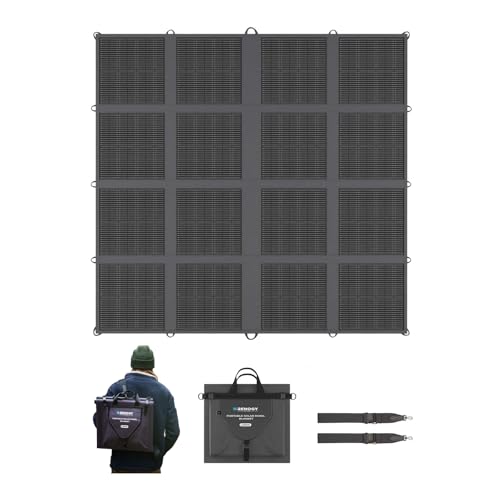
- 400W output for camping, RV, marine, and off-grid use
- 16.09 lb foldable blanket design for easier storage
- Folds to 16.54 x 15.83 x 4.13 in
- 25% efficiency with 16BB N-Type cells
- UL 61730 certified with listed CE, RoHS, FCC claims
Cons
- MC4 output only; 4-in-1 adapter sold separately
- Output varies with sun, shade, temperature, and cables
- Requires tie-downs, stakes, or weights in windy campsites

Pros
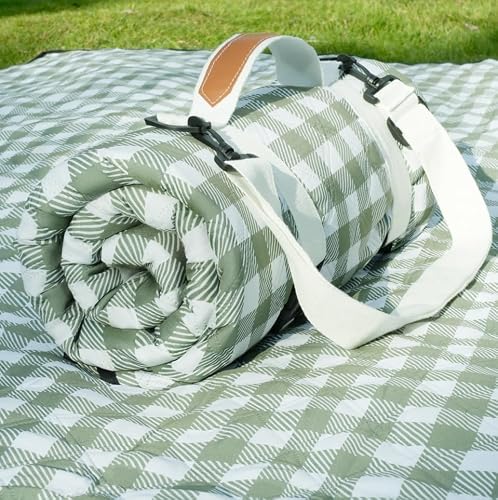
- 55 x 60 inch size for ground cover or picnics
- Lightweight 5.7 oz design for easy packing
- Folds into a mini storage bag
- Ripstop polyester is tear resistant
- Water resistant and quick drying
Cons
- No insulation or warmth rating listed
- Water resistant, not listed as waterproof
- Thin 0.04 inch profile offers little cushioning
How We Chose Camping Blankets for Cold Weather Camping
Cold campsites ask more from a blanket than a backyard picnic does. According to the National Park Service, hypothermia can happen above freezing when a person gets wet, so insulation, dryness, and ground separation matter.
- Insulating value or capacity: The Amazon Basics Camping Blanket is the warmth-first pick because it uses 80% wool with 20% synthetic fibers. Wool is useful at camp because the goal is to trap body heat while sitting near a fire pit, sleeping in a shelter, or adding a layer over a bag. For power rather than insulation, one pick supplies 400 watts, which is better suited to charging compatible stations than warming a person directly.
- Material and durability: The Orga’Neat Camping Blanket uses ripstop polyester and is described as water resistant, sandproof, and tear resistant. That combination is useful when the blanket is working as a ground cloth outside a tent, where twigs, grass, rocks, and insects are part of the site. Among our picks, material approaches range from an 80% wool blend to polyester fabric to solar cells built into a foldable panel blanket.
- Size and weight: The group covers very different jobs, so packed size matters as much as open size. One pick opens to 55 by 60 inches and weighs 5.7 ounces, which makes it the easiest to carry for backpacking or a quick sit-down spot. The solar-focused alternative weighs 16.09 pounds and folds to 16.54 by 15.83 by 4.13 inches, so it belongs more in a vehicle, RV, van, or base camp than in a jacket pocket.
- Ease of cleaning or packing: Cleaning needs differ sharply across the 3 picks. The wool-blend option calls for hand washing with cold water and wool-specific detergent, with line drying after washing. The polyester ground blanket dries fast and packs into a small storage bag, while the solar option folds into a 16-fold layout for storage in tight campsite spaces.
- Lid or closure design: None of the 3 picks is a lidded container, so lid design was not treated like it would be for a cooler or insulated water jug. For blankets, the closest equivalent is how the product secures or closes for use and storage. One option includes a mini storage bag, while the solar alternative can be secured with tie-downs, stakes, or weights in windy campsites.
We excluded summer or three-season-only gear when it was not rated for freezing temperatures, because cold weather camping puts a premium on warmth and dryness. We also excluded home space heaters used inside tents without ventilation because the U.S. Consumer Product Safety Commission warns that carbon monoxide is colorless and odorless, and children’s toy tents and sleeping bags do not address adult campsite warmth or power needs.
The Competition
These are other camping blankets we looked at but did not put on our main list.
If you want a simple emergency layer, Arcturus Emergency Blanket measures 60 by 82 inches and is water resistant. That coverage is useful, but it does not match the main list as closely because our top pick focuses on an 80% wool blend for warmth, while our alternative pick handles charging needs.
For a lighter emergency backup, Don’t Die In The Woods Emergency Blanket is also water resistant, but its listed details do not give the same insulation numbers as our top pick. The main list also includes a 400-watt solar alternative, so this option sits closer to emergency shelter gear than to the combined warmth and power problem behind this search.
Prefer a blanket that leans into reflective emergency design? LYN Emergency Blanket lists solar charging, an aluminum build, and water resistance, which makes it relevant for poor weather planning. Still, the main solar alternative gives a clear 400-watt output figure and UL 61730 listing, so it is easier to judge for power-station use.
And if certification is the main concern, Renogy Product lists solar charging and UL listing. It remains outside the main list because the selected solar alternative states 400 watts and a 16-fold design, two numbers that make its camp role clearer.
FAQs
What matters most for cold weather camping?
Warmth and dryness matter before convenience. The National Park Service says hypothermia happens when the body loses heat faster than it can produce it, and it can occur above freezing if rain, sweat, or submersion leaves a person wet.
Should a camping blanket go under you or over you?
For cold ground, under-body insulation can be as important as a top layer. The National Park Service recommends insulating from the cold ground, and our picks include options from a 55 by 60-inch ground layer to a heavier blanket intended for warmth.
Can a solar camping blanket replace a warm blanket?
No, solar charging and insulation are different jobs. In our picks, the power-focused option is rated at 400 watts, while the warmth-focused option relies on an 80% wool blend to trap body heat.
Is it safe to use a heater in a tent instead?
Be cautious with fuel-burning heat sources. The U.S. Consumer Product Safety Commission says carbon monoxide is produced by burning fuel, and fuel-burning stoves, heaters, or wood stoves should not be used inside a tent or other enclosed space without proper ventilation.
Sources
- Hypothermia, National Park Service. NPS guidance on preventing hypothermia outdoors.
- Carbon Monoxide Questions and Answers, U.S. Consumer Product Safety Commission. CPSC guidance on carbon monoxide hazards from fuel-burning devices.




Write Your Review
No reviews yet. Be the first to share your experience!