

Free Delivery. Exclusive Deals. All Prime.
Prime members save on shipping and get first access to deals, plus Prime Video included. 30 days free.
When the cocoa freezes before the marshmallows toast, the shelter setup is losing the argument. Wood burning tent stoves add controlled heat, a cooking surface and a chimney path for smoke. After comparing 6 models, the Avoforest Wood-Burning Tent Stove stands out for its 7 chimney sections, 12-inch pipe sections and silicone glass window. The unho Wood-Burning Tent Stove is the alternative pick for campers who want a stainless steel build with 7 chimney pipes.

Pros
- Chimney breaks down into 7 sections, each 12 inches long, for easy packing
- Glass viewing window lets you monitor the fire with an adjustable damper
- Iron stove body with stainless steel chimney for durability
- Includes fire tongs, ash brush, gloves and a drain screen for ash filtering
- All accessories pack inside the stove for one-box transport
Cons
- At 15.35 pounds it adds notable weight to a camping or hunting pack
- Glass window is made of flame-retardant silicone fiber, not solid glass
- Requires a full outdoor burn-in before first use, adding an extra step

Pros
- Stainless steel construction for outdoor durability
- Includes 7 chimney pipes for venting combustion gases
- Large ceramic glass window listed in the size details
- Compact 15.7 x 7.6 x 9.5 in stove body
- Stable legs and airflow control for combustion
Cons
- 22 lb weight is heavier than some camping stoves
- For outdoor use with strict clearance from flammable items
- Legs must be assembled before use

Pros
- 3000 in³ firebox for quick, long lasting heat
- Damper and ventilation holes help control fire and smoke
- Detachable 7 x 20 inch shelves for outdoor cooking
- Includes 8 chimney pipes plus shovel, scraper and gloves
- 3mm reinforced alloy steel panels resist deformation
Cons
- 58.6 lb weight may be bulky for transport
- 103.15 inch height needs adequate tent clearance
- Designed for camping use, not a home fireplace stove
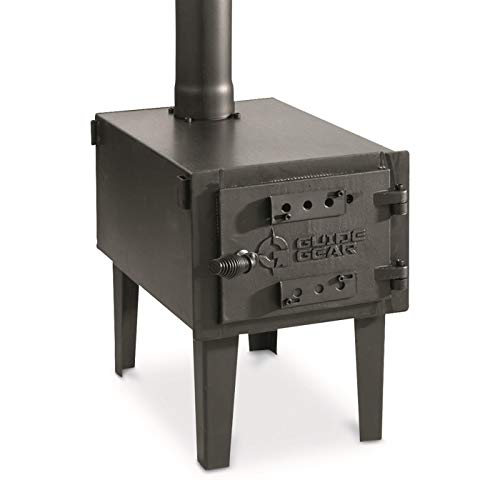
Pros
- Portable design with detachable legs and interlocking stove pipes
- Galvanized steel fire box with heat resistant finish
- Cast iron front door with air vent holes
- Doubles as a cooking surface for pots, saucepans, and boiling water
- Stove packs inside itself for easier transport, weighs 42.4 pounds
Cons
- Intended for outdoor use only, not a home heating solution
- No stated heating capacity or burn time in the product data
- Cast iron and steel construction adds notable weight for a portable stove

Pros
- 2 in 1 tent stove and oven for outdoor cooking
- Stainless steel construction for high heat use
- Multiple secondary air inlets for even cooking
- Includes temperature gauge, smoke pipe, gloves, hooks
- Anti slip feet help keep the stove stable
Cons
- Camping stove design, not a listed home heating appliance
- Standard size and silver color only listed
- 15.4 lb weight may be bulky for some trips

Pros
- 6 detachable chimney pipes extend up to 73.23 inches
- Includes spark arrestor, gloves, ash hook, stakes, and ropes
- Iron and stainless steel construction for outdoor use
- Flat top supports boiling, frying, and heating food
- 14 lb weight with side shelves that can work as handles
Cons
- First burn must be done outdoors for about 30 minutes
- Requires dry firewood to reduce smoke and improve combustion
- Not for use in a fully sealed tent
What Matters in a Wood-Burning Tent Stove for Winter Camping
Cold weather camping asks more from a stove than a backyard fire pit does. The right model needs enough chimney height, controlled airflow and a body material that can handle repeated heat cycles.
- Season rating and capacity: A stove for freezing trips should be judged by how much fuel it can burn and how steadily it can move smoke outside the shelter. Among our picks, chimney systems run from 5 interlocking pipes to 8 pipes, which affects how easily the pipe can be matched to a tent opening. Firebox capacity is listed on one larger pick at 3000 cubic inches, which matters if you want longer burn time between refueling.
- Stove jack fit: A wood-burning stove should pair with a shelter that has a proper stove jack, not a random fabric opening. The Avoforest Wood-Burning Tent Stove uses 7 chimney sections, and each section is listed at 12 inches, giving campers a modular pipe stack to route through a jack. Its silicone glass window lets you check the flame while the door stays closed.
- Pole structure and wind resistance: The stove is only one part of a winter shelter system, because wind can shift fabric, pipe and guy lines at the same time. One of our picks includes ground stakes and ropes for pipe stability, while another uses detachable 7-inch by 20-inch shelves that should be kept clear of tent walls. Campers should also make sure legs are fully unfolded, since several listings warn against direct contact with the floor.
- Weight and pack size: Packability changes quickly when a stove has a larger body, extra shelves or a thicker firebox. The Vevor Wood-Burning Tent Stove is listed at 54 pounds, and its reinforced steel panels are 3mm thick. That is a better fit for vehicle-supported camps than for long carries where every pound matters.
- Ventilation and carbon monoxide: According to the U.S. Consumer Product Safety Commission, carbon monoxide is a colorless, odorless gas produced by burning fuel, charcoal and wood. The Vrygle Wood-Burning Tent Stove has 6 detachable chimney pipes extending up to 73.23 inches, and the pipes are described as fire resistant and water resistant. Its first burn should be done outdoors for about 30 minutes, which helps reduce initial smoke before any tent use.
We excluded summer or three-season-only gear that is not meant for freezing conditions, home space heaters used inside tents without ventilation and children’s toy tents or sleeping bags. Those categories do not solve the winter shelter problem, and fuel-burning devices add risks when the shelter is not designed for them.
Other Wood-Burning Tent Stoves Worth Considering
These are other wood-burning tent stoves we looked at but did not put on our main list.
If you prefer stainless steel over a silicone-focused window setup, Gonex Wood-Burning Tent Stove is an alternative worth noting. Its stainless steel build lines up more closely with our alternative pick than with our top pick, but the available comparison detail is limited to 1 material point rather than pipe count or firebox capacity.
For campers who want a simpler steel body, Oheyaq Wood-Burning Tent Stove takes a different route. Its steel build gives it 1 clear construction detail, but it lacks the listed chimney count and window information that helped separate the main picks.
Height is the reason to look at Kungka Wood-Burning Tent Stove. It lists a 6-foot setup and a stainless steel build, which gives it a more concrete chimney reference than several alternatives, though our main list includes models with pipe counts from 5 to 8 for easier comparison.
Glonerle Wood-Burning Tent Stove stays in the same stainless steel lane as several other alternatives. With 1 listed material detail and no stated firebox size, it is harder to judge against our top pick, which gives more information about chimney sections and the flame-viewing window.
FAQs
Can a wood-burning tent stove be used in any winter tent?
No. A shelter needs a proper stove jack and enough clearance around the stove pipe, not just a cold-weather label. Among our picks, chimney setups range from 5 interlocking pipes to 8 pipes, so the pipe path has to match the shelter design.
How important is chimney height in snow and wind?
Chimney height affects how smoke exits and how the pipe clears the shelter. Our picks include detachable pipe systems up to 73.23 inches, and one larger setup includes 8 pipes for more height adjustment.
What is the carbon monoxide risk with wood-burning tent stoves?
According to the U.S. Consumer Product Safety Commission, carbon monoxide is colorless and odorless, and it can come from burning wood. Never use a fuel-burning stove inside an enclosed tent without proper ventilation, and watch for symptoms such as headache, dizziness, weakness, nausea and confusion.
What else helps prevent heat loss during winter camping?
The National Park Service says hypothermia happens when the body loses heat faster than it can produce it, even above freezing if a person gets wet. Staying dry, layering clothing and insulating from the cold ground are key steps, whether the stove is running or cooling down.
Sources
- Carbon Monoxide Questions and Answers, U.S. Consumer Product Safety Commission. CPSC guidance on carbon monoxide hazards from fuel-burning devices.
- Hypothermia, National Park Service. NPS guidance on preventing hypothermia outdoors.





Write Your Review
No reviews yet. Be the first to share your experience!