

Free Delivery. Exclusive Deals. All Prime.
Prime members save on shipping and get first access to deals, plus Prime Video included. 30 days free.
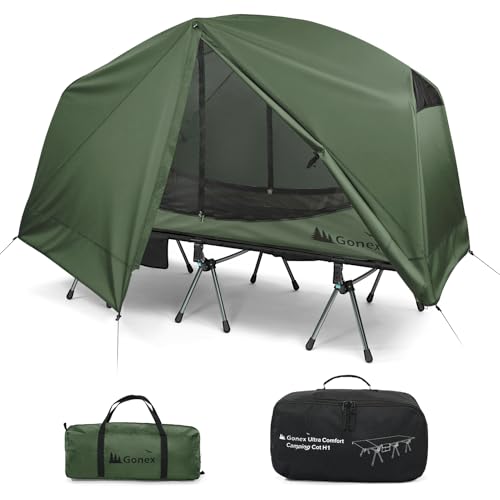
When your tent floor feels like a cold sponge at 3 a.m., the joke is usually on your sleeping pad. Camping cot tents solve that by lifting the bed above wet, uneven ground. After comparing 6 models, the Night Cat 4-Season Tent is the best fit because it supports up to 330 pounds, uses a full-coverage seam-taped rainfly, and has mesh windows on both sides. The Outsunny 4-Season Tent is the alternative pick with a 190T polyester taffeta build.

Pros
- Elevated cot design keeps sleeper off cold, damp ground
- Full-coverage seam-taped rainfly with storm zipper flaps
- 87 x 32 x 40 inches with 330 lb support rating
- Large mesh side windows plus roof vent for airflow
- Front vestibule can store boots, packs, or other gear
Cons
- Trekking poles or tarp poles for awning are not included
- 32 inch width may be tight for some campers
- 14 lb packed weight is not ultralight

Pros
- 4-in-1 set includes tent, cot, air mattress and bed cover
- Elevated cot helps keep sleeper off wet ground
- Air mattress inflates with included foot pump
- Cot supports up to 352 lbs
- Rolling bag included for transport
Cons
- Not recommended for use in rainy weather
- Pillow and sleeping bag are not included
- 45.1 lb weight may be heavy for backpacking
Pros
- 31.5 in wide cot gives extra room for side sleepers
- Two cot heights: 15.8 in high or 5.9 in low
- Includes cot, inner tent, and waterproof outer tent
- Packs into separate cot and tent carry bags
- 5 minute setup process listed by the brand
Cons
- Not recommended for heavy or steady rain
- Brand recommends adding a blanket or camping mattress
- Total weight is listed as 13.8 lbs

Pros
- PU4000 waterproof fabric with fully taped seams
- 210D silver-coated polyester is tear-resistant
- Fits most cots up to 78.7 x 31.5 inches
- 4.5 lb weight with carry bag for transport
- Sets up in minutes without complicated tools
Cons
- Camping cot or bed is not included
- Designed for 1-person use only
- 31.5 inch width may feel narrow for some campers

Pros
- 2 inch memory foam adds cushioning to a cot
- 75 x 30 inch size fits many cot setups
- Non-slip, water-resistant bottom helps reduce shifting
- Removable machine-washable cover for easier cleaning
- 5 pound pad rolls up for car camping and travel
Cons
- Pad only, cot frame and accessories are not included
- 2 inch foam may compress more for heavier users
- New foam scent may need airing out before first use

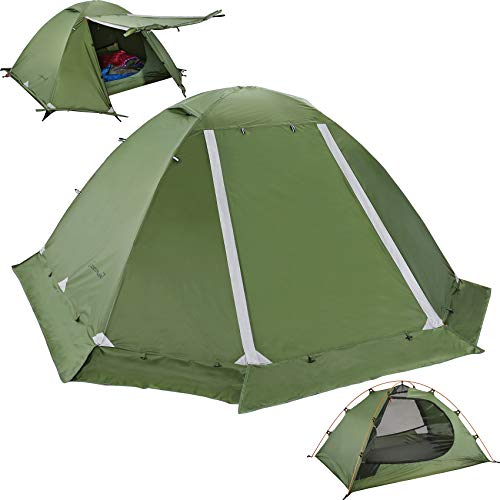
Pros
- Includes cot, tent, rainfly, and wheeled storage bag
- 77" x 57" cot elevates sleepers 18" off the ground
- PU 3000MM rainfly has sealing strips to help block seepage
- 2 mesh doors plus skylight roof for airflow and views
- Lantern hook, 2 pockets, and under-cot shoe storage
Cons
- Not for use during heavy rain or strong wind
- 37.5 lb weight may be bulky for longer hikes
- 48" tent height limits standing room
What Matters in 4-Season Tents for Winter Cot Camping
Cold-weather cot shelters have to do more than create a dry place to lie down. For winter campers, the important questions are whether the shelter keeps you off wet ground, whether it can manage wind, and whether it allows enough airflow to reduce condensation.
- Season rating and capacity: A winter shelter should match the number of sleepers and the size of the cot system. Among our picks, sleeping capacity ranges from 1 person to 2 people, and cot lengths run up to 78.8 inches. The Night Cat 4-Season Tent stands out for an elevated design rated to support up to 330 pounds, which matters when cold-weather clothing and sleep systems add bulk.
- Stove jack for a wood-burning stove: None of the listed picks includes a numbered stove-jack specification, so this was not treated as a deciding feature. That matters because a stove opening needs more than a marketing claim, especially when shelter fabric and ventilation are involved. According to the U.S. Consumer Product Safety Commission, carbon monoxide is a colorless, odorless gas produced by burning fuel, including wood and charcoal.
- Pole structure and wind resistance: Winter use calls for secure anchoring and a frame that does not depend on a single contact point. One 2-person pick includes 8 metal ground stakes, while another uses 6 guy lines to secure the shelter. The Pumbba 4-Season Tent uses 210D silver-coated polyester with fully taped seams and a PU4000 waterproof rating, which gives it a clear weather-protection number for a solo cot setup.
- Weight and pack size: Cot tents are rarely ultralight, so packed size matters if the shelter has to move from a vehicle to a winter campsite. Among the main picks, one 1-person cot-tent system lists a total weight of 13.8 pounds. Its cot packs to 18 by 7 by 11 inches, while the tent packs separately to 16.9 by 5.5 by 5.5 inches.
- Ventilation for condensation and safety: A raised cot can help with ground moisture, but it does not remove the need for airflow. Two of the main shelter picks use double-layer doors or side mesh openings, and one includes a roof vent. The Cymula 4-Season Tent is a 2-inch memory-foam pad with a water-resistant bottom, so it can add insulation on a cot, but it is not a ventilated shelter by itself.
We excluded summer or three-season-only gear that is not rated for freezing temperatures, home space heaters used inside tents without ventilation because of carbon monoxide risk, and children’s toy tents or sleeping bags. Those products can be useful in other settings, but they do not answer the winter shelter problem here.
The Competition
These are other 4-season tents we looked at but did not put on our main list.
If your priority is a familiar cot format, Coleman Camping Cot has a steel build, fits users up to 6 feet, and carries a 1-year warranty. It is a capable unit, but it does not line up as closely with the main list because the key winter-camping questions here are shelter coverage, ventilation and cot-tent integration.
For campers trying to keep frame materials lighter, Marchway Camping Cot uses an aluminum build. The drawback is that the available comparison point is mainly the 4-season cot category, while our top pick gives more shelter-specific information, including an elevated sleep system and a 330-pound support figure.
Prefer a cot built around steel instead of aluminum? Araer Camping Cot fits that direction and remains within the 4-season tent comparison set, but the limited listed detail makes it harder to judge wind management against main picks that specify stakes, guy lines or frame height.
And if fabric durability is the reason you are shopping, Aboron Camping Cot uses an oxford build. That is useful context for a 4-season cot, but it does not provide the same winter-shelter picture as the main list, where one pick gives a PU4000 waterproof rating and another lists 8 metal ground stakes.
FAQs
Are elevated cot tents warmer in winter?
They can help by separating your sleep system from wet or frozen ground, which is one of the heat-loss problems the National Park Service warns about. Among our picks, cot height ranges from 5.9 inches to 18 inches, depending on the model and setup.
Can a wood stove be used inside a cot tent?
Do not use a fuel-burning stove, heater or wood stove inside a tent or enclosed shelter without proper ventilation, according to the U.S. Consumer Product Safety Commission. Carbon monoxide has no color or odor, and symptoms can include headache, dizziness, weakness, nausea and confusion.
What size cot tent works for two winter campers?
For 2 people, look for a shelter and cot width that leaves room for insulated layers and sleeping bags. Among our 2-person picks, one tent measures 77 by 59 inches at the floor, while another cot setup measures 77 by 57 inches.
How much packed bulk should winter campers expect?
Integrated cot shelters trade backpacking compactness for off-ground comfort. One 1-person setup lists a total weight of 13.8 pounds, while another 2-person option uses a wheeled storage bag to manage the packed load.
Sources
- Carbon Monoxide Questions and Answers, U.S. Consumer Product Safety Commission. CPSC guidance on carbon monoxide hazards from fuel-burning devices.
- Hypothermia, National Park Service. NPS guidance on preventing hypothermia outdoors.





Write Your Review
No reviews yet. Be the first to share your experience!