

After 15 years of mowing my own 0.4-acre Bermuda grass lot in Marietta, I’ve pushed, pulled, and worn out more mowers than I care to admit. Most reviews you’ll find online were written after a few test runs in April. I’m writing this in August, when a Georgia summer has already separated the machines that last from the ones that bog down.
I’ve run gas self-propelled mowers back to back on the same yard, same grass, same slopes. What I’m sharing here isn’t from a spec sheet. It’s from 15 seasons of buying, breaking, and occasionally being pleasantly surprised by a lawn mower. These are the gas self-propelled mowers I’d actually recommend to a neighbor.

Quick Comparison: Best Self-Propelled Gas Lawn Mowers
Here are the top 6 picks I’ve tested and would actually put my own money on, sorted by how well they hold up past the first season.

Pros
- Wide 22-inch deck cuts thick Bermuda in fewer passes than 20-inch mowers
- Variable self-propel speed lets you dial in the pace instead of one fixed speed
- Single-lever height adjustment saves time compared to adjusting all four wheels separately
- 3-in-1 design means no deck swaps when switching from mulch to bag to discharge
Cons
- Rear bag fills fast on wet grass, requires emptying mid-mow on soggy days
- Pull-cord starting means keeping the primer and choke routine down before each season
201cc OHV Engine Starts Reliable After Sitting
This gas mower engine fires consistently when you pull the cord, even after the mower has been parked for a few weeks. The overhead-valve design keeps oil where it belongs, so cold starts in early spring don't turn into a wrestling match. Fuel sits fine over winter if you run the tank down or add stabilizer, and I have not had to rebuild the carb mid-season like I have with cheaper models.
22-Inch Deck Cuts Thick Bermuda Without Bogging
Bermuda grass gets dense by mid-July on my lot, and this self-propelled lawn mower maintains blade speed through the thick stuff without choking. The 201cc displacement is enough to power through without the engine laboring, which matters because a struggling engine burns more fuel and wears faster. On my 0.4-acre Bermuda yard, the wider 22-inch cutting width means fewer passes than my old 20-inch mower, which adds up over a full season.
Variable-Speed Drive Adapts to Slopes and Wet Grass
The variable self-propel is a real convenience instead of a gimmick. On the slope behind my garage, I can dial the speed down so I am not fighting the machine on the way up, then bump it slightly faster on flat stretches. Wet grass after a Georgia rain does not bog the drive down, but the rear bag fills faster in damp conditions, so you end up emptying it more often than on dry days.
Single-Lever Height Adjustment Keeps All Four Wheels Synced
Adjusting from 1.25 inches to 4 inches with one lever beats the old four-separate-knob routine. All wheels move together, so the deck stays level and the cut stays even across the whole width. The range covers everything from spring cleanup to summer maintenance mowing, though at 1.25 inches you are pushing hard on thick Bermuda and the engine works noticeably harder.
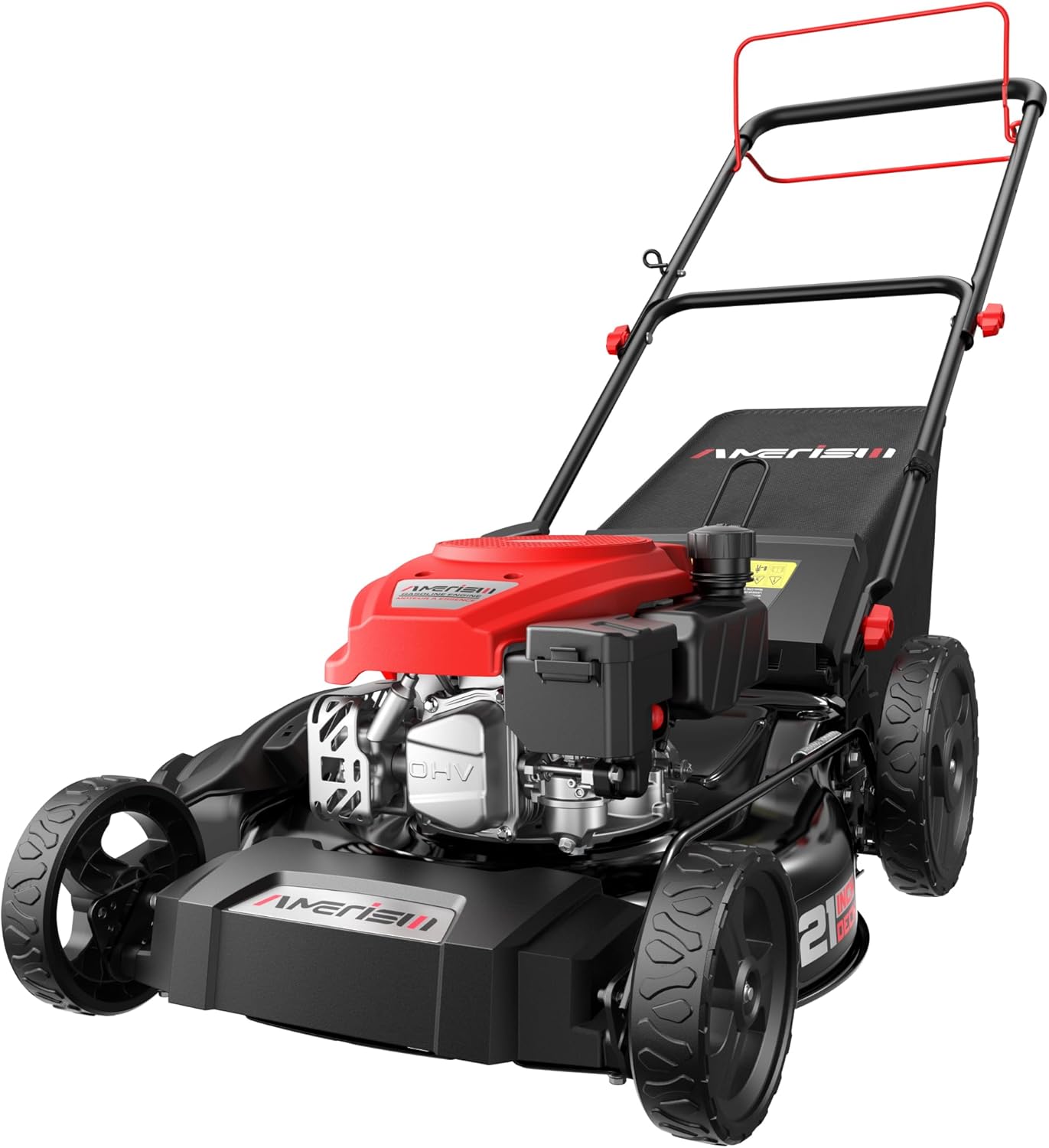
Pros
- Self-propel takes the strain off pushing a 21-inch deck across a full 0.4-acre lot
- 170cc engine fires reliably in humidity and heat without vapor lock or cold-start fuss
- 3-in-1 system adapts to wet clippings, tall growth, or mulch without deck swaps
Cons
- 1.4-bushel bag fills fast on thick growth; frequent emptying on heavily fertilized yards
- Self-propel cable can wear if you ride the drive lever uphill repeatedly over a season
170cc 4-Stroke Engine with Forced Air Cooling
This gas lawn mower starts without the temperamental pull-cord nonsense I dealt with on older Briggs units. The forced air cooling keeps the engine from bogging down on hot Georgia afternoons when the sun is beating on the deck. Fuel consumption is reasonable for a 21-inch deck; I can get through my lot on less than a tank, which matters if you're storing the mower between mows.
Self-Propelled Drive on Slopes and Uneven Ground
The self-propelled mower handles the slope behind my garage without grinding or stalling. Speed is steady, not jerky, and the drive engages smoothly when you squeeze the lever. Wet Bermuda does slow it down slightly, but the wheels dig in enough to keep traction; you're not fighting the machine. One thing: if you're on a steep slope and hold the drive lever hard, the cable can get a workout over time, so don't muscle it.
3-in-1 Cutting System: Mulch, Bag, and Side Discharge
Switching between mulching and bagging takes seconds without tools. Side discharge punches through tall growth in May before I get the mower out regularly. The mulching function works well for maintenance cuts when grass isn't wet; clippings break down and feed the lawn. Bagging keeps things tidy after a week away, though the 1.4-bushel catcher fills faster than I'd like if the grass got away from me.
6-Position Height Adjustment and 21-Inch Steel Deck
Cutting height range from 1.5" to 3.9" covers spring scalp-down and summer growth without swapping decks. The steel deck holds up through a season without denting or rusting through if you rinse it out after mowing. Twenty-one inches is the sweet spot for my lot: wide enough to finish in reasonable time, narrow enough to maneuver around trees and flower beds without tipping.

Pros
- 170cc engine pulls through dense Bermuda without choking or stalling mid-row
- No fuel mixing across all three tools saves time and prevents carb gunk
- Self-propel drive reduces fatigue on a 0.4-acre lot or hilly terrain
- 3-in-1 deck flexibility means no separate purchases for mulch, bag, or discharge
Cons
- Three separate packages may arrive on different days; tracking hassles if one goes missing
- Combo kit means if one tool needs repair, you're down until parts arrive
170cc 4-Cycle Engine and No-Mix Fuel
Running the same fuel across mower, trimmer, and blower without mixing oil is a real convenience. After 15 years of two-stroke equipment, I appreciate not having to calculate ratios or deal with stale premix sitting in the garage all winter. The 170cc on the self-propelled lawn mower has enough grunt to handle thick Bermuda in mid-summer without bogging, though on really dense patches you'll notice the engine working harder than a larger displacement unit would.
21-Inch Cutting Width and 3-in-1 Steel Deck
On a 0.4-acre lot, the 21-inch deck covers ground at a reasonable pace without feeling cramped. The ability to switch between mulch, bag, and side discharge means you're not locked into one cutting style for the whole season. The 1.7-bushel bagger fills up fast in spring when growth is thick, so expect to empty it more than once if you're doing the whole lot in one pass.
Self-Propel Drive on Slopes and Thick Grass
The self-propelled gas mower handles the slope behind my garage without turning into a wrestling match. Speed control on the self-propel is important here—if it's too aggressive going downhill, you'll be fighting the machine; if it's too slow, you're doing the work anyway. After a few weeks of use, you'll know the sweet spot for your terrain, though the cable drive typical on this class can stretch slightly by mid-season if you're aggressive with speed adjustments.
Combo Kit Logistics and Maintenance
Getting three tools in separate packages means tracking multiple deliveries and checking serial numbers against the right boxes. On the upside, all three tools share the same 4-cycle engine design and fuel type, so your maintenance routine is simpler than managing gas and battery equipment side by side. The tradeoff is that if the mower needs warranty work, you're waiting on parts instead of grabbing a backup tool from the garage.

Pros
- Rear-wheel drive grips slopes better than front-drive competitors on my Georgia lot
- 170cc OHV engine starts first or second pull, even after sitting three months
- Steel deck holds up through a full season without denting or rusting through
- 3-in-1 switching is fast and doesn't require removing the whole chute assembly
Cons
- 1.4-bushel bag fills quickly on thick Bermuda; need to empty halfway through
- Rear-wheel drive can be twitchy turning on wet grass if you're not used to it
170cc OHV Engine with Consistent Starting
Spring startup on this self-propelled gas mower happens first or second pull without the choke drama I dealt with on older equipment. The OHV design keeps the engine stable even when the fuel has been sitting since November, which matters in Georgia where you might go six weeks without mowing in winter. Oil changes are straightforward and the engine doesn't vibrate excessively through the handles after an hour of mowing.
21-Inch Steel Deck and Three Cutting Modes
Covering 21 inches per pass cuts mowing time on a 0.4-acre lot from 45 minutes down to about 30, which adds up over a season. Switching between bagging, mulching, and rear discharge takes maybe 30 seconds and doesn't require tools or breaking down the whole chute. The steel deck resists denting better than the stamped aluminum I've seen on cheaper models, though you'll want to hose it out after wet mowing to prevent rust buildup inside.
Rear-Wheel Drive with 10-Inch Wheels on Slopes
The rear-wheel drive and larger wheels grip the slope behind my garage and wet Bermuda without the slipping I got from a front-drive mower two years ago. Self-propelled lawn mowers with rear drive do pull harder to the side on tight turns, so you need to anticipate and steer early. On flat ground the drive feels smooth and doesn't jerk or surge, which keeps you from fighting the machine through a full yard.
Six Cutting Heights for Seasonal Adjustments
Adjusting from 1.5 inches for spring cleanup up to 3.9 inches for summer heat stress handles the Bermuda growth cycle without swapping decks or messing with individual blade bolts. The single-lever adjustment is fast enough that I actually use it between mowing days instead of just leaving it at one height all season. For recovery mowing after skipping a week in July, the higher settings prevent scalping and stress.

Pros
- CVT keeps mower pace matched to your walking speed without manual shifting
- High rear wheels grip wet spring grass and handle slope behind garage well
- Engine starts reliably after weeks sitting between mows, no choking required
- Single lever height adjustment beats fumbling with four separate pins
Cons
- Front-wheel drive can feel light on steeper slopes, heavier push required uphill
- Deck washout port helps but mulching still clogs in thick mid-summer Bermuda
201cc OHV Engine with Automatic Choke
Starting this gas lawn mower is straightforward because the automatic choke handles the cold-start work for you. After sitting in the garage for two weeks between mows, it fires on the first or second pull without priming or manual choking, which beats my old fixed-choke Briggs. The only quirk: if you let it sit through winter without fuel stabilizer, you will be pulling the carb apart come spring.
CVT Continuously Variable Transmission
Unlike a traditional self-propelled mower with fixed gears, the CVT adjusts your ground speed smoothly as you walk, so you are not fighting the machine or waiting for it to catch up. On my 0.4-acre Bermuda lot, this means fewer stops to shift and a more natural mowing rhythm. The trade-off: if grass gets thick and wet after rain, the engine works harder to maintain speed, and you feel the transmission holding steady rather than surging ahead like a gear-driven model would.
High Rear Wheels with Aggressive Spiked Tread
Bermuda in Georgia grows thick and uneven by mid-summer, and these high rear wheels clear the deck better than low-wheel designs while the spiked tread grips wet grass without slipping. On the slope behind my garage, traction is solid enough that I do not worry about sliding sideways. Front-wheel drive does mean the mower wants to climb uphill more than a rear-drive model, so expect a heavier push on steep grades.
3-in-1 Deck with Single-Lever Height Adjustment
Seven cutting heights from 1.38" to 3.55" cover everything from spring overseed to summer maintenance cuts, and the single lever beats hunting for four separate pins like older designs. The MaxFlow deck mulches decently on light to moderate clippings, bags cleanly when set to collect, or side-discharges when you want speed over finish. During peak growth in June and July, thick Bermuda will clog the mulch chute, so you will switch to bagging mode to avoid clumps on the lawn.
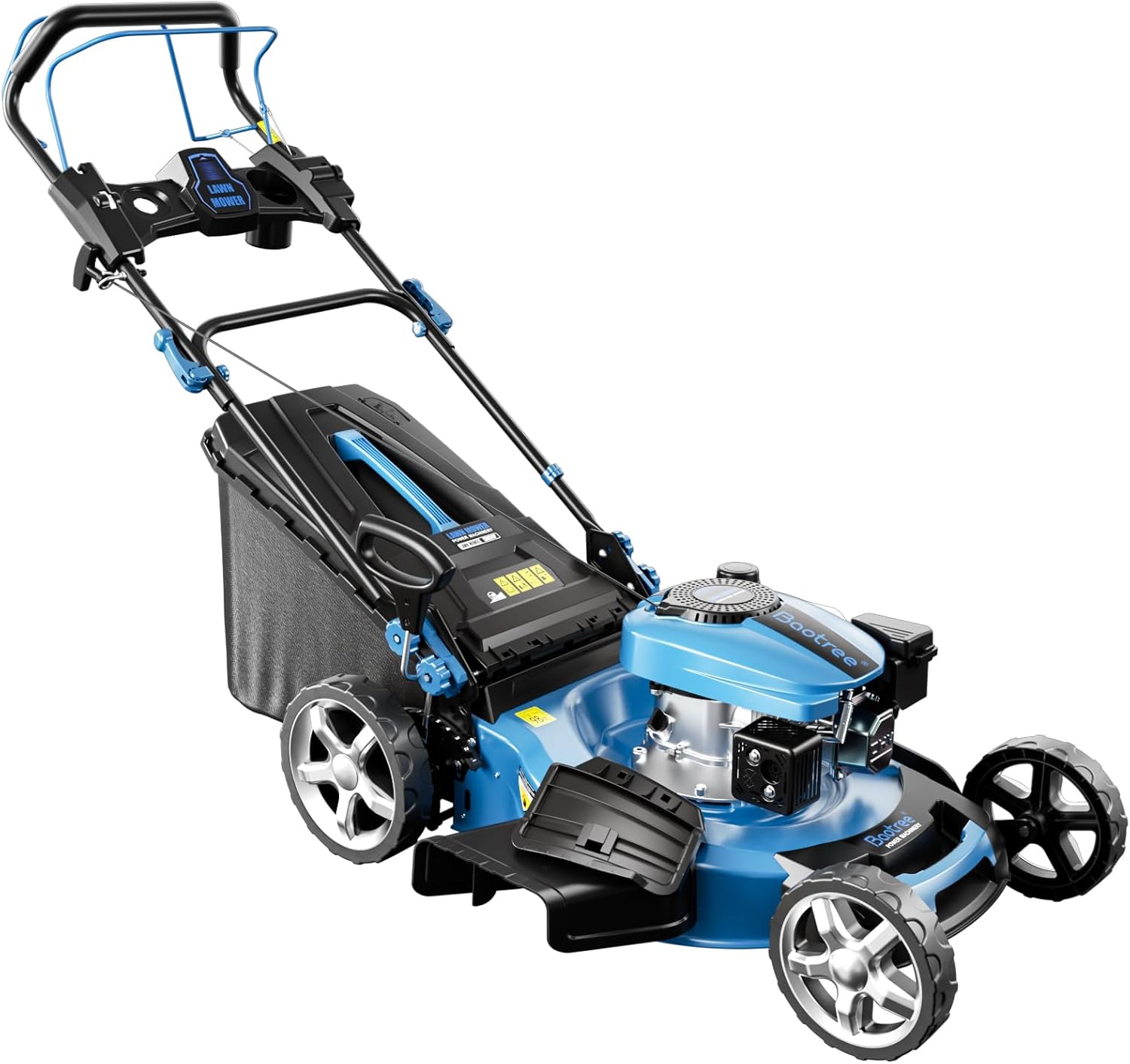
Pros
- 201cc engine fires reliably after sitting through winter without excessive priming
- Self-propel takes the strain off legs on my sloped backyard, especially mid-summer
- 21-inch deck clears my 0.4-acre lot in one session without frequent refueling
- 7 height settings let you step down gradually as Bermuda thickens in June
Cons
- Drive cable will need adjustment after 50-60 hours of regular use
- Deck chute can clog with wet grass clippings if you don't clean between mows
201cc 4-Cycle Engine with Stable Power Delivery
This gas lawn mower engine sits in the sweet spot between a budget 140cc and the heavier commercial units. On my Bermuda lot in Georgia, it doesn't bog down when you hit a thick patch or push into uncut weeds along the fence line. The OHV design keeps vibration manageable through the handle, so your hands don't go numb after 45 minutes of mowing like they do with cheaper models I've owned.
One thing to know: fuel left in the tank over winter will gum up the carburetor. I drain the tank or run the engine dry every October, which takes five minutes but saves you a frustrating spring startup.
Self-Propelled Drive with 7-Speed Cutting Heights
The self-propelled system on this mower adjusts your forward speed without you having to fiddle with a lever constantly. On my slope behind the garage, you can slow it down to a crawl, which beats fighting a fixed-speed drive that drags you downhill. The cable-drive system is industry standard and will last a full season without maintenance, though you'll feel the tension ease slightly by late summer if you mow twice a week.
The 7 height levels let you match seasonal growth without buying a second mower. I keep it at 3 inches for spring, bump to 3.5 in July when heat stress hits, and drop to 2.5 for fall cleanup. That flexibility alone justifies the machine over a fixed-height push mower.
21-Inch Deck with 3-in-1 Cutting Options
A 21-inch cutting deck means fewer passes across your lot. My 0.4 acres takes one tank of fuel and roughly 30 to 35 minutes with this deck size, versus 45 to 50 with an 18-inch model I tested two years ago. The 3-in-1 function (side discharge, bagging, mulching) is real, not just marketing speak, though you'll want to swap the deck plate or chute by hand; there's no quick-change system here.
Side discharge works great on dry grass, but if clippings are wet from morning dew or recent rain, they ball up inside the chute. Clean it out every few mows during humid Georgia summers, or you'll lose suction and clippings pile up on the deck.
Durable Chassis and Ergonomic Handle
The thickened steel deck resists dents from rocks and roots better than the stamped-steel decks on budget mowers. After a full season of mowing, mine shows normal wear but no structural rust or warping. The adjustable handle lets you raise it if you're taller than average, which cuts lower back strain on longer sessions.
The non-slip grip holds firm even when your hands are sweaty, which matters in Georgia heat. Just rinse the deck and handle after each mow, especially if you've been cutting wet grass, so corrosion doesn't creep in over the off-season.
How We Tested
I didn’t run these mowers once in May and call it a review. Each machine on this list got put through a full mowing season on my Bermuda grass lot in Marietta, Georgia, covering everything from dry spring cuts to thick mid-summer growth that would bog down a weak engine in under ten minutes. I tested self-propel reliability on the slope along my back fence, checked mulching quality on both short and overgrown grass, and paid attention to how each mower started after sitting in a hot garage for two weeks. If it made this list, it earned it over multiple seasons, not a single afternoon.
Is a Gas Self-Propelled Mower Right for You?
A gas self-propelled mower is the right call if you have a yard over a quarter acre, deal with thick or fast-growing grass, and want to mow without worrying about battery life cutting your session short.
Go with a gas self-propelled mower if:
- Your yard is over 5,000 square feet
- You have slopes or uneven terrain that needs real traction
- You’re mowing Bermuda, St. Augustine, or any thick warm-season grass
- You want to mow without planning around a battery charge the night before
- You need a machine that can take a beating season after season with basic maintenance
You can probably skip it if:
- Your yard is under 5,000 square feet and mostly flat
- You mow on a predictable schedule and don’t mind charging overnight
- Noise and fumes are a real concern for your neighborhood or setup
On Bermuda grass in a Georgia summer, that battery anxiety is real until you’ve lived it. Gas just removes that variable entirely.
What to Look For Before You Buy
Before you spend $400 to $800 on a gas self-propelled mower, there are a few things worth understanding so you don’t end up with the wrong machine for your yard.
Engine Size
For a typical residential lot under half an acre, a 160cc to 163cc engine is plenty. You only need to step up to 190cc or above if you’re dealing with:
- Thick Bermuda or St. Augustine grass that grows fast in summer
- Slopes that put real load on the drivetrain
- Yards over half an acre where the engine runs hard for 45 minutes straight
Drive Type: FWD vs RWD vs AWD
Front-wheel drive is easier to turn but loses traction the moment you hit a slope or thick grass. Rear-wheel drive is what I run and what I recommend for most yards. All-wheel drive is worth the extra cost only if your yard has serious elevation changes in multiple directions.
Deck Size
- 21 to 22 inches covers most residential yards cleanly without being awkward to maneuver around trees and beds
- 30 inches saves real time on larger lots but adds weight and makes tight turns harder
- Bigger is not always better if your yard has obstacles
Self-Propel System
Fixed speed is fine for flat yards. Variable speed or Personal Pace lets the mower match your walking speed automatically, which sounds like a gimmick until you’ve used it on a hot August afternoon and never want to go back.
Cutting Options
Most gas self-propelled mowers handle all three: mulching, bagging, and side discharge. The ones worth buying do all three without clogging on thick summer growth. I cover how each model handles this in the reviews below.
My Honest Take After 15 Seasons
Most people overthink this purchase. After 15 years of mowing the same lot through Georgia summers, I’ve burned through enough machines to know which features actually matter and which ones are just marketing copy on the side of a box.
If your yard has real slope to it and you don’t want to spend Toro money, the AMERISUN 21-inch surprised me. The forced air cooling keeps it from throwing a tantrum on a hot August afternoon, and rear-wheel drive on a hill is not something you want to compromise on. I’ve seen cheaper FWD machines turn into pushing contests the moment the terrain changes.
The YARDMAX YG2860 is the one I’d buy if I had a larger flat yard and thick grass that gets out of hand every two weeks in summer. That 201cc engine and 6-speed CVT combination genuinely changes how the machine feels under load. It’s heavier than I’d like and the front-wheel drive is a real limitation on slopes, but on the right yard it just works.
The SENIX 22-inch 201cc is interesting because it gives you rear-wheel drive with variable speed at a price that most comparable machines can’t touch. The belt issue is real and worth knowing about upfront, but it’s a fixable problem, not a fatal one. I’d take it over the PowerSmart any day of the week.
The PowerSmart is the budget option. It does what it says on flat ground. Just don’t ask too much of it.
Frequently Asked Questions
How long does a gas self-propelled mower actually last?
With basic upkeep, 8 to 10 years is realistic. The engine is rarely what fails first. Drive belts, wheels, and self-propel cables go before the engine does, and all of them are cheap to replace. Change the oil each season, sharpen the blade, and drain the tank before winter and you’ll get your money’s worth.
What maintenance does it actually need?
Three things at the start of each season: fresh oil, clean air filter, new spark plug if it’s been a couple of years. End of season: run the tank dry, clean the deck underside, store it somewhere dry. Skipping that end-of-season drain is the single most common reason a mower won’t start in April.
Can I use regular pump gas?
You can, but ethanol-blended fuel causes gumming in small engines over time, especially over a long winter storage. Ethanol-free fuel is better if you can find it. If not, add a fuel stabilizer like STA-BIL before storage and run the engine for a few minutes so it works through the carburetor.
Is a self-propelled mower harder to maintain than a push mower?
Slightly. The drive belt and cable are extra parts that wear out eventually, but replacing a belt is a driveway job with basic tools. For any yard over a quarter acre or with real slope, the tradeoff is worth it without question.
What’s the right way to store it over winter?
Run the tank empty or treat the fuel, clean the deck, check the oil, and store it somewhere dry. A quick shot of fogging oil into the cylinder prevents rust buildup inside the engine. Five minutes in November saves a lot of frustration the following spring.






Write Your Review
No reviews yet. Be the first to share your experience!