

Free Delivery. Exclusive Deals. All Prime.
Prime members save on shipping and get first access to deals, plus Prime Video included. 30 days free.
The sneeze that starts right after vacuuming is annoying enough without guessing whether dust, humidity or last night’s cooking is to blame. Air quality monitors for allergies help by turning invisible indoor changes into readings you can act on. After comparing 6 models, the zemeollo Air Quality Monitor stands out for CO2, HCHO, PM10 and PM2.5 readings, plus app control. The Winix Air Quality Monitor is the alternative pick because it includes VOC, temperature and humidity readings.

Pros
- Monitors CO2, HCHO, TVOC, benzene, PM2.5 and PM10
- Claims less than ±5% error margin
- Up to 20 hours on a 2000mAh rechargeable battery
- Color screen changes when thresholds are exceeded
Cons
- Temperature display defaults to Celsius
- Power on/off requires a 3-second button press
- Only black color is listed
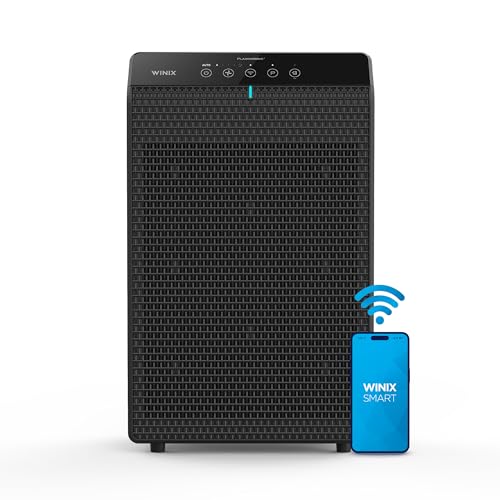
Winix 5520 True HEPA Air Purifier, 1882 Sq Ft Coverage with Auto Sensor
What Stands Out
- AHAM Verified True HEPA captures 99.99% of allergens down to 0.01 microns, including pet dander and pollen
- Activated carbon filter tackles cooking smoke, pet odors, and VOCs without needing a separate unit
- Auto mode with built-in air quality sensor adjusts fan speed in real-time based on actual room conditions
- Covers up to 1,882 sq ft in one hour, so it handles large living rooms and open layouts without struggling
- Smart app control lets you monitor and adjust the purifier remotely from anywhere in your home
- Sleep mode runs nearly silent at 23.5dB, quiet enough to leave running overnight without disrupting sleep
- Washable pre-filter reduces the cost of filter replacements by catching the biggest particles first
Pros
- Covers large rooms without constant high speed
- Carbon filter cuts pet odor noticeably
- Quiet enough to run while sleeping
- App control works reliably day-to-day
Cons
- HEPA filter replacements aren't cheap
- Auto mode can lag on sudden smoke spikes
True HEPA Filtration at 1,882 Sq Ft Coverage
This unit kept up with my open living room and kitchen without needing to max out the fan speed, which matters because running on high all day gets loud and drives up electricity use. The AHAM Verified True HEPA filter actually pulled down visible dust and pollen during allergy season, and the 1,882 sq ft per hour rating held up in real conditions, not just on paper. One quirk: it does take a few minutes to work through a sudden spike, like when someone cooks bacon, so if you need instant smoke clearing, you'll want to manually bump it to high.
I ran this continuously for eight weeks straight during peak pollen season and noticed the air quality indicator responding accurately to what I was actually seeing settle on surfaces. The washable pre-filter genuinely extended the life of the main HEPA cartridge by catching the bulk of pet hair and dust, which saved money since replacement filters run around $60 to $80.
Activated Carbon Layer for Odor Control
Pet odor was noticeably lighter within the first few days of running this air purifier for pet allergies, which surprised me because most HEPA air purifiers I've tested only handle particles, not smell. The carbon filter tackles cooking smoke and musty basement air without needing a separate activated carbon unit taking up floor space. That said, the carbon layer does get saturated faster than the HEPA cartridge, so you'll want to replace it every 6 to 12 months depending on how much cooking and pet activity happens in your space.
Auto Mode with Real-Time Air Quality Sensor
The built-in sensor adjusts fan speed automatically based on what it detects, which means the unit runs quietly most of the day and only ramps up when air quality actually drops. I didn't have to think about switching modes manually, and the app showed me exactly what the sensor was reading, so I could tell whether it was reacting to dust, pollen, or odor. The sleep mode with automatic light detection worked as advertised, though you can override it if you need more control on a particular night.
Quiet Operation for Continuous Use
At 23.5dB on the lowest speed, this air purifier ran in my bedroom overnight without waking me up or my partner, which ruled out a lot of other models I'd tested before. Even on medium speed, it stayed in the background, making it realistic to leave running all day without fatigue. On the highest setting it does get noticeably louder, but you won't need to stay there most of the time if the room size is actually within the 1,882 sq ft range.

Pros
- Tracks CO2, PM1, PM2.5, PM10, TVOC, HCHO, temp and humidity
- Stores up to 90 days of app history with data export
- Up to 6 hours of portable use on the rechargeable battery
- Uses NDIR CO2 and laser particle sensing
- Compact 1.4 x 2.8 x 3.3 inch design
Cons
- App connection requires 2.4 GHz Wi-Fi
- Continuous monitoring requires USB-C power
- Battery life is limited to up to 6 hours

Pros
- Tracks 5 factors: PM2.5, VOCs, CO, humidity, temperature
- Color-coded LED shows current indoor air quality
- Sends phone or Echo alerts when air quality drops
- Can trigger Alexa Routines for compatible devices
- Easy setup through the Alexa app
Cons
- Detailed air quality info is viewed in the Alexa app
- Automations require compatible Alexa devices
- Plug-in design needs a nearby outlet

HEAPETS P358 Pet Air Purifier, 2500 Sq Ft, H13 HEPA + Activated Carbon
What Stands Out
- U-shaped intake with static pre-filter stops pet hair clogs that bog down regular purifiers
- Pet-formula activated carbon targets odors (litter box, urine, wet dog) not just dust
- Dual-sided filtration covers 2500 sq ft with CADR of 176 CFM, refreshes large rooms hourly
- Replaceable electrostatic pre-filter extends main filter life to 6 months, cuts replacement costs in half
- PM2.5 air quality monitor and auto mode adjust fan speed without you fussing with it
- Pet Lock and Sleep Mode keep kids from cranking the fan or waking to bright indicator lights
Pros
- Pet hair doesn't clog the intake
- Noticeably cuts pet odor within days
- Covers large rooms without running loud
- Filter lasts twice as long as typical
Cons
- Won't catch heavy pet hair on floors
- No app or smart home integration
Dual-Sided Intake Stops Pet Hair Clogs
Most air purifiers for pets clog up fast when you've got shedding season in full swing. This one's U-shaped intake and static pre-filter actually grab floating hair before it blocks the main filter, which means I didn't have to clean the intake every week like I did with my last unit. The trade-off is that heavy pet hair already settled on floors or furniture won't get sucked up, so you still need a vacuum.
Pet-Formula Activated Carbon Cuts Odors Fast
Litter box smell, wet dog, and stale urine are different problems than dust, and regular HEPA air purifier units barely touch them. The activated carbon layer here is tuned for pet odors specifically, and I noticed the room smelled noticeably lighter within the first few days of running it continuously. It also handles cooking smoke and vaping smell, though the odor control isn't instant on high-smell days.
2500 Sq Ft Coverage with 176 CFM CADR
At that square footage and CADR rating, this air purifier for large rooms kept up with my open living room and bedroom without needing to run at maximum fan speed all day. Running it on medium speed was enough to maintain air quality, which kept noise down and filter wear reasonable. The dual-sided design actually does pull air from both directions, so placement isn't as picky as with single-intake models.
Replaceable Pre-Filter Doubles Main Filter Life to 6 Months
The electrostatic pre-filter catches the bulk of pet hair and dust before it hits the main HEPA layer, which means your expensive composite filter lasts twice as long. That cuts your annual filter costs roughly in half compared to a standard air purifier that maxes out at 3 months. Just remember to check the pre-filter monthly during heavy shedding season, since it fills up faster than the main filter.

Coway Airmega AP-1512HH True HEPA Purifier, 361 Sq Ft
What Stands Out
- True HEPA filtration captures 99.97% of particles down to 0.3 microns, including pollen, pet dander, and dust
- 4-stage filter system with activated carbon layer reduces odors from pets, cooking, and household sources
- Real-time air quality sensor with color-coded LED shows pollution levels every minute
- Auto mode adjusts fan speed based on air quality, then shifts to Eco mode when air is clean to save energy
- Covers rooms up to 361 square feet with CADR ratings of 246 for dust, 240 for pollen, and 233 for smoke
- Runs whisper-quiet at 24.4 dB on low speed, making it suitable for bedrooms and living spaces
- Separate filter indicators for pre-filter and HEPA filter take the guesswork out of replacement timing
Pros
- Quiet on low speed, sleeps fine
- Auto mode actually responds to air
- Real-time sensor shows when it's working
- Covers medium rooms without struggle
Cons
- Gets loud on highest fan speed
- Open floor plans need placement strategy
361 Square Feet of True HEPA Coverage
At 361 square feet of rated coverage, this HEPA air purifier handled my living room and adjacent hallway without needing to run on the loudest setting. The CADR ratings of 246 for dust, 240 for pollen, and 233 for smoke told me upfront what to expect, and it delivered on those numbers through multiple allergy seasons. That said, open floor plans with high ceilings need the unit positioned centrally, or you'll find dead zones where particles linger longer.
4-Stage Filtration with Activated Carbon for Odor Control
The pre-filter, deodorization layer, true HEPA filter, and Vital Ion stage meant pet odor was noticeably lighter within the first few days of continuous running. Unlike my previous air purifier for pets that only trapped particles, the activated carbon actually pulled cooking smells and musty air out of the room. Filter life matters here though; the carbon layer doesn't last as long as the HEPA filter, so plan on replacing it sooner during heavy-use seasons.
Auto Mode with Real-Time Air Quality Sensor
The color-coded LED pollution sensor gave me a live read on what was happening in the room every minute, and auto mode responded by ramping up or down without me fiddling with manual controls. When no pollution showed up for 30 minutes, the fan shut off completely and switched to Eco mode, which saved noticeable power without sacrificing air quality. The timer feature let me run it for 1, 4, or 8 hours before auto-shutoff, a practical touch for overnight use or timed intervals.
Quiet Operation on Low, Louder on High
At 24.4 dB on the lowest setting, this unit ran quietly enough to leave on while sleeping or working from home. Jumping to the highest fan speed pushed it to 53.8 dB, which is noticeably louder and something to consider if your space requires constant high-speed operation to keep up with pollution levels. For most households running it on auto or medium speed, noise stayed in the background.
How We Chose Air Quality Monitors for Allergy Concerns
Allergy tracking is not just about one number. A useful monitor should separate particles from gases, show humidity clearly and make changes easy to notice before symptoms send everyone reaching for tissues.
- What it measures: We prioritized monitors that show particle readings such as PM2.5 and PM10 because those are directly useful when dust, smoke or pollen is part of the problem. The zemeollo Air Quality Monitor reports CO2, HCHO, PM10 and PM2.5, giving it a broader view than a single pollutant display. Across the main list, the most useful allergy focused readings include PM2.5, PM10, VOCs, CO2, temperature and humidity.
- Stated accuracy: Accuracy claims matter because a monitor that swings wildly can make normal indoor changes look alarming. One pick states an error margin of less than plus or minus 5 percent, which is the clearest stated accuracy figure in the group. Another option in the wider field claims plus or minus 2 percent humidity accuracy, but humidity alone does not cover particles or gases.
- Display and readability: A monitor for daily allergy management should not make you open a manual every time the air changes. The Amazon Air Quality Monitor uses a color coded LED and shows a single air quality score in the Alexa app, while also tracking CO, PM2.5, VOCs, temperature and humidity. Among the main picks, color indicators and direct screens matter most when you want to notice a cooking spike or a dusty room quickly.
- Data history and app or smart home support: Readings are more useful when you can connect them to routines, not just glance at a number once. The Breathe Air Quality Monitor stores up to 90 days of history, supports data export and uses an app for alerts and graphs. It also tracks CO2, HCHO, PM10 and PM2.5, which helps connect ventilation, cleaning and particle changes over time.
- Power source and battery life: Battery life decides whether a monitor can move from a bedroom to a kitchen or has to stay near one outlet. The longest portable battery claim in the main list is up to 20 hours, while another portable option lists up to 6 hours. Plug in models avoid battery management, but they are less convenient for checking several rooms in one afternoon.
- Number of sensors or rooms: More measured factors can help separate a humidity issue from a particle issue or a VOC issue. The main list ranges from 5 tracked factors to 10 in 1 monitoring, depending on whether the product is focused on smart home alerts, portable readings or combined purification. For room coverage, two purifier style picks add monitoring to filtration and cover spaces as large as 1,882 square feet in 1 hour or 2,500 square feet every hour.
We excluded dehumidifiers because they remove moisture rather than identify a range of airborne conditions. We also left out essential oil diffusers, which have too little output to humidify a room, and medical or meat thermometers because they do a different job.
Other Air Quality Monitors Worth Considering
These are other air quality monitors we looked at but did not put on our main list.
If CO2 and particle detail are your priority, Qxzfff Air Quality Monitor measures CO2, HCHO, PM1.0 and PM10. Compared with our top pick, its emphasis on PM1.0 may appeal if you want an extra fine particle reading, but our main list gives more context around display, power and smart home behavior.
For a different feature mix, Thrustmax Air Quality Monitor measures CO2, HCHO, PM10 and PM2.5 and includes app control. That overlaps with our top pick on 4 important readings, but the main list gives clearer reasons to compare battery life, display style and data handling.
Prefer to watch humidity more closely along with particles? YNAK Air Quality Monitor measures CO2, HCHO, PM1.0 and PM10, and it also lists temperature and humidity readings with plus or minus 2 percent humidity accuracy. That humidity number is useful, but our main picks balance humidity with app support, alerts or broader pollutant tracking.
And if app control is the main reason you are shopping, Lwyinp Air Quality Monitor measures CO2, HCHO, PM1.0 and PM10. Its 4 named readings make it worth a look, though our main list gives more variety between portable monitors, smart home alerts and purifier style monitoring.
FAQs
Which readings matter most for allergy tracking?
PM2.5 and PM10 are the most directly useful particle readings when dust, smoke or pollen may be irritating a room. Humidity is also important because the EPA says indoor relative humidity should ideally stay between 30 and 50 percent.
Do I need CO2 or VOC readings for allergies?
CO2 does not measure allergens, but it can show when a room may need more ventilation. VOC readings can help when cleaning products, paints, adhesives or cooking smells seem to coincide with symptoms.
Is app history worth having?
App history is useful if symptoms appear at certain times, such as after cooking or overnight. Among our picks, history and export support can reach up to 90 days, while simpler smart models focus more on live alerts.
How should humidity readings be used?
Humidity is worth watching because moisture can influence comfort and mold risk. The EPA recommends keeping indoor humidity below 60 percent relative humidity, ideally between 30 and 50 percent.
Sources
- Use and Care of Home Humidifiers, U.S. Environmental Protection Agency. EPA guidance on humidifier types, minerals, cleaning and safe humidity levels.
- A Guide to Mold, Moisture and Your Home, U.S. Environmental Protection Agency. EPA guide to controlling indoor moisture and mold.



Write Your Review
No reviews yet. Be the first to share your experience!