

If you’re looking for the best robot vacuum with LiDAR, here’s something most buying guides skip: “LiDAR” on a box describes at least three meaningfully different hardware setups, and those differences affect what the robot can reach, how fast it maps your floors, and how well it holds a map over time. I’ve spent time running four of the current top options, from the flat-bodied Roborock Saros 10R with its solid-state embedded sensor, to the panoramic dToF setup inside the Ecovacs Deebot X8 Pro Omni, to the more traditional spinning turret on the Dreame L40 Ultra Gen 2. Each one makes different trade-offs. Here’s what I found.
Everything I Recommend
Here are the four best robot vacuums with LiDAR I’d put my name behind right now.

Pros
- Actually fits under beds and sofas that rejected every other robot vacuum I've tested
- Zero-tangling brush stayed clear through two weeks of peak shedding season without one clog
- Mop extends automatically into corners; no more dust lines where walls meet the floor
- 60-day dust bag means I'm not emptying the base every week like with my previous model
Cons
- Only connects to 2.4GHz Wi-Fi; older routers or 5GHz-only networks won't work
- At $1,099, this is a premium machine; worth it only if you have low-clearance furniture or pets
3.14-Inch Ultra-Slim Profile for Under-Furniture Cleaning
After eight years of testing robot vacuums, I can count on one hand how many actually fit under my bed or the low-slung couch in the living room. The Saros 10R's 3.14-inch height means it glides into spaces where standard models get wedged, reaching dust and pet hair that accumulate in those forgotten zones. The StarSight 3D sensing system doesn't rely on a bulky LiDAR dome sticking up from the top, so there's nothing to catch or block its path. One thing to know: the ultra-slim profile doesn't mean a smaller footprint overall, so tight hallways between furniture still require a bit of clearance.
22,000Pa HyperForce Suction with Zero-Tangling Brush Design
During shedding season with a long-haired cat, most robot vacuums need a brush cleaning every two or three days. The Saros 10R's DuoDivide main brush and anti-tangle omnidirectional wheels held up through a full week of heavy shedding without a single wrapped hair or jam. At 22,000Pa, the suction pulls embedded pet hair out of low-pile area rugs in one pass, something I couldn't say about the 4,000Pa model I ran before this. The side brush does wrap occasionally on long strands, but far less often than traditional designs.
FlexiArm Riser Side Brush and Mop Extends Into Corners Automatically
Corner and edge cleaning on most robot vacuum and mop combos leaves visible dust lines where walls meet the floor. The FlexiArm automatically extends as the Saros 10R detects corners, so the mop pad actually reaches into those tight spots instead of just skirting them. After weeks of daily runs, I noticed fewer dusty corners than with any previous model, though very tight 90-degree corners still get a light touch rather than a deep scrub.
Self-Emptying Dock with 60-Day Dust Capacity and Hot-Water Mop Cleaning
The 10-in-1 dock handles the jobs that usually fall on you: auto mop removal, dust collection, hot water mop washing at 176°F, hot air drying, and auto detergent dispensing. With 60-day dust collection, I'm emptying the base bag roughly once every six weeks instead of weekly like I did with my old self-emptying robot vacuum. The dock does get loud during the dump cycle (around 80dB for about 10 seconds), so don't run it while someone's napping upstairs. Refilling the water tank and detergent takes about two minutes every two weeks, which is still far less work than manually washing mop pads by hand.

Pros
- Exceptional mopping performance with instant self-cleaning roller technology that eliminates dirty mop problems
- Outstanding suction power handles pet hair, dust, and debris on hardwood, tile, and carpet without tangling
- Comprehensive 12-in-1 station reduces manual maintenance to just filling clean water and emptying dirty water tanks monthly
- Smart AI navigation learns your home layout and automatically targets high-traffic areas for efficient cleaning
- Extended brushes and RGBD obstacle detection deliver thorough edge-to-edge cleaning with minimal missed spots
Cons
- App connectivity and stability issues reported by some users, including error codes and docking failures that require troubleshooting
- Premium price point at $799 makes it a significant investment compared to competing robot vacuums
- Requires regular maintenance of water tanks and filter cleaning despite hands-free operation claims
The ECOVACS DEEBOT X8 PRO OMNI is a flagship robot vacuum and mop designed for homeowners seeking premium, hands-free floor cleaning. It combines powerful 18,000Pa suction with innovative self-washing mopping technology and an intelligent 12-in-1 docking station. This robot excels for pet owners with multiple floor types, large homes, and those wanting minimal manual intervention in their cleaning routine.
The standout feature is the OZMO ROLLER instant self-washing mopping system, which continuously cleans the mop as it works rather than waiting for periodic returns to the station. This prevents dirty water from spreading across your floors and ensures streak-free results. The 18,000Pa suction paired with ZeroTangle 2.0 technology handles pet hair effectively without clogging the brush, a major advantage for households with dogs or cats. The extended side brush and roller automatically extend to reach walls and corners, delivering genuinely edge-to-edge coverage that many competitors struggle to achieve. AIVI 3D 3.0 navigation with RGBD sensors intelligently avoids obstacles and learns your home layout, while the AI Instant Re-Mop feature targets dirtier areas for thorough cleaning.
The 12-in-1 OMNI Station represents a major quality-of-life upgrade, handling auto-refill, auto-wash, auto-dry, and automatic cleaning solution dispensing. Hot water washing at 167 degrees Fahrenheit sanitizes the mop and removes stubborn stains. Users report the water tanks last approximately two weeks with frequent use, and dust bags last about a month even with heavy shedding. The sleek black design with embedded LiDAR fits well in modern homes, and Matter smart home compatibility with voice control adds convenient automation options.
However, potential buyers should be aware of reported app stability issues. Some users have experienced persistent error codes, docking failures in low-light conditions, and connectivity problems that required factory resets or unit replacements. The app occasionally displays confusing error messages unrelated to actual hardware issues. Additionally, the $799 price tag positions this as a premium investment, and despite the hands-free design, regular maintenance of water tanks and filters remains necessary.
The DEEBOT X8 PRO OMNI is an excellent choice for tech-savvy homeowners with pets, multiple floor types, and large living spaces who prioritize cleaning performance and automation. The instant self-washing mopping and powerful suction deliver genuinely impressive results. However, if app reliability and immediate support responsiveness are critical to your decision, consider waiting for user feedback to stabilize or comparing alternatives. For those willing to invest in premium cleaning technology, this robot offers class-leading performance and convenience.
Cleaning Performance: 18,000Pa suction power, OZMO ROLLER instant self-washing mopping, 10mm auto-lift mop height on carpets, extended side brush for edge cleaning, ZeroTangle 2.0 hair prevention technology
Navigation and Intelligence: AIVI 3D 3.0 technology, RGBD obstacle detection, embedded dToF LiDAR navigation, AI Instant Re-Mop for high-traffic areas, smart dirt detection
Station Features: 12-in-1 OMNI Station with auto-refill, auto-wash, auto-dry, cleaning solution auto-dispensing, 167 degree Fahrenheit hot water washing, dirt detection capabilities
Battery and Runtime: 6400mAh lithium-ion battery, 200-minute runtime, 3 power levels, 3 speed settings
Smart Home Integration: Matter compatibility (via OTA update Q2), Amazon Alexa support, Google Assistant compatibility, YIKO-GPT AI assistant, app control with smartphone and touch button options
Physical Specifications: Dimensions 13.78 inches L x 20.98 inches W x 15.94 inches H, weight 17.69 kilograms, round form factor, black color, washable filter type
Compatibility: Suitable for hardwood floors, tile, and carpet surfaces, compatible with Amazon Echo and Google Home devices
Who Should Buy This: The DEEBOT X8 PRO OMNI is ideal for homeowners with pets, multiple floor types, and large living spaces who value convenience and advanced cleaning technology. If you have hardwood, tile, and carpet and want truly hands-free operation with premium mopping performance, this robot delivers. Tech-savvy users comfortable with app-based controls and smart home integration will appreciate the advanced features.
Who Should Consider Alternatives: If app stability and immediate support are your top priorities, wait for user feedback to improve or compare other brands. Those with small apartments or primarily carpet floors may find the $799 investment excessive compared to more affordable options. If you prefer minimal tech complexity and want simple button-based operation, simpler robot vacuums may suit you better.
Setup and Maintenance: Initial setup is straightforward, requiring minimal assembly and QR code app registration. The OMNI Station requires filling the clean water tank and emptying the dirty water tank approximately every two weeks with frequent use. Filter cleaning and dust bag replacement are necessary maintenance tasks. The washable filter can be cleaned regularly to maintain performance.
Performance Expectations: Expect excellent results on hard floors and tile with thorough mopping and strong suction. Carpet cleaning is effective, though some users report the mopping feature works best on hard surfaces. The robot effectively handles pet hair without tangling and reaches corners and edges better than many competitors. Battery runtime supports most homes on a single charge.
Cost Considerations: At $799, this represents a premium investment in robot cleaning technology. However, the 12-in-1 station eliminates many recurring maintenance headaches, and the cleaning performance justifies the cost for those seeking high-end automation.
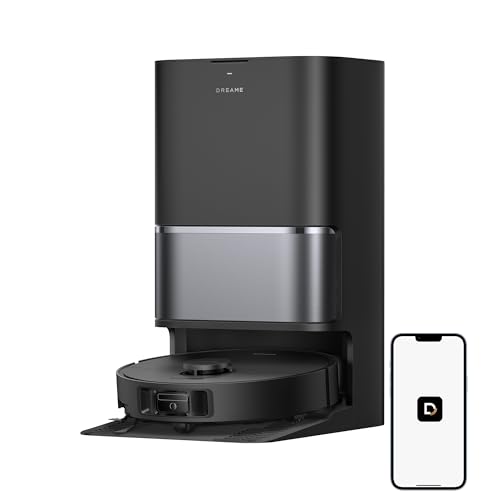
Pros
- 25,000Pa suction pulled matted cat hair from area rugs my old unit left behind
- Extendable brush reaches corners and under couch edges where crumbs pile up
- Self-emptying base means touching the dust bin once every 6 weeks, not after every run
- LiDAR mapping remembered my home layout and avoided toy obstacles without re-learning
Cons
- Mop function works best on hard floors; doesn't substitute for mopping carpeted rooms
- Only supports 2.4GHz Wi-Fi, so dual-band routers need separate network setup
25,000Pa Suction with 5 Power Levels
At max suction, this unit pulled embedded pet hair and ground-in cereal dust from my living room area rug in a single pass, something my previous robot vacuum needed two runs to handle. The 5 power levels mean you can dial down to Quiet Mode for afternoon cleaning without waking a napping toddler, or crank it to boost when the kitchen floor needs serious work after dinner.
Extendable Side Brush and Mop for Corner Coverage
Watching the side brush extend into corners and under furniture edges was the first time a robot vacuum actually cleaned the spots I usually miss with a handheld. The mop extends too, which matters if you have hardwood or tile that collects dust in tight spaces. On carpet, the mop lift feature keeps the pad off the fibers so you're not wetting down rugs you want to stay dry.
LiDAR Mapping with 3DAdapt Navigation
The first run mapped my entire first floor, including the awkward kitchen island and the hallway with the coat rack that trips up bump-and-go units. It learned no-go zones I set in the app and didn't waste time re-cleaning the same spots or getting stuck behind chair legs. After 2 months of daily use, the mapping stayed accurate even when I moved a side table.
Self-Emptying Dock with 4 Carpet Modes
This self-emptying robot vacuum base handles dust bin emptying automatically, so I touch the bin maybe once every 6 weeks instead of after every run. The 4 carpet-specific modes (avoidance, boost, intensive, and mop lift) let you protect delicate rugs while going aggressive on the kitchen tile. The dock is quiet enough during the auto-empty cycle that it doesn't startle anyone in the next room.

Pros
- LiDAR mapping nails room layout on first run, including tight spaces around furniture
- 5300Pa suction pulls cat and dog hair from area rugs that my old stick vac missed
- Self-empty base means touching the dust bin maybe three times a year instead of every other day
- Mesh Grid pattern covers floor systematically, not the random crisscross you get with cheaper models
Cons
- Mop function is basic wipe-only; doesn't scrub dried spills off hardwood like a dedicated wet mop
- 3L dust bag adds ongoing cost if you run it daily; budget $15-20 per bag over a year
5300Pa Suction with Ultra Mode and Carpet Boost
Running this on Ultra mode pulled embedded cat hair out of my living room area rug that my old upright would have needed three passes to catch. The carpet detection is genuinely smart: it bumps suction automatically when the front wheels sense pile, then dials back down on hardwood so it's not screaming through the kitchen at 3 a.m. The trade-off is that Ultra mode drains the battery faster, so I use it for the high-traffic zones and standard mode for maintenance passes.
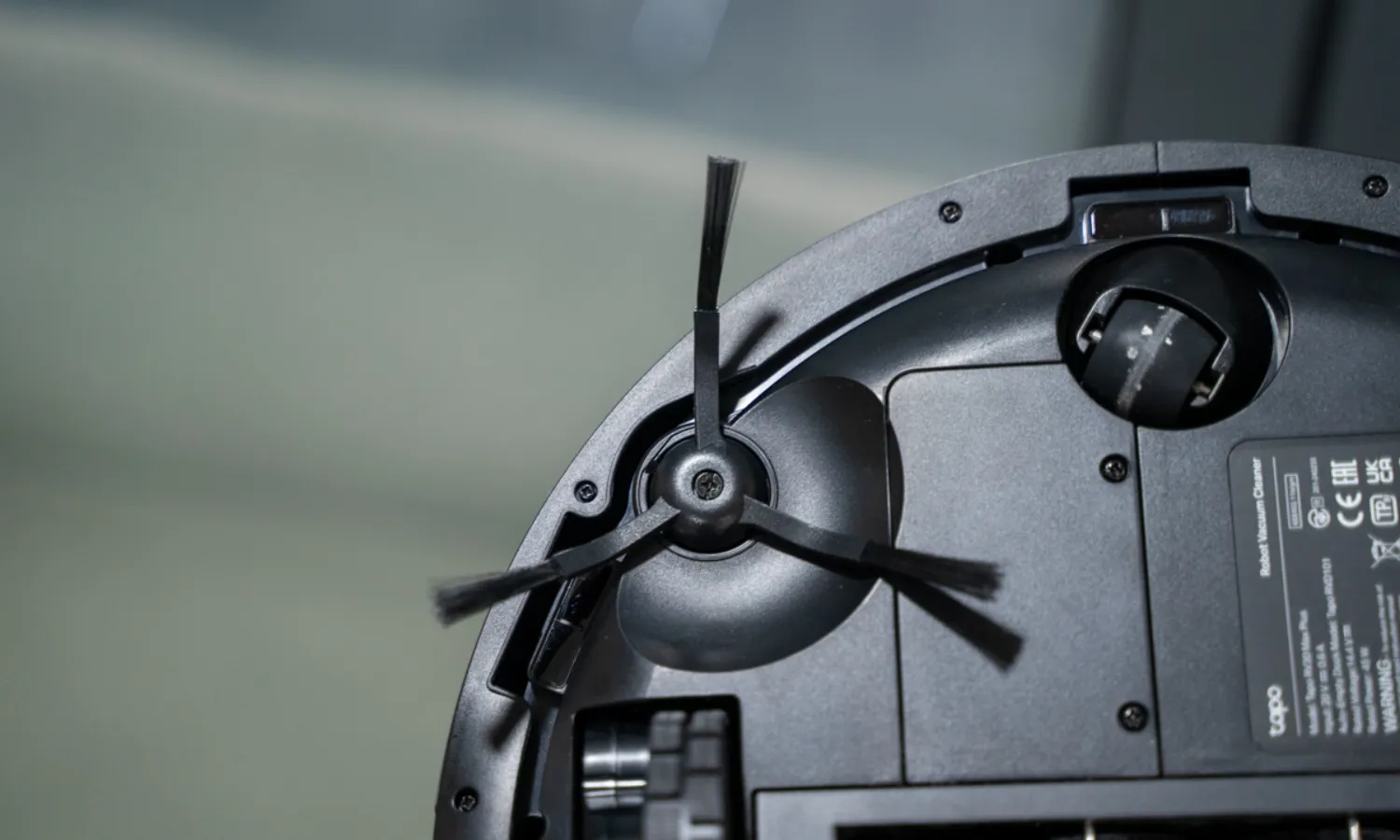
LiDAR Navigation with Mesh Grid Cleaning Pattern
After eight years with bump-and-go models that cleaned the same corner four times while missing the hallway, the LiDAR robot vacuum mapped my first floor in one run and remembered it. The Mesh Grid pattern means it cleans in actual lines instead of the random wandering, which cuts the total run time and eliminates that nagging feeling that something got skipped. I do occasionally find it confused by the toy pile in the kids' room, but the app lets me set no-go zones so it just avoids that mess entirely.
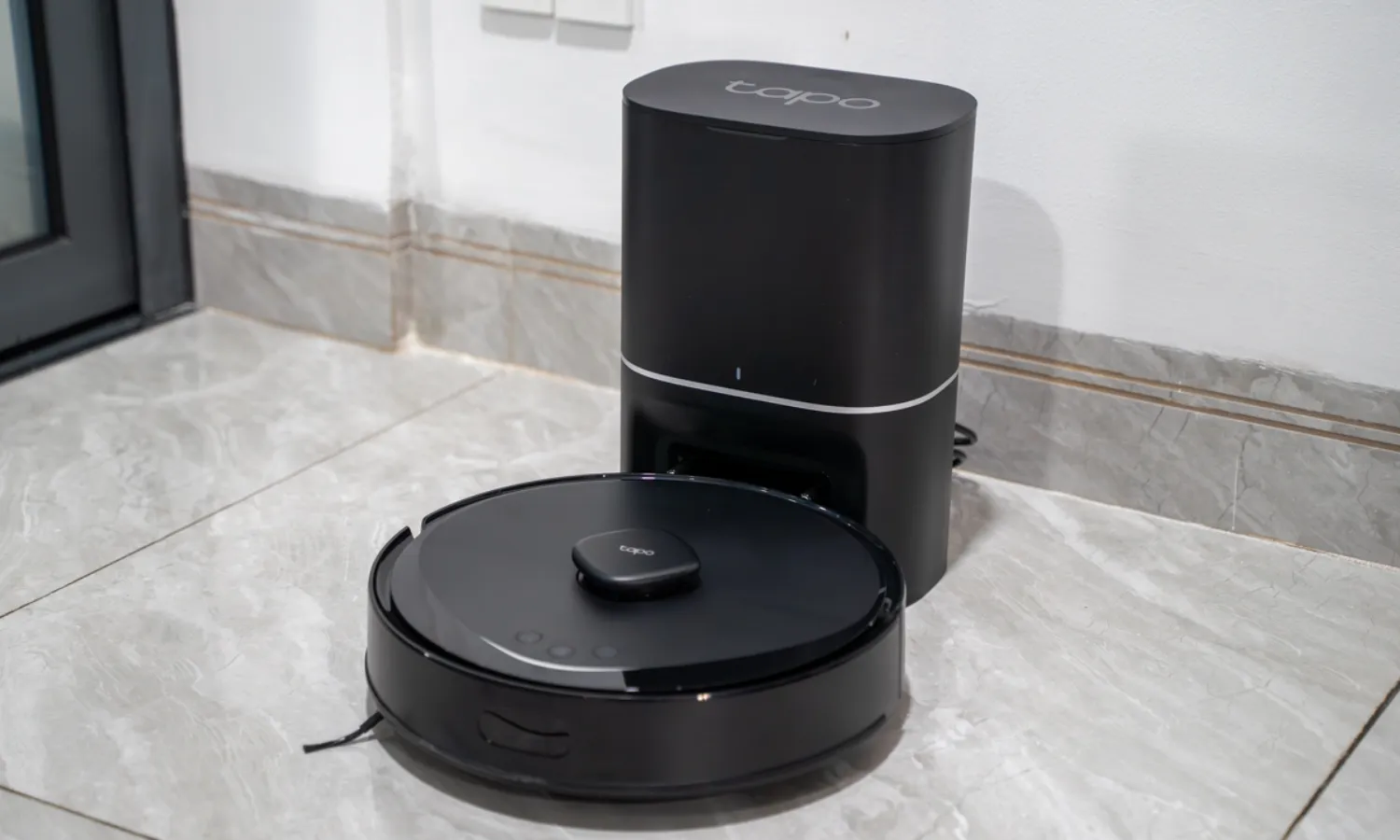
Self-Emptying Dock with 60-Day Dust Bag Capacity
This is the feature that actually changed my daily routine. The sealed 3L dust bag holds about two months of debris before it needs replacing, which means I'm not cracking open a dusty bin every other day like I was with my previous self-emptying robot vacuum. The dock is quiet enough that it won't wake the house during a midday empty cycle, and the bag swap takes maybe 30 seconds. The ongoing cost of replacement bags is real, but so is the time I got back.

2-in-1 Vacuum and Mop with Carpet Avoidance
Running a robot mop and vacuum combo means I can knock out both tasks in one cycle instead of swapping pads or running the unit twice. The mop pad does a decent job on hardwood spills and sticky spots, though it's more of a damp wipe than actual scrubbing. The app lets me mark which rooms get mopped and which stay vacuum-only, so the kids' rug doesn't end up damp and the kitchen tile gets the attention it needs.
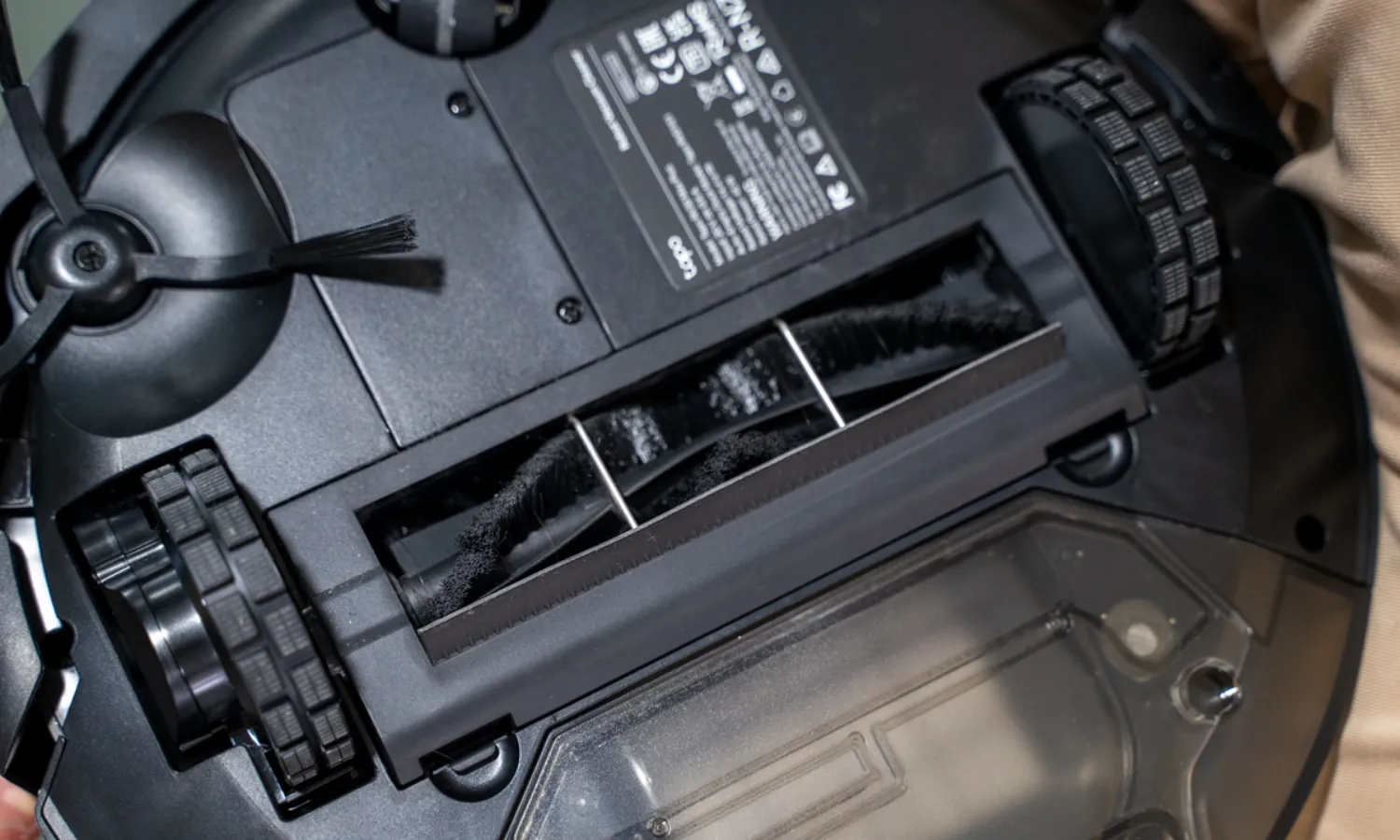
The biggest thing I want you to take away before you pick one: LiDAR navigation and obstacle avoidance are not the same system. LiDAR builds the map. Obstacle avoidance is a separate sensor package that stops the robot from ramming into a dog toy or a power cord. A robot can have excellent LiDAR mapping and mediocre avoidance, or vice versa. That combination shapes the experience more than any single spec on the box.
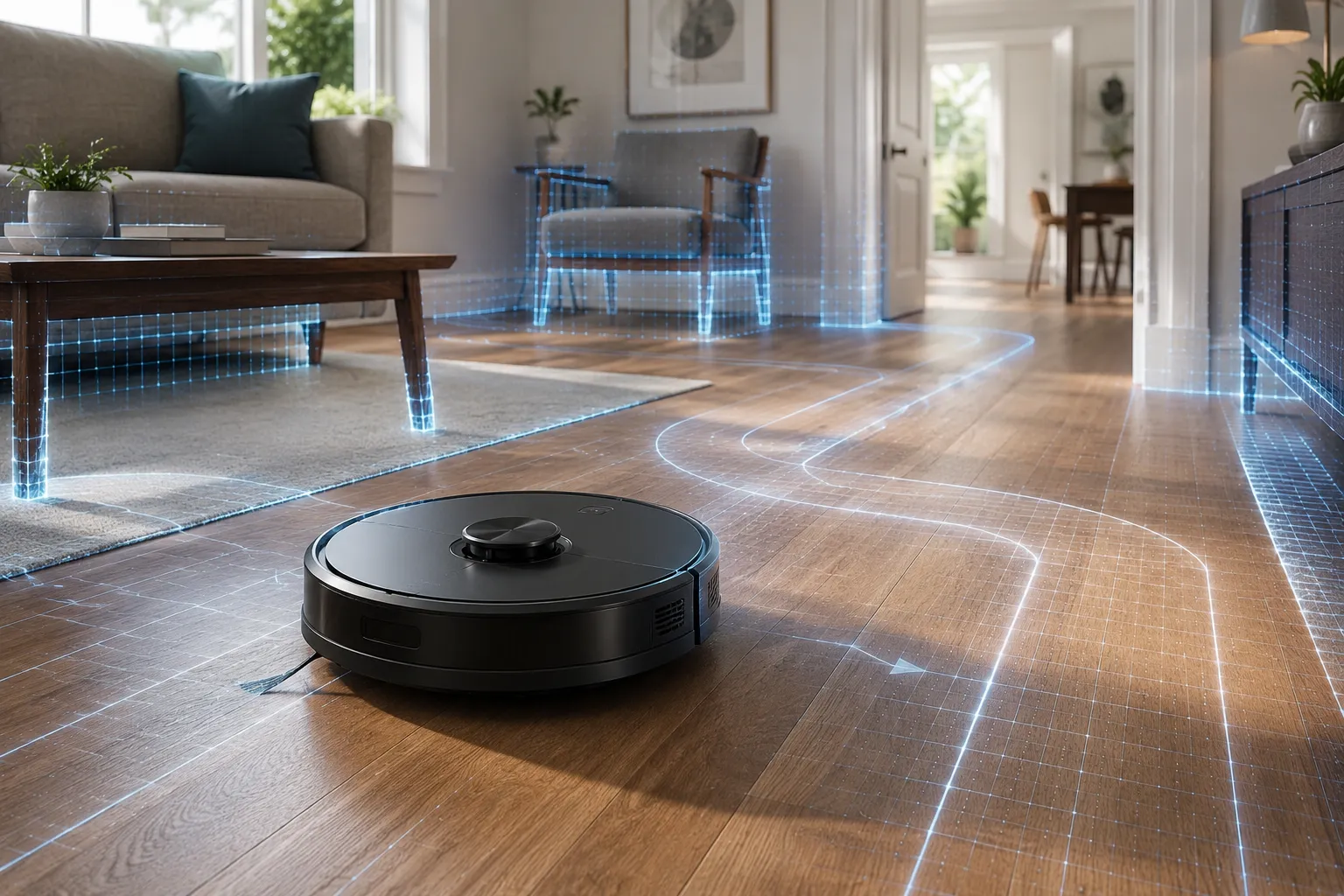
The other thing worth saying is what LiDAR actually changes for daily cleaning. Without it, a robot bumps its way around randomly. With it, the robot runs in systematic rows, stores a real floorplan in the app, and lets you set zone cleaning and keep-out zones. So if you want to clean just the kitchen before dinner, or keep the robot out of the baby’s room, you need a map. And for a real map, you need LiDAR.
I have two dogs, a mix of hardwood and area rugs, and one carpeted bedroom. That context shaped everything I noticed about how these four robots behave day to day.
My Top Pick
Before I get into each one, here’s the quick rundown.
Best Overall Roborock Saros 10R at Amazon ↓ Jump to Review
Best for Mopping and Heavy Cleaning Ecovacs Deebot X8 Pro Omni at Amazon ↓ Jump to Review
Best Premium All-in-One Dreame L40 Ultra Gen 2 at Amazon ↓ Jump to Review
Best Affordable LiDAR Tapo RV30 Max Plus at Amazon ↓ Jump to Review
If you’re in a hurry: the Dreame L40 Ultra Gen 2 is the one I’d send most households home with. It has the most suction in the group, excellent obstacle avoidance, and the lowest price of the premium options. The Saros 10R is worth the extra spend if you want the best obstacle avoidance score ever recorded by Vacuum Wars and a flat profile that slides under furniture the other three cannot reach. More on all of that below.
#1 Best Overall: Roborock Saros 10R
The Saros 10R does something none of the others in this group can do: it sits at 3.14 inches tall. That’s not a rounding error. Roborock achieved that height by replacing the traditional spinning LiDAR turret with dual solid-state sensors embedded flat into the body. No rotating parts, no raised bump on top. The robot just slides under furniture that stops every other model cold.
Roborock calls the navigation system StarSight Autonomous System 2.0. It pairs the dual solid-state LiDAR with 3D time-of-flight depth sensing and an RGB camera that can recognize 108 object types. That’s the hardware behind what Vacuum Wars clocked as a 24/24 obstacle avoidance score, the highest they’ve ever recorded. In my house with two dogs, that matters. Charging cables on the floor, dog bowls that move around, a dropped sock near the couch leg. The Saros 10R handled all of it without getting stuck or knocking anything over.
Suction is rated at 22,000 Pa. On my hardwood floors it pulls up what I’d estimate is close to everything. The DuoDivide brush is two short contra-rotating rollers with a gap in the center, which directs long hair into the suction path instead of wrapping around the axle. Vacuum Wars clocked 100% hair removal in their 7-inch hair wrap evaluation. My dogs have medium-length coats and I can confirm the brush comes out looking clean in a way I wasn’t expecting.
The dock is the 10-in-1 Multifunctional Dock 4.0. Hot water mop washing at 176 degrees, warm-air drying, auto-refill, detergent dispensing, mop pad auto-removal, and dual squeegees that clean the dock itself. The bag holds 2.5L, which Roborock says handles about 70 days of debris. With two dogs I empty it more often than that, but not by much.
One honest downside: the onboard bin is 270ml, which is on the small side. In my experience with heavy pet hair days, the robot returns to the dock to empty more frequently than I’d like. The solid-state LiDAR also has a narrower horizontal field of view than a spinning turret. Roborock compensates with dual transmitters, but navigation efficiency is slightly below what a top-tier spinning model can achieve. You’re trading some mapping speed and coverage width for that flat profile and those obstacle avoidance scores. For most homes that’s the right trade.
This sits in the upper-premium price tier. It’s the most I’ve spent on a robot vacuum and I don’t regret it, but it is a real number.
#2 Best for Mopping and Heavy Cleaning: Ecovacs Deebot X8 Pro Omni
The Deebot X8 Pro Omni is the most interesting LiDAR setup in this group because it doesn’t use a spinning turret and it doesn’t use solid-state sensors. It uses a fully embedded panoramic dToF LiDAR mounted near the front of the body, flush with the chassis. The sensor range goes up to 39 feet at millimeter accuracy, compared to 9 to 13 feet for older spinning LDS units. The signal is also 1,000 times stronger than LDS, which matters if your home gets direct sunlight through windows or has reflective surfaces like glass tables. Both of those conditions degrade LDS accuracy. The X8 handles them without issue.
The robot sits at 3.86 inches. Not as slim as the Saros 10R, but there’s no turret bump at all, so the profile is even all the way across. It can reach more low furniture than a turret-based robot even though the Saros 10R beats it on raw clearance height.
Navigation efficiency is where this thing surprised me. Vacuum Wars measured 1.09 square meters per minute, which they list as the second highest they’ve ever recorded. The robot covers ground fast and methodically. For a bigger home, that speed translates to shorter cleaning runs.
Pet hair pickup is the standout in this group. Vacuum Wars measured 97% pickup. With two shedding dogs, I noticed this on the first run. The ZeroTangle 2.0 brush is confirmed at zero tangles in extended evaluation. I’ve had other robots that looked like a cat lived inside the brush roll after two weeks. This one doesn’t do that.
The mopping system uses an OZMO Roller, a rotating cylindrical mop at 200 RPM. The TruEdge 3D extends the roller to wall edges, which is one of those things that sounds like marketing until you actually see the difference at your baseboard. The dock washes the mop at 167 degrees, dries it with hot air, and handles auto-refill and dirty water drain.
The weakness here is obstacle avoidance. Where the Saros 10R scored 24/24, the X8 Pro Omni relies on a single camera and structured light rather than full 3D time-of-flight. Avoidance is below average for this price tier. In my house I had to pick up a few things before running it, where the Saros 10R would have handled them without help. The 220ml onboard bin is also the smallest in the group, so it makes more trips to the dock in a heavy-shed week. But if pet hair pickup and fast, accurate mopping are what you need, this is the one. Vacuum Wars ranks it third on their all-time list for a reason.
#3 Best Premium All-in-One: Dreame L40 Ultra Gen 2
The Dreame L40 Ultra Gen 2 is the one I keep coming back to when someone asks me for a straight recommendation, because it gives you more performance per dollar than anything else in this group. It sits in the mid-range price tier, well below the Saros 10R and the Deebot X8 at its current pricing, and it has the highest suction rating of all four: 25,000 Pa.
The LiDAR setup here is the traditional architecture: a spinning dToF turret on top of the robot. That spinning turret gives you 360-degree horizontal coverage per rotation and the fastest initial mapping of any design style, typically around five minutes for a full floorplan. The trade-off is body height. The robot needs to be tall enough to house the rotating sensor, so it can’t match the flat profile of the Saros 10R or the X8 Pro Omni. If you have furniture that sits very close to the floor, this one may not get under it.
Obstacle avoidance scored 21/22 at Vacuum Wars, second best in this group. It pairs the turret LiDAR with 3D structured light and an RGB camera that recognizes over 200 object types at 2cm accuracy. That’s better object recognition granularity than the Saros 10R. In practice I found it handled day-to-day floor clutter reliably, though not quite at the Saros 10R’s level.
The TriCut brush has an integrated blade that cuts long hair strands before they wrap around the axle. I’ve heard from people who went months without touching the brush roll. My experience tracks with that. And the MopExtend system, where the side mop swings out for baseboard coverage, combined with 10.5mm carpet lift, the best of any robot I’ve run, means it genuinely transitions between floors without leaving a wet trail on the rug.
The dock holds 4.5L and empties in about 10 seconds using 20,000 Pa reverse suction. Dreame says that’s up to 100 days between bag changes. The battery runs about 194 minutes in real-world conditions and charges at a rate of 2.2 minutes per one percent, which is the best efficiency I’ve seen in this category. Vacuum Wars gave it 3.61 out of 5 and ranked it second on their all-time list. The Gen 2 is newer, so long-term reliability data is still building, but the short-term performance is strong.
#4 Best Affordable LiDAR: Tapo RV30 Max Plus
If you’re entering the LiDAR category for the first time and don’t want to spend upper-premium money, the Tapo RV30 Max Plus is the honest answer. It comes in at a budget-friendly price point, under $300, includes a self-emptying dock, and uses real LiDAR navigation with an added IMU (inertial measurement unit) for positional accuracy in open-floor areas. Multi-floor mapping is built in. Tom’s Guide, NextPit, and TechGearLab all recommend it specifically for its price-to-LiDAR-navigation value.
The robot covers a rated 1,940 square feet per charge. Zone cleaning, no-go zones, room-specific scheduling, Alexa and Google Home integration, all there. The dock holds 3L, which handles about two months of emptying on average. For a smaller home or an apartment, that’s plenty.
Here’s where I want to be direct, because I’ve seen this robot oversold: suction is 5,300 Pa, which is significantly below the rest of this group. If you have dogs that shed heavily or a carpeted bedroom that accumulates pet hair, this will underperform. TechGearLab gave it a 4.0 out of 10 on pet hair pickup and 5.6 out of 10 on obstacle avoidance (bumper sensors only, no avoidance camera). It’s better on hard floors than carpet. The brush tangles with long pet hair, which none of the other three in this group do.
The app has also drawn some complaints from power users around firmware and cloud dependency. I’d call that a fair flag for anyone who wants granular local control. But for a first LiDAR robot in a home with hard floors and light shedding, the value is real. See best budget robot vacuum with mapping for more options at this price level.
What to Look for in a Robot Vacuum with LiDAR
Picking the best robot vacuum with LiDAR isn’t just about finding a robot that has the word “LiDAR” on the box. The sensor type, the dock automation, and the obstacle avoidance system all shape how useful that map actually is in a real home.
Types of LiDAR in Robot Vacuums
The three main designs each make a different trade-off. Spinning turret LiDAR (like the Dreame L40) gives you fast, complete horizontal mapping because the sensor rotates a full 360 degrees. The downside is the robot needs a raised bump to house the turret, so it can’t get under very low furniture.
Front-embedded panoramic dToF (like the Deebot X8 Pro Omni) removes the turret bump and extends sensor range dramatically, up to 39 feet versus 9 to 13 feet for spinning LDS units. The robot sits flatter, handles sunlight and reflective surfaces better, and maps very efficiently. The trade-off is narrower vertical field of view compared to a full 360-degree rotation.
Solid-state dual-transmitter LiDAR (like the Saros 10R) is the newest design. No rotating parts at all. The sensor is flat inside the body, which is why the robot reaches 3.14 inches. The trade-off is narrower horizontal angle per scan, compensated by dual transmitters, and very high cost to manufacture at this point.
Obstacle Avoidance vs. Navigation
I want to say this plainly because it trips people up constantly. LiDAR maps your room. Obstacle avoidance is a completely separate sensor system that detects and avoids objects during a run. A robot can have precise LiDAR mapping and still drive into a charging cable if the avoidance camera is weak. The Deebot X8 Pro Omni is the clearest example in this group: excellent LiDAR navigation, below-average obstacle avoidance.
The best avoidance systems pair 3D time-of-flight depth sensing with an AI camera. That’s what gives the Saros 10R its 24/24 score. If you have a home with pets, kids, or general floor clutter, prioritize both specs, not just LiDAR.
Suction and Floor Type
LiDAR improves coverage. It does not improve how much the robot picks up on each pass. That’s suction and brush design. For hardwood and short-pile rugs, 5,000 to 10,000 Pa is generally enough. For thick carpet or heavy pet hair, you want 18,000 Pa or above. The jump from 18,000 to 25,000 Pa matters most on plush carpet, where deeper suction pull is needed to dislodge hair embedded in the pile.
Brush design matters just as much as suction numbers. A rubber roller brush with hair-cutting or hair-directing geometry will outperform a bristle brush at any suction level when it comes to long pet hair. For more on this, see best robot vacuum for pet hair.
Dock Automation
Self-emptying docks are close to standard now in the upper-mid range and above. But the quality gap between a basic auto-empty dock and a fully automated station is significant. At the entry level, you get a dust bag that collects debris from the bin. At the full tier, you get hot-water mop washing, hot-air drying, auto water refill, auto dirty water drain, and auto detergent dispensing. That full tier means the dock cleans itself between runs, which is the difference between mopping being genuinely automatic and mopping requiring you to rinse a pad every day.
Bag capacity also matters if you have pets. A 2.5L bag on the Saros 10R versus a 4.5L bag on the Dreame L40 means meaningfully different intervals between bag changes. If you want more details on self-emptying setups, see best self-emptying robot vacuum.
Coverage Per Charge
Rated coverage and real-world coverage diverge, sometimes by a lot. Manufacturers rate coverage on a flat, open floor with no obstacles and a fresh battery. Your actual home has furniture, multiple rooms, transitions between floor types, and a robot that stops to avoid obstacles or return to empty the bin. In my experience, real coverage runs 30 to 40 percent below the rated number in a typical home. A robot rated at 2,000 square feet reliably covers a 1,200 to 1,400 square foot home in a single run.
My Pick: Best Robot Vacuum with LiDAR
My choice for the best robot vacuum with LiDAR overall goes to the Dreame L40 Ultra Gen 2. It has the highest suction in the group, a strong obstacle avoidance score, the best carpet mop clearance of the four, and it comes in at the lowest price among the premium options. The spinning turret means it won’t slide under every piece of furniture, but the performance-to-price ratio is better than anything else here. If you’re also researching options by floor type, the best robot vacuum for carpet guide covers that side of the decision in more detail.
If obstacle avoidance and slim profile matter most, the Roborock Saros 10R is worth the premium. That 24/24 avoidance score is real, and the 3.14-inch height opens up furniture that no other robot in this group can reach. For households with a lot of floor clutter or low-clearance furniture, that’s not a small thing.
For pet-heavy homes where mopping and vacuuming both need to do real work, the Ecovacs Deebot X8 Pro Omni is the one. Its 97% pet hair pickup is the best in the group and the OZMO Roller mopping system is the strongest here. Just go in knowing you’ll need to clear more floor obstacles before each run.
For a first LiDAR robot on a budget, the Tapo RV30 Max Plus delivers actual LiDAR mapping and a self-emptying dock at a price that doesn’t feel like a gamble. Stick to hard floors and manage expectations on pet hair performance.
FAQs
What is LiDAR on a robot vacuum and why does it matter?
LiDAR stands for Light Detection and Ranging. The sensor fires laser pulses and measures how long they take to return, building a precise map of your room. That map is what allows the robot to clean in systematic rows, remember your floorplan between runs, and let you set zones or keep-out areas in the app. Without LiDAR, the robot navigates by bumping into things and reversing.
What’s the difference between LiDAR and camera-based obstacle avoidance?
LiDAR builds the room map. Obstacle avoidance is a separate system, usually a depth-sensing camera, structured light projector, or time-of-flight sensor, that detects objects during a live run. A robot can have a precise LiDAR map and still roll into a power cord if the avoidance hardware is weak. The Deebot X8 Pro Omni is a good example: the LiDAR navigation is excellent, but avoidance is below average for the price. Check both specs before buying.
Is there a best robot vacuum with LiDAR under $500?
Yes. The Tapo RV30 Max Plus is the best robot vacuum with LiDAR at that price point. You get real LiDAR mapping, a self-emptying dock, and zone cleaning — all under $500. Performance on thick carpet and pet hair is limited compared to the premium tier, but for hard floors in a smaller home, it does the job.
Do all LiDAR robot vacuums work the same way?
No, and this is the thing most buying guides don’t explain clearly. There are three meaningfully different LiDAR designs: spinning turret (fast mapping, taller body), front-embedded panoramic dToF (flatter profile, longer sensor range, better in sunlight), and solid-state embedded (flattest profile possible, no rotating parts, highest cost). Each makes different trade-offs for under-furniture reach, initial map speed, and accuracy in different lighting conditions.
Is LiDAR worth the extra cost over random-navigation robots?
For most homes, yes. The practical benefits go beyond just better maps. You get zone cleaning so the robot handles one room while you’re in another, keep-out zones for areas you don’t want it touching, and a cleaning history you can actually read. Random-navigation robots miss the same corners on every run. LiDAR robots don’t. If your home is larger than 800 square feet or has multiple rooms, the coverage consistency alone makes the upgrade worth it.


Write Your Review
No reviews yet. Be the first to share your experience!