

Cleaning your home shouldn’t consume your entire weekend. A quality robot vacuum and mop combo handles the heavy lifting while you focus on what matters. We’ve tested dozens of models to identify which ones truly deliver results without premium pricing.
This comprehensive guide breaks down everything you need to know: what features actually make a difference, how to match a model to your home’s needs, and honest answers to the questions homeowners ask most. Whether you’re juggling pets, managing a large space, or simply want effortless floor maintenance, you’ll find practical guidance here.
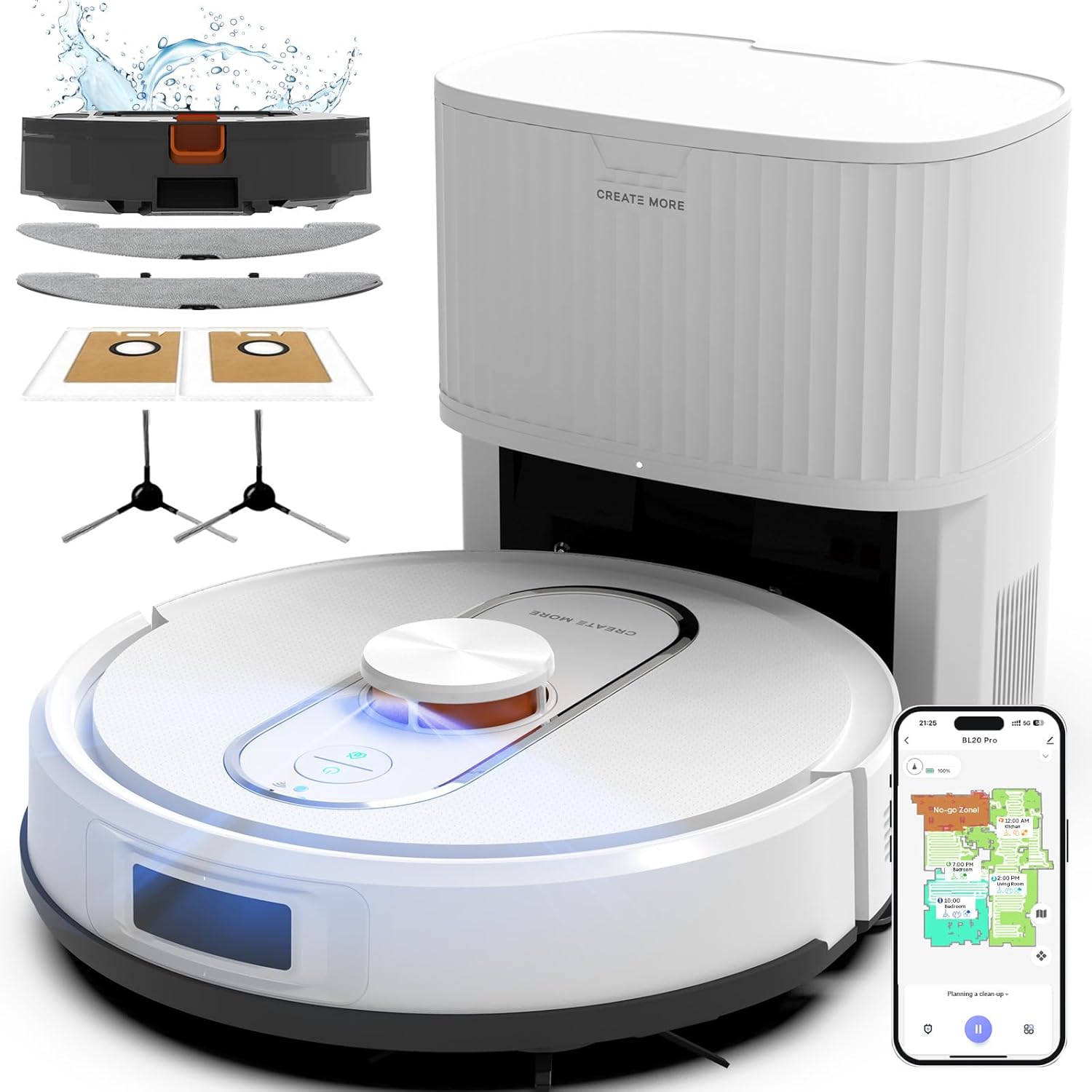


Pros
- 20,000 Pa powerful suction
- Always-clean roller mop
- Zero hair tangle design
- Smart AI obstacle avoidance
- Edge-to-corner coverage
Cons
- Leaves floors slightly damp
- Struggles on deep carpet
- No mop-only mode
8,000 Pa Suction And Dual Mops Deliver Deep, Hands-Free Cleaning
With powerful suction and two spinning mops, the X10 Pro Omni vacuums and mops simultaneously — leaving hard floors and carpets genuinely clean in one pass.
Auto-Lift Mop And Tangle-Free Brushes Perfect For Pet Homes
The mop lifts 12mm automatically on carpet detection, while anti-tangle brushes handle pet hair on all surfaces without constant maintenance.
Users Praise The Accurate Mapping And Truly Autonomous Station
Customers highlight how rarely it gets stuck, how precise the LiDAR mapping is, and how the all-in-one station handles emptying, washing, and refilling on its own.


Understanding What Drives Performance
Suction Power: More Than Just Numbers
When evaluating a robot vacuum and mop, suction power matters, but context is everything. Models range from 3000 to 7000 PA at this price point. A 4000 PA unit handles typical household dust and light debris effectively. But if you have shedding pets or live in a high-traffic home, jump to 5000+ PA. The jump from 4000 to 7000 PA makes a tangible difference with pet hair, reducing the number of cleaning cycles needed weekly.
Mopping Mechanics: Vibration Speed Matters
Not all robot mops clean equally. Some oscillate their pads 1000 times per minute (basically moistening your floor), while premium units hit 3000 vibrations per minute (actually scrubbing). If you spill juice, syrup, or other sticky substances regularly, prioritize higher vibration counts or hybrid dual-tank systems. A single-pass clean beats three passes any day, and that’s the real difference between entry-level and mid-range mopping.

Battery Reality Check
Advertised runtimes look impressive until you realize that real-world usage is about 80% of what’s claimed. A 210-minute model realistically gives 170 minutes of actual cleaning. For homes under 1500 square feet, 150 minutes works fine. Medium homes (1500-2500 sq ft) should aim for 180+ minutes to complete cleaning in one cycle. Larger homes benefit from 200+ minute capability to avoid mid-clean docking and resuming.
The Dock Game: Where Convenience Gets Real
Basic charging docks require you to empty the dustbin 50+ times yearly. That’s genuine time spent on maintenance. Self-emptying docks cut this to 12 times per year, saving 2-3 hours annually. Premium docks add automatic mop pad washing with hot water and drying, essentially eliminating manual mop maintenance. If you value your time, the dock features matter as much as the robot itself.
Navigation Systems and Real-World Performance
LiDAR mapping is standard across quality models now. It creates precise floor maps quickly and prevents your robot from getting stuck in corners. Some units add cameras for obstacle detection or thermal sensors for pet identification. For most homes, LiDAR alone handles navigation perfectly fine. The expensive additions matter only if you have unusual layouts or specific safety concerns.
Water Capacity and Mopping Coverage
A 2-liter water tank covers approximately 1500 square feet before emptying. A 2.5-liter tank handles 2000 square feet without refilling. Larger homes require refilling mid-mop, which disrupts the cleaning flow. Additionally, check whether the model uses separate clean and dirty water tanks. Single-tank systems reapply progressively dirtier water, while dual-tank systems maintain cleaner water throughout.
Answering Your Real Questions
Q: How frequently should I actually empty the dustbin?
Without a self-emptying dock, expect weekly emptying (5-7 days with pets, 10-14 without). With self-emptying technology, you’re looking at monthly maintenance. The time savings accumulate significantly: roughly 40 fewer dustbin sessions per year equals 2-3 hours reclaimed.
Q: Will it genuinely manage pet shedding?
Yes, with design-dependent results. Dual rubber brushes outperform single brushes substantially. Dual designs need untangling every 3 weeks, while single-brush models require weekly attention. Pro tip: use a lint roller on pet bedding before running your robot. This simple step reduces hair volume entering the system by nearly half.
Q: Does hot water mopping justify the extra cost?
It depends on your kitchen’s reality. Hot water removes sticky residues (juice, syrup, dried food) in one pass versus three passes with cold water. For households with frequent spills, it’s valuable. For primarily dusty floors, cold water works adequately and saves money.
Q: What happens if I add my favorite floor cleaner?
Don’t. Stick exclusively to plain water. Floor cleaners damage protective coatings on mop pads, clog water nozzles, and void warranties. When stubborn stains appear, clean manually first, then let your robot handle regular maintenance.
Q: How much actual runtime should I expect?
Advertised runtimes typically reflect ideal conditions. Real-world usage delivers 80-85% of those numbers. A 210-minute model realistically provides 170-180 minutes of cleaning. Most robots automatically return to the dock when battery reaches 15-20%, then resume from where they stopped on the next cycle.
Q: Can it handle homes with both carpet and hardwood?
Hardwood and tile cleaning works excellently. Low-pile carpet presents no problems. High-pile carpet struggles significantly. For mopping, quality models automatically lift pads when detecting carpet, preventing wet carpet issues. Budget models skip this feature, requiring manual no-mop zone setup.
Q: What maintenance routine should I follow?
Weekly takes 5 minutes: empty the dustbin. Monthly requires 10 minutes: wash the mop pad and clean the filter. Quarterly involves 15 minutes: deep clean the pad and inspect brushes for tangled hair. Self-emptying docks eliminate most weekly work, reducing overall maintenance burden significantly.
Q: Can I schedule it remotely while at work?
Absolutely. Set cleaning schedules through the app for specific days and times. Maintain 24-hour intervals between cycles to allow adequate charging. Your robot automatically docks when needed and resumes cleaning from where it left off.
Q: What warranty protection comes standard?
Most manufacturers provide 2 years of parts and labor coverage. Register your unit immediately upon purchase to activate full benefits. These machines rarely fail during the warranty period. Accidental damage and normal wear items typically fall outside coverage.
Making Your Decision
Selecting the right unit hinges on understanding your home’s specific demands. Pet owners prioritize suction and brush design. Homeowners with frequent spills focus on mopping technology. Budget-conscious buyers balance features against price points. Maintenance tolerance varies: some value automated convenience, others accept weekly effort for lower costs. All models in this category work reliably, so matching features you’ll actually use with your real-world needs ensures satisfaction. Order with a return window available, test in your actual home, and switch if it doesn’t align with your lifestyle.





Write Your Review
No reviews yet. Be the first to share your experience!